Blatnica
Blatnica Castle is a striking example of a medieval hill castle located on a limestone ridge at 685 meters above sea level, near the village of Blatnica in Slovakia. Constructed in the 13th century, it was strategically positioned to guard an important trade route running from Nitra through Liptov and Orava to Poland. The castle's location atop a narrow ridge provided natural defenses with steep cliffs to the east and north, making it a formidable stronghold in its time.
Early history and strategic importance
The origins of Blatnica Castle likely date back to the mid-13th century, although archaeological evidence suggests the site may have been used earlier as a Great Moravian fortified settlement. Its primary function was to protect the vital trade corridor that connected the southern regions of present-day Slovakia with northern territories. The first written record of the castle appears in 1300, naming Piotr of Brezovica as its owner.
In 1321, the castle was seized by the forces of King Charles Robert of Anjou, marking its transition into royal hands. However, the castle's military significance declined after the main trade route was redirected through Mošovce and Martin, diminishing Blatnica's strategic value.
Architectural features and layout
Originally, Blatnica Castle occupied only the narrow summit ridge of the hill, featuring a long building ending in semi-circular towers. The western tower was considerably larger than the eastern one, due to the natural protection offered by steep cliffs on the east and north sides. This western tower served as the main defensive structure guarding the castle entrance, accessible via a winding staircase.
Below the hilltop castle lay the outer bailey or lower castle, which housed the economic buildings and was later fortified with walls and artillery towers during the Renaissance period. The entrance to the castle complex was from the west, crossing a rock-cut moat, emphasizing its defensive design.
Ownership and historical events
Throughout its history, Blatnica Castle changed hands frequently due to political turmoil and conflicts. After King Charles Robert's forces took control in 1321, the castle was often pledged and passed between various owners. Between 1450 and 1470, it was owned by the Polish knight Piotr Komorowski. His involvement in a rebellion against King Matthias Corvinus led to the loss of the castle and other estates in the Spiš, Liptov, and Orava regions.
In 1540, the wealthy Révay family acquired Blatnica Castle and undertook significant expansions in the second half of the 16th century. They adapted the towers for the use of firearms by installing artillery positions, reflecting the changing nature of military technology. The outer bailey was transformed into a fortified lower castle with walls reinforced by three artillery towers.
The castle suffered damage in 1678 during a fire caused by the kuruc rebels led by Emeric Thököly. It was again occupied in 1703 by forces loyal to Francis II Rákóczi during another uprising. Despite these setbacks, the Révay family regained the castle in 1708 but found parts of it uninhabitable due to the damage sustained.
In 1744, Jozef Révay attempted a partial reconstruction of the castle, but by 1790 it was abandoned and gradually fell into ruin.
Current condition and accessibility
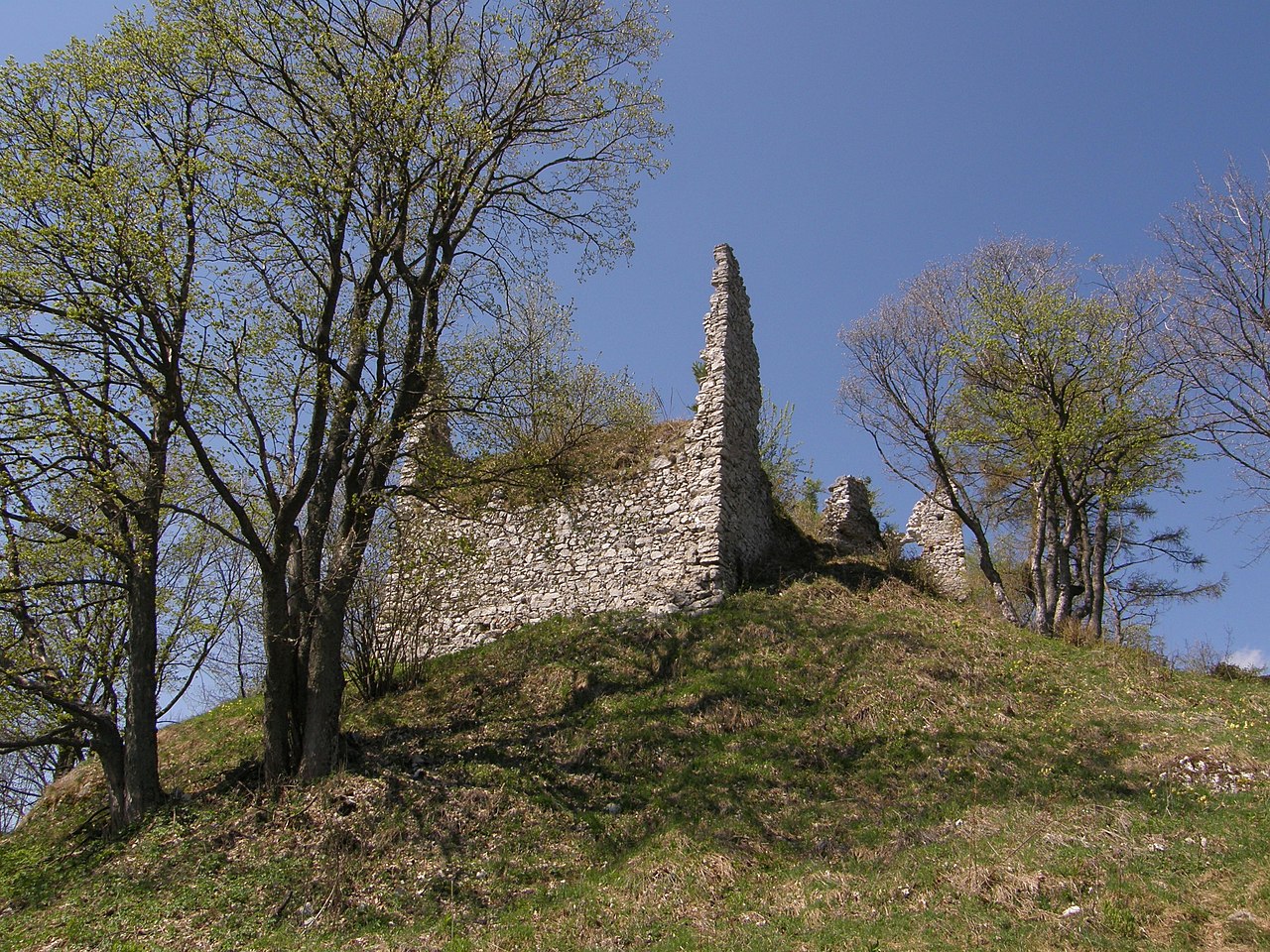
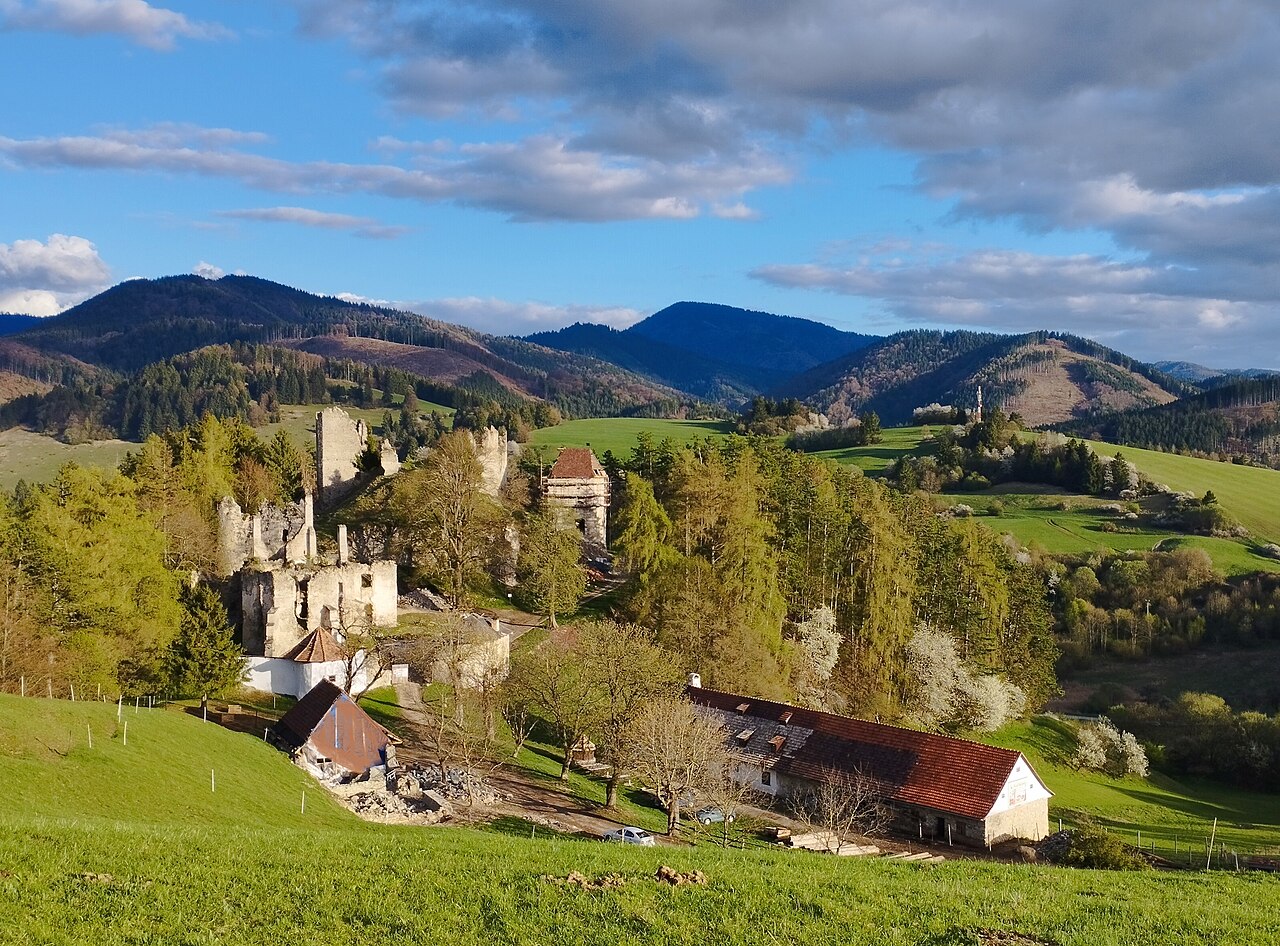
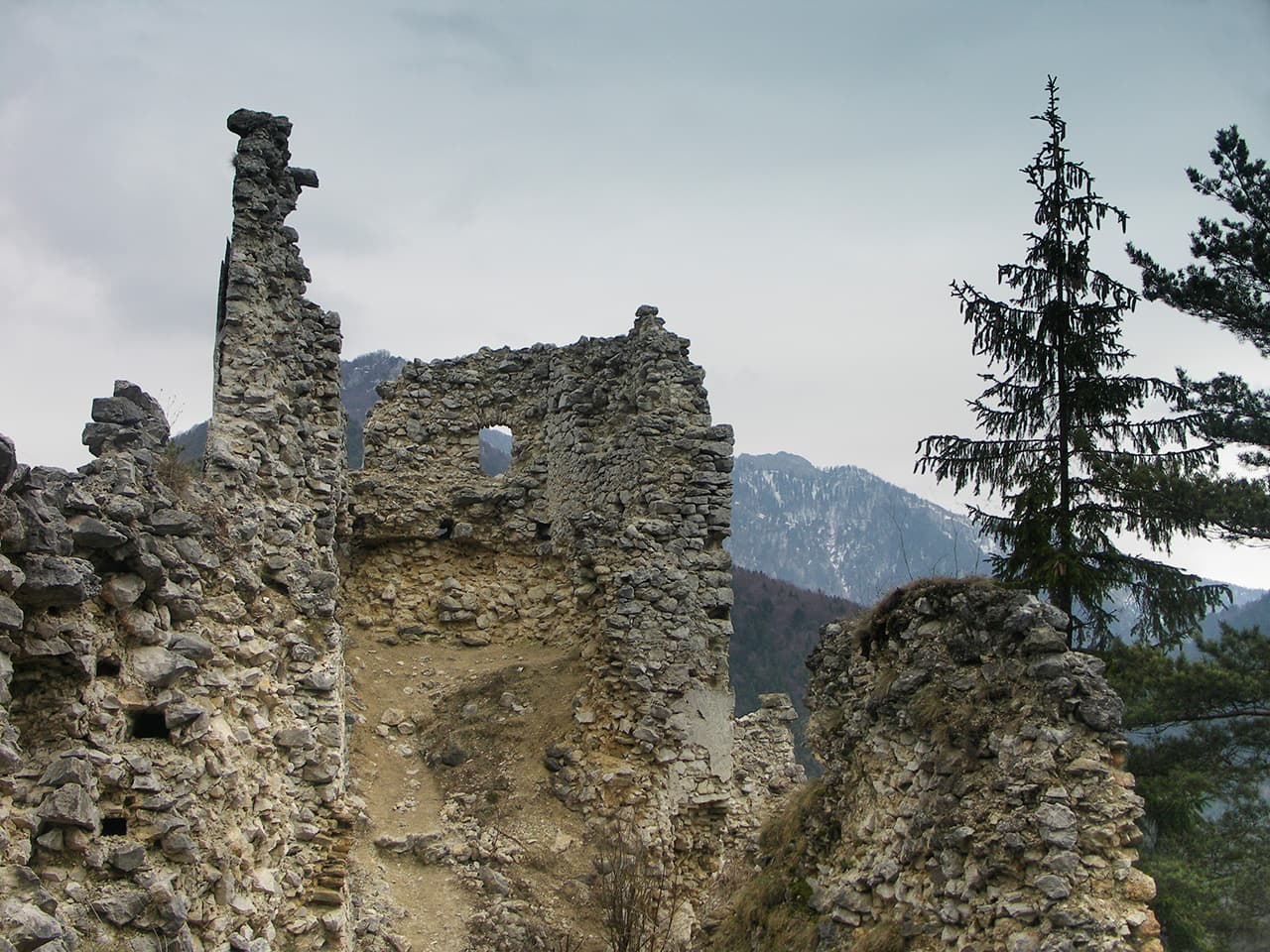
Today, Blatnica Castle remains as ruins nestled within a forest on the hill of Plešovica, which divides the Turiec Basin from the Greater Fatra mountain range. The remnants include partial walls of the Gothic residential building and both towers on the upper castle, as well as the defensive walls of the lower castle visible among the trees below.
The site is freely accessible via a marked hiking trail from the village of Blatnica. Visitors can explore the ruins and enjoy views of the Gader Valley and the prominent Tlstá Mountain opposite the castle.
Architectural significance
Blatnica Castle exemplifies the evolution of medieval fortifications adapting to Renaissance military innovations. The transformation of towers to accommodate artillery and the fortification of the lower castle with bastions illustrate this shift. The castle's location on a narrow ridge with natural cliffs provided a strong defensive advantage, typical of hill castles in Central Europe.
Cultural heritage and tourism
As a cultural monument, Blatnica Castle offers insight into the medieval history of Slovakia and the region's role in trade and military affairs. Its ruins are a popular destination for hikers and history enthusiasts interested in exploring authentic medieval architecture and the landscape of the Greater Fatra region.
Frequently asked questions (FAQ)
- How do I get to Blatnica Castle?
- Blatnica Castle is accessible by a marked hiking trail from the village of Blatnica. The path leads through forested terrain to the castle ruins on the hilltop.
- What is the historical significance of Blatnica Castle?
- Blatnica Castle was built in the 13th century to protect a key trade route and later served as a royal fortress. It reflects medieval and Renaissance military architecture.
- When was Blatnica Castle last inhabited?
- The castle was last inhabited in the late 18th century, around 1790, after which it was abandoned and fell into ruin.
- Can I explore the ruins of Blatnica Castle?
- Yes, the ruins of Blatnica Castle are open to visitors year-round. While the site is largely in ruins, visitors can explore the remains of the towers, walls, and lower castle.
- Why did Blatnica Castle lose its strategic importance?
- The castle lost strategic importance after the main trade route was redirected through Mošovce and Martin, reducing its role as a defensive stronghold.
Photo gallery

Information
Current owner
Municipality
Loading map...
Visitor reviews
No reviews yet. Been here? Write the first review and help other travelers!
Write the first reviewVisited this castle? Share your experience
Your review helps other travelers and adds first-hand knowledge to our encyclopedia.