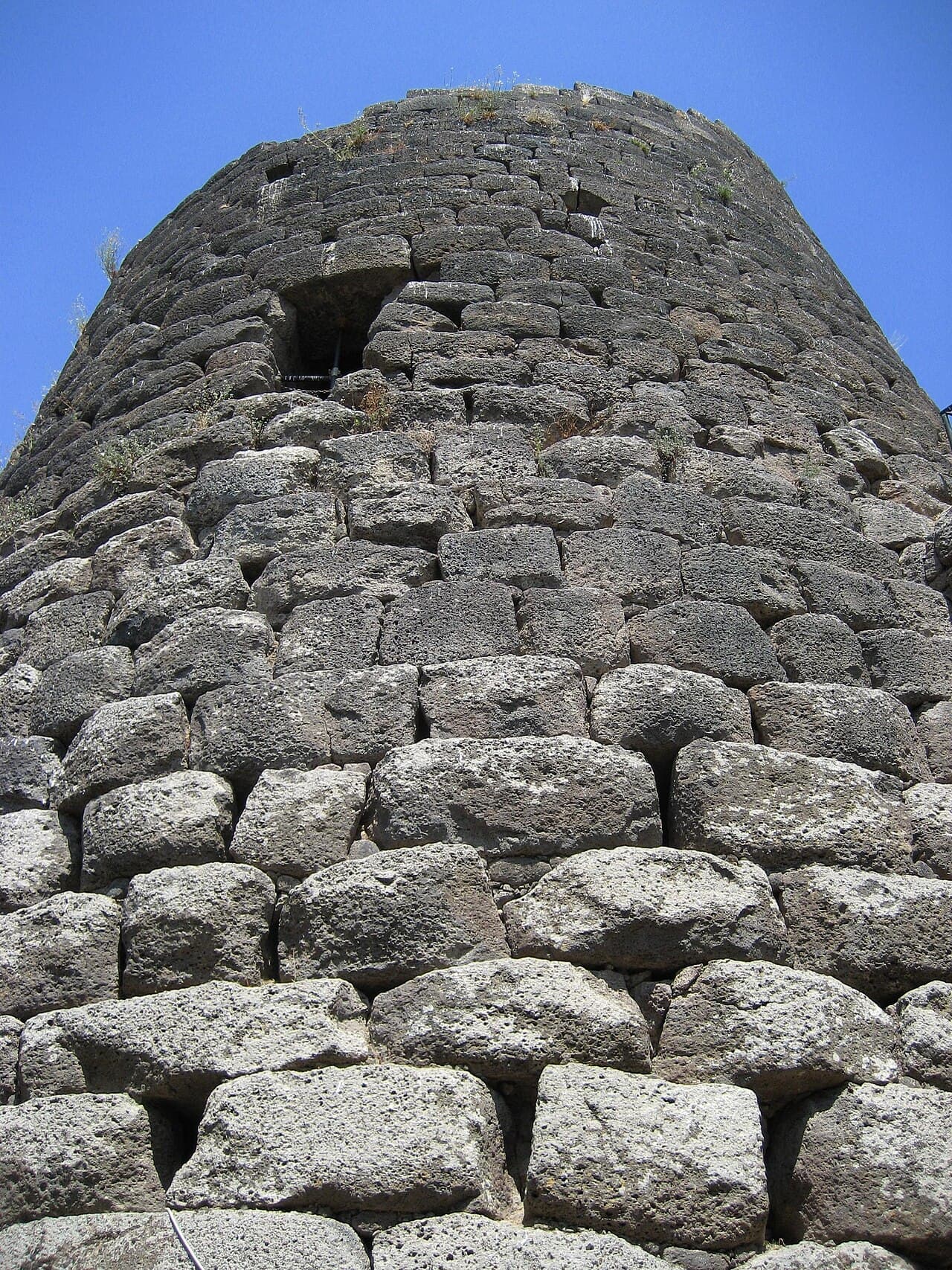
Su Nuraxi di Barumini
Su Nuraxi di Barumini is a remarkable Nuragic archaeological site located in the municipality of Barumini, in the island of Sardinia, Italy. The name "Su Nuraxi" translates simply as "The Nuraghe" in Campidanese, the southern dialect of the Sardinian language. This site represents one of the most important and best-preserved examples of the ancient Nuragic civilization, which flourished on Sardinia during the Bronze Age.
Architectural features of Su Nuraxi
The central structure of Su Nuraxi is a large nuraghe built around the 17th century BC, making it a significant monument from the early Bronze Age. The nuraghe consists of a massive central tower, known as the keep or "mastio," surrounded by four corner towers connected by thick curtain walls, forming a bastion-like complex. This layout is a distinctive feature of the nuraghe type, designed for both defensive purposes and as a symbol of power.
The towers are constructed from large basalt blocks, expertly fitted together without mortar, showcasing advanced prehistoric masonry techniques. The central tower rises higher than the surrounding bastion towers, providing a commanding view of the surrounding landscape. The interior of the towers contains chambers with corbelled vaults, a sophisticated architectural element for the period.
Surrounding the nuraghe is a village settlement that developed from approximately the 13th to the 6th century BC. This village includes circular huts arranged around the nuraghe, which served as dwellings and workshop spaces. The layout of the settlement suggests a complex social organization and a community centered around the nuraghe as both a defensive stronghold and a communal hub.
Historical context and significance
The Nuragic civilization, named after these distinctive stone towers, is unique to Sardinia and represents a significant prehistoric culture in the Mediterranean. Su Nuraxi di Barumini is considered by scholars to be the most impressive expression of this civilization due to its scale, state of preservation, and architectural complexity.
Excavations at Su Nuraxi have revealed artifacts such as pottery, tools, and bronze objects, which provide insight into the daily life, trade, and craftsmanship of the Nuragic people. The site also illustrates the evolution of the Nuragic culture over several centuries, reflecting changes in social structure and external influences.
In recognition of its outstanding universal value, UNESCO inscribed Su Nuraxi di Barumini as a World Heritage Site in 1997. This designation highlights its importance as a cultural heritage site and ensures its protection and study for future generations.
Construction techniques and materials
The builders of Su Nuraxi employed large blocks of local basalt, carefully shaped and assembled without the use of mortar. This dry stone construction technique is a hallmark of Nuragic architecture and demonstrates remarkable engineering skills for the Bronze Age.
The corbelled vaults inside the towers are particularly notable, as they create strong, self-supporting roofs that have withstood millennia. The thickness of the walls and the strategic placement of towers suggest a design optimized for defense against invaders.
Archaeological research and preservation
Systematic excavations began in the early 20th century and have continued intermittently, uncovering the complex stratigraphy of the site. Archaeologists have documented the phases of construction and habitation, revealing how the site expanded and adapted over time.
Today, Su Nuraxi is well preserved and partially restored, allowing visitors to explore the towers, walls, and village remains. The site includes a visitor center with educational exhibits explaining the Nuragic culture and the significance of the archaeological findings.
Visitor experience and accessibility
Su Nuraxi di Barumini is open to the public, offering guided tours that provide detailed insights into the site's history and architecture. The path through the site includes access to the central tower and surrounding bastion towers, giving visitors a tangible sense of the scale and complexity of the Nuragic fortress.
The site is accessible by road from the nearby town of Barumini, which also features a museum dedicated to Nuragic civilization. Visitor facilities include information panels, rest areas, and a small shop selling related literature and souvenirs.
Frequently asked questions (FAQ)
- What is Su Nuraxi di Barumini?
- Su Nuraxi di Barumini is a Bronze Age nuraghe complex and archaeological site in Sardinia, Italy, representing the Nuragic civilization.
- When was Su Nuraxi built?
- The central nuraghe at Su Nuraxi was constructed around the 17th century BC during the early Bronze Age.
- Can visitors explore the towers at Su Nuraxi?
- Yes, visitors can access the central tower and surrounding bastion towers through guided tours, experiencing the site's architecture firsthand.
- Why is Su Nuraxi a UNESCO World Heritage Site?
- It was inscribed by UNESCO in 1997 for its outstanding representation of the Nuragic civilization and its well-preserved Bronze Age architecture.
- How do I get to Su Nuraxi di Barumini?
- Su Nuraxi is located in Barumini, Sardinia, and is accessible by road from nearby towns with visitor facilities available on site.
Photo gallery

Photo by Fawcett5. Compressed by |EPO|.•Public domain
Information
Loading map...
Visitor reviews
No reviews yet. Been here? Write the first review and help other travelers!
Write the first reviewVisited this castle? Share your experience
Your review helps other travelers and adds first-hand knowledge to our encyclopedia.



