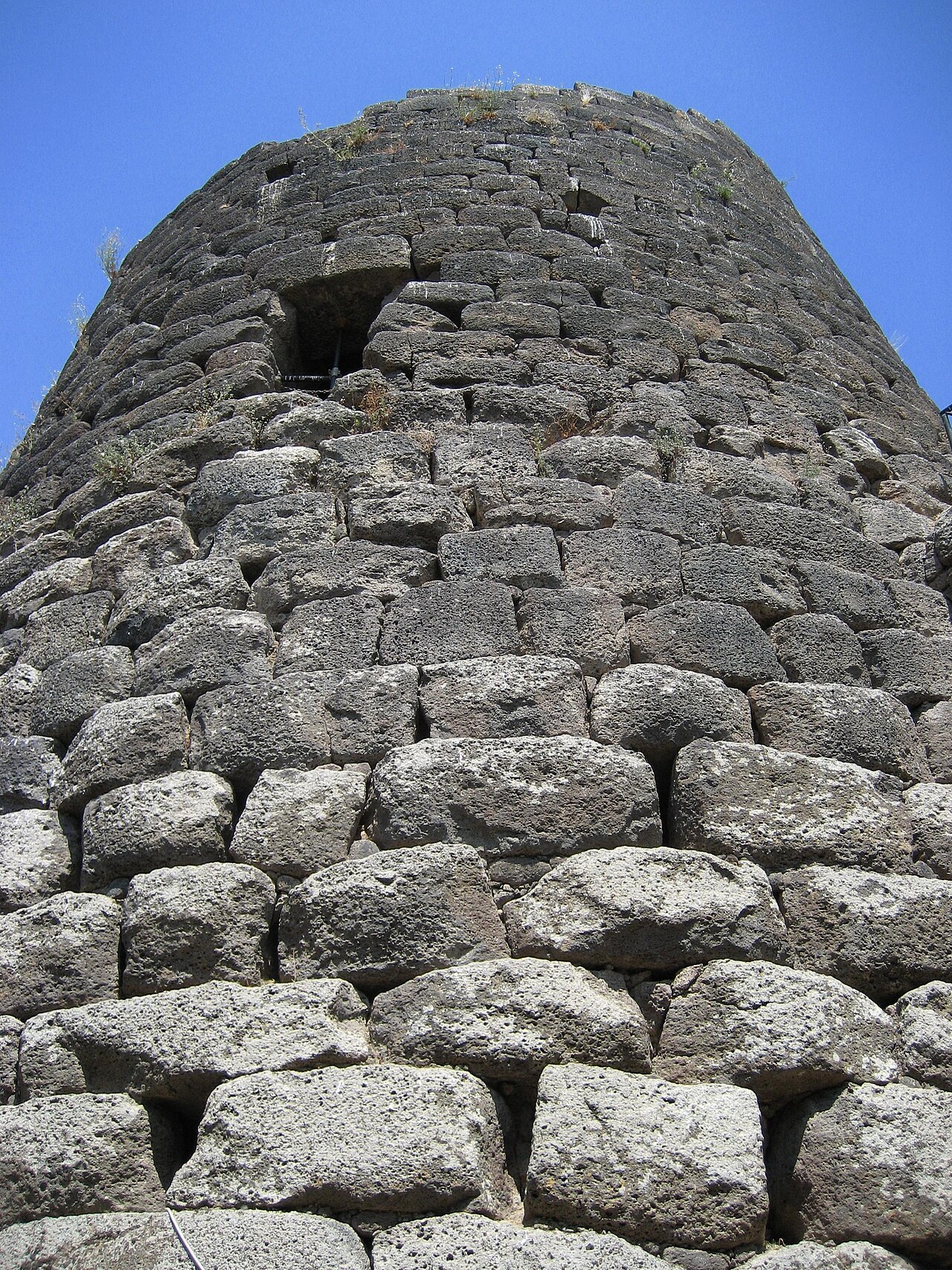
Castle of Sanluri
The Castle of Sanluri, situated in the municipality of Sanluri in Sardinia, Italy, stands as a remarkable example of medieval military architecture deeply intertwined with Sardinian history and culture. Originally constructed during the medieval period by the Sardinian Judicates, this hill castle was strategically positioned to control the borderlands between the Judicate of Cagliari and the Judicate of Arborea. Its enduring presence offers insights into the complex political and military struggles that shaped Sardinia from the 12th century onward.
The castle’s early origins are subject to historical debate. While local tradition associates the castle with Eleonora d’Arborea, a celebrated Sardinian ruler known for her legal reforms and leadership during the late 14th century, there is no definitive evidence that she resided within its walls. More recent scholarship suggests the castle was likely erected between 1188 and 1195 under the reign of Judge Peter I of Arborea. This timing aligns with the castle’s initial function as a defensive outpost designed to protect Arborean territories from incursions by the rival Judicate of Cagliari.
Medieval origins and strategic importance
During the high medieval period, the Castle of Sanluri played a pivotal role in the territorial conflicts that characterized Sardinia. Its location on a hill provided a commanding view of the surrounding plains, making it a key military stronghold. The castle’s historical significance was further cemented in the 14th century when it became involved in the power struggles between local Sardinian rulers and the expanding influence of the Crown of Aragon.
The aragonese reconstruction and expansion
In 1355, the castle came under the control of King Peter IV of Aragon, who undertook extensive rebuilding and fortification efforts as part of a broader campaign to consolidate Aragonese dominance over Sardinia. The castle’s architecture from this period reflects typical 14th-century military construction techniques, including thick curtain walls and robust masonry designed to withstand sieges. The involvement of the architect Berengario Roich in these works highlights the strategic importance placed on the castle during this era.
The castle’s military role was underscored by its proximity to the Battle of Sanluri in 1409, a significant conflict between Sardinian forces and Aragonese troops. Earlier in the century, the castle was also the site of the Peace of Sanluri treaty in July 1355, an important political event that marked a momentary resolution in Sardinia’s turbulent history.
Architectural features and defensive design
The Castle of Sanluri exemplifies the defensive priorities of its time through its architectural layout. The core of the fortress is a rectangular keep, known locally as a "mastio," which rises three stories high and is flanked by two square towers. These towers served both as lookout points and strongholds in case of attack.
The curtain walls encircling the castle are notably thick, averaging around two meters, and were constructed to resist artillery and siege engines. Their orientation is deliberate, with the most fortified sections facing south, reflecting historical threats from that direction. The castle’s design incorporates battlements, arrow slits, and a gatehouse, all typical features of medieval military architecture aimed at defense and control.
Interior layout and residential adaptations
While originally a military fortress, the castle gradually transitioned to residential use following the establishment of Aragonese rule and the decline of local conflicts. The interior spaces were adapted to accommodate noble families, with the castle passing through several prominent lineages including the De Sena, Henriquez, Castelvì, Aymerich, and finally the di Villa Santa family from 1924 onward.
The castle’s interiors retain period furnishings and rooms that reflect its residential evolution. The study of Count di Villa Santa, for example, contains personal correspondence with the Italian nationalist General Gabriele d’Annunzio, highlighting the castle’s continued cultural relevance into the modern era. Other rooms, such as the Napoleonic salon and the Doria chamber, showcase artifacts and furnishings that connect the castle to broader European historical narratives.
Cultural heritage and museum collections
Today, the Castle of Sanluri functions as a museum, preserving and exhibiting a rich collection of historical artifacts. The Museo delle Ceroplastiche within the castle houses over 400 wax sculptures dating from the 16th to the 19th centuries. These works were created by renowned artists such as Ammannati, Susini, Zumbo, Giambologna, Piamontini, and Mazzafirri, offering visitors a unique glimpse into artistic traditions spanning several centuries.
Additional museum halls, including the Militia and Justice rooms, contain the Museo Risorgimentale Duca d’Aosta, which preserves significant relics of the Italian unification movement. Among these are the first Italian tricolor flag flown in Trieste in 1918 and the original Victory Bulletin announcing the end of World War I, underscoring the castle’s role as a custodian of national memory.
Preservation and ongoing significance
The castle’s excellent condition is largely due to its continuous occupation and adaptive reuse over the centuries. Unlike many medieval fortresses that fell into ruin, Sanluri’s transformation into a residence and later a museum has ensured its preservation. Restoration efforts under the di Villa Santa family have maintained the structural integrity and historical authenticity of the site, making it an important cultural landmark in Sardinia.
Visitors today can explore both the castle’s formidable defensive architecture and its richly furnished interiors, gaining a comprehensive understanding of its multifaceted history. The castle stands as a testament to the dynamic interplay of military, political, and cultural forces that have shaped Sardinia from the medieval era to modern times.
Frequently asked questions (FAQ)
- When was the Castle of Sanluri originally built?
- The Castle of Sanluri was likely constructed between 1188 and 1195 during the reign of Judge Peter I of Arborea, serving as a defensive outpost.
- What architectural features characterize the Castle of Sanluri?
- The castle features a rectangular keep or mastio, two square towers, thick curtain walls about two meters thick, battlements, arrow slits, and a fortified gatehouse typical of 14th-century military architecture.
- Can visitors explore museum collections inside the castle?
- Yes, the castle houses the Museo delle Ceroplastiche with over 400 wax sculptures and the Museo Risorgimentale Duca d’Aosta, featuring artifacts related to Italian unification and World War I.
- Is the Castle of Sanluri well preserved?
- The castle is well preserved due to continuous use as a residence and museum, with restoration efforts maintaining its structural and historical integrity.
- What is the significance of the Battle of Sanluri near the castle?
- The Battle of Sanluri in 1409 was a significant conflict between Sardinian forces and Aragonese troops, highlighting the castle's strategic military importance during that period.
Information
Opening hours
10:00-16:00, daily
Ticket prices
€5 adult, €3 child
Architect
Berengario Roich
Current owner
di Villa Santa family
Website
Visit websiteSources & official resources
Verify the information above using these authoritative references.
Loading map...
Visitor reviews
No reviews yet. Been here? Write the first review and help other travelers!
Write the first reviewVisited this castle? Share your experience
Your review helps other travelers and adds first-hand knowledge to our encyclopedia.