Strechau Castle
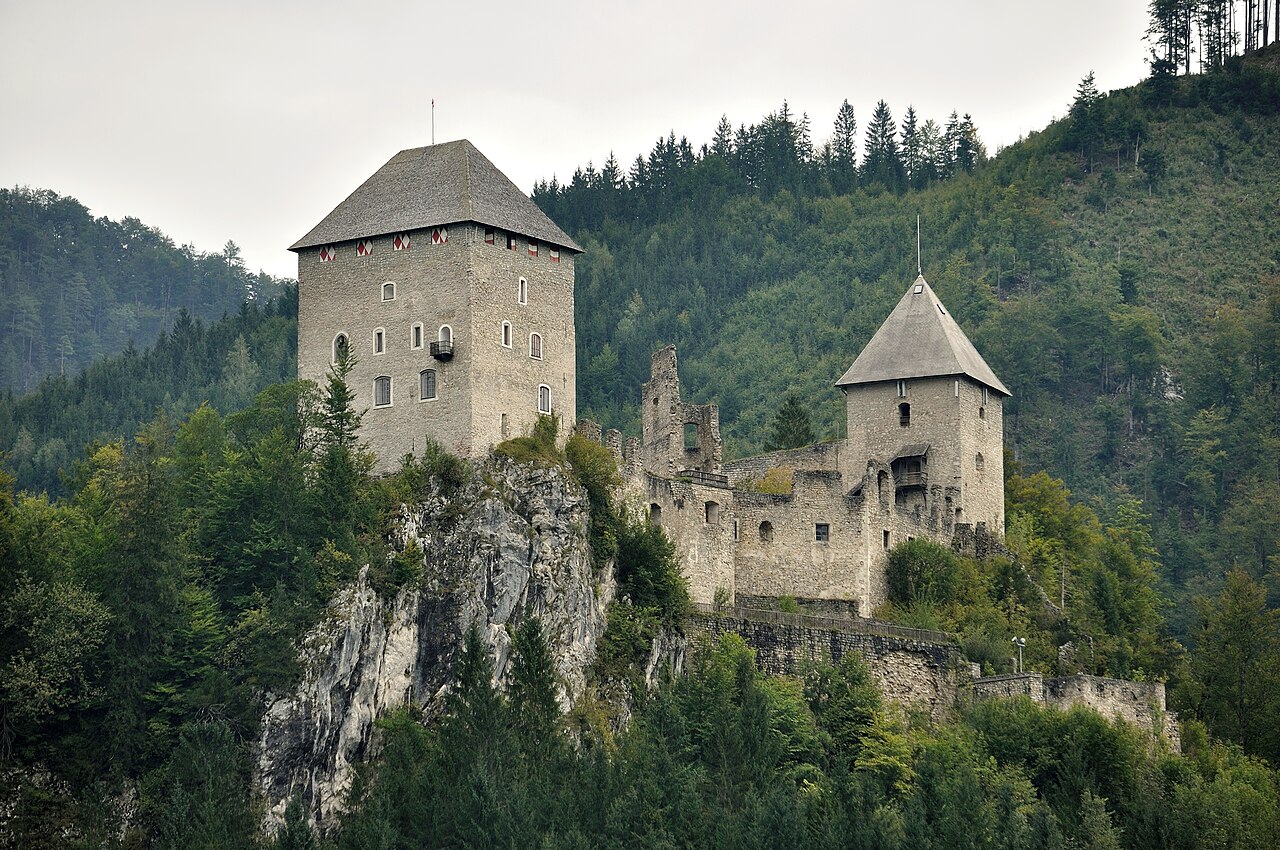
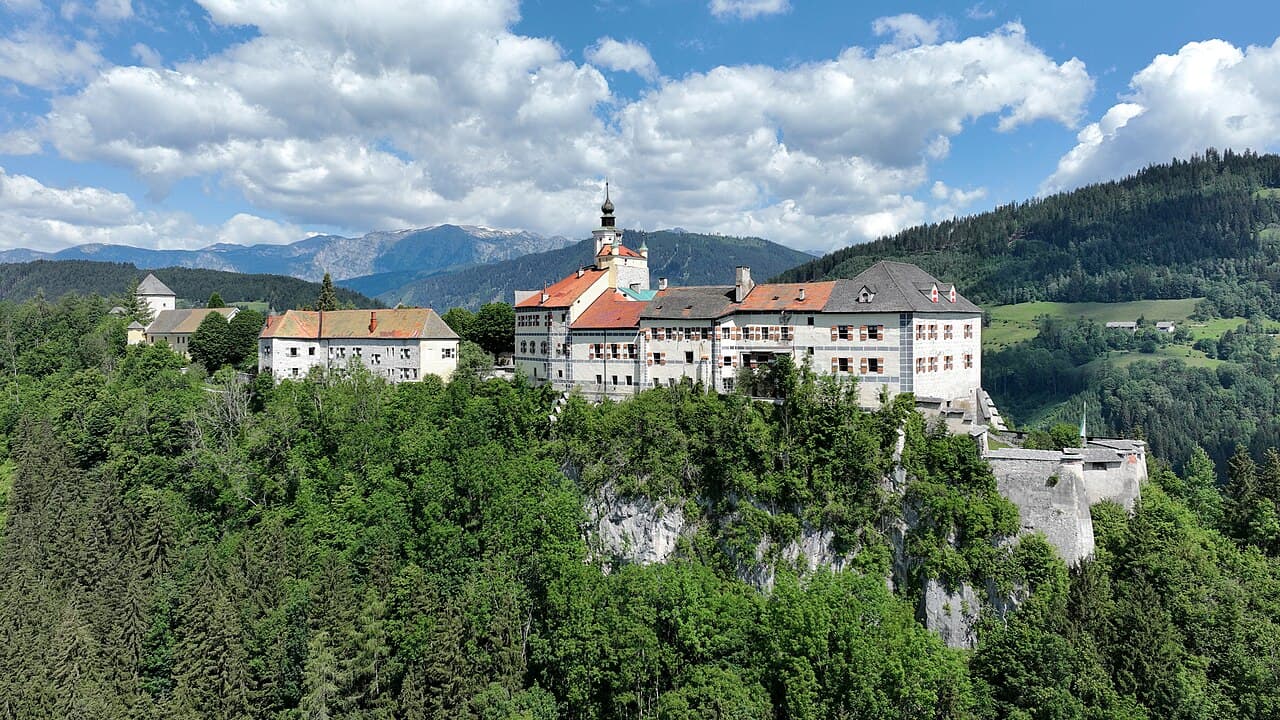
Strechau Castle stands as a remarkable example of a hill castle in Austria, embodying a rich history that spans from the High Middle Ages through the Renaissance and Baroque periods. Located in the municipality of Lassing bei Selzthal, this fortress evolved from a simple medieval tower into a complex residence reflecting the shifting political, religious, and cultural currents of the region.
The castle’s origins trace back to the late 11th century, when a solitary tower was erected atop the Burgberg hill, serving as a strategic lookout and defensive stronghold for local nobility. This initial structure laid the foundation for centuries of architectural development and adaptation. By the early 12th century, the castle was under the stewardship of the von Strechau family, also known as the von Winklern or von Ennstal, who acted as burgraves, overseeing the castle’s administration and defense.
Medieval origins and feudal transitions
In the early 13th century, ownership of Strechau Castle transferred to the brothers Rudolf and Konrad von Trenstein, who held it as a fief from the powerful Archbishop of Salzburg. This arrangement exemplifies the medieval feudal system, where castles were granted in exchange for loyalty and military service. The castle’s strategic position allowed its owners to control the surrounding landscape and maintain regional influence.
The year 1282 marked another significant shift when Duke Albrecht I assumed control of the castle, entrusting its administration to the Abbot of Admont. This transition from secular to ecclesiastical management reflected the intertwined nature of political and religious authority during the Middle Ages. Over the next century and a half, Strechau Castle experienced multiple changes in ownership, mirroring the turbulent political landscape of the region.
Renaissance transformation and religious shifts
The early 16th century brought profound changes to Strechau Castle under the ownership of Hanns Hofmann von Grünbühel, who acquired it in 1528. Hofmann’s tenure coincided with the rise of Protestantism, and he transformed the castle into a hub of Protestant influence by appointing preachers from Nuremberg and commissioning significant architectural renovations. These included the construction of a Renaissance-style arcade courtyard and the addition of mannerist ceiling paintings in the Protestant chapel, reflecting the era’s artistic and religious innovations.
However, the Counter-Reformation led to the castle’s reacquisition by the Catholic Admont Abbey under Abbot Urban Weber (Textor). Between 1629 and 1892, the abbey undertook extensive expansions and modifications, adding functional buildings such as a large granary and stables, as well as representative spaces including a Baroque grand hall and a Catholic chapel dating to around 1650. These changes underscored the castle’s evolving role as both a religious center and an agricultural estate.
Architectural features and artistic heritage
Defensive structures and courtyard layout
Strechau Castle is arranged around a central courtyard that showcases a blend of medieval fortifications and Renaissance architectural elements. The main entrance is set beneath a gate integrated into a former bastion, a projecting defensive structure equipped with three oval cannon openings, illustrating the adaptation of the castle to early modern artillery technology. Above the gate, a projecting oriel served as an enclosed lookout, enhancing defensive capabilities.
The castle’s roof is covered with traditional wooden shingles and is uniquely adorned with three weather vanes, including one depicting a witch flying on a broomstick, a distinctive feature adding character to the castle’s silhouette.
Renaissance arcades and interior decoration
Along the courtyard’s east and west sides, three-story arcades form elegant galleries supported by columns and decorated with ornamental details, exemplifying Renaissance ideals of proportion and decoration. These galleries reflect the castle’s transition from a purely military fortress to a residence emphasizing aesthetic refinement.
Inside, several rooms retain significant historical decorations. The “Kaiserzimmer” (Emperor’s room) features a Baroque door dated 1637, symbolizing the status of its occupants. The former Protestant prayer room contains ceiling paintings from 1579 crafted under the guidance of Lutheran scholar David Chyträus, blending theological themes with late Renaissance artistry.
On the second floor of the east wing, a grand hall boasts a richly decorated ceiling from 1652, combining stucco work with oil paintings illustrating scenes from Ovid’s Metamorphoses alongside a Baroque depiction of the New Testament wedding feast parable (Matthew 22:1–14), merging classical mythology with Christian symbolism.
Baroque chapel and religious art
The castle’s small Marian chapel in the south wing features a four-bay cross-ribbed vault, a hallmark of Gothic structural design adapted during the Baroque period. Its interior furnishings include a richly decorated altar attributed to sculptor Georg Remele from Admont Abbey, installed in 1637. The altar centerpiece is a Madonna and Child statue, flanked by figures of Saint Barbara and Saint Catherine, with an image of the Archangel Michael carved into the broken pediment above. This iconographic program reflects the castle’s Catholic identity following the Counter-Reformation.
Strehau castle in modern times
In the 19th century, the castle was modified by Anton Stary, an administrator for Admont Abbey, to serve as a personal and representative residence for Archduke Johann. It was here that Archduke Johann met his future wife, Anna Plochl, and planned their wedding celebration, though it was ultimately forbidden by Emperor Franz I.
Following the revolutionary upheavals of 1848, the castle’s official administrative function ceased, leading to decades of neglect. In 1892, industrialist Julius Hofmeier acquired and restored the property, establishing an estate. During the 20th century, Strechau Castle served various purposes, including a National Political Academy (NAPOLA) school from 1938 to 1945 and later as a convalescent home for children.
Since 1978, the castle has been a protected historic monument. Its current owner, Harald Boesch, has overseen further renovations. Since 2006, part of the castle hosts a vintage car exhibition, demonstrating its ongoing adaptive reuse and cultural significance.
Cultural and heritage significance
Strechau Castle’s architectural evolution from a medieval defensive tower to a multifaceted residence with Renaissance and Baroque elements illustrates the dynamic history of Austrian castles. Its preserved and restored features offer valuable insights into the region’s feudal history, religious transformations, and artistic developments. The castle remains a significant cultural monument, attracting visitors interested in medieval fortifications, Renaissance architecture, and Baroque art.
The castle’s unique features, such as the witch weather vane and the blend of military and residential architecture, enhance its appeal as a heritage site. Its continued use for exhibitions and cultural events ensures that Strechau Castle remains a vibrant part of Austria’s historical landscape.
Frequently asked questions (FAQ)
- How do I get to Strechau Castle?
- Strechau Castle is located near the town of Spital am Pyhrn in Austria. You can reach it by car via the A9 motorway, with ample parking available nearby. Public transportation options are also available, including trains to Spital am Pyhrn followed by a short taxi ride.
- What is the historical significance of Strechau Castle?
- Strechau Castle dates back to the 12th century and has played a crucial role in the region's history, serving as a defensive stronghold. It is known for its well-preserved architecture and has witnessed various historical events, including the struggles between noble families. The castle provides a glimpse into medieval life and the feudal system of the time.
- When was Strechau Castle built?
- Construction of Strechau Castle began in the late 12th century, making it one of the oldest castles in the region. Its original structure has undergone several renovations and expansions over the centuries, reflecting various architectural styles. Today, it stands as a testament to medieval engineering and design.
- Can I visit Strechau Castle year-round?
- Yes, Strechau Castle is open to visitors year-round, although hours may vary by season. It is advisable to check the official website for the most current opening hours and any scheduled maintenance closures. Guided tours are available to provide insight into the castle's history and architecture.
- Why is Strechau Castle a popular tourist attraction?
- Strechau Castle attracts visitors for its stunning panoramic views of the surrounding landscape and its rich historical significance. The well-preserved architecture offers a unique look into medieval life, making it a favorite among history enthusiasts and photographers alike. Additionally, the castle hosts events and exhibitions throughout the year, enhancing its appeal.
- Is it possible to explore the castle interior?
- Yes, visitors can explore the interior of Strechau Castle through guided tours. These tours typically include access to various rooms, historical exhibits, and insights into the castle's past. It's a great way to learn more about the castle's architecture and the stories of those who once lived there.
- What are the ticket prices for visiting Strechau Castle?
- Ticket prices for Strechau Castle are generally affordable, with discounts available for students and seniors. Children under a certain age may enter for free or at a reduced rate. Check the official website for the latest pricing information and any special offers.
- What is the best time to visit Strechau Castle?
- The best time to visit Strechau Castle is during the spring and early autumn when the weather is mild, and the surrounding scenery is at its most beautiful. Summer can also be a great time, but it may attract larger crowds. Visiting during weekdays can help avoid busier periods.
- Are there any nearby attractions to visit?
- Yes, there are several attractions near Strechau Castle, including the picturesque town of Spital am Pyhrn and beautiful hiking trails in the surrounding mountains. The region is known for its natural beauty, making it perfect for outdoor activities. Additionally, local museums and cultural sites provide further exploration opportunities.
Photo gallery

Information
Website
Visit websiteSources & official resources
Verify the information above using these authoritative references.
Loading map...
Visitor reviews
No reviews yet. Been here? Write the first review and help other travelers!
Write the first reviewVisited this castle? Share your experience
Your review helps other travelers and adds first-hand knowledge to our encyclopedia.