Burgruine Gallenstein
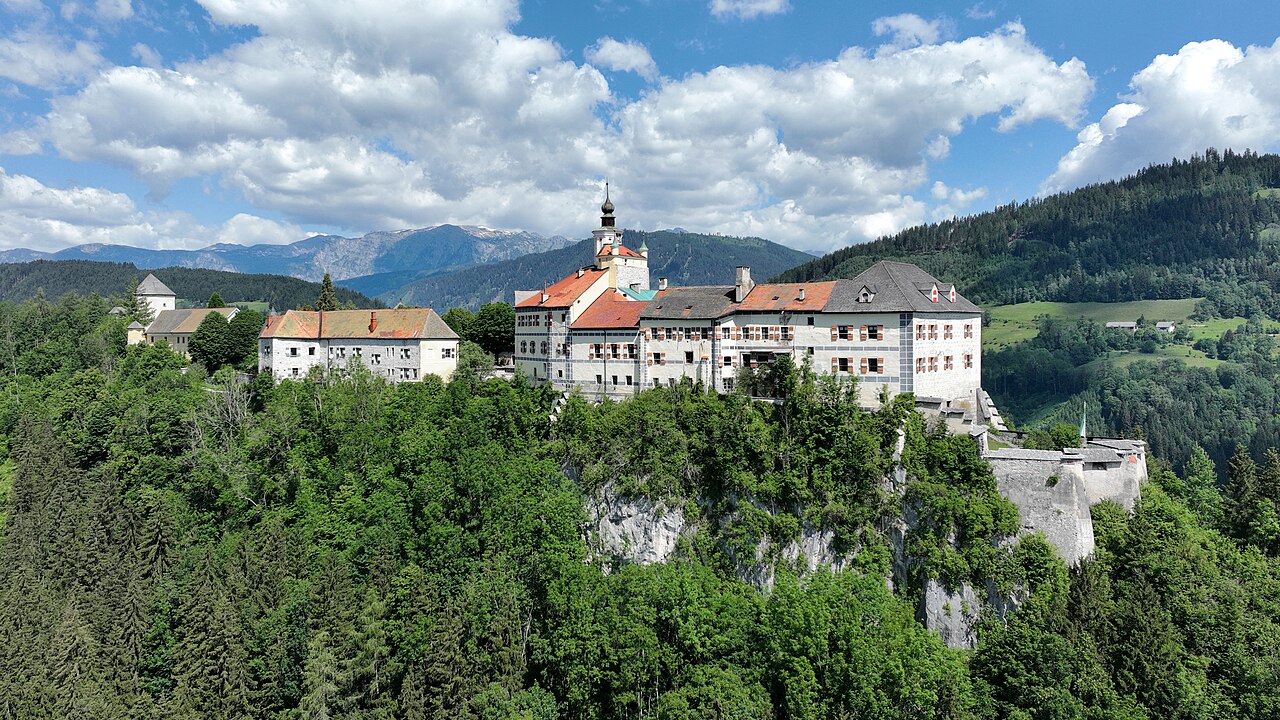
Burgruine Gallenstein stands as a remarkable example of a 13th-century medieval hill castle located near the village of St. Gallen in the Austrian region of Styria. Perched atop a rocky summit at an elevation of 631 meters, this fortress was strategically constructed to serve both defensive and administrative purposes during the high medieval period. Its commanding position and robust fortifications reflect the military architecture and feudal power dynamics of the time, making it a significant heritage site in Austria.
The castle's origins trace back to 1278, when King Rudolf I of Habsburg granted the Abbot Heinrich II of Admont the right to erect a fortified stronghold. This initiative was driven by the need to protect the Benedictine monastic community and their valuable possessions amid regional conflicts and noble unrest. Construction was completed swiftly by 1285, establishing Gallenstein as a refuge and administrative center for the Benedictine Abbey of Admont.
Historical significance and role
Throughout its history, Gallenstein Castle served multiple vital roles. It was primarily a secure sanctuary for the monks of Admont Abbey, providing shelter during turbulent periods such as the noble insurrections of the late 13th century and the widespread Peasants' War of 1525. Notably, the castle protected figures like Abbot Heinrich II in 1291 and Abbot Georg von Steynach in 1525, underscoring its importance as a religious and military refuge.
Beyond its defensive function, the castle was the seat of regional administration and justice. The appointed burgrave managed the abbey’s extensive estates, which covered nearly one-third of the modern-day Liezen district. This administrative role was supported by the castle’s facilities, including courtrooms and living quarters for officials.
Architectural features and layout
Defensive structures
The castle complex is characterized by its medieval fortifications adapted to the rugged topography of the hill. Access was historically secured by a series of fortified gates and a moat spanned by a drawbridge, creating a narrow, defensible approach from the south. The outer defenses included the imposing Grey Tower, which formed part of the first line of protection.
Towers and walls
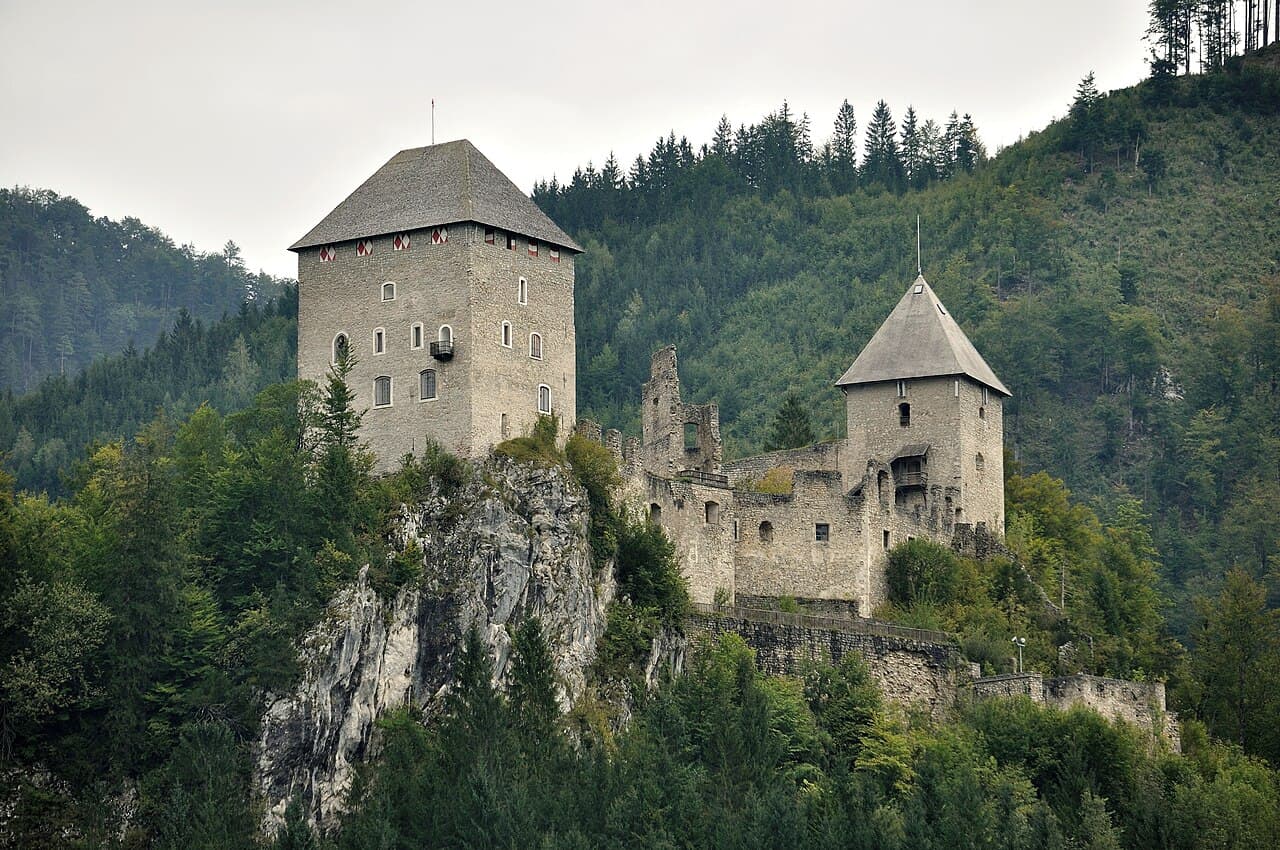
Three prominent Gothic towers with square bases dominate the site: the Red Tower, Grey Tower, and White Tower. The White Tower served as a residential tower, featuring vaulted ceilings on the ground floor supported by a central wall and wooden beam ceilings above. The Red Tower is constructed mainly of rubble stone with tuff block reinforcements at the corners and is connected to the residential quarters by a crenellated defensive wall equipped with battlements and arrow slits.
The castle’s ring wall encircles the complex, providing substantial protection with covered walkways that allowed defenders to move safely while repelling attackers. During the early 17th century, under the guidance of Italian architects Benedetto and Bartolomeo della Torre, the walls were heightened and thickened, reflecting advancements in military architecture to counter firearms and artillery.
Courtyard and internal buildings
The inner courtyard contains vaulted casemates and elegant arcades added in the early 1600s, blending defensive utility with architectural refinement. A cistern within the courtyard collected rainwater, although this area is currently not accessible to visitors. The main residential building on the western side of the courtyard is a three-story structure that housed the castle’s administrative and living spaces.
Two chapels are notable features within the castle grounds: one near the second gate and another within the White Tower. These chapels highlight the integration of spiritual life within the fortress, serving the religious needs of the monastic community and castle inhabitants.
Historical events and preservation
Despite its strategic importance, Burgruine Gallenstein was never successfully besieged or captured, even during periods of conflict such as Ottoman incursions and local peasant uprisings. The castle also functioned as a prison, notably detaining Abbot Antonius Gratiadei until his death in 1491.
In 1727, a devastating fire caused by lightning severely damaged the castle, leaving large portions in ruins. Although some administrative functions continued, the castle’s challenging location and limited water supply led to gradual abandonment. In the 19th century, the property passed into private hands, and dismantling of metal elements like the copper roof accelerated its decline. Local residents repurposed stones and timber from the ruins for their own use.
Preservation efforts began in 1968 under the Austrian Castle Association, focusing on stabilizing the two large towers and several ancillary buildings. Today, the castle remains a partially preserved ruin, with significant portions stabilized to prevent further decay.
Modern use and cultural importance
Today, Burgruine Gallenstein serves as a vibrant cultural venue, hosting numerous concerts, exhibitions, and the annual Festival St. Gallen. Its dramatic hilltop setting and medieval architecture provide an atmospheric backdrop for these events, attracting visitors interested in history, architecture, and the arts.
The castle’s historical pathways, including the original Old Castle Way, remain a popular route for visitors, offering insight into the fortress’s defensive design and medieval access strategies. Modern infrastructure improvements, such as a tunnel and road, have facilitated easier access while preserving the site's historical character.
Architectural legacy and significance
Burgruine Gallenstein exemplifies the evolution of medieval hill castles in the Alpine region, combining Gothic military architecture with later Renaissance-era enhancements. Its well-documented history, architectural features, and role in regional governance make it an invaluable resource for understanding feudal and ecclesiastical power structures in medieval Austria.
The castle’s integration of defensive elements such as moats, drawbridges, bastions, battlements, and vaulted casemates demonstrates advanced fortification techniques adapted to the challenges of the terrain and the changing nature of warfare. The involvement of Italian architects in the 17th century reflects the cross-cultural influences in castle design during the period.
As a partially preserved ruin, Burgruine Gallenstein offers a tangible connection to Austria’s medieval past and continues to inspire interest among historians, architects, and visitors alike.
Frequently asked questions (FAQ)
- How do I get to Burgruine Gallenstein?
- Burgruine Gallenstein is located near the village of Sankt Galle in Styria, Austria. Visitors can access the castle via a modern road and tunnel that facilitate easier approach, although the original medieval paths like the Old Castle Way are still visible and popular for hiking.
- What is the historical significance of Burgruine Gallenstein?
- Burgruine Gallenstein was a strategic hill castle built in the 13th century to protect the Benedictine monks of Admont Abbey and serve as an administrative center. It played a key role in regional defense and governance, surviving multiple conflicts without being captured.
- Can I visit the interior of the White Tower?
- Yes, the White Tower has been thoroughly restored and its interiors are accessible to visitors. It offers a unique glimpse into medieval residential architecture with vaulted ceilings and original design elements preserved.
- When is the best time to visit Burgruine Gallenstein?
- The castle is best visited during the warmer months when cultural events such as concerts and the Festival St. Gallen take place. Spring through early autumn offers pleasant weather for exploring the hilltop ruins and surrounding landscape.
- Are there any guided tours available at Burgruine Gallenstein?
- Guided tours are occasionally offered, especially during festival events and special exhibitions. Visitors should check the official schedule or contact the Austrian Castle Association for current tour availability and times.
Photo gallery

Information
Sources & official resources
Verify the information above using these authoritative references.
Loading map...
Visitor reviews
No reviews yet. Been here? Write the first review and help other travelers!
Write the first reviewVisited this castle? Share your experience
Your review helps other travelers and adds first-hand knowledge to our encyclopedia.