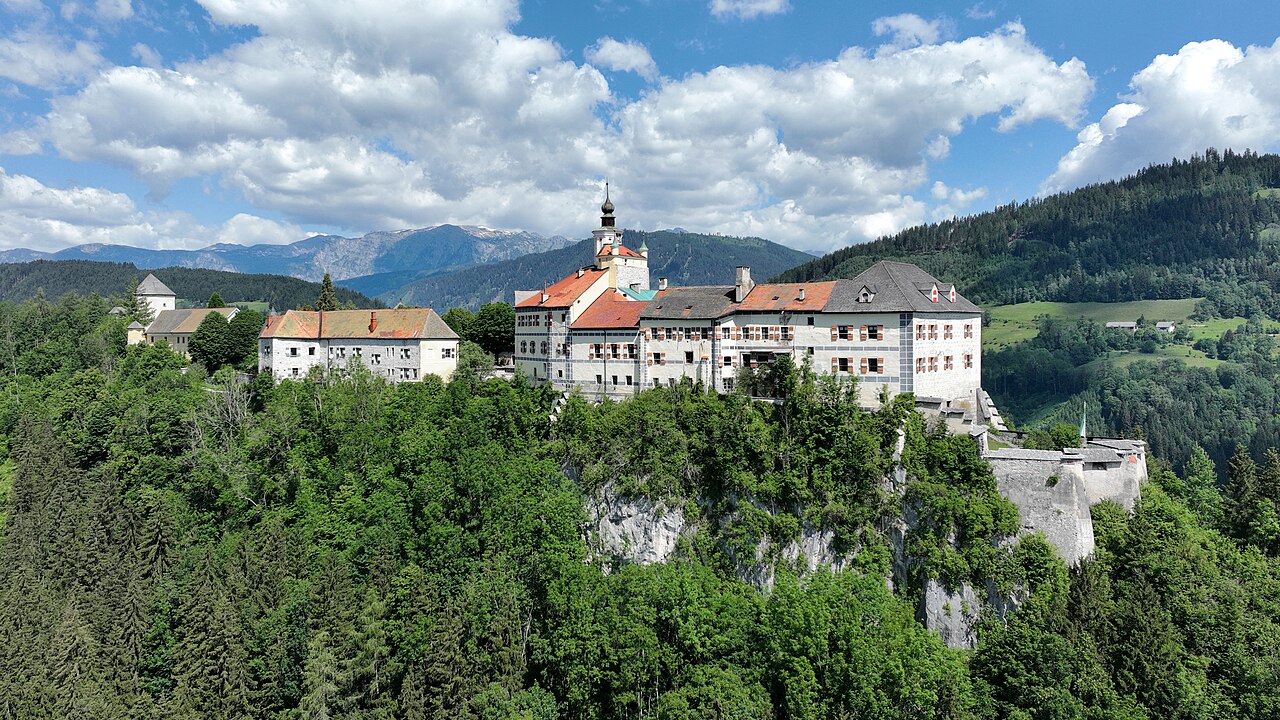
Schloss Pichlarn
Schloss Pichlarn stands as a remarkable example of a Renaissance hill castle nestled in the scenic Enns valley within the municipality of Aigen im Ennstal, Austria. With origins tracing back to the early medieval period, this castle has evolved through centuries of architectural and historical transformations, reflecting the shifting tides of noble ownership, religious significance, and modern adaptation.
The earliest documentary evidence of Schloss Pichlarn dates to around 1009, with a more definitive mention in 1074. Originally, it served as the ancestral seat of the noble family known as the Herren von Püchlern or Pühelarn. This lineage included notable figures such as Walter (documented 1139), Leo der Edle (mid-12th century), and Volkmar von Püchel (1191), who played influential roles in the local feudal hierarchy. The original noble line concluded with Leo von Puhele in 1360, marking the end of the family's direct association with the castle.
Medieval origins and noble lineage
The castle's early function was primarily as a fortified noble residence, strategically positioned to oversee the surrounding territory near Irdning. Its location on a hilltop provided natural defensive advantages, characteristic of hill castles of the period. The initial construction phases likely incorporated Romanesque architectural elements, though much of this early fabric has been subsumed by later renovations.
Following the extinction of the Herren von Püchlern, ownership transitioned to ecclesiastical authorities, most notably the Stift Admont monastery in the 12th century. This monastic administration lasted several centuries, during which the castle's role expanded to include use as a clerical retreat. This religious connection is underscored by the castle's association with Pope Pius II (Enea Silvio de’ Piccolomini), who is recorded to have visited the estate, highlighting its significance within the ecclesiastical landscape of the region.
Renaissance transformation and architectural features
The most visually defining features of Schloss Pichlarn date from the mid-16th century, specifically around 1555, when the castle was under the ownership of the Herren von Stainach. This period saw the addition of two prominent round towers, which remain key elements of the castle's silhouette today. These towers exemplify the defensive architectural style of the Renaissance era, combining robust masonry with aesthetic considerations.
The castle's overall architectural style is predominantly Renaissance, characterized by balanced proportions, symmetrical layouts, and the integration of both defensive and residential functions. The masonry work from this period reflects regional techniques and materials, contributing to the castle's enduring structural integrity and visual appeal.
Layout and setting
Schloss Pichlarn is situated above the town of Irdning but is officially located in the village of Gatschen within Aigen im Ennstal. The castle's elevated position offers commanding views of the surrounding Enns valley and the imposing Grimming massif. Its layout reveals a complex development history, with multiple building phases layered over the centuries.
The castle complex today includes not only the historic structures but also a modern golf course established during its conversion into a luxury hotel in the 1970s. This blend of heritage and contemporary leisure facilities exemplifies the adaptive reuse of historic castles in modern Austria.
Modern era and adaptive reuse
In the early 1970s, the castle entered a new chapter when acquired by Fritz Ries. He transformed Schloss Pichlarn into a luxury hotel, opening its doors to guests in 1972. The addition of a golf course on the castle grounds complemented this new function, attracting a clientele interested in both history and recreation.
Since then, Schloss Pichlarn has maintained its status as a prestigious hospitality venue, undergoing several renovations to enhance guest experience while preserving its historic character. In 2021, it became part of the Imlauer Hotels and Restaurants group, ensuring continued investment and professional management.
The castle has also hosted significant political gatherings, including meetings involving notable German figures, underscoring its ongoing importance as a site for high-profile events.
Historical documentation and preservation
Visual records such as 19th and 20th-century photographs and lithographs provide valuable insights into Schloss Pichlarn's architectural evolution and its setting within the Enns valley. Aerial views illustrate the castle's relationship to the surrounding landscape, including its proximity to the Grimming massif.
Despite adaptations for modern use, Schloss Pichlarn retains key historic elements, particularly its Renaissance origins and the distinctive round towers added in the 16th century. The preservation of these features ensures the castle remains an important cultural and architectural landmark in Austria.
Architectural significance
The castle exemplifies the evolution of a medieval noble residence into a Renaissance stronghold, combining defensive features with residential comfort. The round towers added in 1555 are particularly notable for their design and construction, reflecting advancements in military architecture of the period.
Schloss Pichlarn's location and design also illustrate the strategic importance of hill castles in Austria's feudal landscape, serving both as a symbol of noble power and a practical fortification.
Current status and visitor information
Today, Schloss Pichlarn operates as a five-star hotel, offering guests the unique experience of staying within a historic castle setting while enjoying modern luxury amenities. The addition of the golf course enhances its appeal as a destination for leisure and events.
The castle's blend of historic architecture and contemporary function makes it a notable example of successful adaptive reuse in Austria, preserving cultural heritage while contributing to the local economy and tourism.
Frequently asked questions (FAQ)
- When was Schloss Pichlarn originally built?
- Schloss Pichlarn's origins date back to the early medieval period, with the earliest records around 1009 and a definite mention in 1074.
- What architectural style characterizes Schloss Pichlarn?
- The castle primarily features Renaissance architecture, with significant additions like the two round towers constructed in 1555.
- Can visitors tour Schloss Pichlarn?
- Schloss Pichlarn currently operates as a luxury hotel, so general public tours are limited. Access is mainly available to hotel guests and event attendees.
- What is the significance of the round towers at Schloss Pichlarn?
- The two round towers added in 1555 are key defensive features that define the castle's Renaissance silhouette and reflect mid-16th-century military architecture.
- Who owns Schloss Pichlarn today?
- Since 2021, Schloss Pichlarn has been owned and managed by the Imlauer Hotels and Restaurants group, maintaining its status as a luxury hotel.
Information
Opening hours
Hotel guests only; events vary
Ticket prices
Varies by event and accommodation
Current owner
Imlauer Hotels and Restaurants
Website
Visit websiteSources & official resources
Verify the information above using these authoritative references.
Loading map...
Visitor reviews
No reviews yet. Been here? Write the first review and help other travelers!
Write the first reviewVisited this castle? Share your experience
Your review helps other travelers and adds first-hand knowledge to our encyclopedia.