Strathaven Castle
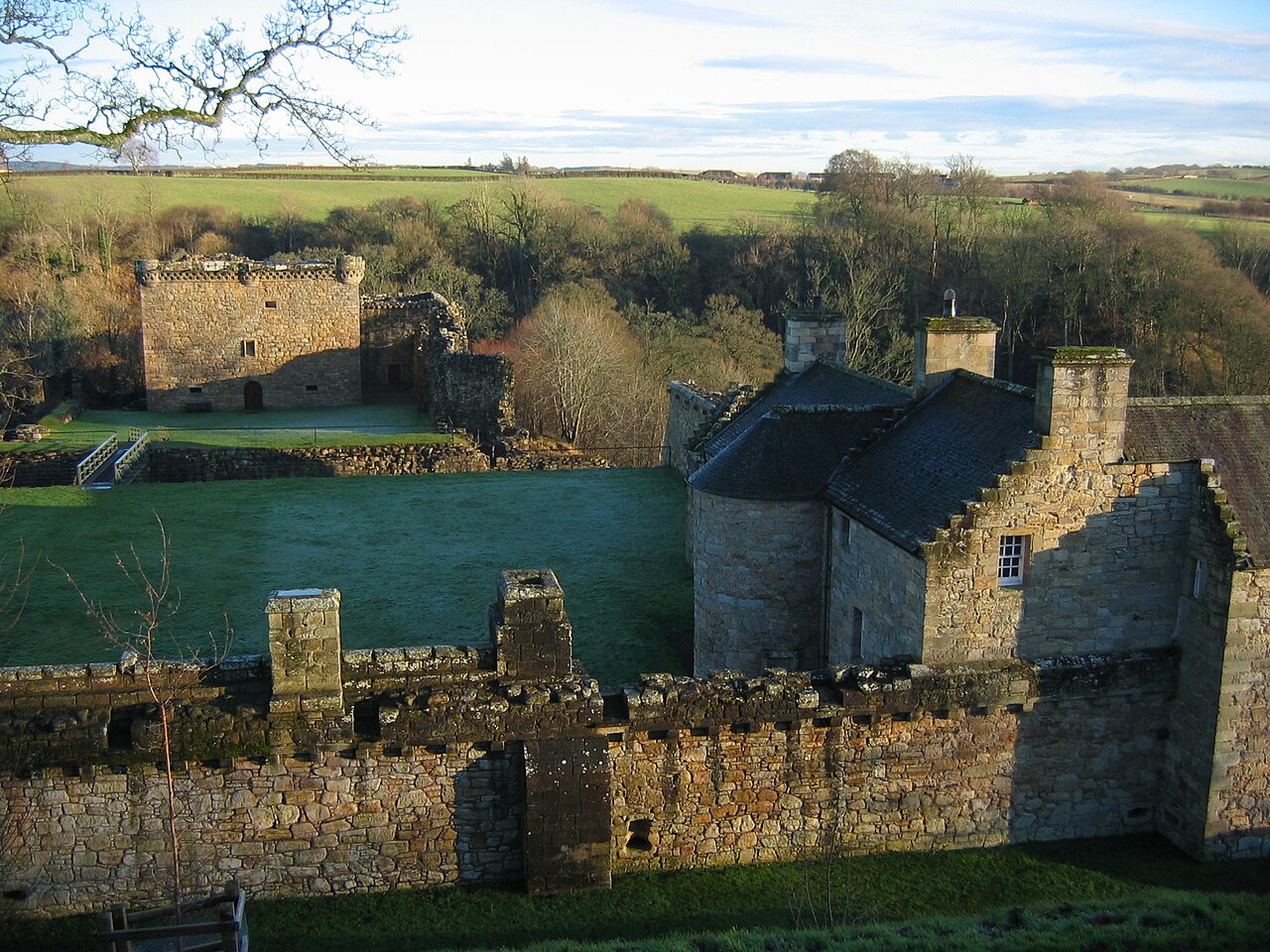
Strathaven Castle is a significant example of a late medieval hill castle situated in the town of Strathaven, Lanarkshire, Scotland. Established around 1350, the castle occupies a strategic position on a rocky, partly artificial mound overlooking the bend of the Powmillon Burn. Its location provided natural defense with steep banks on three sides, augmented by a barmkin wall enclosing the summit, remnants of which remain visible today.
The origins and early history
The castle's initial construction is attributed to the Baird family, who established the stronghold in the mid-14th century. The Bairds' tenure was followed by ownership under the Sinclair family, and subsequently the powerful Earls of Douglas. This lineage reflects the castle's importance within the feudal landscape of medieval Scotland.
In 1455, during the reign of James II of Scotland, the castle suffered significant damage when the king suppressed the Earls of Douglas. The castle was sacked and deliberately slighted, a common practice intended to render fortifications unusable after a rebellion. As a result, little of the original 14th-century structure survived this period of conflict.
Reconstruction and expansion under the Stewarts and Hamiltons
Following the downfall of the Douglases, the castle and lands were granted in 1457 to Sir Andrew Stewart, an illegitimate grandson of Murdoch Stewart, Duke of Albany. Stewart, who later became Lord Avondale, undertook substantial rebuilding or possibly constructed a new castle on the site, marking the beginning of the castle's late medieval phase. This reconstruction likely included the three-storey rectangular block and the distinctive round tower.
In 1534, ownership passed to Sir James Hamilton of Finnart, a notable architect and nobleman. Hamilton expanded the castle's buildings, incorporating advancements in military architecture such as wide gunloops in the round tower, reflecting the increasing use of firearms in defense. The tower's improbably low entrance is a unique architectural feature that has intrigued historians and archaeologists.
Historical records from 1559 mention Master Patrick Buchanan teaching the children of Regent Arran at the castle, indicating its role not only as a fortress but also as a residence and center of education for the Scottish nobility during the 16th century.
Later ownership and decline
The castle changed hands again in 1611 when it was sold to James, Marquis of Hamilton. It remained a noble residence until the early 18th century. The last known occupant was Anne, Duchess of Hamilton (1632–1716), who primarily resided at Hamilton Palace. By 1717, Strathaven Castle was abandoned, leading to its gradual decline and ruin.
Architectural features and remains
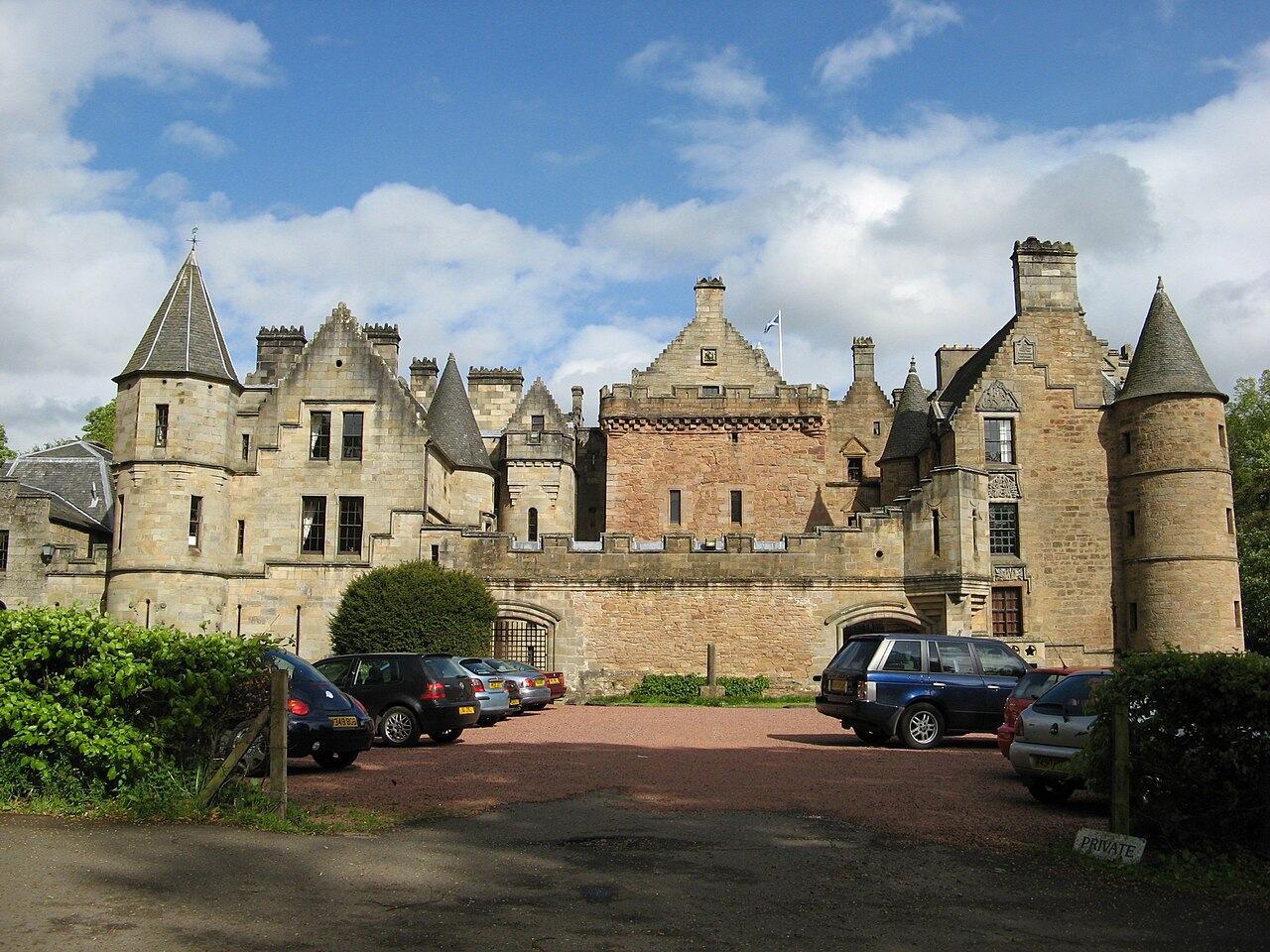
The castle's surviving structures include the north wall and the four-storey round tower at the northwest corner, which remain almost complete. Other walls survive only in fragments. The main building was a three-storey rectangular block approximately 11 by 21 meters, with a small projecting wing at the southeast.
Internally, the remains of a collapsed vaulted basement are visible, though modern concrete infill has obscured much of the original detail. However, traces of 15th-century corbelling can still be seen, showcasing the craftsmanship of the medieval masons.
The round tower features several wide gunloops, indicative of adaptations to gunpowder weaponry during the 16th century. The tower's entrance is notably low, an architectural curiosity; studies suggest the doorway was originally wider but lacked a traditional lower threshold due to a continuous stone plinth beneath it.
Defensive layout
Strathaven Castle was naturally defended by the steep banks of the Powmillon Burn on the east, south, and west sides. The barmkin wall enclosed the castle's summit, providing protection for ancillary buildings and livestock during sieges. The site’s elevated position and natural defenses made it a formidable stronghold in its time.
Folklore and archaeological notes
Local tradition recounts the discovery of a human skeleton during wall collapses or dismantling, linked to a legend of a woman immured alive within the castle. Additionally, folklore speaks of underground "ley tunnels" connecting the castle to nearby landmarks such as Sweetie’s Brae and Mill Brae. However, archaeological investigations during roadworks found no evidence supporting the existence of such tunnels.
Current status and preservation efforts
Today, Strathaven Castle stands as a protected historic monument, recognized for its architectural and historical significance. The site has been closed to the public for several years, but a local organization formed in 2023 aims to promote restoration and reopen access to visitors. These efforts seek to preserve the castle’s remains and enhance public understanding of its role in Scotland’s medieval history.
Frequently asked questions (FAQ)
- What is the historical significance of Strathaven Castle?
- Strathaven Castle is a medieval fortress that dates back to the 13th century, showcasing the rich history of Scotland during the feudal era. It played a crucial role in local power struggles and has connections to notable Scottish families, making it an important site for understanding the region's heritage.
- When was Strathaven Castle built?
- Strathaven Castle was originally constructed in the late 13th century, with significant modifications made over the following centuries. Its architecture reflects the changing styles and defensive needs of the time, making it a fascinating study for history enthusiasts.
- Is it possible to visit Strathaven Castle?
- Yes, Strathaven Castle is open to the public, allowing visitors to explore its historical grounds and learn about its past. Guided tours are available, providing insights into the castle's architecture and significance.
- What are the opening hours for Strathaven Castle?
- Strathaven Castle is typically open to visitors from 10 AM to 5 PM, Tuesday through Sunday. It is recommended to check the official website for any seasonal changes or special events that may affect opening times.
- Can I access Strathaven Castle with a mobility aid?
- The site has some accessibility features; however, due to its historic nature, certain areas may be challenging to navigate with mobility aids. It's best to contact the castle's visitor services ahead of your visit to inquire about specific accessibility options.
- What is the best time to visit Strathaven Castle?
- The best time to visit Strathaven Castle is during the spring and early autumn when the weather is milder and the surrounding landscape is in bloom. This period also tends to have fewer crowds, allowing for a more enjoyable experience.
- Are there any nearby attractions to visit along with Strathaven Castle?
- Yes, visitors to Strathaven Castle can also explore the charming town of Strathaven, which offers various shops, parks, and local eateries. Additionally, the nearby Avondale Park is a great spot for a leisurely walk after touring the castle.
- What are the ticket prices for visiting Strathaven Castle?
- Ticket prices for Strathaven Castle are generally affordable, with discounts available for children, seniors, and families. Check the castle's official website for the most current pricing and any special promotions that may be offered.
Information
Website
Visit websiteSources & official resources
Verify the information above using these authoritative references.
Loading map...
Visitor reviews
No reviews yet. Been here? Write the first review and help other travelers!
Write the first reviewVisited this castle? Share your experience
Your review helps other travelers and adds first-hand knowledge to our encyclopedia.