Cadzow Castle
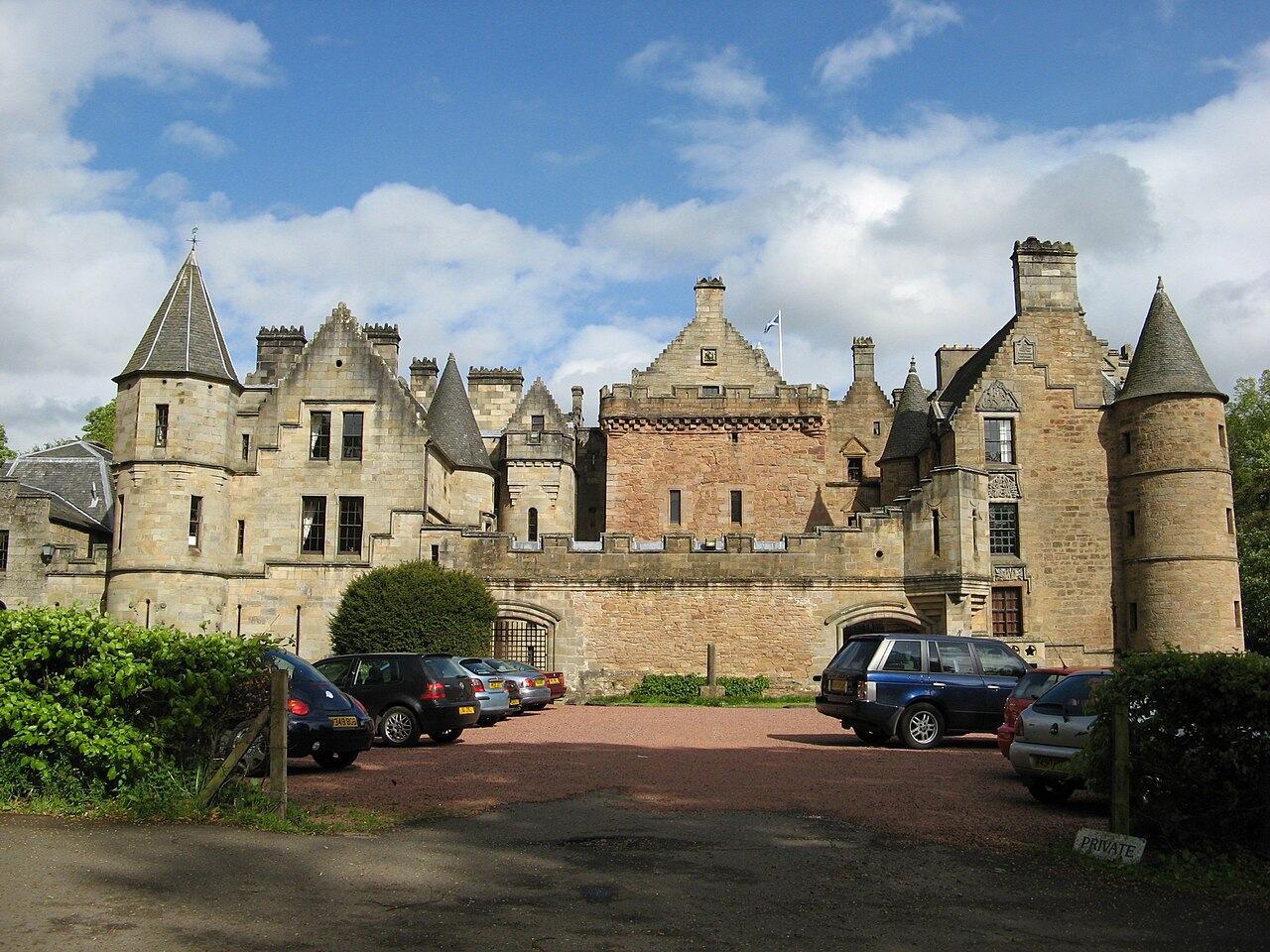
Cadzow Castle stands as a significant historic site within Chatelherault Country Park, near the town of Hamilton in Scotland. Originally constructed during the 12th century by the medieval Scottish kingdom, it served primarily as a royal hunting lodge rather than a defensive fortress. This early function highlights the castle's role in leisure and royal activity within the extensive woodland parklands that surrounded the estate.
The castle gained prominence under King David I of Scotland (reigned 1124–1153), who issued royal charters from Cadzow as early as 1139. The estate was favored by several Scottish monarchs, including Alexander II, Alexander III, and Robert the Bruce, who used it as a hunting retreat within the vast woodland. In 1222, the estate was divided and passed into the hands of the Comyn family. Following their political downfall due to support for John Balliol, the property was awarded by Robert the Bruce to Walter FitzGilbert de Hambeldon in the early 14th century, laying the foundation for the later Dukes of Hamilton.
16th-century rebuilding and architectural features
The current ruins predominantly reflect a rebuilding phase around 1530 initiated by Sir James Hamilton of Finnart. This phase replaced earlier medieval structures and is part of a broader pattern of castle building by Hamilton of Finnart, linking Cadzow Castle architecturally and historically with nearby Craignethan Castle. The castle's design from this period showcases typical 16th-century Scottish masonry techniques and the use of local stone, consistent with regional construction practices.
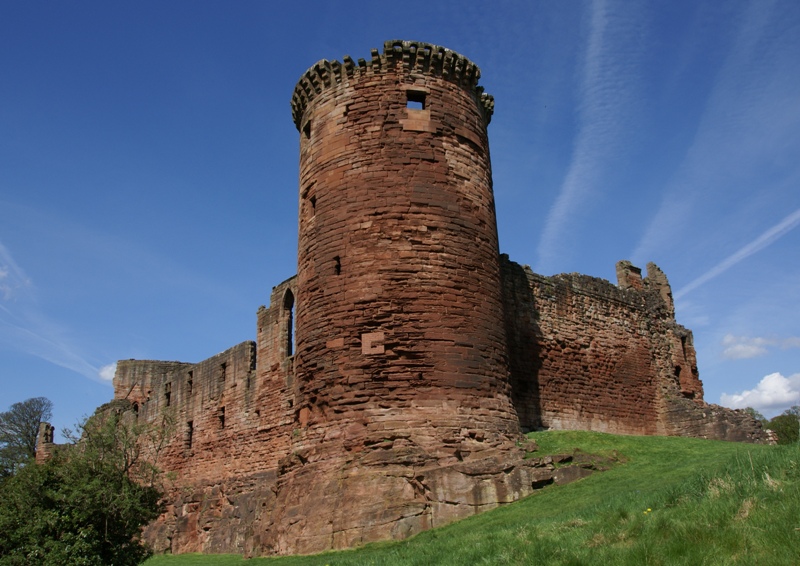
The castle was strategically positioned atop a hill overlooking the Avon Water gorge, providing commanding views and natural defensive advantages. The surviving ruins reveal the fragmented outline of the castle’s form, including remnants of its battlements, walls, and possibly gatehouse structures. However, detailed decorative elements or inscriptions have not been recorded, and the ruins today are fragile, supported by scaffolding to prevent further collapse.
Historical significance and notable events
Cadzow Castle played a role in several key historical events during the turbulent 16th century. Notably, James Hamilton, 3rd Earl of Arran, was imprisoned here in 1566. The castle also served as a refuge for Mary, Queen of Scots, following her dramatic escape from Lochleven Castle in 1568.
In the later 16th century, the castle suffered destruction ordered by the Earl of Mar, acting as regent for the young James VI of Scotland. This attack was a direct consequence of the Hamilton family's allegiance to Mary, Queen of Scots, during the complex political conflicts of the period.
By the 18th century, portions of the castle ruins were partially reconstructed as a decorative folly within the park surrounding Hamilton Palace, reflecting a shift in the castle’s role from functional stronghold to landscape feature.
Archaeological investigations and site context
Excavations conducted between 2000 and 2003 have refined the understanding of Cadzow Castle's origins. These investigations found no evidence of early medieval fortifications or significant settlement directly at the current castle site, challenging earlier assumptions about the extent of early occupation. The absence of artefacts such as tools, pottery, or inscriptions linked directly to the castle remains limits detailed knowledge about daily life or earlier building phases.
Close to the castle lies the Hamilton Motte, a medieval earthwork fortification located near the modern M74 motorway. This motte represents an earlier form of defense on the estate, consisting of an artificial mound that would have been topped by a wooden or stone structure during the medieval period.
Preservation and public access
Today, the ruins of Cadzow Castle are fragile and extensively supported by scaffolding to prevent further deterioration. Public access to the ruins themselves is restricted for safety reasons. However, visitors can explore nearby footpaths and view the castle remains from vantage points such as the historic Duke’s Bridge, which offers scenic views of the site and the surrounding landscape.
The castle is protected as a Scheduled Ancient Monument under the care of Historic Environment Scotland, ensuring its preservation within the national heritage framework. The site remains a valuable example of 16th-century Scottish castle architecture and a witness to significant historical events tied to the Hamilton family and Scottish monarchy.
Frequently asked questions (FAQ)
- What is the best way to visit Cadzow Castle?
- Cadzow Castle ruins are located within Chatelherault Country Park near Hamilton. Visitors can explore the park's footpaths and view the castle from designated vantage points such as Duke's Bridge. Direct access to the ruins is restricted for safety.
- When was Cadzow Castle originally built and by whom?
- Cadzow Castle was originally constructed in the 12th century by the medieval Scottish kingdom as a royal hunting lodge, with significant rebuilding around 1530 by Sir James Hamilton of Finnart.
- What historical figures are associated with Cadzow Castle?
- Notable figures include King David I, Robert the Bruce, Sir James Hamilton of Finnart, James Hamilton, 3rd Earl of Arran, and Mary, Queen of Scots, who sought refuge here after escaping Lochleven Castle.
- Is Cadzow Castle accessible to the public?
- While the castle ruins themselves are not accessible due to safety concerns, visitors can enjoy the surrounding parkland and view the ruins from nearby paths and bridges.
- Why was Cadzow Castle destroyed in the 16th century?
- The castle was attacked and partially destroyed by forces under the Earl of Mar because of the Hamilton family's support for Mary, Queen of Scots, during political conflicts in the late 16th century.
Information
Sources & official resources
Verify the information above using these authoritative references.
Loading map...
Visitor reviews
No reviews yet. Been here? Write the first review and help other travelers!
Write the first reviewVisited this castle? Share your experience
Your review helps other travelers and adds first-hand knowledge to our encyclopedia.