Dalzell House
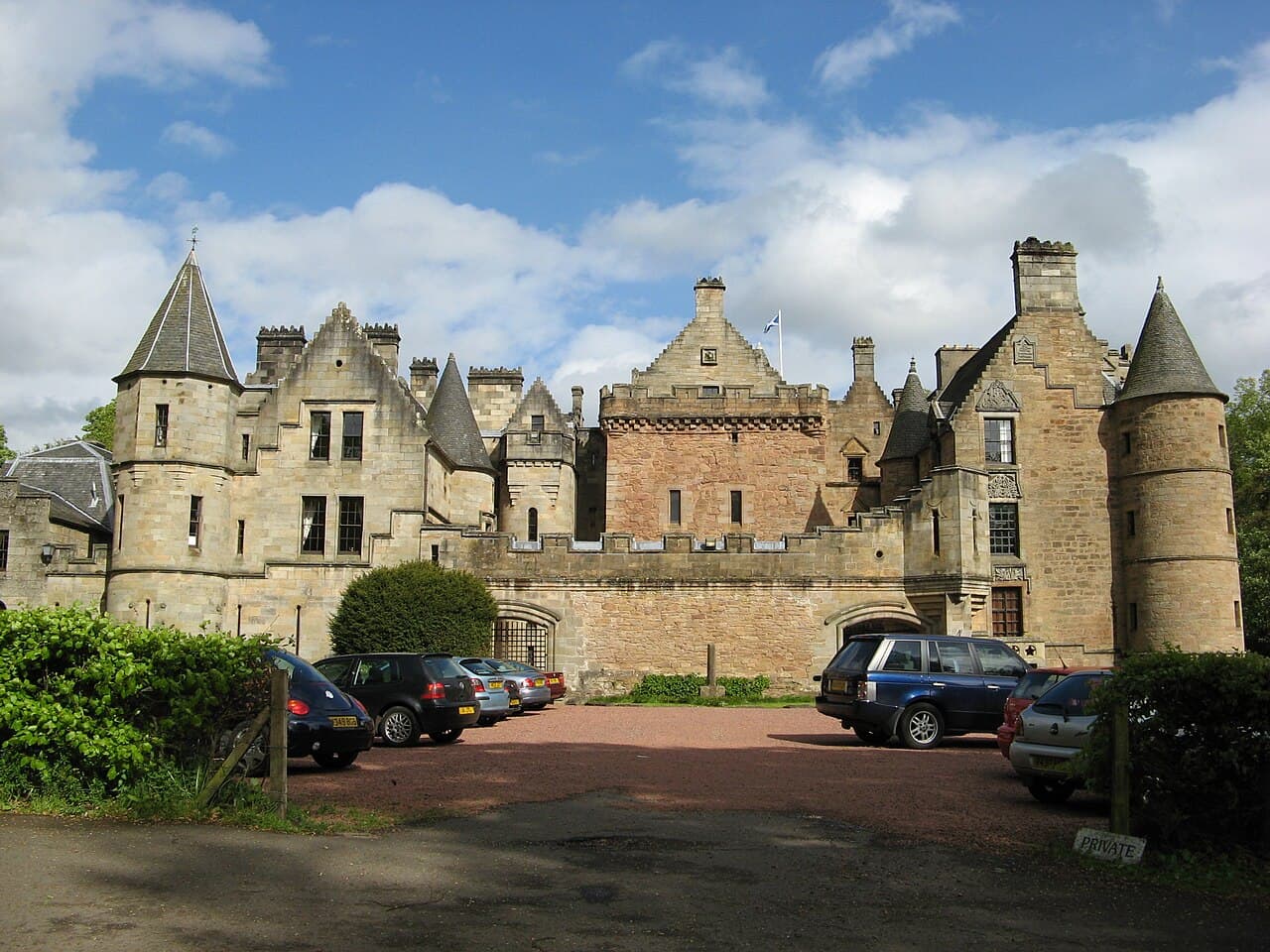
Dalzell House is a significant historic residence located in Motherwell, North Lanarkshire, Scotland, positioned on the north bank of the River Clyde. The house's origins date back to the 15th century, centered around a traditional tower house that exemplifies the defensive architecture typical of the late medieval period in Scotland. This original tower formed the core of the estate and reflects the architectural style and social status of the Scottish nobility during that era.
Architectural evolution and expansions
Over the centuries, Dalzell House underwent significant expansions and alterations, particularly during the 17th and 19th centuries. These additions transformed it from a purely defensive structure into a more comfortable and stately residence, blending elements of traditional Scottish tower house design with later architectural influences. The 17th-century extensions introduced more domestic features, including larger windows and expanded living quarters, while the 19th-century modifications often reflected Victorian tastes, including ornamental detailing and improved interior layouts.
The 15th-century tower house core
The original tower house at Dalzell is a classic example of late medieval Scottish architecture. Tower houses were fortified residences built for the landed gentry and minor nobility, designed to provide both defense and domestic accommodation. The Dalzell tower would have featured thick stone walls, narrow slit windows for archery defense, and a great hall serving as the main living and social space. Its strategic location near the River Clyde would have been advantageous for both defense and transport.
17th and 19th-century additions
The 17th-century expansions likely included the addition of wings or separate ranges to the original tower, increasing the living space and reflecting the reduced need for fortification. The 19th-century renovations often introduced elements of the Victorian architectural style, such as decorative stonework, sash windows, and possibly landscaped gardens surrounding the house, enhancing its appearance as a country estate.
Historical significance and ownership
Dalzell House has been associated with prominent local families over the centuries, serving as a symbol of regional power and heritage. The estate's proximity to Motherwell and the River Clyde placed it within a historically important area for trade and industry in Scotland. Throughout its history, the house has witnessed the social and economic changes that shaped the region.
20th-century restoration and modern use
In the 1980s, Dalzell House underwent a major restoration project that preserved its historic fabric while adapting the building for contemporary use. The house was subdivided into eighteen private apartments, allowing for its continued occupation and maintenance. This adaptive reuse reflects a broader trend in the conservation of historic buildings, balancing preservation with practical modern living requirements.
Protection and heritage status
The house is designated as a Category A listed building, recognizing its national architectural and historic importance. Additionally, the surrounding grounds are listed on the Inventory of Gardens and Designed Landscapes in Scotland, highlighting the significance of the estate's landscape design and its contribution to Scotland's cultural heritage.
Architectural features and estate grounds
The estate grounds surrounding Dalzell House include landscaped gardens and parkland typical of large Scottish country houses. The proximity to the River Clyde adds to the scenic and strategic value of the site. The house itself retains many original features, such as stone masonry, traditional rooflines, and interior elements reflective of its various construction phases.
Interior and exterior characteristics
Inside, the apartments retain some historic details, including fireplaces, wood paneling, and stone staircases. Externally, the house presents a composite architectural appearance, blending the robust medieval tower with the more refined later additions. The combination of defensive and domestic architectural elements makes Dalzell House an important example of evolving Scottish residential architecture.
Frequently asked questions (FAQ)
- What is the historical significance of Dalzell House?
- Dalzell House is a 15th-century tower house that reflects the defensive and domestic architecture of late medieval Scotland and has been associated with prominent local families.
- Can I visit Dalzell House and its grounds?
- Dalzell House has been converted into private apartments, so public access inside is limited. However, the surrounding estate grounds are owned by North Lanarkshire Council and may be accessible for outdoor visits.
- When was Dalzell House restored?
- The house underwent major restoration in the 1980s, preserving its historic features while converting it into private apartments.
- What architectural styles are present at Dalzell House?
- Dalzell House features a core 15th-century late medieval tower house with 17th and 19th-century additions reflecting evolving residential styles including Victorian influences.
- Why is Dalzell House protected as a Category A listed building?
- It is protected due to its national architectural and historic importance as a well-preserved example of a Scottish tower house with significant later additions.
Photo gallery

Information
Loading map...
Visitor reviews
No reviews yet. Been here? Write the first review and help other travelers!
Write the first reviewVisited this castle? Share your experience
Your review helps other travelers and adds first-hand knowledge to our encyclopedia.