Storgosia
Storgosia was originally established as a Roman road station and later developed into a fortress located within the modern Kaylaka Park near the city of Pleven in north-central Bulgaria. The site played a significant role in the Roman military network, serving as a strategic point along important routes and accommodating detachments from the Legio I Italica, which was garrisoned at Novae (modern-day Svishtov).
During the Late Antiquity period, particularly after the year 238 AD, the station was transformed into a fortified stronghold in response to increasing threats from Gothic and other Barbarian raids. By the early 4th century, the fortress encompassed an area of approximately 31,000 square meters (330,000 square feet), enclosed by a robust defensive wall measuring about 2.20 meters (7.2 feet) in thickness. This wall was designed to withstand sieges and invasions common during the turbulent times of the Roman Empire's decline.
Architectural features and fortifications
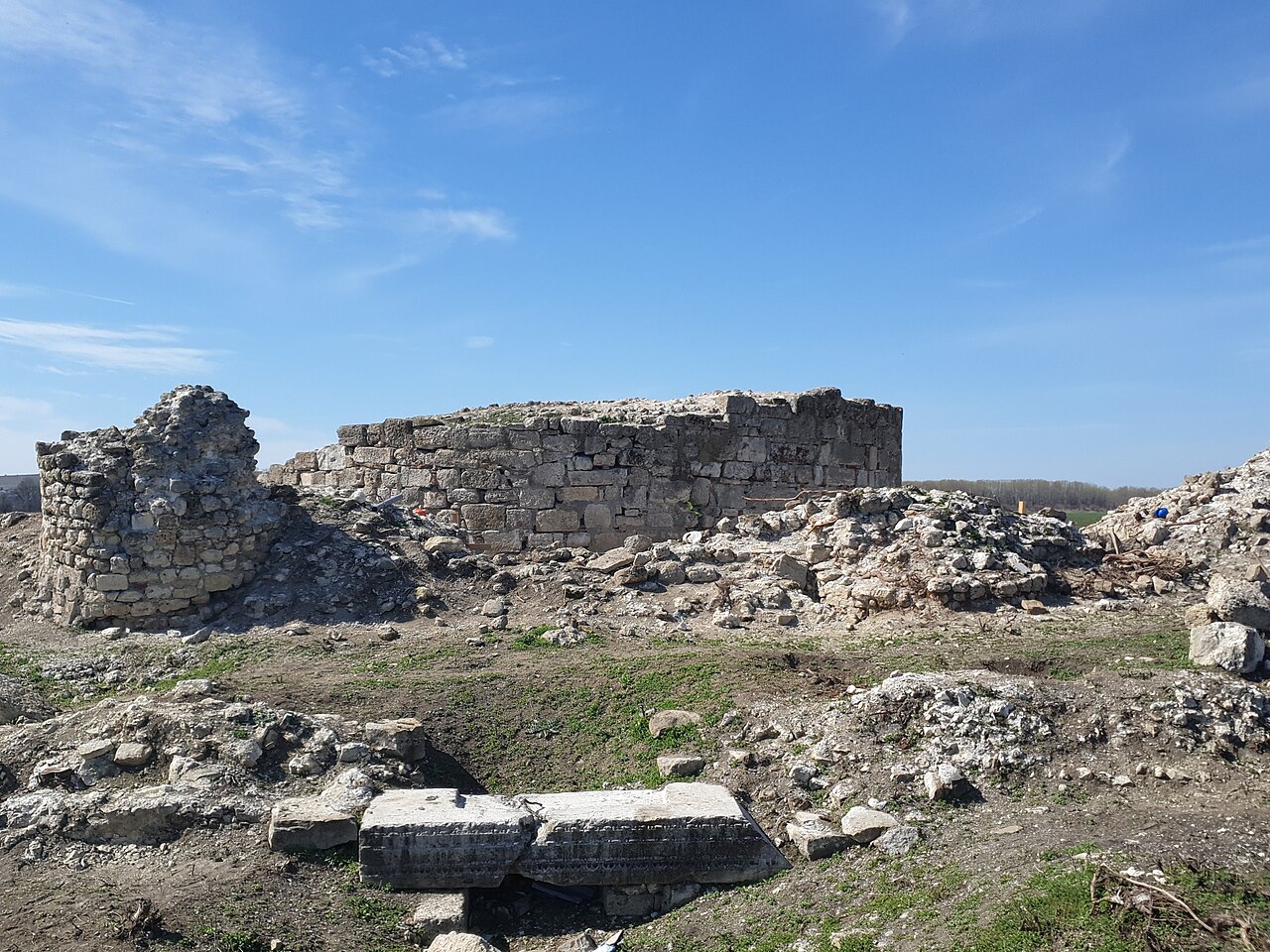
Archaeological excavations at Storgosia have uncovered several significant structural elements that highlight the fortress's military and civic importance. Among these are two well-preserved gates that controlled access to the interior, along with three defensive towers strategically positioned to provide overlapping fields of fire and surveillance over the surrounding landscape. The towers would have been essential for spotting approaching enemies and coordinating defense.
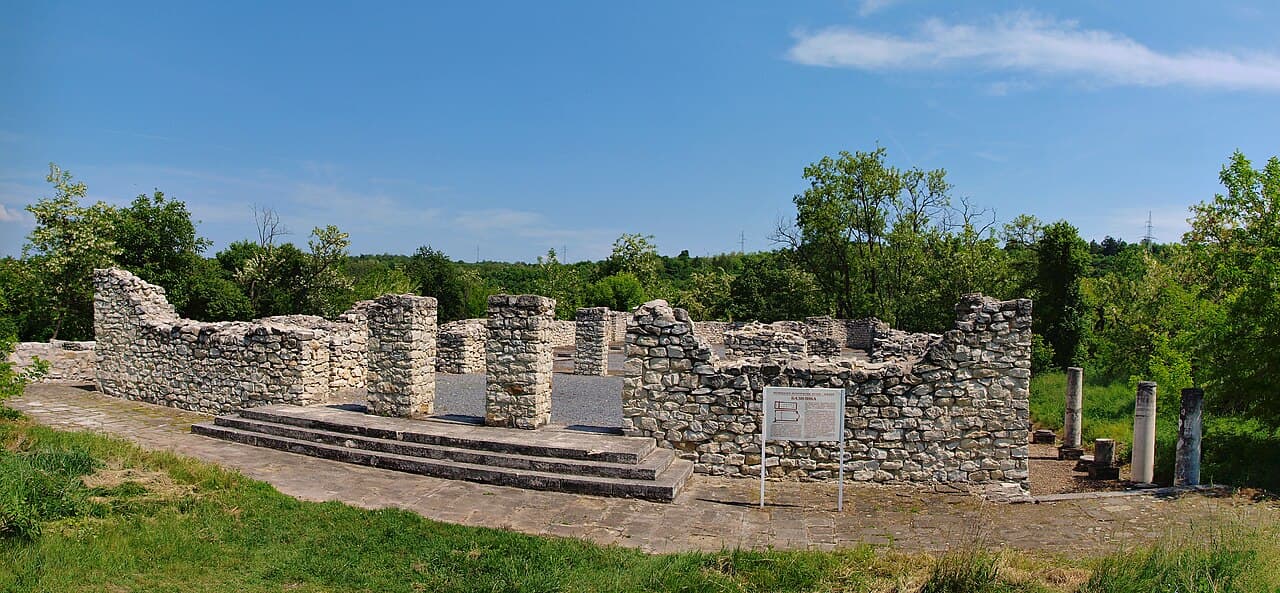
Within the fortified perimeter, remains of residential buildings have been found, indicating that Storgosia was not only a military installation but also a living community for soldiers and their families. A particularly notable discovery is the large 4th-century basilica, measuring approximately 45.20 by 22.20 meters (148.3 by 72.8 feet). This basilica served religious and communal functions and reflects the spread of Christianity within the Roman Empire during this period.
Additionally, the fortress contained a public granary, which would have been crucial for storing food supplies and sustaining the garrison during prolonged sieges or periods of instability.
Historical context and significance
The fortress of Storgosia existed until the end of the 6th century AD, a time marked by significant demographic and political changes in the region. The arrival and settlement of the Slavs in the Balkans contributed to the decline and eventual abandonment of the fortress as a Roman military site. The changing power dynamics and the shifting frontiers of the Byzantine Empire influenced the strategic value of such fortifications.
During the period of the Ottoman Empire, the fortress was largely dismantled, likely in the 16th century. Stones from Storgosia were repurposed for constructing a defensive wall around the Turkish barracks in the nearby city of Pleven. This practice of reusing materials was common in the Ottoman era and contributed to the loss of many ancient structures.
Archaeological research and preservation
Today, Storgosia is recognized as an important archaeological site that offers valuable insights into Roman military architecture and urban planning in the Balkans. Excavations have provided detailed information about the layout and construction techniques of Late Antique fortresses. The site is part of the cultural heritage of Bulgaria and is accessible to visitors interested in Roman history and archaeology.
The remains of the defensive walls, gates, towers, and basilica form a significant part of the historical landscape of Kaylaka Park, contributing to the understanding of the region's past and its role within the Roman Empire's frontier system.
Location and accessibility
Storgosia is situated within Kaylaka Park, a popular recreational area near Pleven, making it accessible for tourists and scholars alike. The park's natural surroundings enhance the visitor experience, combining historical exploration with outdoor activities.
Legacy and cultural importance
As a former Roman military base and later a fortress, Storgosia exemplifies the transformation of Roman infrastructure in response to external threats during Late Antiquity. It stands as a testament to the complex history of the Balkans, illustrating the interactions between Roman, barbarian, Slavic, and Ottoman influences over many centuries.
Frequently asked questions (FAQ)
- What is the historical significance of Storgosia?
- Storgosia was a Roman fortress and road station that played a key role in military defense and logistics in the Balkans during Late Antiquity.
- Can I visit the ruins of Storgosia?
- Yes, the ruins are located within Kaylaka Park near Pleven and are accessible to visitors interested in Roman history and archaeology.
- When was Storgosia built and abandoned?
- Storgosia was fortified in the 3rd to 4th centuries AD and was abandoned by the end of the 6th century due to Slavic settlements in the region.
- What architectural features can be seen at Storgosia?
- Visitors can see remains of defensive walls, gates, towers, a large basilica, residential buildings, and a public granary within the fortress area.
Photo gallery

Information
Address
Kaylaka Park, Pleven, Bulgaria
Loading map...
Visitor reviews
No reviews yet. Been here? Write the first review and help other travelers!
Write the first reviewVisited this castle? Share your experience
Your review helps other travelers and adds first-hand knowledge to our encyclopedia.