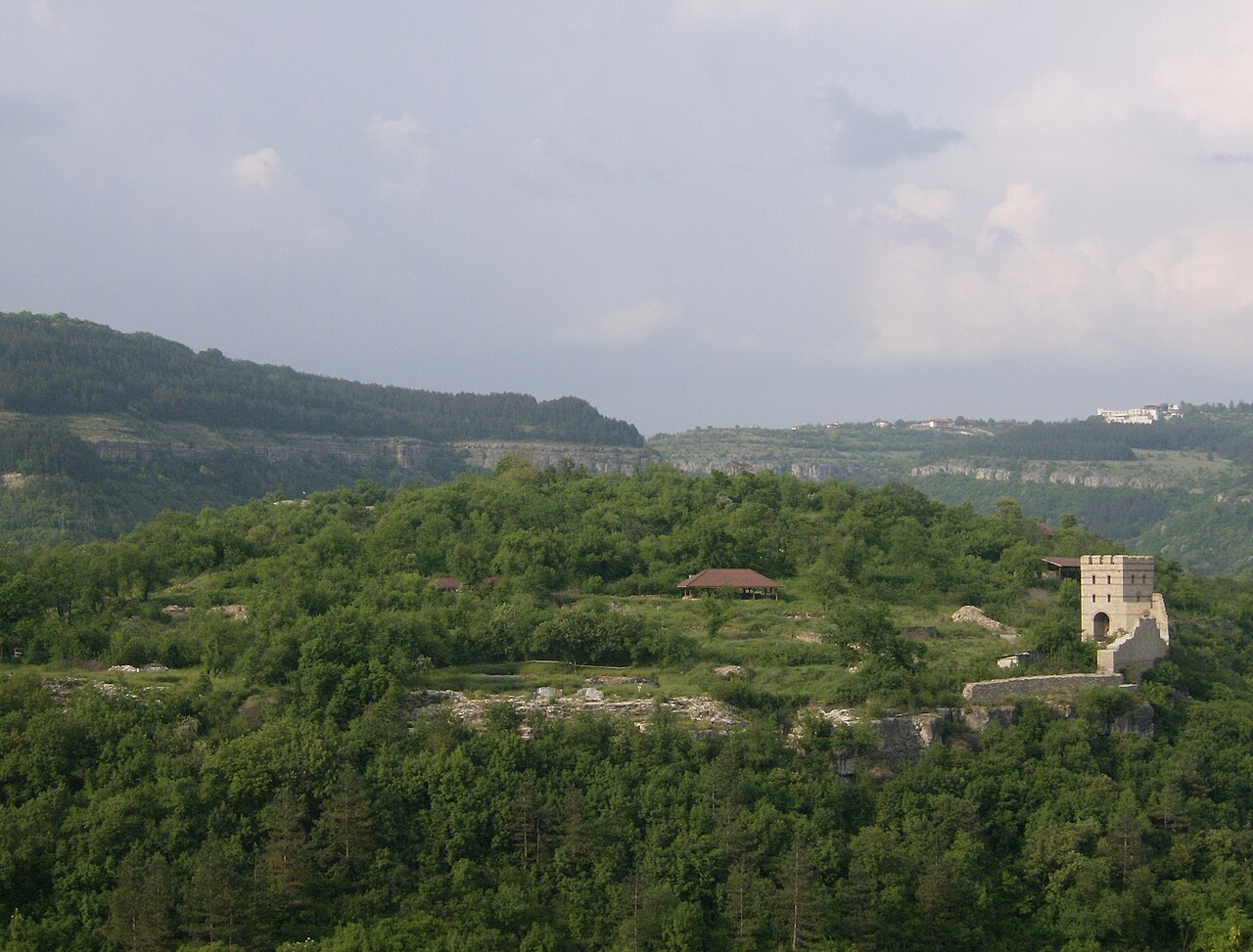
Hotalich Fortress
The Hotalich fortress stands as a significant archaeological site near the town of Sevlievo, Bulgaria, located approximately 4 kilometers northwest of the modern town center. This medieval town-fortress occupies a strategic hilltop position, reflecting its historical importance as a defensive stronghold through various periods, primarily in the Early Medieval era.
Originally constructed by the Byzantines in the 5th century AD, the site was later adapted and expanded by the First Bulgarian Empire during the 9th and 10th centuries. The Bulgarian state fortified the location to protect its northern borders from barbarian invasions and to defend against Byzantine incursions from the south. The fortress's extensive area made it one of the largest in Bulgaria, second only to the capitals Pliska, Preslav, and Veliko Tarnovo.
Historical context and significance
The Hotalich fortress played a crucial role in the military and administrative organization of the Bulgarian Empire during the Early Medieval period. Its location was chosen for its natural defensive advantages and its ability to control important routes through the Balkan Mountains. The fortress served not only as a military bastion but also as a medieval town with residential quarters, religious buildings, and administrative centers.
Byzantine origins and Bulgarian expansion
The earliest fortifications at Hotalich date back to the Early Byzantine period in the 5th century, evidenced by the remains of the first defensive walls found during archaeological excavations. These initial structures were designed to secure the frontier of the Byzantine Empire against northern threats. In the 9th and 10th centuries, as the Bulgarian state expanded under rulers such as Tsar Simeon I, the fortress was significantly enlarged and reinforced. The second set of walls, built in this period, reflects advanced medieval military architecture aimed at withstanding sieges and protecting the local population.
Architectural features and archaeological discoveries
Extensive excavations beginning in 1981 have uncovered a wealth of structures within the fortress complex. Among the most notable finds are:
- A high defensive tower that provided surveillance and protection against attackers.
- Two parallel defensive walls, with the older dating to the 5th century Byzantine period and the newer from the 9th-10th century Bulgarian reconstruction.
- Remains of two main gates that controlled access to the fortress, reflecting its strategic design.
- Ruins of residential quarters where inhabitants lived during the medieval period.
- Several churches, indicating the religious importance and presence of Christian communities within the fortress.
- The palace of the boyar, the local noble or ruler, illustrating the administrative role of the fortress.
The fortress layout reveals a complex urban center with defensive, residential, religious, and administrative functions integrated within its walls. The dual defensive walls exemplify the evolution of military architecture from the Byzantine to the Bulgarian medieval periods, showcasing adaptations to new threats and technologies.
Military architecture and defensive design
The fortress's defensive system was carefully planned to maximize protection. The two parallel walls created a formidable barrier, with the outer wall serving as the first line of defense and the inner wall reinforcing the stronghold. The high tower functioned as a lookout point, providing early warning of approaching enemies and a platform for archers and defenders.
The main gates were strategically placed and fortified to control access, likely featuring heavy wooden doors and possibly portcullises. The positioning of the fortress on elevated terrain further enhanced its defensive capabilities, making direct assaults difficult for invading forces.
Religious and residential structures within the fortress
The presence of multiple churches within the fortress walls reflects the Christian character of the Bulgarian state during the medieval period. These churches would have served the spiritual needs of the inhabitants and the ruling elite.
The residential quarters uncovered during excavations suggest a well-organized community living within the fortress. Houses and workshops were likely clustered in specific areas, supporting a diverse population including soldiers, craftsmen, and administrators.
Archaeological significance and preservation
The site of Hotalich fortress is considered one of the most important medieval archaeological sites in Bulgaria. Excavations have provided valuable insights into the military, urban, and social organization of the Bulgarian Empire during the Early Medieval period.
Today, the fortress remains in a state of ruins, with many structures partially preserved. Ongoing archaeological work continues to uncover new information, contributing to the understanding of medieval fortifications and settlement patterns in the Balkans.
Visitors to the site can explore the remains of the walls, towers, gates, and building foundations, gaining a sense of the scale and complexity of this once-thriving fortress town.
Location and accessibility
The fortress is situated near Sevlievo, a town in central Bulgaria known for its rich history and cultural heritage. The site is accessible by road and offers an opportunity for visitors interested in medieval history and archaeology to experience a significant Bulgarian fortress firsthand.
Frequently asked questions (FAQ)
- When was Hotalich fortress originally built?
- Hotalich fortress was originally constructed by the Byzantines in the 5th century AD and later expanded by the Bulgarian state in the 9th and 10th centuries.
- What can visitors see at the Hotalich fortress site?
- Visitors can explore the ruins of defensive walls, a high tower, two main gates, residential quarters, churches, and the palace of the local boyar.
- Where is Hotalich fortress located?
- The fortress is located about 4 kilometers northwest of Sevlievo in Gabrovo Province, central Bulgaria.
- What is the historical significance of Hotalich fortress?
- Hotalich fortress was one of the largest medieval Bulgarian fortresses, serving as a military, administrative, and religious center during the Early Medieval period.
- Is Hotalich fortress accessible to the public?
- Yes, the fortress ruins are accessible to visitors, though facilities may be limited as it is primarily an archaeological site.
Information
Loading map...
Visitor reviews
No reviews yet. Been here? Write the first review and help other travelers!
Write the first reviewVisited this castle? Share your experience
Your review helps other travelers and adds first-hand knowledge to our encyclopedia.