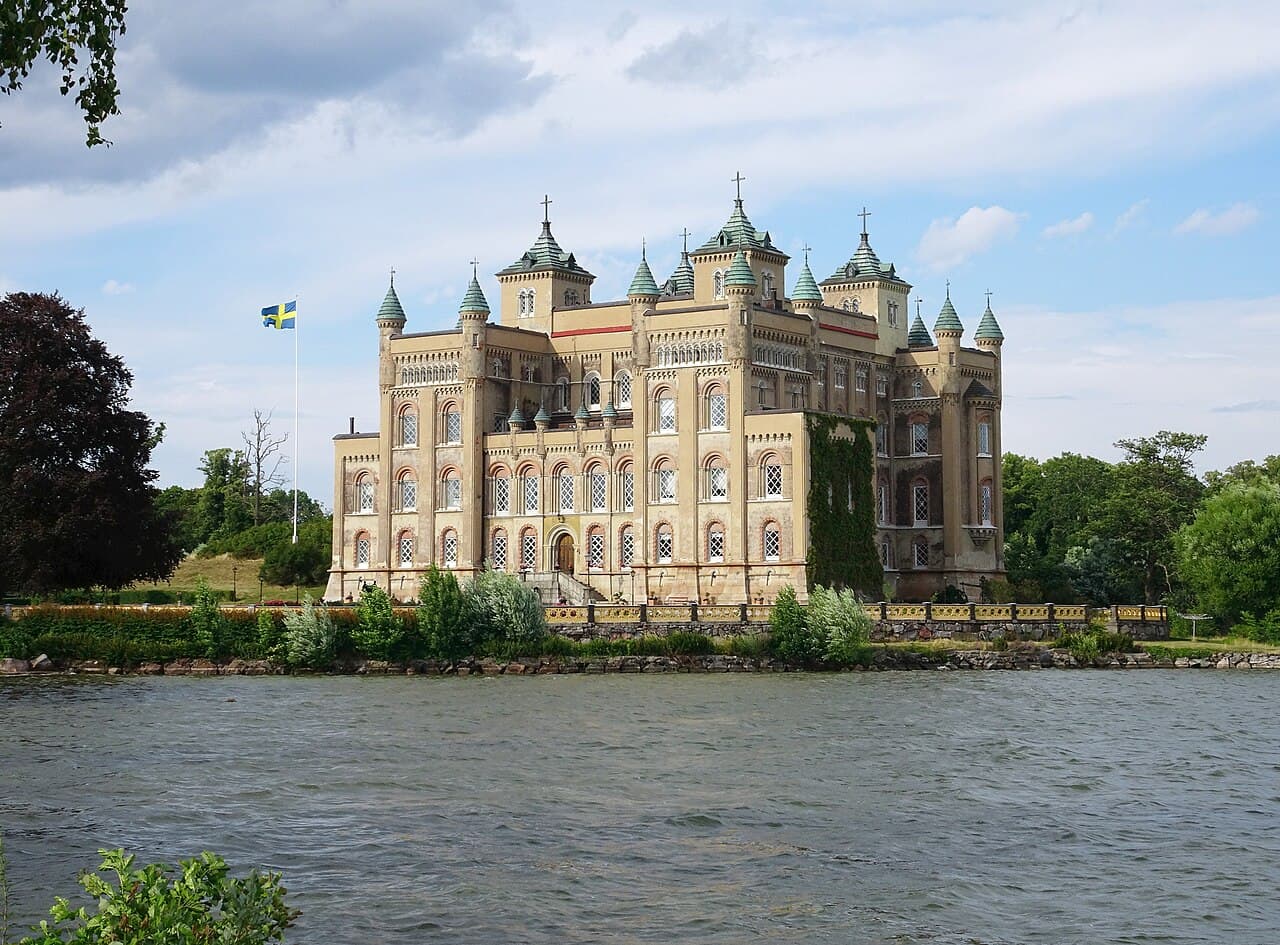
Stora Sundby Castle
Stora Sundby Castle is a remarkable example of 19th-century castle architecture located in Stora Sundby, Eskilstuna Municipality, Södermanland County, Sweden. The castle's origins date back to the Middle Ages, with the earliest recorded mention in 1364 when it was besieged and captured by Albrecht of Mecklenburg during his conflict with King Magnus Eriksson. Throughout the late 14th and early 15th centuries, the estate belonged to notable figures such as Lars Ulfsson Blå and later passed through the hands of Julita monastery and noble families including Natt och Dag, Sparre, and Chevron.
Historical background and ownership
The castle's medieval roots are intertwined with the political and military struggles of the era. The siege in 1364 marks a significant event in its history, illustrating its strategic importance in regional power dynamics. Ownership by the Sparre family in the 19th century led to the construction of the present-day castle structure.
19th-century reconstruction and architectural design
The current main building of Stora Sundby Castle was constructed in 1848 under the direction of Lars Siggesson Sparre. He commissioned the English architect Peter Frederick Robinson to design a new castle inspired by the Norman architectural style, which was popular in medieval England and characterized by robust stone construction, rounded arches, and imposing towers.
The castle underwent a significant refurbishment that altered its exterior substantially while preserving much of the interior's original design. This blend of preservation and modernization reflects 19th-century romanticism and the Gothic revival influences prevalent in castle restorations of that period.
Calendar-inspired architectural symbolism
One of the most distinctive features of Stora Sundby Castle is its symbolic architectural design, which represents a calendar. The castle includes:
- 52 rooms, corresponding to the weeks of the year
- 12 small towers, symbolizing the months
- 4 large towers, representing the seasons
- 365 windows, one for each day of the year
This deliberate design reflects a unique architectural concept that merges functionality with symbolic meaning, making the castle a rare example of calendar architecture.
Architectural features and style
The castle's architecture is primarily influenced by the Norman style, evident in its fortress-like appearance, robust stone walls, and the characteristic rounded arches of its windows and doorways. The castle's towers vary in size and function, with the four large towers serving as prominent visual anchors and the twelve smaller towers adding to the vertical emphasis typical of medieval fortifications.
The interior spaces, largely preserved from the 19th-century refurbishment, include grand halls, chambers, and intricately designed rooms that reflect the romanticized medieval aesthetic favored during the period of its reconstruction.
Modern cultural significance and media presence
In recent years, Stora Sundby Castle has gained cultural prominence as a filming location for the Swedish teen drama Young Royals, where it served as the fictional Royal Palace. This exposure has increased public interest in the castle, highlighting its striking appearance and historical ambiance.
Visitor information and preservation status
Today, Stora Sundby Castle is well preserved and remains a significant heritage site in Sweden. Its unique calendar-inspired design attracts visitors interested in historical architecture and symbolism. The castle's condition is classified as well preserved, maintaining both its exterior grandeur and interior historical integrity.
Frequently asked questions (FAQ)
- What is the historical significance of Stora Sundby Castle?
- Stora Sundby Castle dates back to the Middle Ages and was notably besieged in 1364. It has been owned by various noble families and monasteries, reflecting its importance in Swedish history.
- How does the castle's architecture symbolize a calendar?
- The castle features 52 rooms for the weeks of the year, 12 small towers for the months, 4 large towers for the seasons, and 365 windows representing each day of the year.
- Who designed the current castle building?
- The present castle was designed by English architect Peter Frederick Robinson in 1848, inspired by Norman architectural style.
- Is Stora Sundby Castle open to visitors?
- Visitor information such as opening hours and ticket prices is not widely published; it is recommended to check local sources or the castle's official channels before planning a visit.
- What role did Stora Sundby Castle play in modern media?
- The castle was used as the filming location for the Royal Palace in the Swedish teen drama Young Royals, increasing its cultural visibility.
Photo gallery

Information
Sources & official resources
Verify the information above using these authoritative references.
Loading map...
Visitor reviews
No reviews yet. Been here? Write the first review and help other travelers!
Write the first reviewVisited this castle? Share your experience
Your review helps other travelers and adds first-hand knowledge to our encyclopedia.