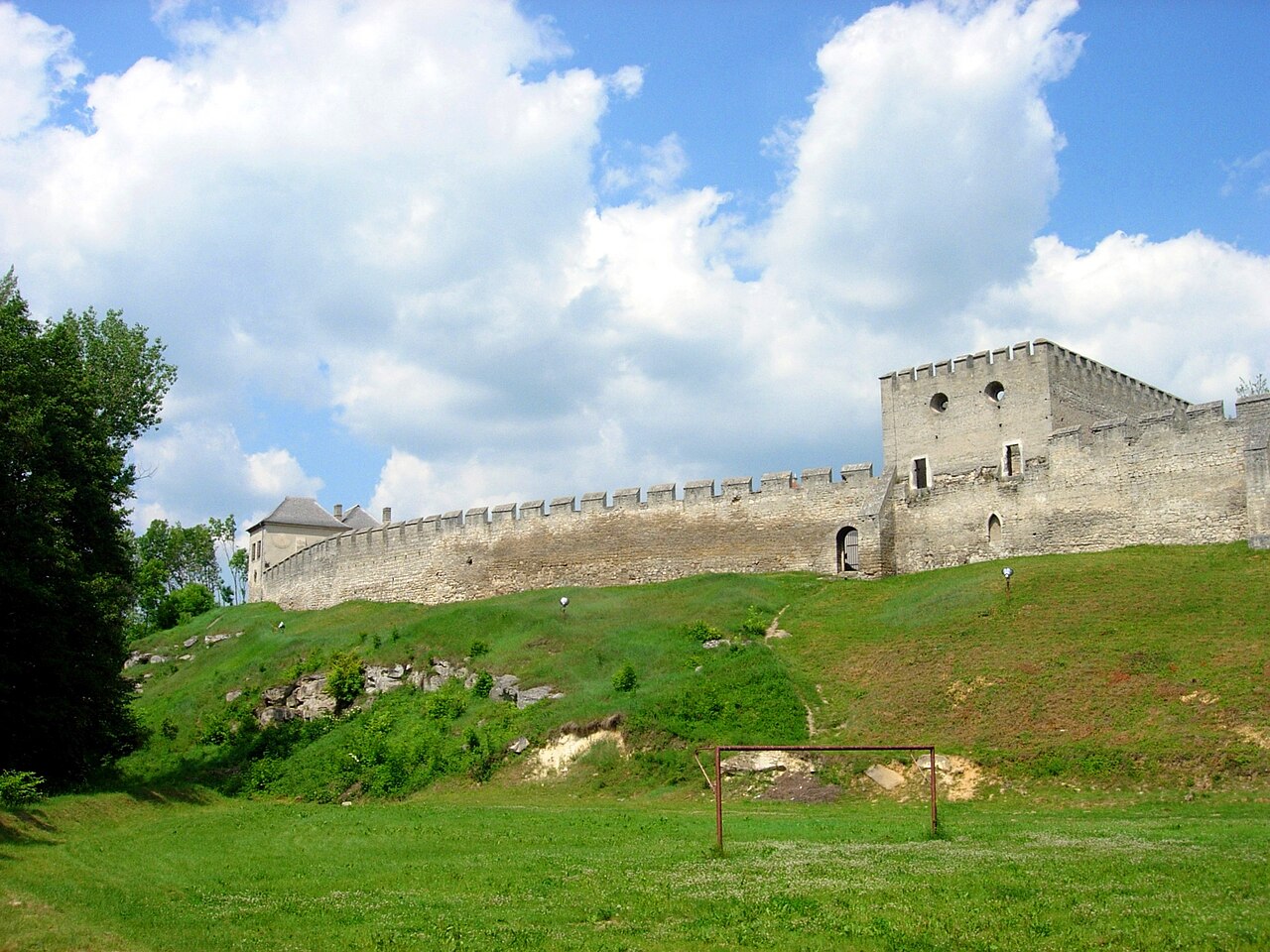
Stopnica
Stopnica Castle is a significant historic site located in the town of Stopnica, Poland. Established around 1360 during the reign of King Casimir III the Great, the castle originally served as a royal residence and administrative center in the region. Over centuries, it evolved architecturally and functionally, reflecting the shifting political, social, and military contexts of Poland from the late medieval period through the Baroque era and into modern times.
The castle’s origins are closely tied to the early development of Stopnica, one of the oldest settlements in the Sandomierz land, with roots reaching back to the turn of the 11th and 12th centuries. Historical records suggest that in the 13th century, the site hosted a princely court, possibly belonging to Duke Bolesław the Chaste. The granting of town rights by King Casimir III in 1360 coincided with the construction of the first stone castle, marking Stopnica as a royal property and strategic point along the important route connecting Kraków and Sandomierz.
Early construction and medieval significance
The original castle, built under the direct patronage of King Casimir III, was a stone manor whose precise architectural details remain elusive due to limited archaeological study. Early descriptions from the early 17th century mention a stone, vaulted building surrounded by a defensive fence, which was likely integrated into later expansions. The castle functioned as a royal seat and administrative hub, managing local estates and serving as a residence for starosts (royal officials) after the royal lands were frequently pledged to nobles.
Ownership and expansions in the 16th century
By the mid-16th century, the castle underwent significant expansion, including the construction of a new two-story, vaulted building measuring approximately 17.7 by 40.8 meters. This expansion probably included the addition of a second wooden building on a stone foundation opposite the main structure. The castle’s role shifted from a royal residence to the seat of local starosts, notably under Marcin Zborowski from 1531, reflecting the common practice of royal estates being managed by noble administrators.
Destruction and baroque transformation
The castle suffered extensive damage during the Swedish Deluge (1655-1660), a devastating military invasion that affected much of Poland. Following this destruction, Jan Klemens Branicki, the starost of Stopnica, undertook a comprehensive rebuilding effort in 1661, remodeling the castle in the Italian style. This reconstruction introduced architectural elements characteristic of the Baroque period, enhancing the castle’s residential and representational functions.
Further transformation occurred in 1783 under the direction of General Eliasz Wodzicki, who expanded and converted the castle into a palace with two wings (officinas). This Baroque renovation marked a significant shift from the medieval fortress concept to a more elegant aristocratic residence, reflecting broader European architectural trends of the time.
Modern history and restoration efforts
During World War II, in 1944, the castle was severely damaged by fire, which destroyed the roof, upper floors, and caused the collapse of vaults in the northern and eastern parts of the building. Post-war efforts in 1958 led to partial demolition and adaptation of the remaining structure into a single-story building, significantly altering its historical appearance.
Recognizing the castle’s cultural and historical value, the municipality of Stopnica purchased the site in the early 2000s and initiated a major restoration project funded partly by the European Union. Completed in 2010-2011, the restoration rebuilt the destroyed upper floors and added an attic, transforming the castle into the Gminne Centrum Kultury (Municipal Cultural Center).
Current use and architectural features
Today, Stopnica Castle serves as a vibrant cultural venue featuring a performance hall, exhibition spaces showcasing regional collections and loaned artifacts from the National Museum in Kielce, a library, multimedia room, club rooms, and guest accommodations. The castle’s cellars have been repurposed into a café, enhancing its appeal as a community hub.
Surrounding the castle, efforts are underway to recreate a park in the Italian style, complementing the castle’s Baroque heritage and providing a scenic setting that echoes its historic grandeur.
Architectural evolution and historical layers
The castle’s architectural fabric reveals a complex history of construction phases and styles. Its initial medieval stone manor evolved through Renaissance expansions, Baroque reconstructions, and modern restorations. The surviving structures and archaeological evidence indicate a layout that once included a Gothic stone house, a chapel with cloisters, and wooden buildings with stone cellars, reflecting a multifunctional noble residence.
The 1783 Baroque renovation introduced two masonry wings that likely incorporated elements of the earlier medieval manor, blending fortress and palace characteristics. By the 19th century, the castle had become a three-story palace with a surrounding fence featuring masonry pillars and a stable, illustrating its adaptation to aristocratic residential needs.
Despite war-related destruction and subsequent alterations, the 21st-century restoration has successfully revived the castle’s architectural presence, preserving its historical significance and enabling its contemporary cultural role.
Historical context and regional importance
Stopnica Castle stands as a testament to the layered history of Polish royal and noble estates. Its origins under King Casimir III the Great highlight the strategic and administrative importance of the site in medieval Poland. The castle’s evolution mirrors broader national trends, including the shift from fortified medieval strongholds to Renaissance and Baroque palatial residences.
The castle’s role as a starosty seat and its association with notable noble families such as the Zborowski, Ossoliński, Lanckoroński, and Branicki families reflect the political and social dynamics of the Polish-Lithuanian Commonwealth. The site’s survival and restoration underscore the value placed on cultural heritage and regional identity in contemporary Poland.
Visiting stopnica castle
Visitors to Stopnica Castle can explore its rich historical layers through exhibitions and cultural events hosted within the restored premises. The castle’s location in the town of Stopnica offers an accessible destination for those interested in medieval and Baroque architecture, Polish history, and regional culture. Plans to restore the surrounding Italian-style park will further enhance the visitor experience.
Frequently asked questions (FAQ)
- When was Stopnica Castle originally built?
- Stopnica Castle was originally constructed around 1360 under the reign of King Casimir III the Great as a royal residence and administrative center.
- What architectural styles are represented in Stopnica Castle?
- The castle features a blend of late medieval stone manor construction, Italian-style Baroque renovations from the 17th century, and 18th-century Baroque palace expansions.
- Can visitors tour the interior of Stopnica Castle?
- Yes, the castle now functions as the Municipal Cultural Center, offering exhibition spaces, a performance hall, a library, and other cultural facilities open to the public.
- What happened to Stopnica Castle during World War II?
- The castle was severely damaged by fire in 1944, which destroyed the roof and upper floors, leading to partial demolition and later restoration efforts.
- Is there a park associated with Stopnica Castle?
- Yes, there are ongoing efforts to recreate an Italian-style park surrounding the castle, complementing its Baroque architectural heritage.
Information
Sources & official resources
Verify the information above using these authoritative references.
Loading map...
Visitor reviews
No reviews yet. Been here? Write the first review and help other travelers!
Write the first reviewVisited this castle? Share your experience
Your review helps other travelers and adds first-hand knowledge to our encyclopedia.