Nowy Korczyn
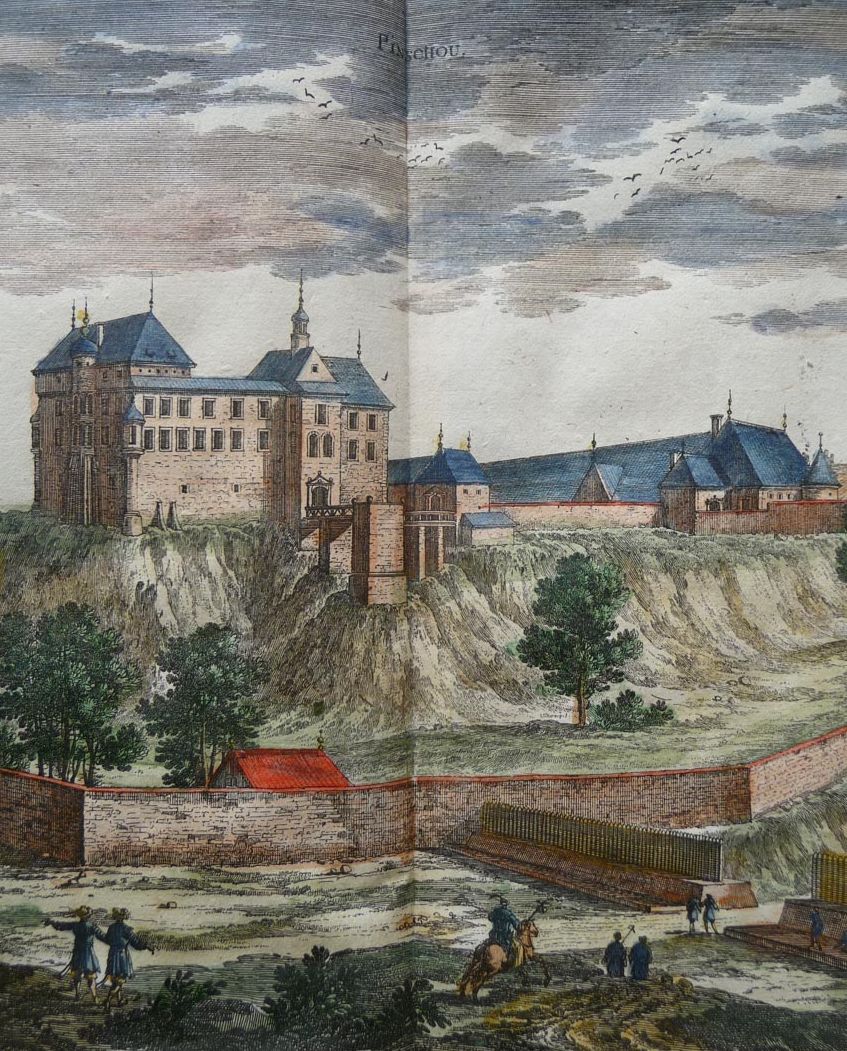
Nowy Korczyn Castle stands as a significant medieval site in Poland, originally established in the mid-13th century as a royal stronghold and administrative center. Founded around 1250 by Prince Bolesław Wstydliwy on the left bank of the Nida River, the adjacent town of Nowy Korczyn flourished under the reign of King Casimir the Great, who commissioned the construction of the stone castle on the right bank opposite the town. This strategic location leveraged the river for defense and control.
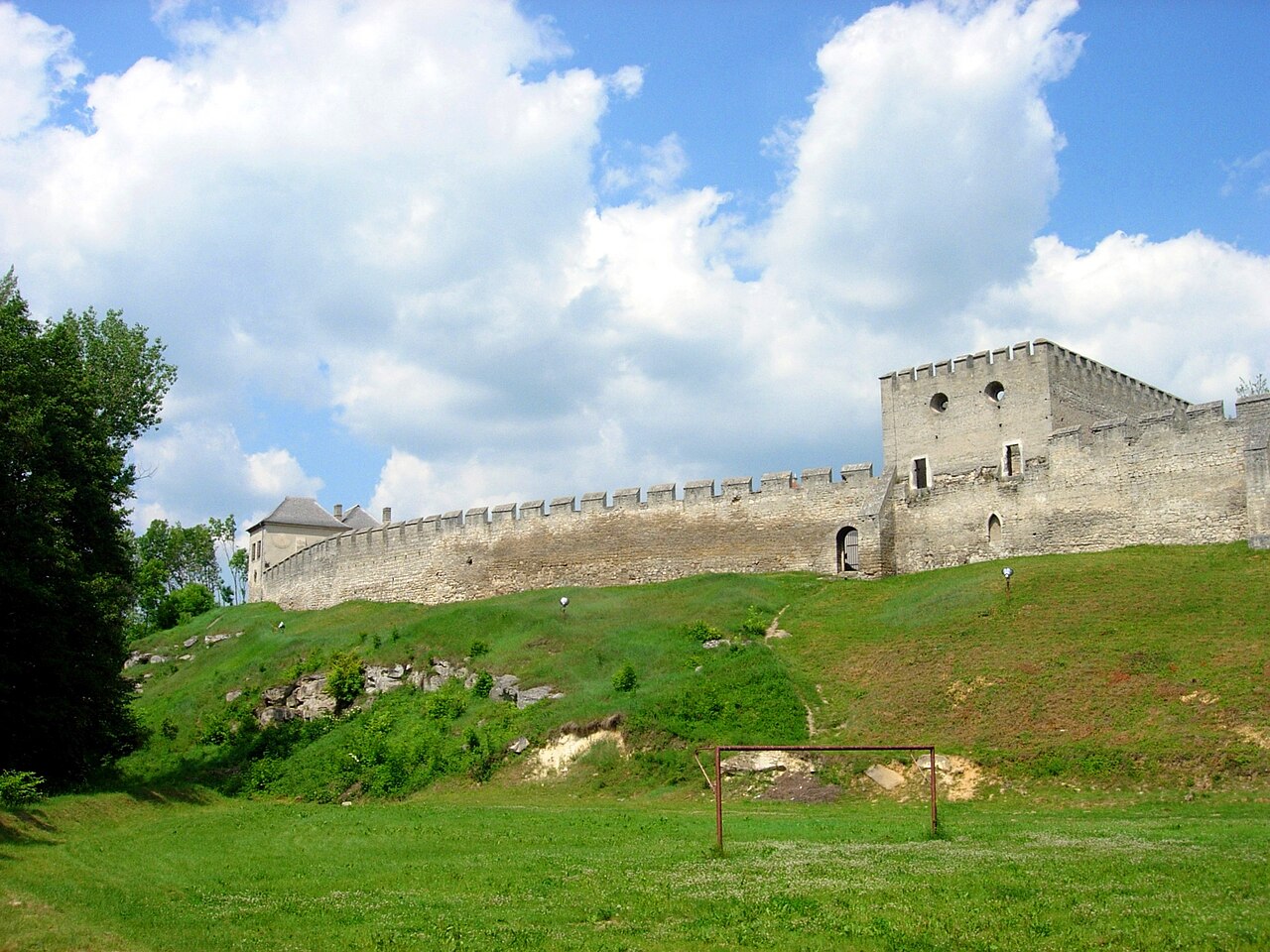
The castle was built during the high medieval period, likely between 1250 and the late 14th century, featuring a regular quadrangular layout as suggested by the surviving earthworks. Though later destruction has obscured its original form, archaeological and historical records reveal that the castle included residential buildings with large halls and royal chambers, alongside numerous economic structures. The lower parts of the castle walls were constructed from limestone, while the upper sections utilized brickwork, a common medieval technique in Polish castle architecture. The entire complex was encircled by a water-filled moat fed by the Nida River, with access controlled by a bridge guarded by a small tower.
Architectural evolution and royal significance
Following the accession of Władysław Jagiełło to the Polish throne, Nowy Korczyn Castle gained prominence as one of the king's favored residences. Between 1388 and 1389, the castle underwent essential repairs to its aging walls. A significant expansion from 1403 to 1408 transformed the castle into a secure repository for the royal treasury, while also enhancing its role as a comfortable royal residence. By 1416, Nowy Korczyn became the seat of a starostwo (royal administrative district), hosting the royal court frequently and serving as a venue for numerous political assemblies and gatherings.
16th-century enhancements under Krzysztof Szydłowiecki
The castle experienced its most extensive reconstruction and enlargement between 1515 and 1532 under the stewardship of Krzysztof Szydłowiecki. Contemporary lustration records describe approximately 80 rooms within the residential wing, indicating a substantial and sophisticated complex. The economic section was equally developed, supporting the castle's administrative and logistical functions. Notably, a tower in the southern corner served as a prison. The castle also housed a chapel, the residence of the castle scribe, and rooms dedicated to storing official documents, including the castle's books and archives.
Decline and destruction
The castle's decline began in the mid-17th century during the Swedish Deluge (Potop) of 1655, followed by another Swedish invasion in 1702. These conflicts led to the castle being looted and set ablaze, marking the end of its prominence as a royal seat. Unlike many other Polish castles, Nowy Korczyn was never rebuilt after its destruction. By the late 18th century, the remaining ruins were dismantled, and the stones repurposed for other construction projects in the region.
Current state and archaeological significance
Today, Nowy Korczyn Castle exists only as an archaeological site with no visible above-ground remains of its walls or buildings. The earthworks and moat traces provide clues to its original layout and scale. The site holds considerable historical importance as a royal residence, treasury, and administrative center during Poland's medieval and early Renaissance periods. Archaeological investigations continue to shed light on its construction techniques, spatial organization, and role within the broader network of Polish castles.
Historical context and legacy
Nowy Korczyn Castle exemplifies the evolution of Polish castle architecture from fortified medieval stronghold to a multifunctional royal residence and administrative hub. Its history reflects the political and military challenges of the region, including the impact of foreign invasions and internal power shifts. The castle's association with notable figures such as King Casimir the Great and Władysław Jagiełło underscores its importance in Polish history.
Although the physical structure no longer stands, the legacy of Nowy Korczyn Castle endures through historical records and archaeological research, offering valuable insights into medieval castle construction, royal administration, and regional defense strategies in Poland.
Frequently asked questions (FAQ)
- When was Nowy Korczyn Castle built?
- Nowy Korczyn Castle was founded around 1250 by Prince Bolesław Wstydliwy during the high medieval period.
- What was the historical significance of Nowy Korczyn Castle?
- The castle served as a royal residence, treasury, and administrative center, especially under King Casimir the Great and King Władysław Jagiełło.
- What remains of Nowy Korczyn Castle today?
- Today, only archaeological earthworks and moat traces remain, with no visible above-ground ruins.
- Can visitors access the Nowy Korczyn Castle site?
- The castle site is an archaeological area open to the public, though no standing structures remain. Visitors can explore the earthworks and learn about its history through informational displays.
- Why was Nowy Korczyn Castle never rebuilt after its destruction?
- After being looted and burned during the Swedish invasions in the 17th and early 18th centuries, the castle was dismantled for building materials and never reconstructed.
Information
Loading map...
Visitor reviews
No reviews yet. Been here? Write the first review and help other travelers!
Write the first reviewVisited this castle? Share your experience
Your review helps other travelers and adds first-hand knowledge to our encyclopedia.