Stolzenfels Castle
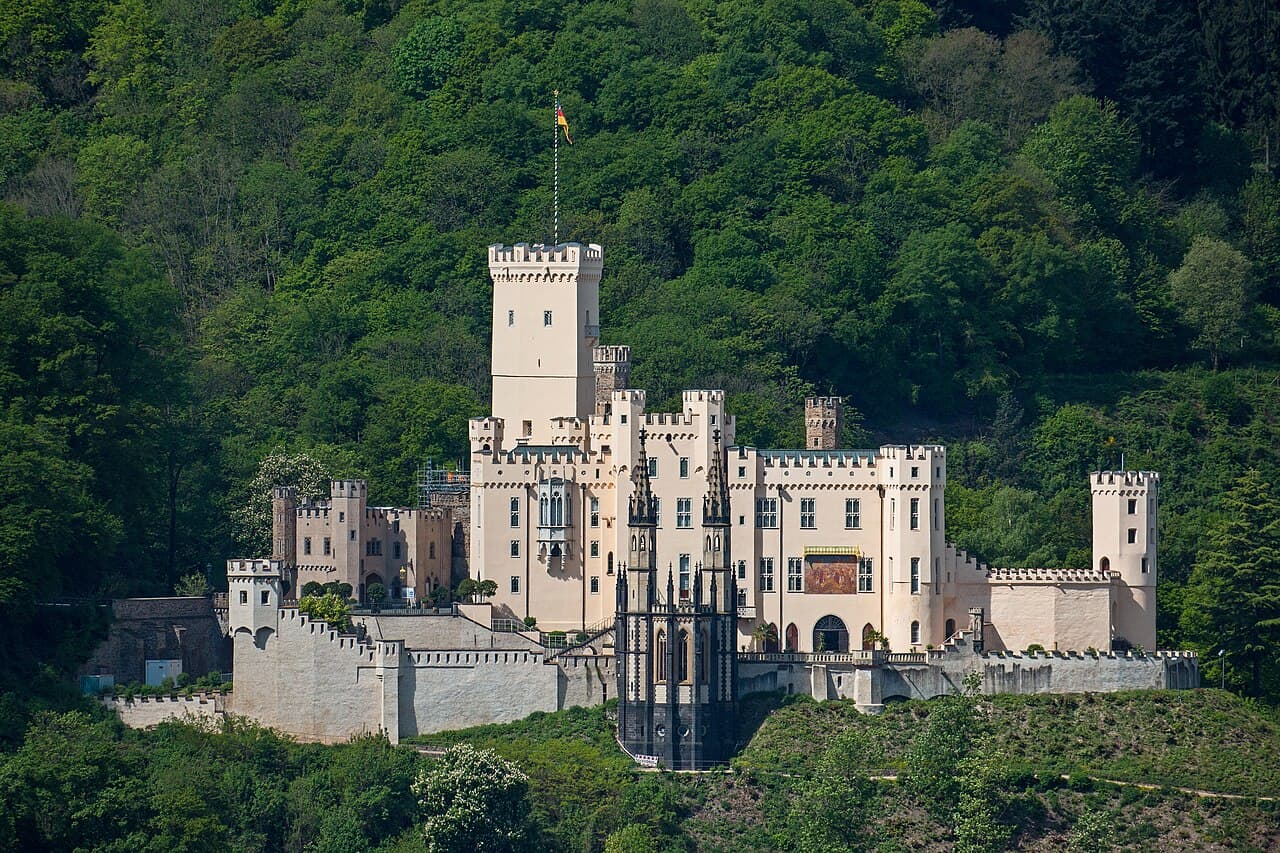
Stolzenfels Castle stands as a striking example of 19th-century Gothic Revival architecture on the left bank of the Rhine near Koblenz, Germany. Originally constructed in the 13th century as a medieval fortress, the castle was strategically built to protect a vital toll station on the Rhine River, where ships transporting goods were required to pay levies. This early fortress, commissioned by the Prince-Bishop of Trier Arnold II von Isenburg and completed in 1259, played a significant role in controlling river traffic and regional commerce.
Over the centuries, Stolzenfels Castle underwent several expansions, notably in the 14th century, adapting to the changing military and administrative needs of the region. The castle endured occupation by French and Swedish forces during the Thirty Years' War and suffered severe damage when it was destroyed by the French army in 1689 during the Nine Years' War. Following its destruction, the castle lay in ruins for approximately 150 years, during which time it was used as a quarry for building materials.
Rebirth as a romantic neo-Gothic palace
In the aftermath of the Napoleonic Wars and the territorial reshuffling at the Congress of Vienna in 1815, the Rhineland became a province of Prussia. In 1823, the ruined castle was gifted by the city of Koblenz to the Prussian Crown Prince Frederick William IV, who was deeply inspired by the Romantic movement and the picturesque Rhine landscape. Enthralled by the region's medieval heritage and natural beauty, Frederick William commissioned the castle's restoration as a summer residence.
The reconstruction, beginning in 1836, was guided by the renowned architect Karl Friedrich Schinkel, whose initial drafts set the tone for the castle's transformation into a neo-Gothic palace. The work was carried forward by architects such as Friedrich August Stüler, who oversaw much of the building process, and the gardens were designed by the celebrated landscape architect Peter Joseph Lenné. The castle was intended to embody the ideals of medieval chivalry and romanticism, complete with a tournament site and richly decorated interiors reflecting the 19th-century fascination with the Middle Ages.
Architectural features and design elements
Stolzenfels Castle exemplifies the Gothic Revival style through its pointed arches, ornate battlements, and towers that evoke medieval fortifications while serving a residential function. The castle's layout includes a keep, gatehouse, courtyards, and decorative chapels, all harmoniously integrated into the steep hillside overlooking the Rhine. The interiors showcase intricate woodwork, stained glass windows, and period furnishings that reflect the tastes of the Prussian royal family.
Historical significance and cultural heritage
Stolzenfels Castle is not only an architectural masterpiece but also a symbol of the 19th-century Rhine romanticism that celebrated Germany's medieval past and natural landscapes. The castle was inaugurated in 1842 with a grand costume ball attended by nobility, marking its status as a cultural landmark. In 1845, the Gothic chapel was consecrated during a visit by Queen Victoria, who herself was embarking on building her own romantic residences in England.
Following the First World War, the castle became state property, and after the Second World War, it was managed by the regional heritage authorities, ensuring its preservation. Today, Stolzenfels Castle is part of the UNESCO World Heritage Site Upper Middle Rhine Valley, recognized for its outstanding cultural landscape and historical architecture.
Modern restoration and public access
Extensive restoration efforts culminated in the reopening of the castle and its gardens in 2011, allowing visitors to experience the grandeur of the neo-Gothic palace and its romantic surroundings. The castle is accessible via a scenic serpentine path from the Stolzenfels district of Koblenz, offering panoramic views of the Rhine and the surrounding vineyards.
Today, Stolzenfels Castle serves as a museum and cultural venue, showcasing the living culture of the 19th century and the architectural heritage of the Rhine region. Its well-preserved state and picturesque setting make it a popular destination for tourists interested in history, architecture, and the romantic spirit of the Rhine Valley.
Nearby historical sites
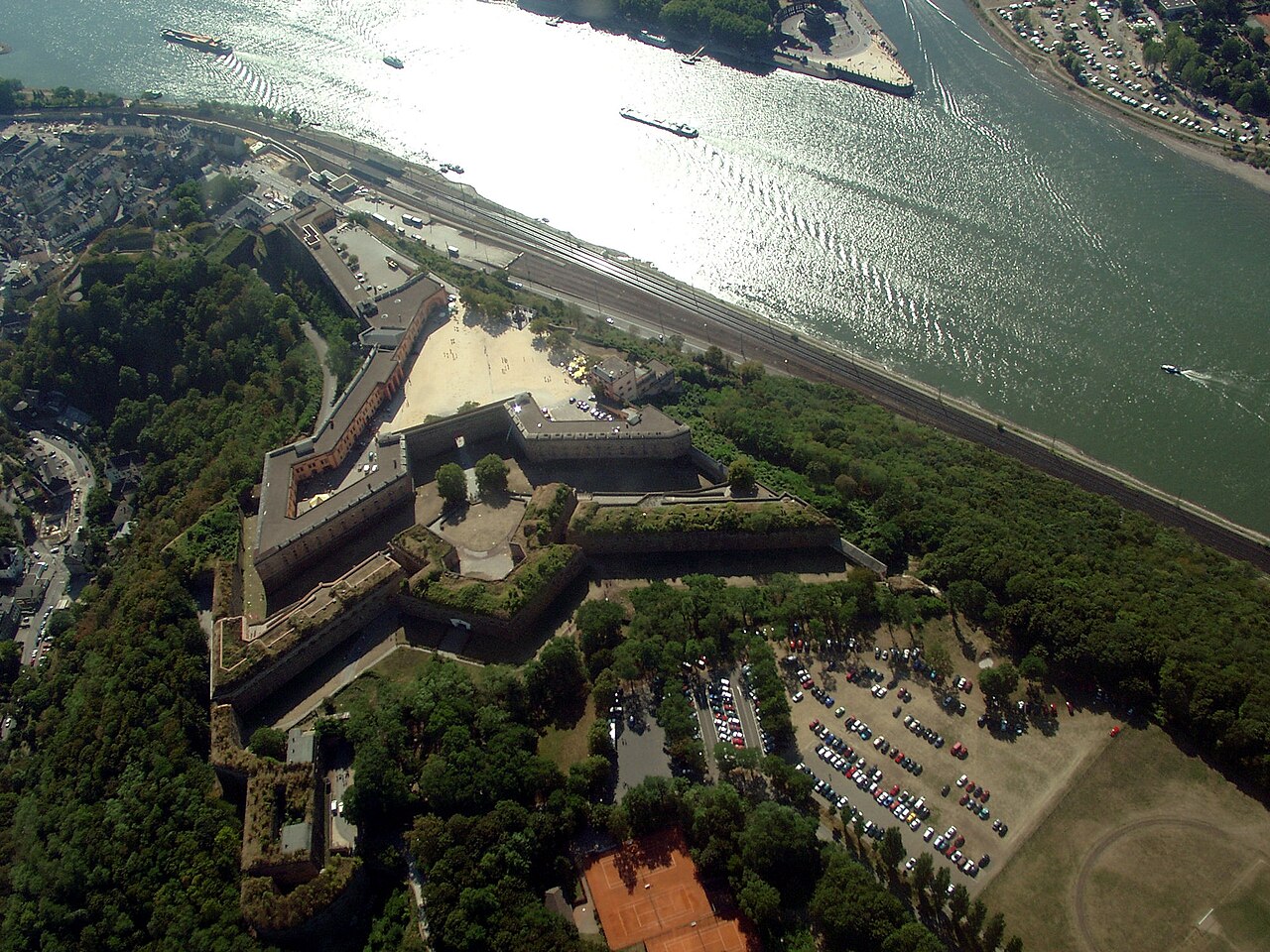
Close to Stolzenfels Castle lies the Ehrenbreitstein Fortress on the east bank of the Rhine, another significant Prussian fortification built between 1817 and 1828. Though never attacked, Ehrenbreitstein played a key role in regional defense and now houses several museums. It is connected to Koblenz by a cable car and an inclined lift, complementing the cultural experience of visitors exploring the Upper Middle Rhine Valley.
Frequently asked questions (FAQ)
- How do I get to Stolzenfels Castle?
- Stolzenfels Castle is located just south of Koblenz, Germany, easily accessible by car or public transport. If you're traveling by train, you can take a bus or a pleasant walk along the Rhine River to reach the castle.
- What is the historical significance of Stolzenfels Castle?
- Stolzenfels Castle was originally built in the 13th century and played a crucial role in the defense of the Rhine River. It was later restored in the 19th century by King Friedrich Wilhelm IV of Prussia, who transformed it into a romantic castle, showcasing the architectural styles of that era.
- When was Stolzenfels Castle built?
- Stolzenfels Castle was first constructed in 1259 as a medieval fortress. The castle underwent significant renovations in the mid-1800s, reflecting the romantic ideals of the time, which added to its historical charm.
- Can I take guided tours of Stolzenfels Castle?
- Yes, guided tours are available, allowing visitors to explore the castle's rich history and stunning architecture. These tours are typically offered in multiple languages and provide in-depth insights into the castle's past and its significance in the region.
- Why is Stolzenfels Castle considered an architectural gem?
- Stolzenfels Castle is known for its unique blend of Gothic, Romanesque, and Renaissance architectural styles, showcasing the evolution of castle design. Its picturesque setting on a hill overlooking the Rhine River adds to its allure, making it a favorite among visitors and photographers alike.
- Is it possible to visit Stolzenfels Castle with mobility impairments?
- While Stolzenfels Castle is a historical site, efforts have been made to improve accessibility for visitors with mobility impairments. However, due to the castle's terrain and historical features, some areas may still pose challenges, so it's advisable to check in advance for specific accessibility options.
- What are the opening hours for Stolzenfels Castle?
- Stolzenfels Castle is typically open to visitors from March to November, with varying hours depending on the time of year. It's best to check the official website for the most current information on opening hours before your visit.
- What are the ticket prices for visiting Stolzenfels Castle?
- Ticket prices for Stolzenfels Castle are quite reasonable, with discounts available for students, seniors, and groups. Children under a certain age often receive free admission, making it an affordable outing for families.
- When is the best time to visit Stolzenfels Castle?
- The best time to visit Stolzenfels Castle is during the spring and summer months when the weather is pleasant and the surrounding gardens are in full bloom. Additionally, special events and festivals often take place during this time, enhancing the visitor experience.
- Are there any nearby attractions to explore after visiting Stolzenfels Castle?
- Yes, after visiting Stolzenfels Castle, you can explore the beautiful Rhine Valley, which is famous for its vineyards and charming towns. The city of Koblenz, with its Deutsches Eck and the Ehrenbreitstein Fortress, is also nearby and worth a visit.
Photo gallery

Information
Website
Visit websiteSources & official resources
Verify the information above using these authoritative references.
Loading map...
Visitor reviews
No reviews yet. Been here? Write the first review and help other travelers!
Write the first reviewVisited this castle? Share your experience
Your review helps other travelers and adds first-hand knowledge to our encyclopedia.