Fort Constantin
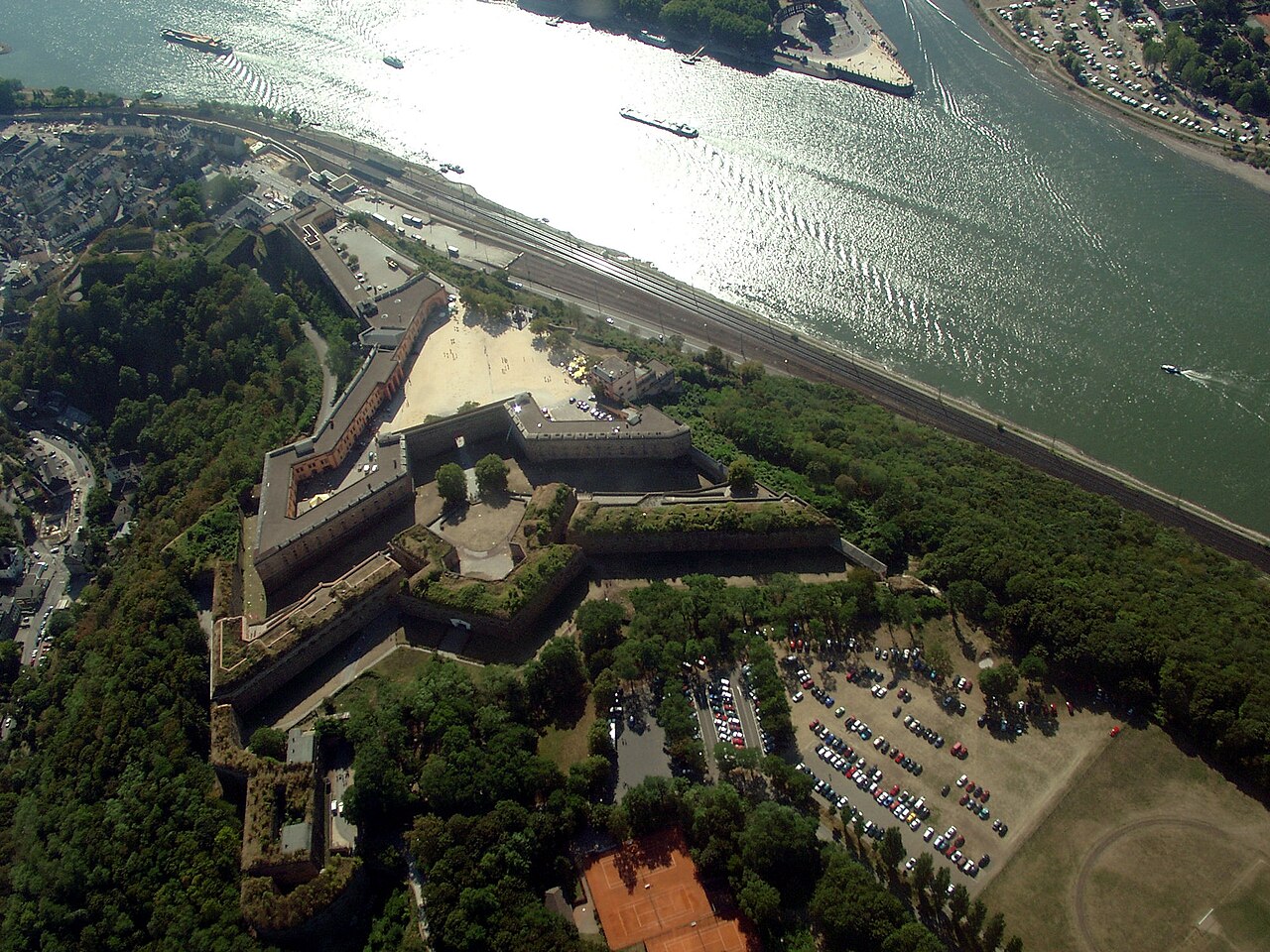
Fort Constantin, also known as Fort Grand Duke Constantine (Fort Großfürst Konstantin), is a significant 19th-century fortress located in the Karthause district of Koblenz, Germany. Constructed between 1827 and 1828, it was an integral part of the extensive Prussian fortress system designed to defend the strategic confluence of the Rhine and Moselle rivers. This fortress was named in honor of Grand Duke Konstantin Pavlovich of Russia, reflecting the historical ties and alliances of the period.
Historical context and strategic importance
Fort Constantin was built during a period of intense military fortification in the early 19th century, a time when Prussia sought to strengthen its western borders following the upheavals of the Napoleonic Wars. The fortress formed part of the defensive network around Koblenz, which included the massive Ehrenbreitstein Fortress across the Rhine. Together, these fortifications were intended to protect the region from French incursions and secure Prussian territorial claims.
The location of Fort Constantin on the Karthause hill provided a commanding view over the Rhine valley, allowing control of river traffic and early warning of approaching forces. Its position complemented the larger Ehrenbreitstein Fortress, creating overlapping fields of fire and mutual support between the fortifications.
Architectural design and features
The fortress exemplifies 19th-century military architecture influenced by the principles of bastioned fortifications adapted to modern artillery. Constructed primarily of stone and brick, Fort Constantin features a bastioned layout with angled walls designed to deflect cannon fire and reduce blind spots.
Key architectural elements include:
- Bastions at the corners, allowing enfilading fire along the walls.
- Thick curtain walls built to withstand artillery bombardment.
- Moats and ditches surrounding the fortress for added defense.
- Casemates and bombproof shelters to protect the garrison and ammunition.
- Gatehouses with defensive features such as portcullises and guardrooms.
The design reflects the transition from medieval fortifications to modern military engineering, emphasizing artillery defense and the integration of living quarters and storage within the fort's walls.
Role in military history
Throughout the 19th century and into the early 20th century, Fort Constantin served as a key defensive position within the Prussian and later German Empire's military infrastructure. It was maintained and upgraded as artillery technology evolved but did not see significant combat action due to the deterrent effect of the Koblenz fortress system.
During both World Wars, the fortress area was used for military purposes, including as a garrison and storage site. However, the fort itself did not play a direct combat role and was eventually decommissioned as military technology and tactics changed.
Preservation and current status
Today, Fort Constantin remains a well-preserved example of early 19th-century fortress architecture. Its robust construction and historical significance have made it a subject of interest for historians and visitors alike. The fort is partially accessible to the public and serves as a cultural landmark within Koblenz.
The site occasionally hosts guided tours and educational events that highlight its architectural features and historical role in the region's defense. Preservation efforts focus on maintaining the structural integrity of the walls and bastions while allowing safe visitor access.
Visiting information
Fort Constantin is located in the Karthause district of Koblenz, accessible by local transportation and car. Visitors can explore the exterior fortifications and some interior areas during guided tours, which provide detailed insights into its construction and military history.
Opening times and ticket prices vary depending on the season and event schedule, so checking local tourist information before planning a visit is recommended.
Frequently asked questions (FAQ)
- How do I get to Fort Constantin?
- Fort Constantin is located in Koblenz, Germany, and can be easily accessed by public transportation. The nearest bus stop is just a short walk away, and there are also parking facilities nearby for those arriving by car.
- What is the historical significance of Fort Constantin?
- Fort Constantin was built in the 19th century as part of the defensive fortifications in Koblenz. It played a crucial role in the military history of the region and provides insight into the strategic military architecture of its time.
- When was Fort Constantin constructed?
- Construction of Fort Constantin began in 1860 and was completed in 1867. It was designed during a period of significant military expansion in Prussia and reflects the architectural style of that era.
- Can I take guided tours of Fort Constantin?
- Yes, guided tours of Fort Constantin are available and provide an in-depth look at its history and architecture. Tours are conducted by knowledgeable guides who share fascinating stories about the fort and its significance.
- Why is Fort Constantin a popular tourist attraction?
- Fort Constantin is popular due to its impressive architecture, rich history, and stunning views of the Rhine River. Visitors are drawn to its unique design and the chance to explore a well-preserved piece of military history.
- Is it possible to host events at Fort Constantin?
- Yes, Fort Constantin offers facilities for hosting events such as weddings, corporate gatherings, and educational programs. The scenic backdrop and historical ambiance make it a memorable venue for various occasions.
- What are the opening hours of Fort Constantin?
- Fort Constantin is typically open to visitors from 10 AM to 6 PM, but hours may vary based on the season and special events. It is advisable to check the official website for the most current information before planning your visit.
- What are the ticket prices for visiting Fort Constantin?
- Ticket prices for Fort Constantin are generally affordable, with discounts available for children, students, and seniors. Group rates are also offered, making it an accessible destination for families and school trips.
- When is the best time to visit Fort Constantin?
- The best time to visit Fort Constantin is during the spring and early autumn months when the weather is mild and pleasant. These seasons also provide opportunities to enjoy the surrounding scenery and participate in outdoor events often held at the fort.
- Are there any nearby attractions to visit after Fort Constantin?
- Yes, there are several nearby attractions, including the Ehrenbreitstein Fortress and the beautiful gardens along the Rhine River. Visitors can easily explore these sites to enhance their experience in Koblenz.
Information
Loading map...
Visitor reviews
No reviews yet. Been here? Write the first review and help other travelers!
Write the first reviewVisited this castle? Share your experience
Your review helps other travelers and adds first-hand knowledge to our encyclopedia.