Stolpen Castle
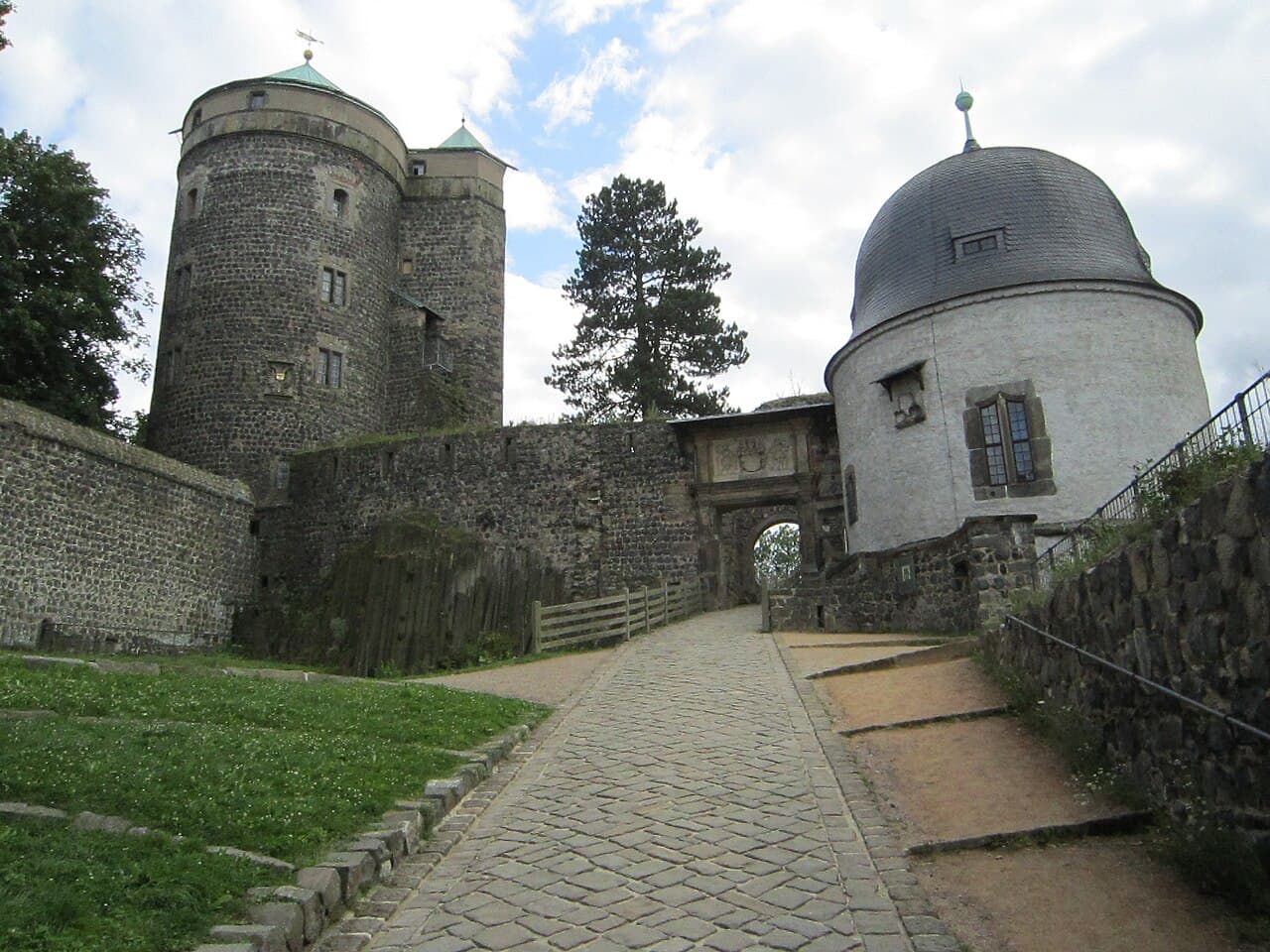
Stolpen Castle is a significant hill castle located atop the Schloßberg overlooking the town of Stolpen in Saxony, Germany. Its origins date back to around 1100, when the first defensive structures were erected, marking it as a notable example of high medieval fortification. The castle was first officially documented in 1222, establishing its early importance in regional defense and administration.
Early history and ownership
For nearly 350 years, Stolpen Castle was under the ownership of the Bishops of Meißen. During this period, it served both as a residence and a strategic stronghold, controlling the surrounding territory. The castle's position on the hill provided commanding views and defensive advantages, typical of medieval military architecture.
Renaissance expansion and architectural evolution
After passing from ecclesiastical hands, Stolpen Castle came under the control of the Electorate of Saxony. This transition ushered in significant architectural changes, particularly during the Renaissance period. The castle was expanded and remodeled to reflect Renaissance aesthetics and functional improvements, including enhanced living quarters and fortifications. These modifications included the addition of ornate residential wings and the adaptation of defensive structures to contemporary military needs.
Fortification and military significance in the 17th century
In 1675, Stolpen underwent a major transformation into a fortress, significantly increasing its military importance. This conversion involved reinforcing the walls, adding bastions, and adapting the castle to withstand artillery siege warfare, which was becoming increasingly prevalent in Europe. The fortress played a role in regional conflicts and served as a garrison until the end of the Augustinian Age in 1763, when the military presence was dissolved.
Countess cosel: imprisonment and legacy
One of the most notable chapters in Stolpen Castle's history is its role as a prison for Countess Anna Constantia von Brockdorff, better known as Countess Cosel. She was the mistress of Augustus the Strong, Elector of Saxony and King of Poland. After falling out of favor, she was confined at Stolpen for 49 years until her death in 1765 at nearly 85 years old. Her imprisonment is a defining aspect of the castle's historical narrative. Countess Cosel was buried within the castle chapel, which remains a site of interest for visitors.
Decline, restoration, and modern use
Following the dissolution of the garrison, Stolpen Castle gradually fell into disrepair towards the end of the 18th century. However, it was preserved from complete ruin by being converted into a museum in 1875. Since then, efforts have been made to restore parts of the castle, balancing preservation with public accessibility. The castle today is partially restored and open to visitors, attracting around 100,000 tourists annually.
Museum and events
The castle hosts a daily museum operation that showcases its rich history and architectural features. The historic granary within the castle grounds is notable for its original wooden-beam architecture, offering insight into medieval storage techniques. The castle yards provide a unique atmosphere for events, ranging from cultural festivals to historical reenactments, enhancing the visitor experience with immersive settings.
Architectural highlights
Stolpen Castle's architecture reflects its long history, combining medieval defensive elements with Renaissance residential expansions and later fortification adaptations. Key features include robust stone walls, towers that command the surrounding landscape, and the castle chapel that houses Countess Cosel's burial site. The transformation into a fortress introduced bastions and artillery platforms, demonstrating the evolution of military architecture from the medieval to early modern period.
Castle layout and structural components
The castle is organized around a central courtyard, with residential and defensive buildings arranged to maximize protection and functionality. The Schloßberg hill location enhances its natural defenses, with steep slopes on several sides. The granary and other ancillary buildings illustrate the castle's role not only as a military installation but also as a self-sustaining estate.
Cultural significance and tourism
Stolpen Castle remains an important cultural landmark in Saxony, symbolizing the region's medieval heritage and its Renaissance transformation. The story of Countess Cosel adds a personal dimension to its history, drawing visitors interested in the human stories behind the stone walls. The castle's museum and event programming contribute to its role as a center for historical education and cultural activities.
Frequently asked questions (FAQ)
- How do I get to Stolpen Castle?
- Stolpen Castle is located in the town of Stolpen in Saxony, Germany. It is accessible by car and public transportation, with local buses connecting from nearby cities such as Dresden.
- What is the best time to visit Stolpen Castle?
- The castle is open year-round, but the best time to visit is during the spring and summer months when the weather is pleasant and outdoor events are held in the castle yards.
- Can I tour Countess Cosel's prison at Stolpen Castle?
- Yes, visitors can explore the areas of the castle where Countess Cosel was imprisoned. The museum provides detailed exhibits about her life and imprisonment.
- Are there guided tours available at Stolpen Castle?
- Guided tours are offered regularly, providing in-depth historical context and architectural insights. Check the castle’s official website or visitor center for tour schedules.
- Is Stolpen Castle wheelchair accessible?
- Due to the castle's medieval hilltop location and historic structures, wheelchair access is limited. Visitors with mobility concerns should contact the castle in advance for assistance and information.
Photo gallery

Information
Website
Visit websiteSources & official resources
Verify the information above using these authoritative references.
Loading map...
Visitor reviews
No reviews yet. Been here? Write the first review and help other travelers!
Write the first reviewVisited this castle? Share your experience
Your review helps other travelers and adds first-hand knowledge to our encyclopedia.