Hohnstein Castle
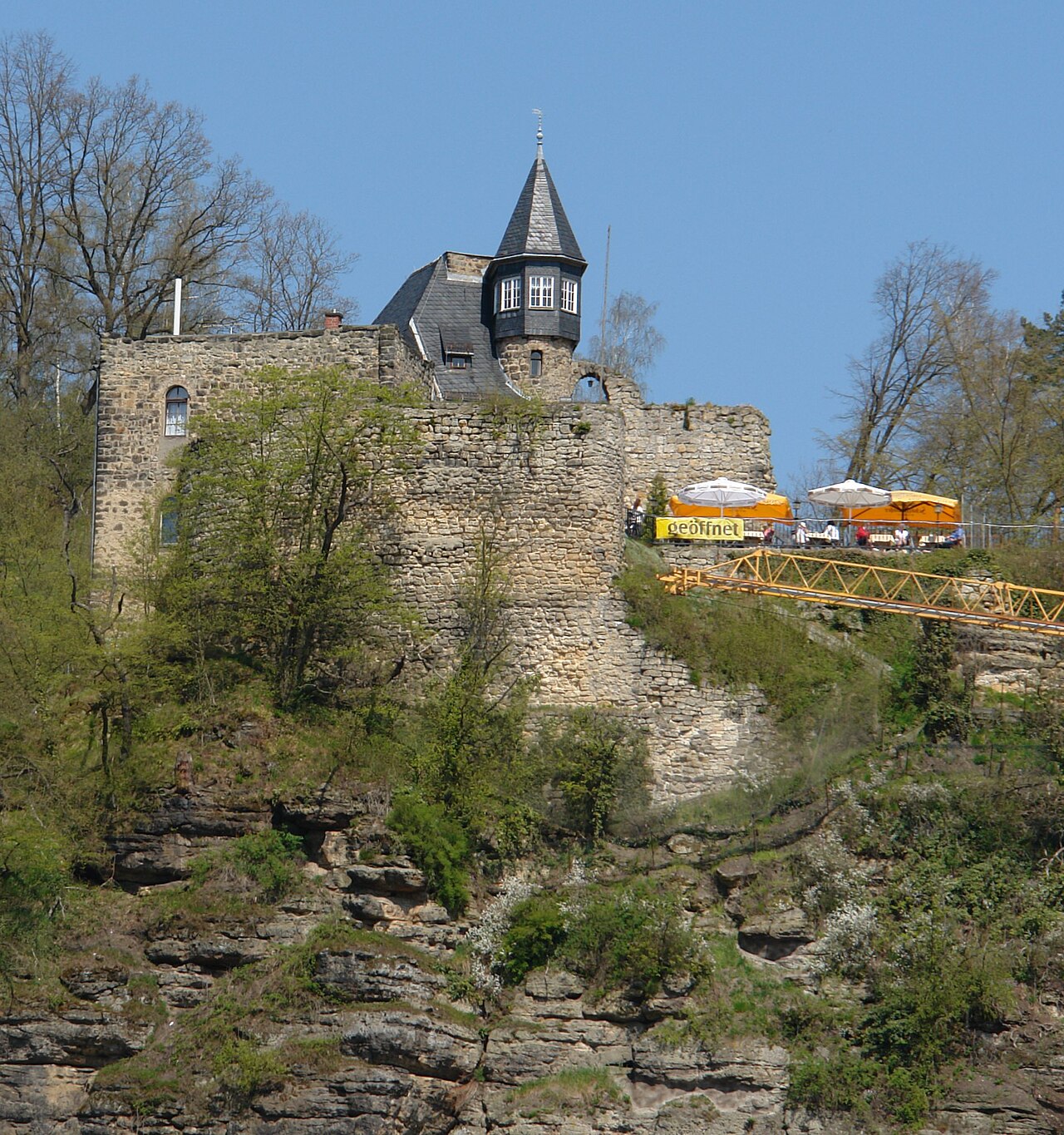
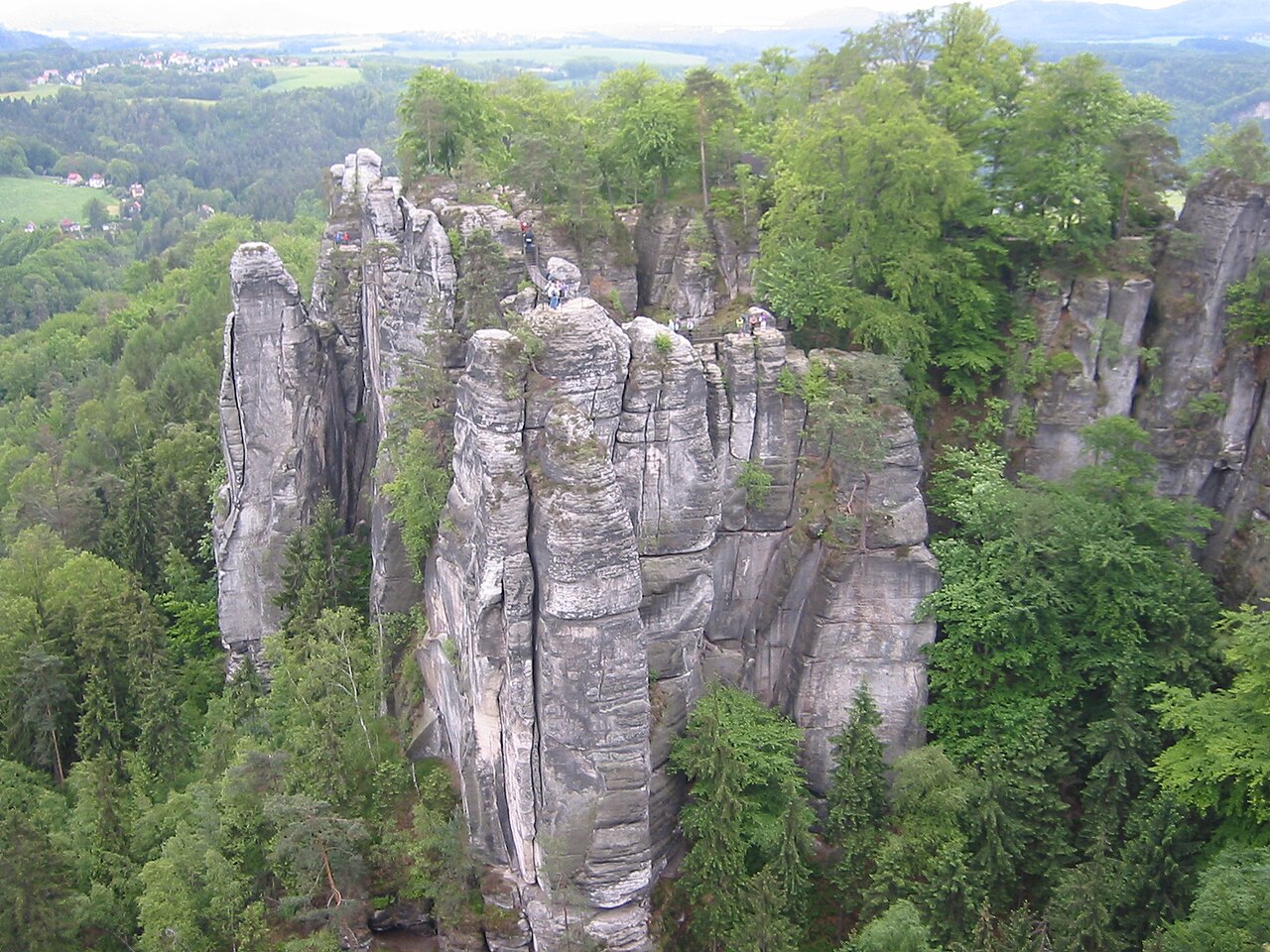
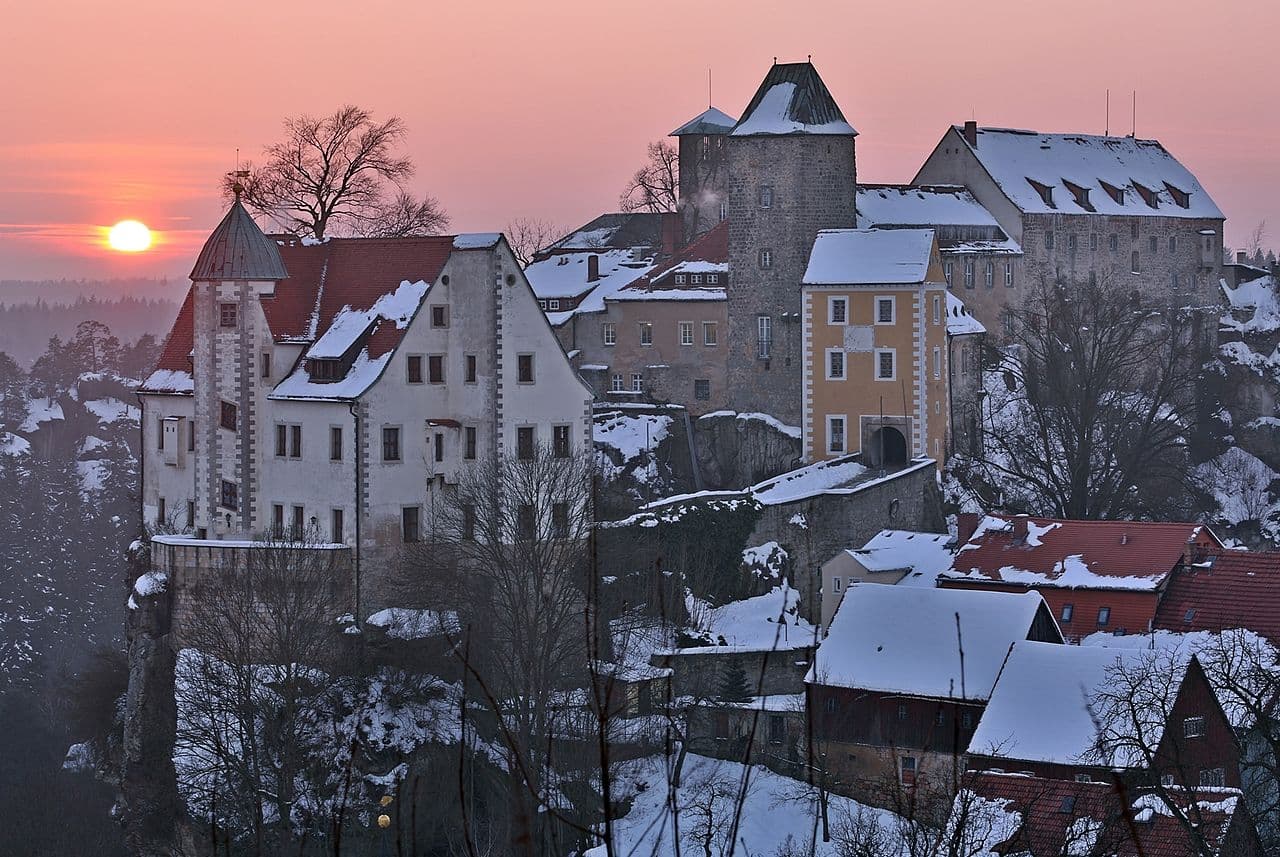
Hohnstein Castle stands prominently on a hard sandstone slab, approximately 140 metres above the Polenz valley, dominating the small town of Hohnstein in Saxony, Germany. This hill castle was likely constructed around the early 13th century, circa 1200, serving as a strategic border fortress for the Margravate of Meissen. Its primary purpose was to defend the region against incursions from Saxony and to secure the Bohemian frontier. The castle's commanding position atop a sandstone outcrop provided natural defensive advantages, making it a formidable stronghold in the region.
Early history and strategic importance
The origins of Hohnstein Castle are tied to the turbulent political landscape of the high medieval period. Initially, it was built by German settlers during the eastward expansion into Slavic territories. The castle first belonged to the noble von Schönburg family in the early 14th century before passing in 1353 to the Bohemian noble house of Berka von der Duba. The Berka family held the castle as a fief under King Charles IV of Bohemia, and their coat of arms, featuring crossed oak branches, still adorns the entrance to the castle's second courtyard.
In 1443, ownership transferred to the Electorate of Saxony under Frederick the Humble, although the castle remained a Bohemian fief until the dissolution of the Holy Roman Empire in 1806. During Wettin rule, the fortress was used as a hunting base and was famed for salmon spearing, locally known as Lachsstechen. Over the centuries, it also served as an administrative center (Amt), a judicial court, and a prison.
Architectural evolution and military resilience
The original castle featured predominantly wooden structures typical of early medieval fortifications. These were gradually replaced by robust stone buildings during the 17th and 18th centuries, reflecting advances in defensive architecture and the need for more durable construction. The castle's stone fortifications famously withstood a Swedish siege in 1639 during the Thirty Years' War, underscoring its strategic and military significance.
Adjacent to the medieval fortress lies a Renaissance palace dating from around 1550, which represents a significant architectural expansion. This palace introduced Renaissance stylistic elements, blending residential comfort with the castle's defensive functions.
Changing roles through the centuries
Following the dissolution of the Amt in 1861, Hohnstein Castle was repurposed as a men's correctional institution and later, in 1919, as a juvenile prison. Reflecting evolving social policies, the castle was transformed into a youth hostel in 1925, accommodating up to 1,000 guests, making it one of the largest youth hostels in Germany at the time. The renowned Hohnsteiner Kasper puppet theatre premiered there in 1928, adding cultural significance to the site.
During the Nazi era, in 1933-34, the castle was used as a concentration camp for approximately 5,600 political prisoners, known as "protective custody prisoners" (Schutzhäftlinge). During World War II, it functioned as a prisoner-of-war camp (Oflag IV-A and Stalag IV-A), detaining soldiers from various nations. After the war, it served as a refuge for displaced persons before becoming East Germany's largest youth hostel by 1949, named in honor of Communist leader Ernst Thälmann in 1951.
Cultural and scientific significance in the modern era
In 1953, the castle became home to the National Science Museum, showcasing exhibits on geology, botany, zoology, and ecology of the surrounding region. This integration of natural science exhibits with the castle's historical context highlights its multifaceted cultural importance.
Post-reunification, the castle's ownership passed to local authorities. From 1996 to 2007, it was managed by the Deutsche Naturfreunde association until insolvency led to renewed municipal control in 2018. Ongoing restoration efforts commenced, with initial work focusing on the castle gardens starting in 2024, aiming to preserve this historic landmark well into the future.
Architectural features and remains
Hohnstein Castle is classified as a rock castle, uniquely positioned on a sandstone outcrop that offers natural fortification. The layout includes multiple courtyards, with the second courtyard's entrance prominently displaying the Berka von der Duba coat of arms. The castle's stone walls, towers, and gates reflect centuries of architectural evolution from medieval fortification to Renaissance residence.
The castle complex also contains a Renaissance palace constructed around 1550, which adds residential elegance to the otherwise military-focused structures. The transition from wooden to stone buildings in the 17th and 18th centuries reflects the adaptation to changing military technologies and the need for more durable defenses.
Despite periods of decline and partial disuse, the castle's structure remains largely intact, though some sections have been closed to the public due to preservation concerns. The museum within the castle continues to operate, linking the site's natural and cultural heritage.
Visitor information and ongoing preservation
Today, Hohnstein Castle serves as a cultural and historical monument, attracting visitors interested in medieval architecture, German history, and natural sciences. The castle's elevated position provides panoramic views of the Polenz valley and the surrounding Saxon landscape.
Restoration projects aim to stabilize and enhance the castle's features, ensuring its preservation for future generations. Visitors can explore the courtyards, museum exhibits, and enjoy the surrounding natural beauty. The castle's rich history, spanning from a medieval fortress to a modern youth hostel and museum, makes it a unique destination in Saxony.
Frequently asked questions (FAQ)
- How do I get to Hohnstein Castle?
- Hohnstein Castle is located in the town of Hohnstein, Saxony, Germany. It is accessible by car and local public transportation. The castle sits on a sandstone outcrop above the town, with pedestrian paths leading from the market square to the castle entrance.
- What is the historical significance of Hohnstein Castle?
- Hohnstein Castle played a key role as a border fortress for the Margravate of Meissen and later as a Bohemian fief. It has served various functions including a hunting lodge, administrative seat, prison, concentration camp, and youth hostel, reflecting its layered history.
- Can I visit the museum inside Hohnstein Castle?
- Yes, the castle houses a National Science Museum featuring exhibits on geology, botany, zoology, and ecology of the region. The museum is open during regular visiting hours and offers educational displays that complement the castle's historical context.
- When is the best time to visit Hohnstein Castle?
- The castle is best visited during the warmer months from spring through early autumn when the weather is favorable for exploring the outdoor courtyards and enjoying panoramic views of the Polenz valley.
- Is Hohnstein Castle wheelchair accessible?
- Due to its hilltop location and historic architecture, full wheelchair accessibility is limited. Some areas may be challenging to access, but efforts are ongoing to improve visitor facilities while preserving the castle's integrity.
Photo gallery

Information
Sources & official resources
Verify the information above using these authoritative references.
Loading map...
Visitor reviews
No reviews yet. Been here? Write the first review and help other travelers!
Write the first reviewVisited this castle? Share your experience
Your review helps other travelers and adds first-hand knowledge to our encyclopedia.