Stolac Castle
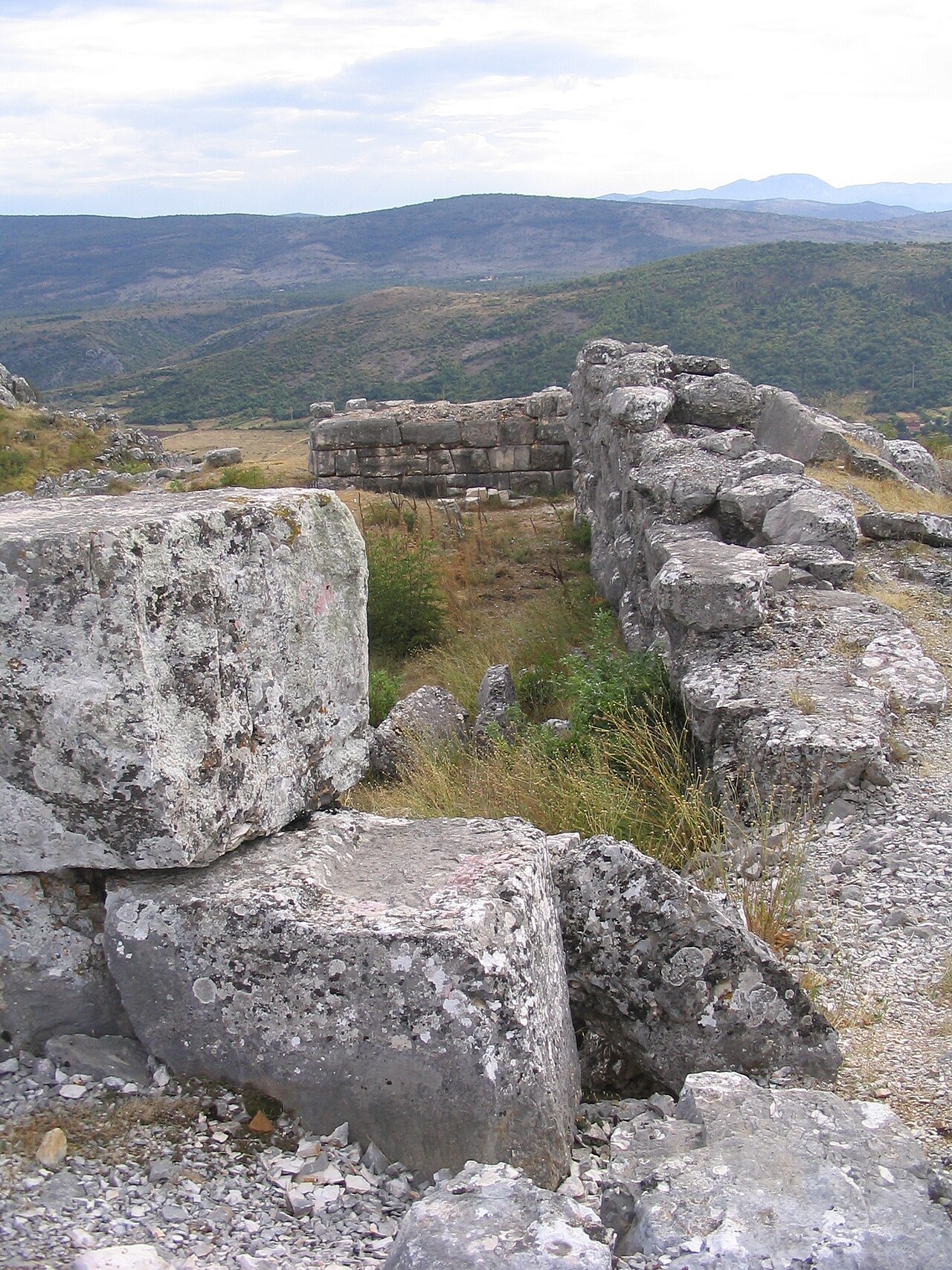
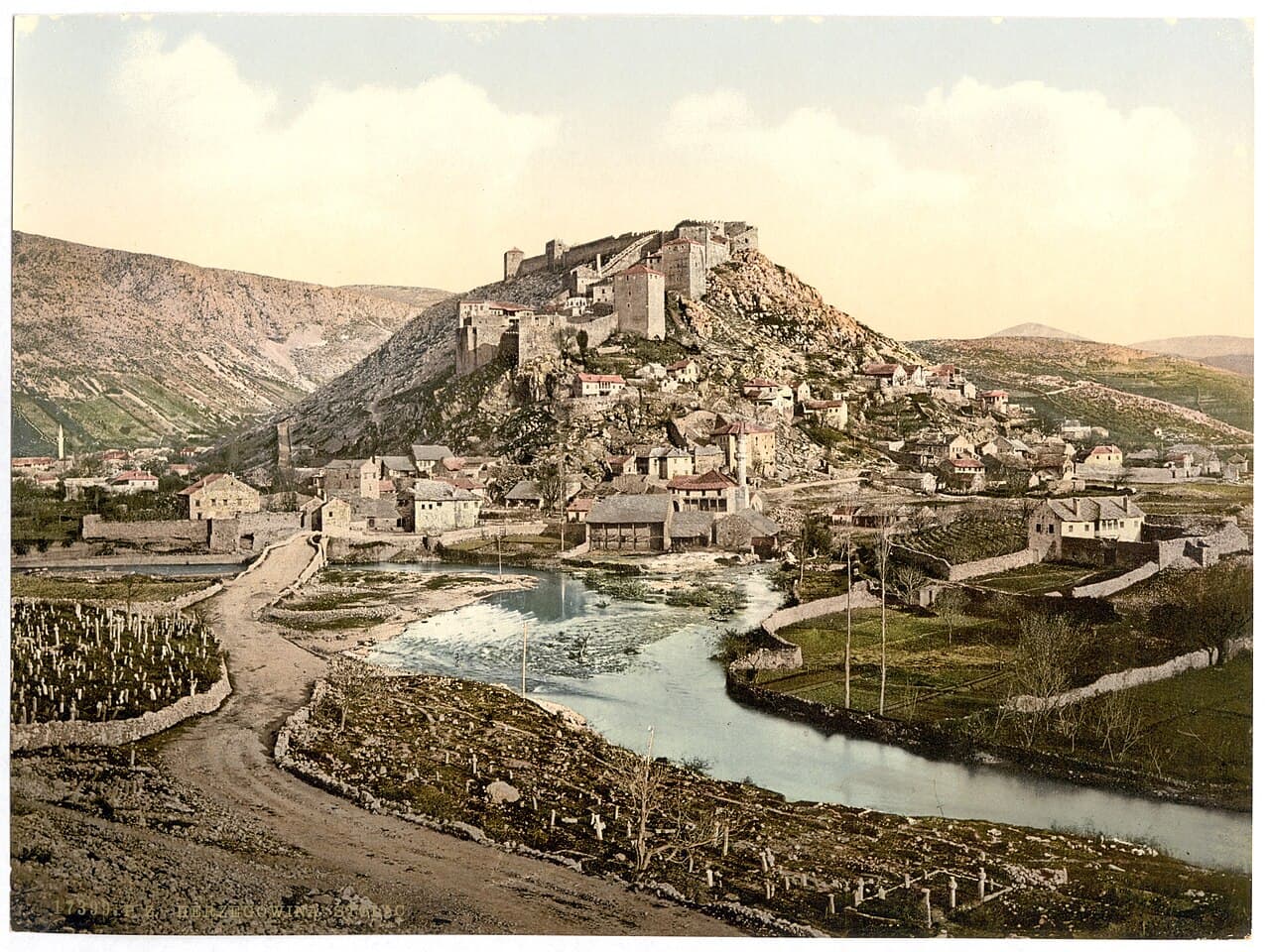
Stolac Castle, also known historically as the Walled town of Vidoški, stands as one of the largest and most significant medieval fortresses in Bosnia and Herzegovina. Perched strategically on a hill overlooking the town of Stolac, this extensive complex of stone walls, towers, and bastions reflects a rich history spanning from prehistoric times through the medieval period and into the Austro-Hungarian era. Its commanding position provided a vital defensive stronghold controlling the surrounding valley and trade routes, underscoring its importance in regional military and political affairs.
The origins of Stolac Castle trace back to the High Medieval period, with construction beginning in the 13th century. However, archaeological evidence reveals that the site had been inhabited since prehistoric times, with the northwestern part of the fortress likely serving as a settlement area outside the walls in antiquity. The location corresponds to the ancient municipium of Dilentum, with finds dating from the 1st to 2nd centuries CE and fortifications from the late antique era. This continuous occupation highlights the site's long-standing strategic and cultural significance.
Medieval development and historical context
The fortress is first documented in historical records in the mid-15th century, notably in a 1444 charter by King Alfonso V of Aragon and Naples, which records it as the possession of the powerful Bosnian noble Stjepan Vukčić Kosača. Subsequent mentions by Frederick III, Holy Roman Emperor, and Alfonso V again, confirm the castle's critical role within the Kosača domain during a turbulent period of political consolidation in the Kingdom of Bosnia.
Between 1465 and 1469, Stolac Castle fell to the advancing Ottoman Empire and was incorporated into the Herzegovina Sanjak. Under Ottoman rule, the fortress was maintained and expanded, serving as a military garrison commanded by a dizdar. The establishment of the Stolac captaincy around 1706 further solidified its administrative and military importance within the Ottoman provincial system.
Following the 1699 Treaty of Karlowitz, the fortress underwent repairs and extensions to bolster its defenses. The Ottoman period left a distinct architectural imprint, including the construction of the Veli-dedina mosque within the lower town, featuring an octagonal stone minaret and a mihrab niche, reflecting the religious and cultural influence of the era.
Austro-hungarian era and modern transformations
In 1878, the Austro-Hungarian Empire established control over Stolac, initiating a new phase of military and administrative use for the fortress. The military authorities conducted extensive repairs in 1883 and constructed a modern polygonal fortress above the medieval complex in 1888-1889. This newer fortification incorporated advanced defensive features such as pentagonal artillery platforms armed with 90-millimeter guns, flank caponiers for wall defense, and machicolations on windows—demonstrating the adaptation of the site to contemporary military technology.
The Austro-Hungarian fortress included barracks, storage for equipment and horses, and a newly built access road to facilitate logistics. Infrastructure improvements such as postal and telegraph communication, water supply, and telephone lines were installed by 1912, reflecting the site's ongoing strategic relevance.
Architectural features and fortifications
Spanning approximately 20,500 square meters, Stolac Castle is divided into three main sections: the lower town, middle town, and upper town, each with distinctive architectural and functional characteristics.
Lower town
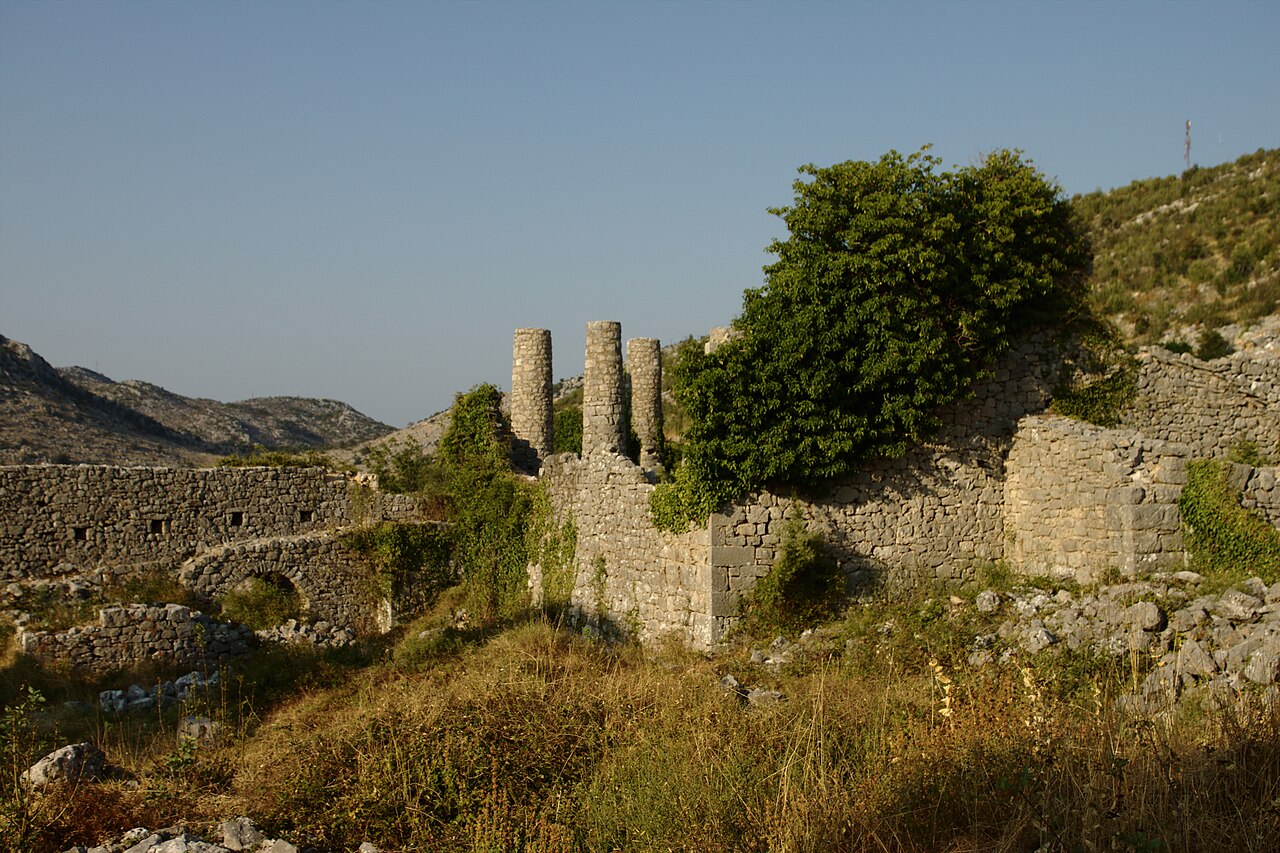
The lower town, covering about 8,481 square meters, is enclosed on three sides by thick stone walls averaging two meters in thickness and thirteen defensive towers constructed primarily from local gray limestone known as sivac. The main entrance is located on the northeastern curtain wall, which measures nearly 45 meters in length and features a guardroom above the gate. Within this section lie the ruins of the Veli-dedina mosque, a 113-square-meter structure with a water cistern beneath its floor. Architectural remnants include the octagonal stone minaret and the mihrab niche on the southern wall, underscoring the fortress's religious heritage during Ottoman times.
Middle town
The middle town, approximately 2,005 square meters, is constructed largely from white limestone quarried on the island of Brač. This area housed military buildings essential for the fortress's defense, including fortified walls and three water cisterns for rainwater storage. An ammunition storage facility was also located here. Although some walls have suffered damage, restoration efforts have preserved key elements of medieval military architecture, including the entrance gate.
Upper town
Located uphill and to the east, the upper town covers around 8,579 square meters and includes five towers connected by defensive walls. One tower served as an explosives depot but was destroyed twice by lightning strikes. The defensive walls here extend over 100 meters in length and feature rows of gunports designed for firearm defense, reflecting adaptations to evolving military technology.
The towers vary in size, ranging from approximately 65 to 232 square meters. The sixth tower in the lower town remains the best preserved, while others exhibit varying degrees of ruin.
Water management and supporting infrastructure
Integral to the fortress's resilience during sieges is its sophisticated water management system. A network of ten water cisterns is distributed throughout the complex, located near entrances, between towers, and within each town section. These cisterns collected and stored rainwater, ensuring a reliable supply for the garrison and inhabitants.
Additional infrastructure included granaries and residential buildings, reflecting the fortress's role as a self-sustaining military and administrative center. The combination of defensive and domestic facilities illustrates the comprehensive planning behind the fortress's construction and use.
Cultural significance and contemporary use
In recognition of its historical and cultural importance, Stolac Castle was designated a national monument of Bosnia and Herzegovina in 2003. The site attracts visitors interested in medieval history, architecture, and the region's layered past.
Since 2015, the castle has hosted the annual Stolačka tarča, a medieval-themed fair held each midsummer. This event celebrates the fortress's heritage through reenactments, traditional music and dance, archery demonstrations, and exhibitions of medieval crafts and weaponry. The fair offers a unique opportunity for locals and tourists alike to engage with the rich cultural legacy of Stolac Castle.
Today, Stolac Castle stands as a testament to the complex history of Bosnia and Herzegovina, embodying centuries of architectural evolution, military strategy, and cultural exchange. Its well-preserved ruins and ongoing cultural activities ensure that this historic fortress continues to inspire and educate future generations.
Frequently asked questions (FAQ)
- How do I get to Stolac Castle?
- Stolac Castle is located in Stolac, Bosnia and Herzegovina, and can be accessed by car or public transport from major cities like Mostar or Sarajevo. Once in Stolac, follow local signage to reach the castle, which is situated on a hill offering stunning views of the surrounding area.
- What is the historical significance of Stolac Castle?
- Stolac Castle dates back to the medieval period and played a crucial role in the defense of the region against invasions. It is an important cultural landmark that reflects the rich history of Bosnia and Herzegovina, showcasing the architectural styles of its time.
- When was Stolac Castle built?
- Stolac Castle was constructed in the 12th century, although it has undergone various renovations and restorations throughout the centuries. Its enduring presence highlights the historical significance of the site in the context of regional defense and governance.
- Can I take guided tours of Stolac Castle?
- Yes, guided tours are available for visitors who wish to learn more about the history and architecture of Stolac Castle. These tours provide insightful information and allow you to explore the castle's ruins and scenic surroundings in detail.
- Why is Stolac Castle a popular tourist attraction?
- Stolac Castle is popular for its stunning panoramic views and rich historical background. Visitors are drawn to its architectural beauty and the opportunity to explore the remnants of a significant medieval fortress.
- Is it possible to visit Stolac Castle year-round?
- Yes, Stolac Castle is open to visitors year-round, though access may vary depending on weather conditions. The best time to visit is during the spring and fall when the weather is mild, making for a pleasant experience while exploring the grounds.
- What are the opening hours for Stolac Castle?
- Stolac Castle typically opens at 9 AM and closes at 6 PM during the peak tourist season. It is advisable to check local sources for any updates on opening hours, especially during the off-peak season.
- Are there any nearby attractions to visit while at Stolac Castle?
- Yes, nearby attractions include the historic town of Stolac, the natural beauty of the Bregava River, and the ancient necropolis of Radimlja. These sites complement your visit to Stolac Castle and provide a deeper understanding of the region's history and culture.
- What are the ticket prices for visiting Stolac Castle?
- Ticket prices for Stolac Castle are generally affordable, with discounts available for students and seniors. It is best to check on-site for the most current pricing and any special offers that may be available during your visit.
Photo gallery

Photo by Photochrom Print Collection•Public domain
Information
Loading map...
Visitor reviews
No reviews yet. Been here? Write the first review and help other travelers!
Write the first reviewVisited this castle? Share your experience
Your review helps other travelers and adds first-hand knowledge to our encyclopedia.