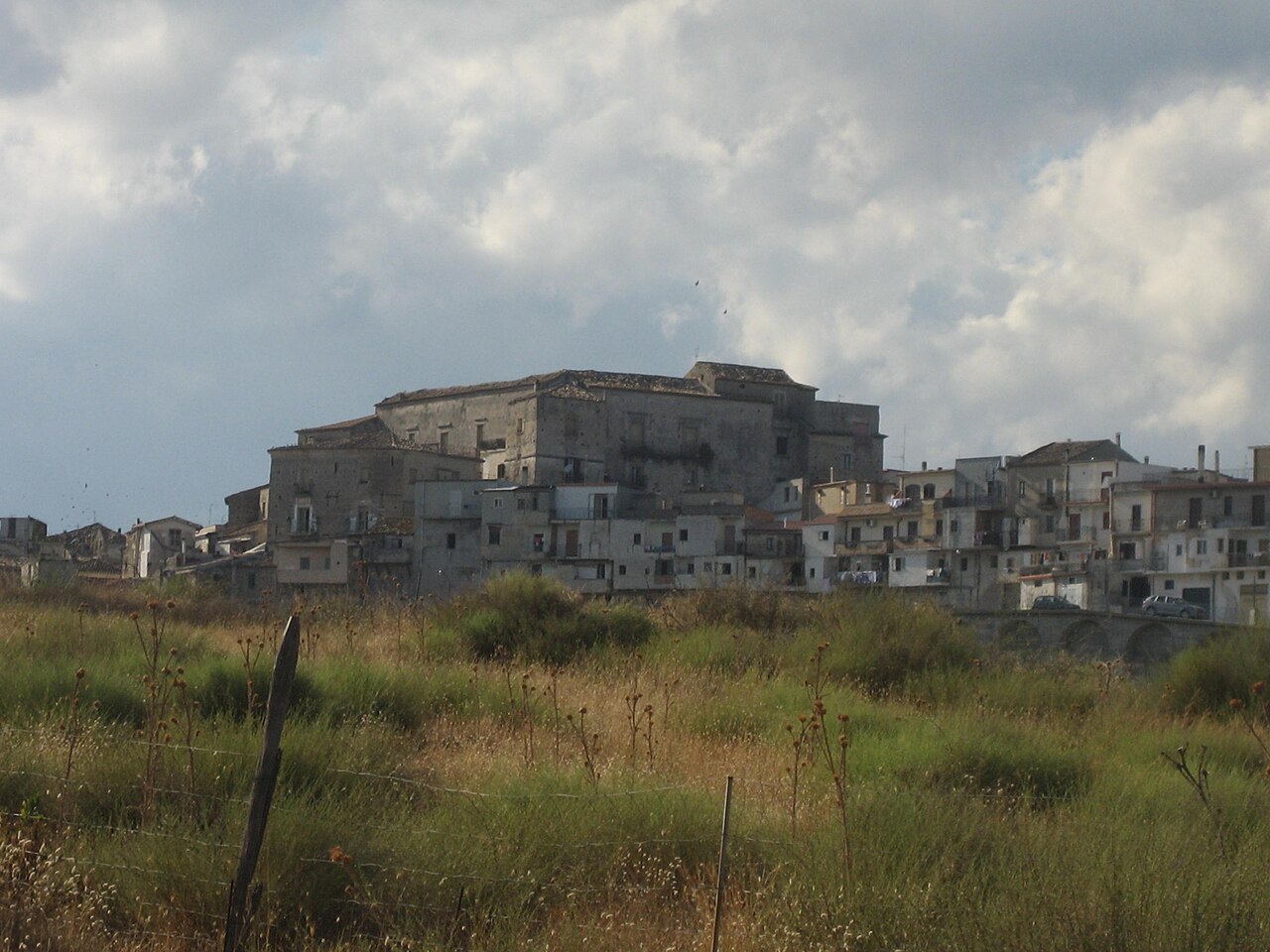
Stilo Castle
Stilo Castle, also known as the Norman Castle, is a prominent medieval fortress perched atop Monte Consolino overlooking the town of Stilo in Calabria, southern Italy. Constructed in the 11th century by the Normans, specifically under the command of Roger I of Sicily, it represents a significant example of Norman military architecture in southern Italy. The castle's strategic location provided commanding views of the surrounding landscape, allowing it to serve as a vital defensive stronghold in the region.
The earliest historical record of the castle dates back to 7 May 1093, when Count Roger made a concession to Saint Bruno, linking the site firmly to Norman authority. Throughout the High Medieval period, the castle played an important role in regional administration and military defense. By the 13th century, it was one of seventeen key castles in Calabria managed by the Royal Curia during the reign of Charles I of Naples. It also functioned as a prison during this era, with archival documents from 1281 detailing maintenance work authorized by royal officials.
Historical significance and governance
In 1323, control of the castle's castellany was granted by the Duke of Calabria, heir to King Robert, to Marco, a nobleman and constable of Settingiano. His family maintained stewardship over the fortress for an extended period, underscoring its continued importance in local governance. By the late 17th century, the castle was described by Father Apollinare Agresta as the strongest fortress in the province, commanding the landscape and valued by monarchs who required feudal lords to contribute to its upkeep. The 17th-century chronicler Giovanni Fiore da Cropani also mentioned the castle in his work "Della Calabria illustrata", highlighting its enduring regional prominence.
During the 18th century under the Kingdom of Naples, the castle was governed by a castellan appointed by the king, who commanded local defensive troops and received a daily wage. However, by the 19th century, the castle had fallen into disuse and ruin, reflecting changing military needs and political circumstances.
Architectural features and defensive structures
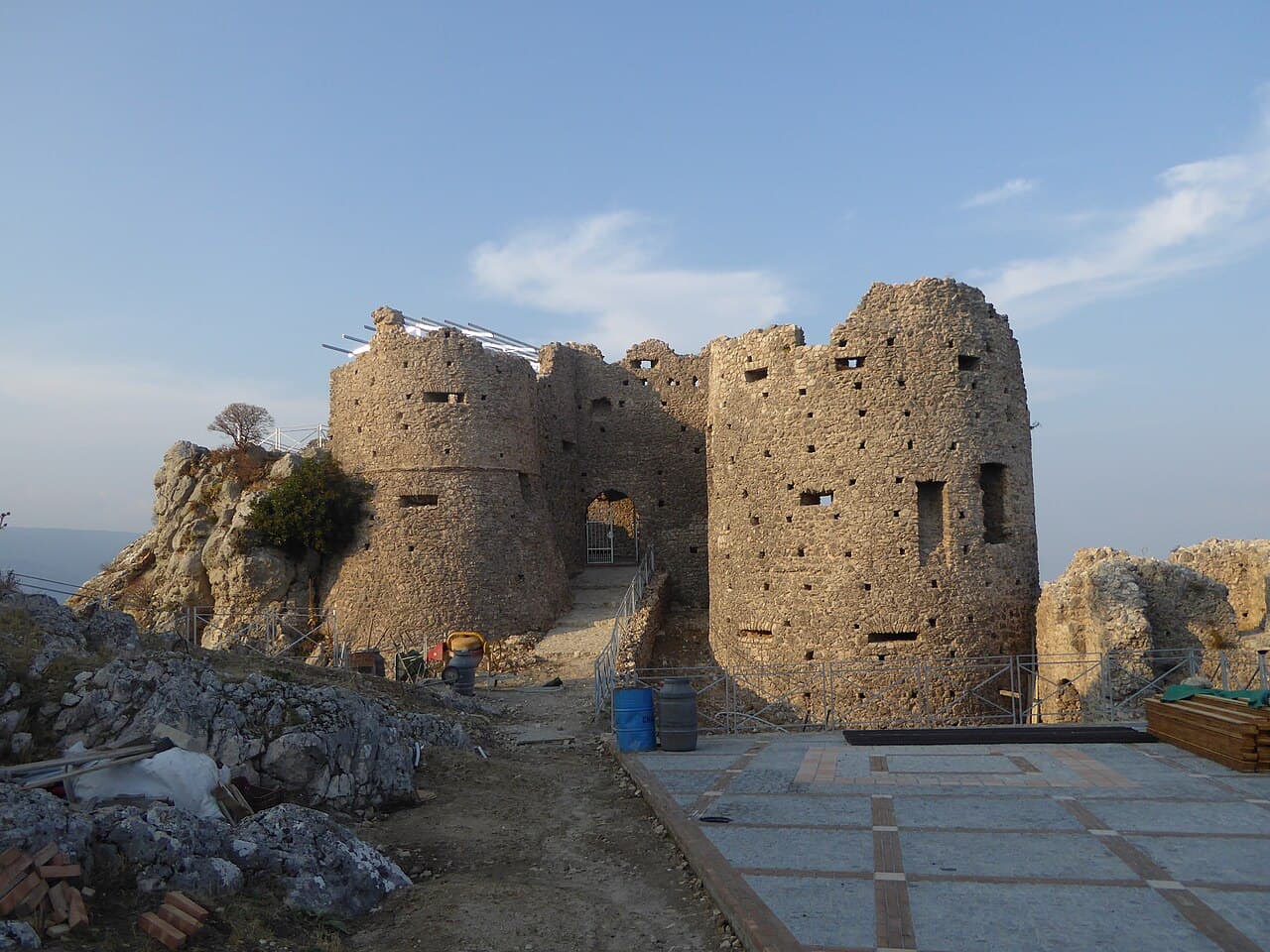
The castle is a hill castle built primarily from locally quarried medium-sized limestone blocks. Its defensive layout includes several triangular and circular towers encircling the main fortress area, each equipped with narrow arrow slits that allowed defenders to shoot while remaining protected. One of the towers is known as Altavilla, though its precise historical association remains unclear.
The fortress walls are notable for their lack of internal vaults or floors and absence of traditional doors or windows, emphasizing their purely defensive function. Instead, holes in the walls indicate the former presence of temporary wooden platforms used by defenders during combat. At the heights where these platforms would have stood, machicolations—overhanging openings designed to drop projectiles or boiling liquids on attackers—are visible, enhancing the castle's defensive capabilities.
The tops of towers are crowned with conical battlements made from the same limestone as the walls, providing cover for soldiers stationed there. A single passage on the western face connects the fortress to the rest of Monte Consolino, leading upward to the summit. Near the main access from the cemetery, remains of additional towers face the sea, indicating the castle's strategic orientation toward maritime approaches.
Internal features and water management
Within the central courtyard, archaeological evidence reveals the presence of a chapel featuring a main altar and four smaller altars against the surrounding walls, reflecting the importance of religious worship within the fortress. The castle also incorporated a sophisticated rainwater collection system using terracotta pipes and tiles to channel water into a cistern beneath the central building, ensuring a water supply during sieges or dry spells.
Restoration and modern access
After centuries of decline, restoration efforts began in the 21st century under the direction of the Calabria Superintendency for Architectural and Landscape Heritage. Led by architect Margherita Eikeberg, conservation work commenced in 2009 and was completed by 2016, stabilizing and preserving the remaining structures. During this period, a monorail system was constructed to improve access to the castle from the town; however, it was never put into service due to incomplete testing.
Local legends and cultural significance
The castle is steeped in local folklore. One legend recounts a Saracen siege in 982, during which defenders purportedly used ricotta cheese to deceive attackers. Another tale involves a noblewoman named Regina and a golden hen that laid eggs, stories entwined with a rebellion eventually suppressed by Charles of Anjou. Additionally, the castle is said to be haunted by a ghostly drumming sound, linked to a legend of a drummer boy sent through secret passages beneath the fortress.
The castle's strategic importance and legacy
Throughout its history, the Castle of Stilo served as a military stronghold, administrative center, and prison. Its commanding position on Monte Consolino allowed control over the surrounding territory and sea routes, making it a key asset for Norman and later rulers in Calabria. The fortress's austere design reflects its primary function as a defensive structure rather than a residential palace.
Today, the castle stands as a partially restored monument, offering visitors insight into medieval military architecture and the Norman presence in southern Italy. Its combination of stone towers, battlements, chapels, and water cisterns illustrates the complexity and self-sufficiency required of hill castles during the High Medieval period.
Frequently asked questions (FAQ)
- How do I reach Stilo Castle from the town?
- Stilo Castle can be reached via two main paths: a steep panoramic path starting near the Cattolica church and the longer, less steep path beginning near the Stilo Cemetery. The latter is more accessible and includes rest areas with benches.
- What is the historical significance of Stilo Castle?
- Built in the 11th century by Norman king Roger I of Sicily, Stilo Castle served as a military stronghold, prison, and administrative center during the High Medieval period, especially under Charles I of Naples.
- Are there any legends associated with Stilo Castle?
- Yes, local legends include tales of a Saracen siege where ricotta cheese was used to deceive attackers, a noblewoman named Regina with a golden hen, and ghostly drumming sounds linked to a drummer boy in secret passages.
- What architectural features are notable at Stilo Castle?
- The castle features triangular and circular towers with arrow slits, conical battlements, machicolations, a chapel with multiple altars, and a rainwater collection system feeding a central cistern.
- Is Stilo Castle currently open to visitors?
- The castle is partially restored and accessible to visitors, although specific visiting hours and ticket prices may vary. Visitors should check local sources for up-to-date access information.
Photo gallery

Information
Website
Visit websiteSources & official resources
Verify the information above using these authoritative references.
Loading map...
Visitor reviews
No reviews yet. Been here? Write the first review and help other travelers!
Write the first reviewVisited this castle? Share your experience
Your review helps other travelers and adds first-hand knowledge to our encyclopedia.