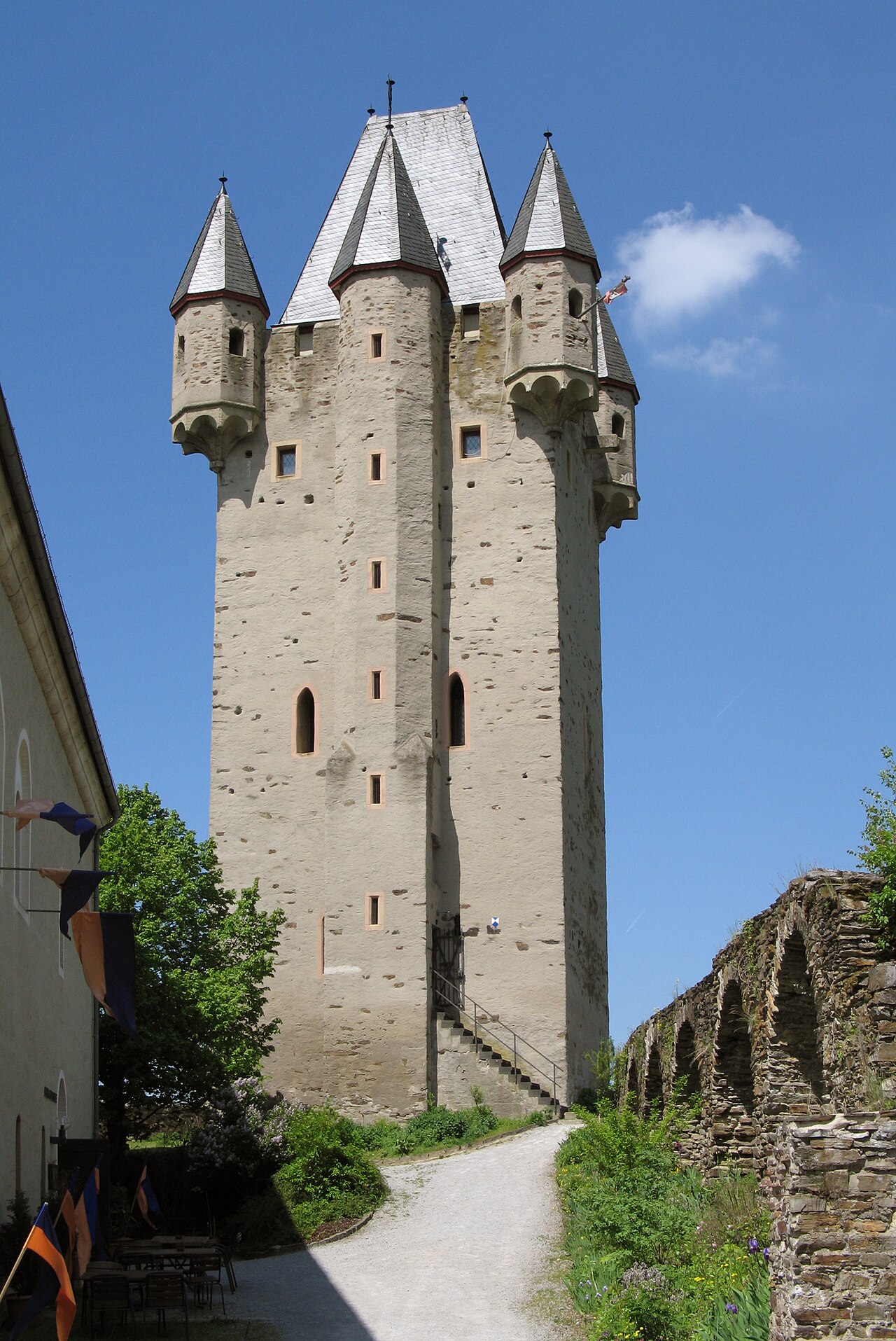
Steinsches Schloss
The Steinsches Schloss is a prominent Renaissance town palace situated in the heart of Nassau, Germany. Originally the residence of the noble vom Stein family, it is historically significant as the childhood home of Prussian reform minister Heinrich Friedrich Karl vom und zum Stein. The site initially served as a tithing farm (Zehnthof) owned by the family since the 14th century, reflecting the estate's deep-rooted connection to regional nobility and agrarian administration.
At the dawn of the Thirty Years' War, the vom Stein family, then prosperous and influential, moved their main seat from the Steinsche Burg located outside Nassau to this central complex. Over the following centuries, the original farmstead underwent significant transformation and expansion, evolving into a castle complex. The main building was finalized in 1621, showcasing the distinct elements of the Late Renaissance architectural style, characterized by balanced proportions and ornamental detail.
Architectural evolution and expansions
In 1755, the castle was augmented with two Baroque wings, adding grandeur and spatial complexity to the palace. These wings reflected the evolving tastes of the period, emphasizing dramatic forms and elaborate decoration. The 19th century brought further significant modifications commissioned by Heinrich Friedrich Karl vom und zum Stein himself.
19th-century neo-gothic additions and restorations
Between 1815 and 1816, an octagonal Neo-Gothic tower was added to commemorate the Wars of Liberation. This tower, a striking vertical element, introduced Gothic revival motifs that contrasted with the Renaissance and Baroque components. It is documented that during the 19th century, stained glass windows from St. Kastor Church in Dausenau were relocated to this tower, enhancing its historic and aesthetic value.
Extensive restoration efforts took place from 2011 to 2018, funded by the state of Rhineland-Palatinate. These restorations meticulously preserved the tower's architectural integrity and historical features. On the ground floor, the marble baths originally intended for ritual cleansing were restored, and a chapel was established, fulfilling a plan that had remained unrealized for two centuries.
Interior features and commemorative elements
The castle's interior includes the Baron's study on the middle floor, notable for its walk-in library shelves, symbolizing the intellectual pursuits of its noble inhabitants. The upper floor houses a cult site adorned with sculptures of the three monarchs Friedrich Wilhelm III, Franz I, and Alexander I, crafted by the renowned sculptor Christian Daniel Rauch. These elements underscore the castle's role as both a familial residence and a monument to historical memory.
Historical significance and ownership
The Steinsches Schloss not only served as a noble residence but also as a symbol of the vom Stein family's enduring legacy. The family's relocation to this site during a turbulent period in European history reflects strategic adaptation and social prominence. Today, the castle remains under the ownership of the female descendants of the vom Stein family, specifically the Counts of Kanitz. This lineage also holds ownership of the Castle Cappenberg, which was another residence of Baron vom und zum Stein and his chosen retirement home.
Cultural heritage and preservation
The castle is a valuable cultural heritage site, showcasing a blend of Renaissance, Baroque, and Neo-Gothic architectural styles. Its preservation and restoration efforts highlight the importance of maintaining historical structures that offer insights into the social and political history of the region. The Steinsches Schloss stands as a testament to centuries of architectural evolution and noble life in Nassau.
Frequently asked questions (FAQ)
- What is the historical significance of Steinsches Schloss?
- Steinsches Schloss, located in Nassau, Germany, dates back to the 14th century and is a prime example of medieval architecture. It played a crucial role in the region's history, serving as a residence for noble families and a strategic defensive stronghold.
- When was Steinsches Schloss built?
- The construction of Steinsches Schloss began in the early 1300s, with significant renovations occurring in the following centuries. Its architecture showcases the evolution of styles from Gothic to Renaissance, making it a fascinating site for history enthusiasts.
- How do I get to Steinsches Schloss?
- Steinsches Schloss is easily accessible by public transportation, including trains and buses that connect Nassau to major cities in Germany. Visitors can also reach the castle by car, with parking available nearby.
- What are the opening hours of Steinsches Schloss?
- Steinsches Schloss is open to visitors from March to October, typically from 10 AM to 6 PM. During the off-peak months, the hours may vary, so it's advisable to check the castle's official website for the most current information before your visit.
- Can I take guided tours of Steinsches Schloss?
- Yes, guided tours are available at Steinsches Schloss, providing an in-depth look at its rich history and architectural features. Tours are led by knowledgeable guides who can answer questions and share fascinating stories about the castle.
- Is Steinsches Schloss accessible for visitors with disabilities?
- Steinsches Schloss is committed to making the site accessible for all visitors. While some areas may have limited accessibility due to the historic nature of the building, there are accommodations in place to assist those with mobility challenges.
- What are the ticket prices for Steinsches Schloss?
- Ticket prices for Steinsches Schloss are generally affordable, with discounts available for students, seniors, and children. Family packages may also be offered, making it a great destination for visitors of all ages.
- When is the best time to visit Steinsches Schloss?
- The best time to visit Steinsches Schloss is during the spring and early autumn months when the weather is pleasant and the surrounding gardens are in full bloom. Additionally, visiting during weekdays can help avoid larger crowds, allowing for a more enjoyable experience.
- What nearby attractions can I explore after visiting Steinsches Schloss?
- After touring Steinsches Schloss, visitors can explore the charming town of Nassau, which offers additional cultural attractions, shops, and dining options. The beautiful Rhine River is also nearby, where you can enjoy scenic walks or boat tours.
Information
Loading map...
Visitor reviews
No reviews yet. Been here? Write the first review and help other travelers!
Write the first reviewVisited this castle? Share your experience
Your review helps other travelers and adds first-hand knowledge to our encyclopedia.