Langenau Castle
Langenau Castle stands as a distinctive example of a lowland castle in the municipality of Obernhof, located in the Rhein-Lahn-Kreis county of Germany. Unlike the more common hill castles in the region, Langenau Castle was strategically positioned at the confluence of the Gelbach and Lahn rivers, utilizing the natural watercourses for defense and estate management. This geographical setting influenced its development into a water castle following the construction of a dyke, an uncommon feature for castles in this part of Germany.
The castle's origins date back to the 13th century, with its first documented mention in 1243 in the will of Countess Mechthild of Sayn. She bequeathed the castle to the Archbishopric of Cologne, which soon after granted it as a fief to the noble Langenau family. This family was related to the counts of Laurenburg and thus connected to the influential House of Nassau. The Langenau family maintained the castle as a Ganerbschaft or joint inheritance for several centuries, reflecting the medieval practice of shared noble ownership.
Architectural evolution and medieval fortifications
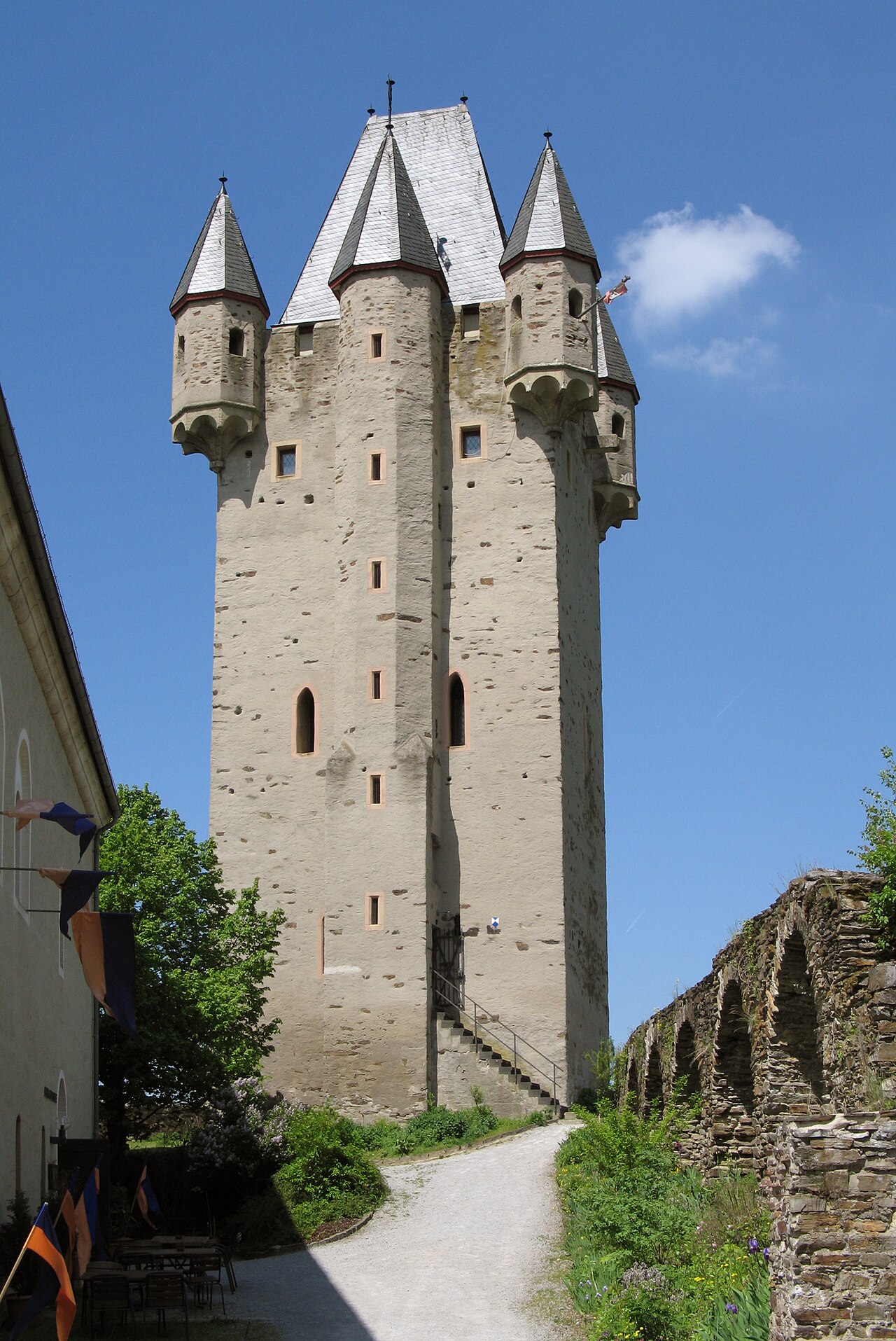
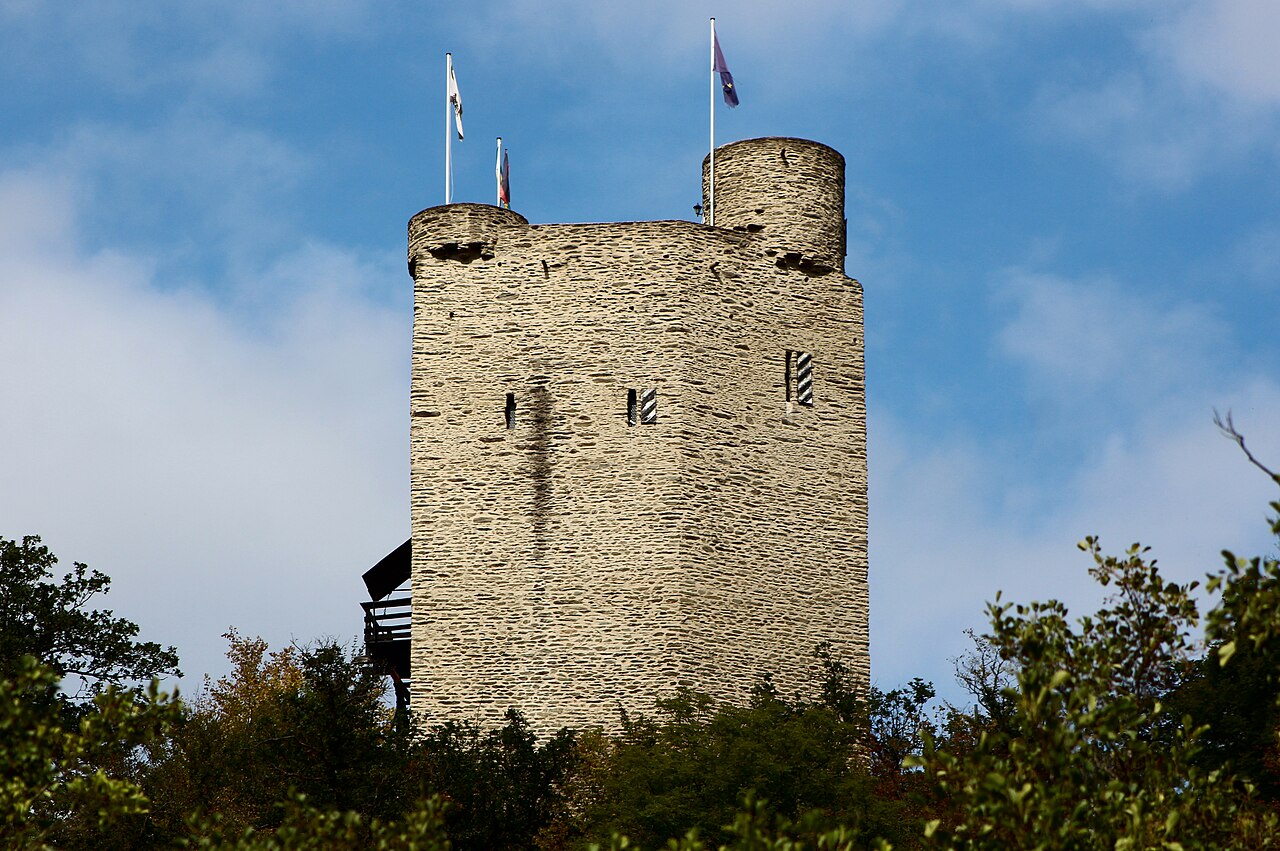
The core of the original fortress, dating from the High Medieval period, is the imposing square bergfried constructed in the Romanesque style. This tower served as a stronghold and lookout point, characteristic of 13th-century military architecture. While much of the initial fortification has not survived intact, the remaining defensive structures include an enceinte and a formidable eight-metre-high shield wall flanked by two towers. These elements exhibit features of Gothic architecture, indicating significant modifications and expansions during the 14th and 15th centuries.
The transition to a water castle
Originally built as a lowland fortress, the castle's defensive capabilities were enhanced when a dyke was constructed, effectively transforming it into a water castle. This adaptation leveraged the surrounding water to create a natural moat, increasing its defensibility and reflecting evolving military engineering techniques of the late medieval period.
The castle's role and ownership through history
By the mid-14th century, the Langenau family established New Langenau Castle as their principal residence, leading to a shift in the original castle's function. It ceased to be a noble seat and instead became an administrative center for managing the family's estates. The castle remained in the Langenau family until their extinction in 1613.
Following the demise of the Langenau lineage, the castle passed through several owners. During the 17th century, a significant addition was made in the form of a large timber-framed domestic building, reflecting changes in residential needs and architectural styles of the period.
Conversion into a schloss and later uses
In 1696, the castle was acquired by the Marioth family, prominent merchants and industrialists, who transformed the fortress into a schloss in 1698. This conversion involved adapting the medieval structures to suit the tastes and functions of a stately residence rather than a military stronghold.
Later, in 1847, Countess Giech, daughter of the Prussian reform minister vom und zum Stein, became the castle's occupant. She repurposed the schloss in 1851 into a hospital and home for impoverished children, marking a significant social function for the historic building.
Architectural features and preservation status
Today, the most prominent surviving feature of the original 13th-century fortress is the Romanesque bergfried, notable for its square plan and robust construction. The Gothic enceinte and shield wall remain significant for understanding the castle's defensive evolution. The combination of Romanesque and Gothic elements provides valuable insight into the architectural transitions from the High to Late Medieval periods.
The castle's adaptation into a water castle and later a schloss illustrates the dynamic nature of castle architecture responding to changing military, residential, and social needs over several centuries. While the castle is no longer a noble residence, its structures reflect a layered history of medieval fortification, Renaissance transformation, and 19th-century philanthropy.
Visiting and cultural significance
Langenau Castle, with its unique location and architectural features, contributes to the cultural heritage of the Rhein-Lahn-Kreis region. Its history is intertwined with the noble families of the area and the broader political landscape of medieval Germany. Visitors interested in medieval architecture, noble lineage, and the adaptation of fortifications over time will find Langenau Castle a site of considerable interest.
Frequently asked questions (FAQ)
- What is the historical significance of Langenau Castle?
- Langenau Castle, situated in Obernhof, Germany, dates back to the 12th century and is an important example of medieval architecture in the region. Its strategic location allowed it to serve as a fortress protecting trade routes and local settlements during the Middle Ages.
- When was Langenau Castle built?
- Construction of Langenau Castle began in the early 1200s, with various modifications and restorations occurring throughout the centuries. The castle has witnessed significant historical events, contributing to its rich heritage and importance in German history.
- Can I visit Langenau Castle?
- Yes, visitors are welcome to explore Langenau Castle and its grounds. Guided tours are available, providing insights into the castle's history and architecture, making it a great experience for history enthusiasts and families alike.
- What are the opening hours for Langenau Castle?
- Langenau Castle is typically open to visitors from April to October, with specific hours varying by day. It is advisable to check the official website or contact the castle directly for the most current opening times before planning your visit.
- Is it possible to access Langenau Castle with a wheelchair?
- Langenau Castle has made efforts to accommodate visitors with disabilities; however, due to its historical architecture, some areas may be challenging to navigate. It's recommended to contact the castle in advance to inquire about accessibility options and available facilities.
- What is the best time to visit Langenau Castle?
- The best time to visit Langenau Castle is during the spring and summer months when the weather is pleasant and the gardens are in full bloom. Additionally, various events and activities are often held during this period, enhancing the visitor experience.
- Are there any nearby attractions to Langenau Castle?
- Yes, Langenau Castle is located near several attractions, including the scenic banks of the Rhine River and charming villages that offer picturesque views. Visitors can also explore hiking trails and local vineyards, making it a perfect day trip destination.
- How much do tickets cost for Langenau Castle?
- Ticket prices for Langenau Castle are generally affordable, with discounts available for students and seniors. Children under a certain age may enter for free, but it is best to check the official site for the latest pricing information before your visit.
Information
Loading map...
Visitor reviews
No reviews yet. Been here? Write the first review and help other travelers!
Write the first reviewVisited this castle? Share your experience
Your review helps other travelers and adds first-hand knowledge to our encyclopedia.