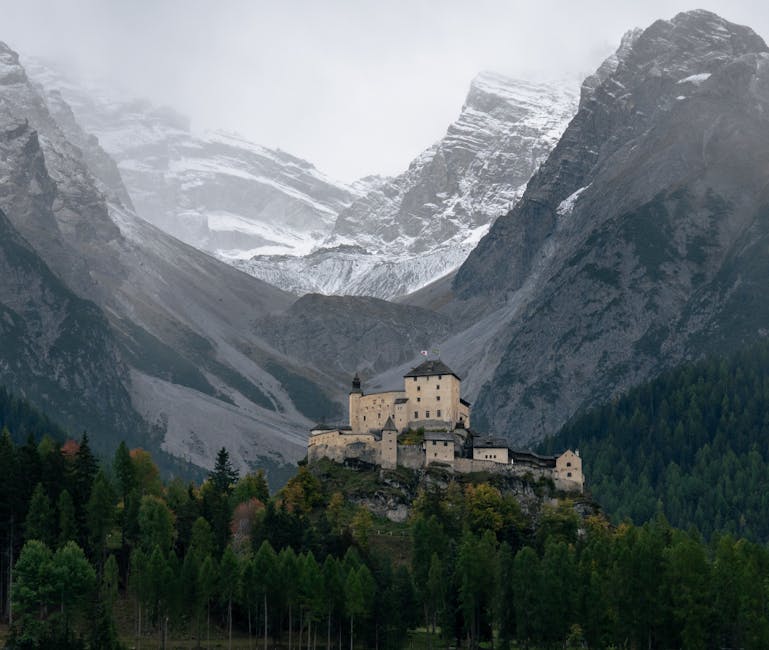
Steinsberg Castle
Steinsberg Castle stands as a significant relic of the High Middle Ages in the region of Scuol, Switzerland. Originally, the site hosted a fortified church surrounded by a ring wall and possibly a tower, dating back to the early part of the 12th century. This early fortification was strategically placed on a plateau above the Church of St. Lazius, offering both religious and defensive functions. By the end of the 12th century, the initial fortifications were dismantled to make way for the construction of the current castle, which was likely commissioned by a local noble family to assert control over the surrounding lands.
Historical development and ownership
The castle's documented history begins with Albert von Frickingen, who in 1209 sold his estates, villages, and the castle above Ardez to the Bishop of Chur. This transaction marked the beginning of the castle's role as the administrative center for the bishopric's estates in the area. Despite competing claims by Count Albert von Tirol, who relinquished his rights in 1228, the castle remained under ecclesiastical control.
Throughout the 14th and 15th centuries, the castle changed hands through a series of pledges and loans. In 1348, the Bishop of Chur pledged the castle and its lands to the Planta family for a loan of 150 Marks. Later, in 1359, it was pledged to the Lords of Katzenstein for 700 Gulden. By 1411, the castle was pledged to Georg Scheck, whose family maintained possession until 1502 despite the bishop's efforts to reclaim it.
The castle's strategic importance was underscored during the Swabian War in 1499, when imperial troops captured and burned it on 25 March. The then-owner, Balthasar Scheck, was taken prisoner to Merano and executed. The castle was left heavily damaged, and in 1502 it was pledged to Hans von Planta, who, along with his son, spent much of the 16th century trying to recover interest owed by the bishopric. Eventually, the castle was abandoned during that century as the Three Leagues increased their influence and curtailed the bishop's authority, including denying the appointment of a vogt over Steinsberg.
Architectural features and layout
The castle occupies the highest point of a roughly 100 by 100 meter plateau with steep sides on all sides, providing a natural defensive advantage. The centerpiece is a four-story keep measuring approximately 6.5 by 8.5 meters (21 by 28 feet). The stonework on the keep shows a notable change above the second story, suggesting either a later addition or significant repair work. Access to the keep was via a high entrance on the second floor facing south, a common defensive feature to prevent easy access by attackers.
The upper floors of the keep contain 14th-century window seats, which may have been part of a renovation or new construction phase during that period. Adjacent to the keep on the east side lies a residential wing built against the ring wall, which likely enclosed the castle complex. Although only traces of this ring wall remain today, it would have provided an essential layer of defense.
North of the castle ruins lie the remains of the Romanesque church of St. Luzius. This church is architecturally unusual because its nave runs north to south rather than the typical east-west orientation. The church's proximity to the castle indicates its importance to the castle's inhabitants and the local community.
Later history and preservation efforts
Following its abandonment in the 16th century, the castle fell into ruin. The nearby church was also abandoned during the Protestant Reformation, reflecting the broader religious and political changes in the region. In 1861, the ruins and surrounding lands were purchased by Emanuel von Planta-Wildenberg from the Bishop of Chur for 1000 Gulden, marking the beginning of modern preservation efforts.
Restoration work was undertaken in the 20th century, with significant repairs carried out in 1964 and again in 1985. These efforts have stabilized the ruins and preserved key architectural elements, allowing visitors to appreciate the castle's historical and architectural significance.
Cultural significance and visitor experience
Steinsberg Castle offers a tangible connection to the region's medieval past, illustrating the complex interplay of ecclesiastical power, noble families, and military conflict in the High Middle Ages. Its strategic hilltop location, distinctive Romanesque church ruins, and surviving fortification features provide valuable insights into medieval castle construction and defensive strategies.
Visitors to the site can explore the remains of the keep, the foundations of the residential wing, and the nearby church ruins, all set within a dramatic natural landscape. The castle's history of ownership disputes, wartime destruction, and eventual abandonment adds depth to the experience, making it a noteworthy destination for those interested in medieval architecture and Swiss history.
Frequently asked questions (FAQ)
- How do I get to Steinsberg Castle?
- Steinsberg Castle is located in Scuol, Switzerland, and can be reached by car or public transport. The nearest train station is Scuol-Tarasp, from where you can take a short bus ride or hike to the castle. Make sure to check local transport schedules for the most efficient route.
- What is the historical significance of Steinsberg Castle?
- Steinsberg Castle dates back to the 13th century and played a crucial role in the region's defense and administration. It stands as a testament to the medieval architecture of the time and reflects the historical power struggles in the Engadine valley. Today, it serves as a reminder of the area's rich heritage and history.
- When was Steinsberg Castle built?
- Construction of Steinsberg Castle began in the early 1200s, making it one of the oldest structures in the region. Over the centuries, it has undergone various renovations and restorations to preserve its historical features. The castle's enduring presence showcases the architectural evolution from the medieval period to the present.
- Can I visit Steinsberg Castle year-round?
- Yes, Steinsberg Castle is open to visitors throughout the year, although certain areas may be restricted during winter months due to weather conditions. It is advisable to check the official website or local tourist information for any updates on accessibility. Guided tours are also available during peak tourist seasons.
- Why is Steinsberg Castle a popular tourist attraction?
- Steinsberg Castle attracts visitors with its stunning panoramic views of the surrounding mountains and valleys. Its rich history, combined with the beautiful natural scenery, makes it a perfect destination for history enthusiasts and nature lovers alike. Additionally, the castle often hosts cultural events, enhancing its appeal.
- Is it possible to enter the castle grounds?
- Yes, visitors can enter the castle grounds and explore its historic features. While some parts of the castle may be restricted for preservation purposes, there are designated areas where you can walk around and enjoy the views. Guided tours provide deeper insights into the history and architecture of the castle.
- What are the opening hours for Steinsberg Castle?
- Steinsberg Castle typically opens from 9 AM to 5 PM during the peak tourist season, with shorter hours in the off-season. However, it is recommended to check the official website for the latest information on opening hours, as they may vary due to special events or maintenance. Planning your visit during these hours ensures you make the most of your experience.
- Are there any nearby attractions to visit along with Steinsberg Castle?
- Yes, there are several nearby attractions, including the picturesque town of Scuol, known for its thermal baths and charming architecture. Additionally, visitors can explore the beautiful hiking trails in the surrounding area, which offer stunning views and opportunities for outdoor activities. Combining your castle visit with these attractions makes for a delightful day trip.
- What are the ticket prices for visiting Steinsberg Castle?
- Admission to Steinsberg Castle is generally affordable, with discounted rates available for students and seniors. Family tickets may also be offered for those visiting with children. It's best to check the official website for the most current pricing information and any special promotions that may be available.
Information
Loading map...
Visitor reviews
No reviews yet. Been here? Write the first review and help other travelers!
Write the first reviewVisited this castle? Share your experience
Your review helps other travelers and adds first-hand knowledge to our encyclopedia.