San Peder
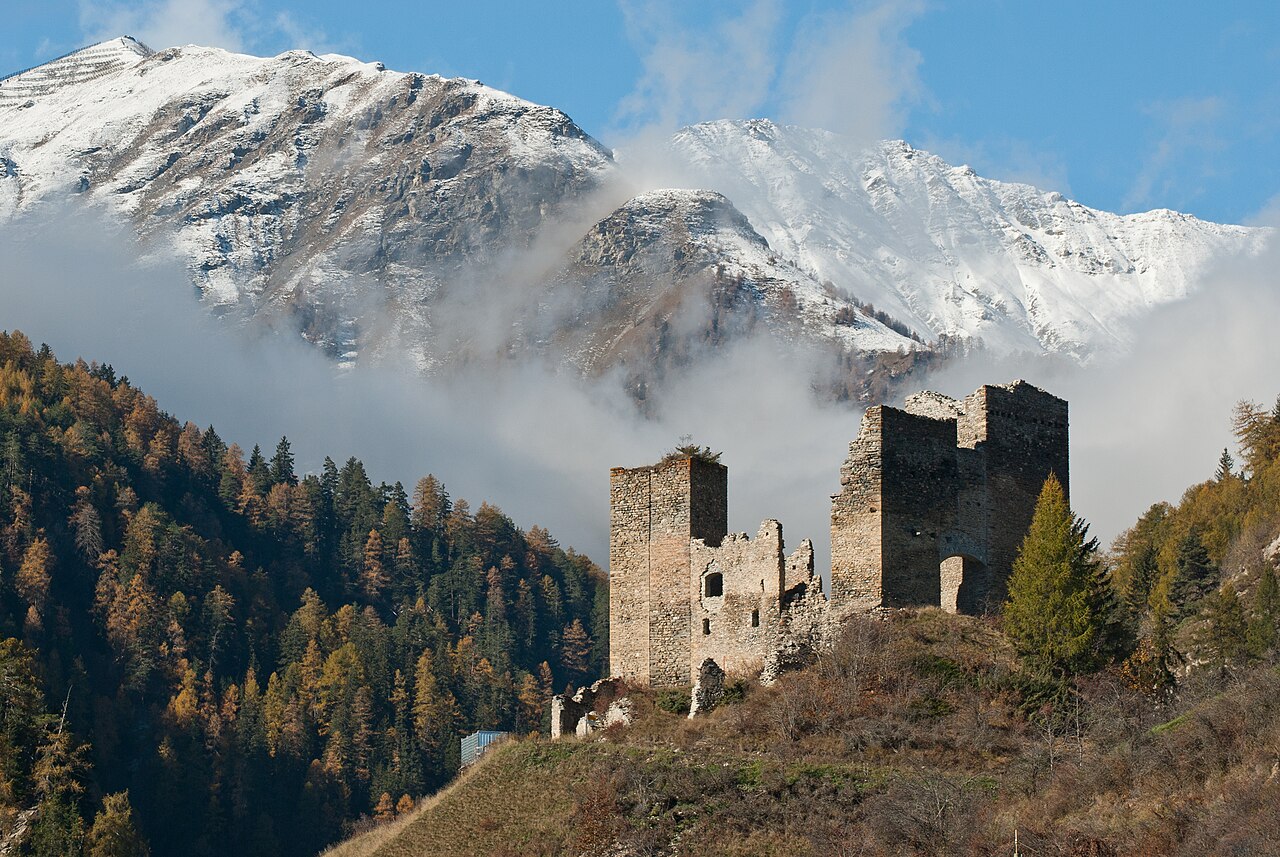
San Peder stands as a compelling example of a medieval fortified church complex located on a rocky hill at the western edge of the former village of Sent, now part of Scuol in Switzerland. This historic site uniquely combines religious and defensive architectural elements, reflecting the dual purposes such structures served during the High Middle Ages. The complex includes a Romanesque church dedicated to St. Peter, a tall bell tower, and a large defensive tower, all constructed primarily from local stone, emphasizing durability and protection.
Historical background and significance
The origins of San Peder date back to the 12th century, with architectural evidence suggesting the church was built around 1173. The church's dedication to St. Peter aligns with common medieval ecclesiastical traditions, and its Romanesque style is characteristic of the period. While historical documents from the 12th and 13th centuries mention individuals with the surname "de Sancto Petro," it remains uncertain whether these figures were directly connected to the ownership or administration of this site.
During the mid-12th century, the Lord of Sent was a vassal to the Bishop of Chur, but records do not clearly identify the lord as the owner of San Peder's castle or church. By the early 14th century, specifically around 1340, the church had lost its status as the primary place of worship in the village, becoming a chapel subordinate to the newer parish church of San Lurench.
The 15th century brought interior renovations to the church, including the addition of murals that decorated its walls, reflecting evolving artistic and religious tastes during the late medieval period. However, following the Protestant Reformation, the church was abandoned as religious functions moved to San Lurench, which became the main parish church for Sent.
After its religious use ceased, the bell tower was repurposed for practical communal uses, notably as a storage site for gunpowder and munitions for several centuries, indicating the site's continued strategic importance despite the church's abandonment.
Architectural features and layout
The romanesque church and bell tower
The Romanesque church at San Peder is the centerpiece of the complex, showcasing typical architectural features of the style, including thick stone walls and rounded arches. The church is dominated by a tall bell tower that also served as a watchtower, rising five stories with walls tapering from approximately 2.2 meters thick at the base to about 1 meter at the upper levels.
A distinctive defensive feature of the bell tower is a bricked-over high entrance located on the north wall at the tower's fifth floor. This elevated entrance was a common medieval defensive design to control access and enhance security. Despite its imposing form, evidence suggests that the tower was not regularly used as living quarters.
The large defensive tower
Southeast of the church stands a large fortified tower measuring roughly 12 by 13 meters, with walls up to 2.3 meters thick. Constructed in the 13th century atop earlier foundations, this tower was part of a significant phase of fortification at San Peder. It was used for about a century before being abandoned in the 14th century, possibly due to changing military or political circumstances.
Fortifications and possible enclosure
Archaeological evidence indicates that the church, bell tower, and large tower may have been enclosed by a defensive wall, creating a fortified church complex. This layout would have provided protection for the religious community and local inhabitants during times of conflict.
Archaeological excavations and restoration efforts
Excavations at San Peder began in 1937 under the direction of Peider Lansel, a prominent Romansh poet and scholar who had acquired the site in 1856. These archaeological investigations uncovered important structural details and artifacts that helped clarify the complex's historical phases and architectural evolution.
Restoration and conservation efforts have been ongoing since the early 20th century, including a significant project in 1901 and further work in the late 1960s. These measures have stabilized the ruins and preserved them as a cultural heritage site. Lansel himself contributed personally by creating a small chamber within the tower, reflecting his deep connection to the site.
Many artifacts and archaeological finds from San Peder are preserved in the Rätisches Museum, where they provide valuable insight into the site's history and the broader medieval context of the region.
Cultural and historical importance
San Peder is a significant example of a hill castle combined with a religious complex, illustrating the intertwined nature of defense and worship in medieval alpine communities. Its Romanesque architecture offers insight into the construction techniques and stylistic preferences of the 12th century, while its later adaptations reflect the changing religious and military needs over several centuries.
The site also exemplifies the transition from medieval religious practices to the post-Reformation period, highlighting shifts in community organization and church usage. Today, San Peder serves as an important archaeological and historical site, attracting scholars and visitors interested in medieval architecture, ecclesiastical history, and Swiss heritage.
Frequently asked questions (FAQ)
- How do I get to San Peder castle from Sent?
- San Peder is located on a rocky hill just west of the village of Sent. Visitors can reach the site by a short hike from the village center, following marked trails suitable for most fitness levels.
- What architectural style is San Peder castle built in?
- San Peder features classic Romanesque architecture, characterized by thick stone walls, rounded arches, and a robust bell tower that also served defensive purposes.
- When was San Peder castle constructed?
- The core structures of San Peder, including the Romanesque church, were built in the 12th century, with the large defensive tower added in the 13th century.
- Is San Peder castle open to visitors year-round?
- The ruins of San Peder are accessible year-round, but visitors should check local conditions and opening hours of any visitor facilities, as these may vary seasonally.
- Can I visit the interior of the bell tower at San Peder?
- Access to the interior of the bell tower is limited due to preservation concerns. Visitors can view the tower from outside and explore the surrounding ruins safely.
Information
Sources & official resources
Verify the information above using these authoritative references.
Loading map...
Visitor reviews
No reviews yet. Been here? Write the first review and help other travelers!
Write the first reviewVisited this castle? Share your experience
Your review helps other travelers and adds first-hand knowledge to our encyclopedia.