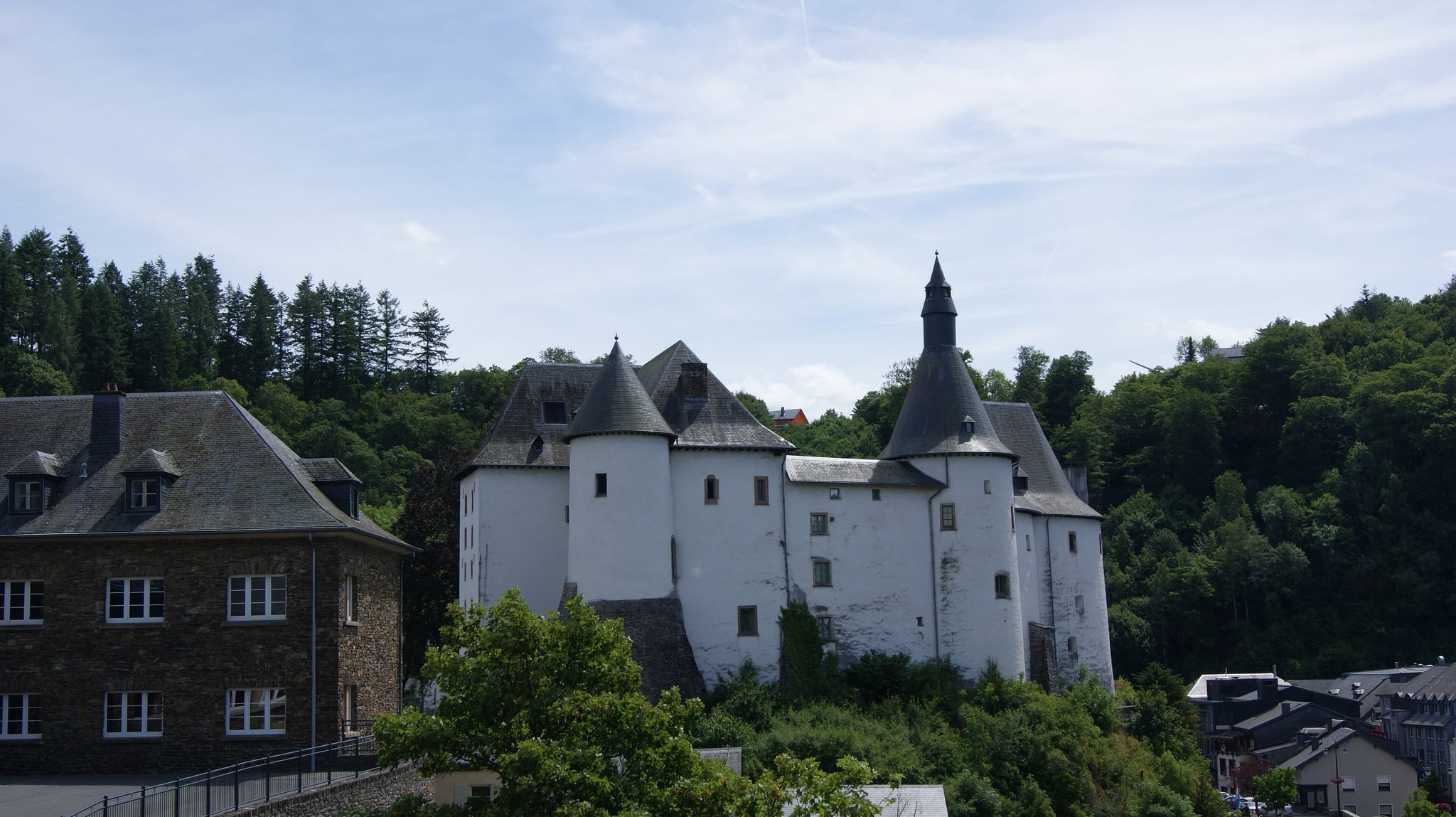
Steinbach Castle in Gouvy, Belgium, is a historic fortress with origins tracing back to the 11th century. Its foundations and basement are constructed from durable schist stone, a material characteristic of the region's medieval architecture. The castle's façade prominently displays a carved stone escutcheon featuring three scallops and three sickles, symbolizing the heraldic ties to the Steinbach and Limerlé families as well as the Grumelscheid lineage.
The medieval origins and family legacy
The Steinbach family rose to prominence in the region when they acquired lordship over Rouvroy and Limerlé in 1451. This noble lineage maintained control over these territories until the late 18th century, playing a significant role in local governance and regional affairs. The castle itself, while rooted in medieval construction, underwent significant transformations over the centuries, reflecting changing architectural styles and historical circumstances.
Architectural evolution and Austrian influence
Following a devastating fire in 1750 that reduced much of the original structure to ruins, Steinbach Castle was rebuilt under the guidance of Albert Starck, an Austrian architect active during the Austrian reign over this part of Europe. Starck's influence is evident in the castle's Austrian-style architecture, which incorporates robust 1.5-meter thick schist stone walls and elegant Louis XV interior design. The main entrance, made from Recht stone, is detailed with the escutcheon of the Beurthé family, adding to the castle’s heraldic richness.
The castle complex includes wings added in the early 19th century that served as farmhouses, carefully designed to preserve the castle's privacy by providing separate access. These farm buildings still contain a functional 16th-century wood oven, which remains in use today, illustrating the blend of historical preservation and ongoing utility.
Historical significance during the 20th century
Steinbach Castle played a notable role during the Second World War, particularly in the Battle of the Bulge. It served as a temporary headquarters for Leon Degrelle and his government, as well as a field hospital for both German and US forces. This dual use highlights the castle's strategic importance and its place in the complex military history of the Ardennes region.
Preservation and current status
The castle remained in the hands of the Steinbach family descendants until 2014, when it was sold to new owners who use it as a second residence. All buildings on the site are protected as national monuments, ensuring the preservation of their historical and architectural value for future generations. Notably, the castle’s tower is adorned with elephant-shaped flags bearing family escutcheons and the building date, a unique decorative feature symbolizing the castle’s heritage.
Architectural features and materials
The use of schist stone throughout the castle, from its thick defensive walls to the interior floors, is a defining characteristic that provides both durability and a distinctive aesthetic. The combination of medieval foundations with 18th-century Austrian architectural elements creates a unique blend that distinguishes Steinbach Castle from other regional fortresses. The castle’s layout, including the separate farm wings, reflects practical considerations of privacy and functionality typical of aristocratic estates in the period.
The escutcheons and heraldry
The stone escutcheons carved into the castle’s façade are rich in symbolism. The three scallops represent the Steinbach and Limerlé families, while the three sickles symbolize the Grumelscheid family, reflecting the intertwined noble lineages that shaped the castle’s history. These heraldic emblems serve as visual markers of the castle’s identity and its owners’ status.
Interior design and layout
The interior floors, crafted from schist stone, complement the castle’s robust exterior. The Louis XV style interiors introduce an element of refined elegance, contrasting with the fortress-like exterior walls. This style includes ornate decorative motifs typical of the mid-18th century, emphasizing comfort and aesthetic appeal alongside defensive functionality.
Steinbach castle in the context of Belgian heritage
As a protected national monument, Steinbach Castle is an important part of Belgium’s cultural heritage. Its layered history from the High Medieval period through the 18th century rebuild and its role in World War II provide valuable insights into the region’s social and political evolution. The castle’s preservation allows visitors and historians alike to explore the architectural and historical narratives embedded in its walls.
Visiting and cultural significance
While currently a private residence, the castle’s protected status underscores its potential for educational and cultural tourism. Its unique architectural features and historical associations make it a point of interest for scholars of medieval and early modern European architecture, as well as those interested in military history.
Frequently asked questions (FAQ)
- What is the historical significance of Steinbach Castle?
- Steinbach Castle, dating back to the 12th century, is a remarkable example of medieval architecture in Belgium. It played a crucial role in the region's defense during various conflicts and has witnessed significant historical events over the centuries.
- When was Steinbach Castle built?
- Steinbach Castle was originally constructed in the 12th century, with various modifications and restorations occurring over the centuries. Its enduring structure reflects the architectural styles and fortification methods of that era.
- What are the opening hours for Steinbach Castle?
- Steinbach Castle is open to visitors from April to October, Tuesday to Sunday, from 10 AM to 6 PM. During the winter months, the castle is closed, but special events may be scheduled, so it's advisable to check their official website for updates.
- Can I visit Steinbach Castle year-round?
- While Steinbach Castle is primarily open during the warmer months, it is closed from November to March. However, guided tours and special events may occasionally be offered in the off-season, so it's best to verify in advance.
- Is Steinbach Castle accessible for visitors with mobility challenges?
- Steinbach Castle has made efforts to accommodate visitors with mobility challenges, including wheelchair access to certain areas. However, due to the castle's historic nature, some parts may still present difficulties, so planning ahead is recommended.
- What is the best time to visit Steinbach Castle?
- The best time to visit Steinbach Castle is during the spring and early autumn months, when the weather is mild and the surrounding landscape is beautiful. Additionally, visiting during these times often allows for fewer crowds and a more enjoyable experience.
- Can I purchase tickets in advance for Steinbach Castle?
- Yes, tickets for Steinbach Castle can be purchased in advance through their official website. This is recommended, especially during peak tourist seasons, to ensure your preferred time slot and avoid long wait times.
- What nearby attractions can I explore while visiting Steinbach Castle?
- While visiting Steinbach Castle, you can explore the stunning natural surroundings of the Ardennes region, which offers hiking trails and picturesque views. Additionally, nearby towns such as Gouvy provide charming local shops and dining options to enhance your visit.
Loading map...
Visitor reviews
No reviews yet. Been here? Write the first review and help other travelers!
Write the first reviewVisited this castle? Share your experience
Your review helps other travelers and adds first-hand knowledge to our encyclopedia.