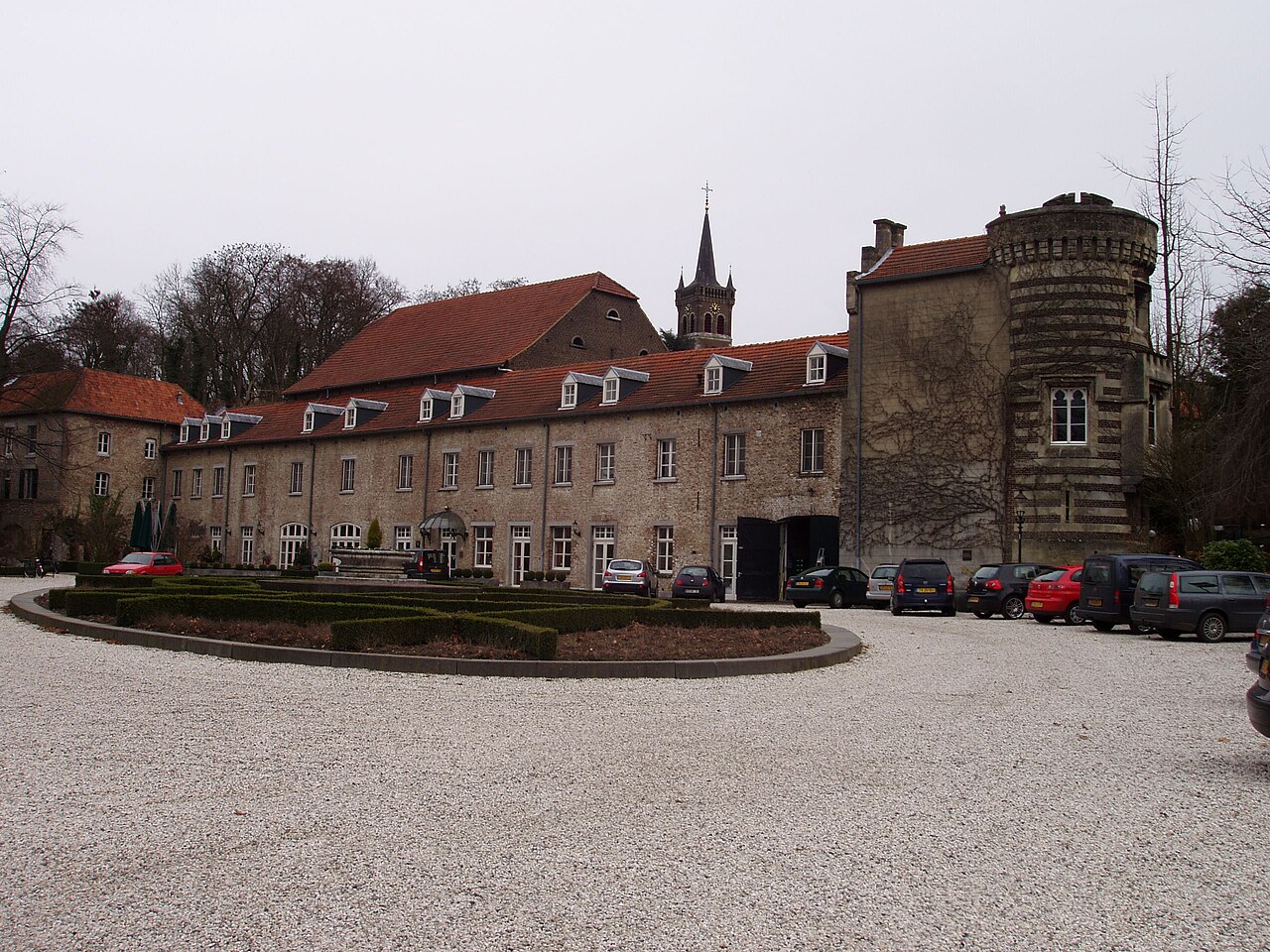
Stein Castle
Stein Castle, locally known as Kasteel Stein, is a historic medieval fortress situated south of the town of Stein in the province of Limburg, Netherlands. This castle is a notable example of a moated motte-and-bailey structure, featuring an impressive 8-meter-high motte called the 'Bovenste Slot' (Upper Castle) and an adjacent bailey known as the 'Benedenste Slot' (Lower Castle). The entire castle complex is surrounded by a defensive moat, emphasizing its strategic importance during the High Medieval period.
The origins and early construction of Stein Castle
The site of Stein Castle likely hosted an earlier fortification around 1220, although no physical traces remain of this predecessor. The current castle was probably constructed in the early 13th century by Arnold III, a noble whose family originated from nearby Elsloo Castle. The most prominent surviving feature from this initial phase is the white keep, standing approximately 16 meters high with walls exceeding 3 meters in thickness. This keep served as the main defensive stronghold and included a pit prison beneath it. The Gothic window visible today was originally the main entrance to the keep, highlighting the castle's medieval Gothic architectural elements.
Medieval conflicts and expansions
Stein Castle's history includes notable military engagements, such as the 1408 siege during a conflict between its then-owner, Willem van Brederode, and the nearby town of Aachen in present-day Germany. This event underscores the castle's strategic position near important regional borders.
In 1451, the castle underwent significant expansion under the ownership of Jan van Heinsberg. Among these additions was the construction of a distinctive red brick tower adjacent to the gate tower, which enhanced the castle's defensive capabilities and architectural complexity.
Damage, restoration, and ownership changes
The castle suffered damage during a siege in 1605, reflecting the turbulent political climate of the early modern period. Restoration efforts took place throughout the 17th century and into the early 18th century, a period during which the castle was owned by the Counts of De Merode (1641–1740). These restorations helped preserve the castle's structural integrity and historical character.
However, by the latter half of the 18th century, Stein Castle fell into disrepair and became uninhabitable. Its residents relocated to the buildings on the bailey, which date from the 18th and 19th centuries. This shift illustrates the changing use and adaptation of castle complexes over time.
20th-century conservation and current status
In 1917, the castle was sold at a public auction. The motte and the castle ruins were purchased by a wood merchant who intended to demolish the ruins for timber. This plan was halted in 1919 when the town council of Stein intervened to protect the site.
By 1921, the entire complex was acquired by the Congregation of the Missionaries of the Sacred Heart. They repurposed the bailey buildings as a study center and conducted archaeological excavations of the ruins on the motte in 1923. Consolidation work was carried out in 1936 to stabilize the ruins, followed by further restoration between 1975 and 1984.
Today, Stein Castle stands as a partially preserved medieval ruin that offers visitors the opportunity to explore its Gothic keep and the red brick tower. Visitors can climb these towers and view the remaining cellars, gaining insight into the castle's defensive architecture and medieval life. The bailey's buildings have been converted into private apartments, blending historic preservation with modern use.
Architectural features and layout
The castle exemplifies the motte-and-bailey design, a common medieval fortification style characterized by a raised earthwork (motte) topped with a defensive keep, accompanied by an enclosed courtyard (bailey). The motte's height and the thick walls of the keep provided formidable defense against attackers.
The white keep's robust construction with walls over three meters thick demonstrates the emphasis on strong fortifications during the High Medieval period. The presence of a pit prison within the keep indicates the castle's role in local justice and governance.
The red brick tower added in the 15th century reflects the transition in building materials and styles, incorporating brickwork alongside traditional stone. Its position next to the gate tower enhanced the castle's entrance defenses, a critical aspect of medieval military architecture.
Historical significance and cultural heritage
Stein Castle's location near the border with Germany placed it at the center of regional power struggles throughout the Middle Ages and early modern period. Its sieges and ownership changes reflect the complex political landscape of the Limburg area.
The castle's preservation efforts in the 20th century highlight the growing recognition of cultural heritage and the importance of protecting medieval monuments. The archaeological work and restorations have allowed Stein Castle to remain a tangible link to the region's medieval past.
Visitors today can appreciate both the castle's military architecture and its evolving role from a noble residence to a religious study center and finally to a historic monument integrated into modern life.
Frequently asked questions (FAQ)
- How do I get to Stein Castle?
- Stein Castle is easily accessible by car and public transportation. If you are traveling by train, the nearest station is located just a short bus ride away. There are also designated parking areas for visitors who prefer to drive.
- What is the historical significance of Stein Castle?
- Stein Castle dates back to the 14th century and has played a crucial role in the region's history, serving as a noble residence and defensive structure. It has witnessed many historical events and has been beautifully preserved, allowing visitors to step back in time and experience its rich heritage.
- When was Stein Castle built?
- Stein Castle was constructed in the 1300s, making it one of the oldest surviving castles in the Netherlands. Over the centuries, it has undergone various renovations, but many original architectural features remain intact, showcasing the medieval craftsmanship of the era.
- Can I take guided tours of Stein Castle?
- Yes, guided tours are available at Stein Castle, providing visitors with in-depth knowledge about its history and architecture. These tours are conducted by knowledgeable guides who share fascinating stories and insights about the castle's past and its significance in Dutch history.
- Why is Stein Castle a popular tourist destination?
- Stein Castle is popular due to its stunning architecture, rich history, and picturesque surroundings. Visitors appreciate the opportunity to explore the castle's beautiful grounds and learn about its role in shaping the local culture and history.
- Is it possible to host events at Stein Castle?
- Yes, Stein Castle offers facilities for hosting special events, including weddings, corporate gatherings, and private parties. The castle provides a unique and enchanting backdrop, making any event truly memorable.
- What are the opening hours for Stein Castle?
- Stein Castle is open to visitors from Tuesday to Sunday, with varying hours depending on the season. It is advisable to check the official website for the most up-to-date information regarding opening times and any seasonal closures.
- What are the ticket prices for visiting Stein Castle?
- Ticket prices for Stein Castle vary based on age and group size, with discounts available for children, students, and seniors. It is best to purchase tickets in advance online to secure your visit and to take advantage of any special offers.
- When is the best time to visit Stein Castle?
- The best time to visit Stein Castle is during the spring and early autumn when the weather is pleasant, and the gardens are in full bloom. Additionally, these seasons see fewer crowds compared to the summer, allowing for a more enjoyable and intimate experience.
- Are there any nearby attractions to visit after Stein Castle?
- Yes, there are several attractions near Stein Castle, including beautiful parks, museums, and charming villages. Visitors can explore the scenic countryside or enjoy local restaurants and shops, making for a full day of exploration.
Information
Loading map...
Visitor reviews
No reviews yet. Been here? Write the first review and help other travelers!
Write the first reviewVisited this castle? Share your experience
Your review helps other travelers and adds first-hand knowledge to our encyclopedia.