Steen Castle

Steen castle in antwerp, belgium
Antwerp, Antwerpen, Belgium
High Medieval (11th–13th c.)
Well Preserved

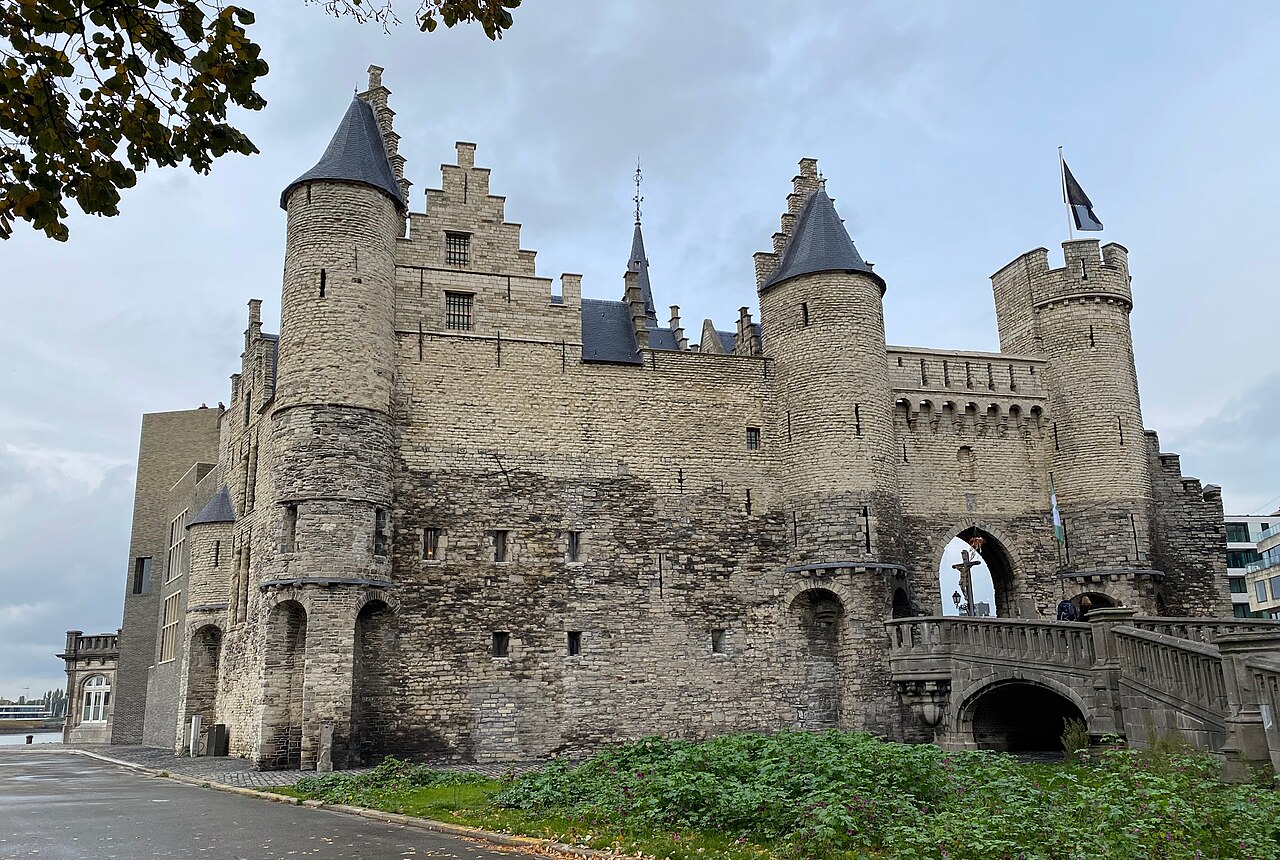
Steen Castle, known locally as Het Steen, stands prominently on the east bank of the Scheldt River in the heart of Antwerp, within the province of Antwerpen in the Flemish Region of Belgium. This medieval fortress is celebrated as the oldest building in Antwerp, with its origins tracing back to the early 11th century. The castle's name, translating to "The Stone," reflects its significance as one of the first structures in Antwerp constructed from stone, a notable advancement during a period when most buildings were timber-framed.

The site's strategic location near a former peninsula called De Werf made it a critical defensive point along the Scheldt. Historical accounts suggest that early fortifications, likely consisting of earthen ramparts and wooden palisades, existed here as early as the 9th century. Although legends mention fortifications dating to 645 and a Viking destruction in 836, these are considered more mythical than factual. The stone fortress and the castle as it is recognized today were constructed between 1200 and 1225 to serve the Dukes of Brabant. Originally, it was part of an extensive fortification system protecting the city, but only about 5% of this original complex remains today.

Architectural evolution and renovations

In the early 16th century, under the reign of Charles V, Holy Roman Emperor, the castle underwent significant renovations. Renowned architects Keldermans and De Waghemakere led these efforts around 1520, introducing a lighter sandstone in place of the original Tournai limestone. This change in materials is still visible today as a distinct color difference in the castle's façade, highlighting the various construction phases.

Steen Castle's architecture features typical medieval defensive elements such as thick stone walls, gatehouses, and remnants of battlements. As one of three gatehouses in the fortress, Het Steen played a crucial role in controlling access to Antwerp. The castle's design reflects the transition from purely military fortifications to more complex structures incorporating administrative and residential functions.

Historical functions and transformations

From 1549 until 1823, Steen Castle was repurposed as a prison. This long period as a penitentiary significantly influenced the castle's internal layout and use of space. Following its closure as a prison, the castle briefly served various functions including a residence, sawmill, and fish depot, illustrating its adaptability over the centuries.

In 1842, the castle was acquired by the Antwerp city council, marking the beginning of its preservation as a heritage site. The 19th century saw several restorations, although parts of the castle were demolished in the 1880s due to river straightening projects. From 1864 to 2008, Steen Castle operated as a museum, initially housing the Museum of Antiquities and later becoming the National Maritime Museum. Today, its maritime collections are displayed at the MAS | Museum aan de Stroom.

Modern role and cultural significance

Currently, Steen Castle functions as the local Tourist Information Office, welcoming visitors and serving as a gateway to Antwerp's rich history. A major renovation began in 2018, aiming to transform the castle into a cruise terminal, welcome centre, and interactive experience route focused on Antwerp's heritage. Scheduled to reopen as a vibrant cultural hub by 2020, Het Steen will offer visitors immersive insights into the city's past.

The castle's location along the Scheldt River offers picturesque views and a fairy-tale backdrop, making it a popular spot for tourists and photographers. The presence of the bronze statue of Lange Wapper, a legendary giant from local folklore, adds to the castle's cultural allure. The tale of Lange Wapper, a mischievous shapeshifter who once terrorized Antwerp's citizens, is deeply embedded in the city's traditions and is symbolically linked to the castle's historic atmosphere.

Visitor experience and accessibility

Visitors to Steen Castle can explore its medieval architecture and learn about Antwerp's evolution from a fortified city to a modern metropolis. The castle's interactive exhibits and planned experience routes aim to engage audiences of all ages with the city's maritime and urban history. Its central location makes it easily accessible for tourists exploring Antwerp's historic district.

Walking past Het Steen along the Scheldt River offers a unique opportunity to connect with Antwerp's medieval past and imagine the lives of knights, prisoners, and residents who once inhabited this enduring fortress. The castle remains a testament to the city's resilience and architectural heritage, bridging centuries of history in a single stone structure.

Frequently asked questions (FAQ)

What is the historical significance of Steen Castle?
Steen Castle is the oldest building in Antwerp, originally built between 1200 and 1225 as part of the city's medieval fortifications. It served various roles including a fortress, prison, and museum, reflecting Antwerp's rich history.
Can I visit Steen Castle and what are the opening hours?
Yes, Steen Castle is open to visitors daily from 10:00 to 17:00. Admission is free, making it an accessible cultural site in Antwerp.
What architectural style is Steen Castle built in?
Steen Castle primarily exhibits Gothic architectural features typical of medieval fortresses, with later renovations introducing elements of Renaissance influence.
What are some unique features of Steen Castle?
Unique features include its construction from sandstone and Tournai limestone, the visible color differences in the façade due to renovations, and its role as one of three gatehouses in Antwerp's original fortress system.
Is Steen Castle accessible for tourists with children?
Yes, Steen Castle offers an engaging visitor experience suitable for families, including interactive exhibits and a scenic location along the Scheldt River that appeals to all ages.

Information

Hill Castle

Opening hours

10:00-17:00, daily

Ticket prices

Free

Current owner

Municipality

Address

Steenplein 1, Belgium

Loading map...

Visitor reviews

No reviews yet. Been here? Write the first review and help other travelers!

Write the first review

Visited this castle? Share your experience

Your review helps other travelers and adds first-hand knowledge to our encyclopedia.
Write a review

(5/5)

0/2000 characters

Your review will be visible after admin approval

Nearby castles

0.2 km
Het Steen — Belgium castle

Het Steen

Antwerp, Belgium

Het Steen is a prominent medieval fortress located in the historic city center of Antwerp, Belgium. As the oldest building in Antwerp, it stands as a remarkable testament to the city's early urban development and strategic importance during the High Medieval period. Constructed in the 13th century, Het Steen was originally built to defend the city after the disruptive Viking incursions of the early Middle Ages, marking Antwerp's transition from wooden fortifications to a durable stone fortress. The origins and strategic importance of Het Steen Initially known as the Antwerpen Burcht or Antwerp Fortress, Het Steen's primary function was to control access to the vital Scheldt river, a key waterway for commerce and military movements. Its location on the riverbank allowed the fortress to oversee and regulate river traffic, protecting Antwerp's burgeoning port, which would grow to become one of Europe's largest and most significant maritime hubs. The name "Het Steen," which translates from Dutch as "the stone," reflects its status as a stone-built fortress, a notable advancement from earlier wooden defensive structures. This name was adopted around 1520 following extensive rebuilding and renovations commissioned by Emperor Charles V, who recognized the fortress's strategic value during a period of intense political and military activity in the region. Architectural features and modifications Het Steen's architecture exemplifies typical High Medieval fortress design, characterized by thick stone walls, battlements, and defensive towers. The fortress incorporated a complex of curtain walls and gatehouses designed to withstand sieges and control access points effectively. Over the centuries, the structure underwent several modifications to adapt to evolving military technologies and needs. During the 16th century renovations under Charles V, the fortress was strengthened, and additional defensive elements were added to counter artillery advancements. The fortress's layout includes a central courtyard, surrounded by fortified walls and towers, which housed garrisons and served as a command center. The use of stone masonry not only provided enhanced durability but also symbolized the city's growing wealth and power. Het Steen's role through history Beyond its military function, Het Steen served as a prison from 1303 to 1827, reflecting its secure and imposing construction. The prison facilities were integrated within the fortress walls, with dungeons and cells designed to hold various categories of prisoners over the centuries. This dual role as both fortress and prison highlights the multifunctional nature of medieval castles in urban centers. In the late 19th century, Het Steen transitioned from a military and penal facility to a cultural institution. In 1890, it was converted into a museum of archaeology, showcasing artifacts and historical objects related to Antwerp's rich past. This marked the beginning of its role in preserving and interpreting the city's heritage for public education and tourism. Museum of maritime history and recent developments In 1952, an annex was added to Het Steen to house the museum of Antwerp maritime history, reflecting the city's deep connection to its port and river trade. This museum focused on the evolution of shipping, navigation, and maritime commerce that shaped Antwerp's economic and cultural landscape. However, in 2011, the maritime museum collection was relocated to the nearby Museum Aan de Stroom (MAS), a modern cultural complex dedicated to Antwerp's history and global connections. This move allowed Het Steen to focus more on its archaeological and historical significance as a medieval fortress and urban landmark. Preservation and cultural significance today Today, Het Steen stands as a well-preserved symbol of Antwerp's medieval heritage and resilience. Its imposing stone walls and towers continue to attract visitors interested in castle architecture, medieval history, and the evolution of urban fortifications. The fortress's location along the Scheldt river offers picturesque views and a tangible connection to Antwerp's maritime past. Het Steen's enduring presence in Antwerp's cityscape underscores its importance as a cultural and historical monument. It exemplifies the transition from early medieval wooden defenses to sophisticated stone fortifications that shaped European urban centers during the High Medieval period. As such, Het Steen remains a vital link to understanding Antwerp's development as a major port city and its role in European history.

High Medieval (11th–13th c.)
Details
0.3 km

Semini Sculpture

Antwerp, Belgium

The Semini sculpture is a unique and enigmatic fertility symbol located above a gate in the historic city of Antwerp, Belgium. Despite its worn and nearly flat appearance today, this ancient bas-relief holds a significant place in local folklore and cultural identity. The figure is believed to date back as far as the second century, although its exact origins remain shrouded in mystery. It has been revered as a symbol of fertility, with women historically gathering around it to pray for conception.Originally, the sculpture prominently featured a large phallus, which was central to its role as a fertility emblem. However, in 1587, the local clergy deemed this aspect inappropriate and ordered the phallus to be removed, reflecting the changing religious and social attitudes of the 16th century. Another popular narrative suggests that women themselves ground down the stone phallus to create fertility potions, illustrating the figure's deep-rooted association with reproductive rites and folk medicine.Historical significance and cultural contextThe Semini sculpture embodies a fascinating intersection of pagan fertility traditions and later Christian influences in Antwerp. While the precise identity of the figure is debated, many scholars propose that it represents the Roman fertility god Priapus, known for his exaggerated male attributes and role in agricultural and human fertility. Alternatively, some interpretations suggest a connection to Norse or Celtic fertility deities, reflecting the diverse cultural influences in the region during antiquity and the early medieval period.Despite the scarcity of surviving historical records, the enduring local reverence for Semini highlights its importance as a symbol of life, fertility, and continuity. The people of Antwerp proudly identify as "Semini’s Children", underscoring the sculpture's lasting cultural resonance.Architectural and artistic featuresThe sculpture is carved in bas-relief, a technique where figures are slightly raised from the background stone, allowing for subtle depth and detail. Over centuries, weathering and deliberate defacement have rendered the figure almost indistinguishable, with its once-prominent phallus now lost to history. This erosion challenges modern viewers to use imagination and historical knowledge to reconstruct its original form and significance.Positioned above a city gate, the placement of the Semini sculpture suggests it was intended to be a protective and auspicious emblem for those entering Antwerp. City gates historically served as symbolic thresholds, and adorning them with fertility symbols may have been intended to invoke prosperity and growth for the community.Controversies and interpretationsThe Semini sculpture’s ambiguous origins have generated various theories and debates among historians and archaeologists. The lack of definitive documentation means that much of its story is pieced together from folklore, religious history, and comparative mythology. The conflicting accounts about the removal of the phallus—whether by clergy or local women—reflect broader tensions between pagan customs and Christian morality during the Renaissance era.Additionally, the debate over whether Semini is a Roman, Norse, or Celtic figure highlights the complex cultural exchanges in the region. Antwerp’s location as a trading hub and cultural crossroads likely contributed to the blending of these traditions into a unique local symbol.Legacy and modern-day significanceToday, the Semini sculpture remains an important cultural artifact and a cherished emblem for the citizens of Antwerp. Although it no longer retains its original physical prominence, its symbolic power endures. The nickname "Semini’s Children" expresses a communal identity tied to fertility, life, and the city’s ancient heritage.Visitors to Antwerp can view the sculpture above the city gate, reflecting on the layers of history and mythology embedded in this modest yet profound bas-relief. Semini stands as a testament to the enduring human fascination with fertility, protection, and the mysteries of life across centuries.

Details
1.6 km
Citadel of Antwerp — Belgium castle

Citadel of Antwerp

Antwerp, Belgium

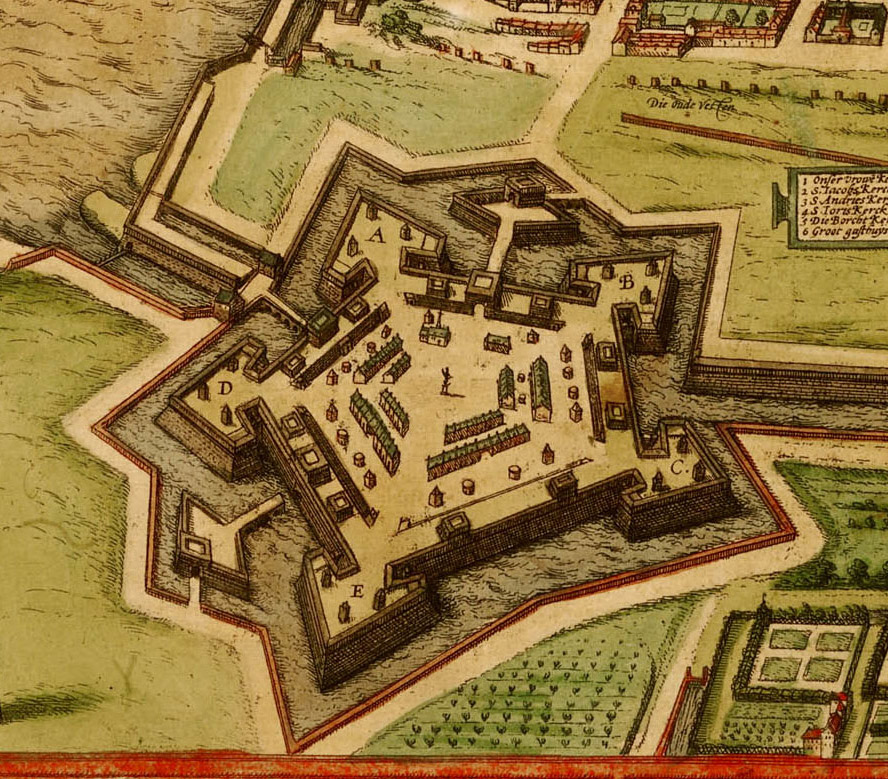
The Citadel of Antwerp, known in Spanish as Castillo de Amberes and in Dutch as Kasteel van Antwerpen, is a significant 16th-century bastioned fortress located in Antwerp, Belgium. Constructed during the Renaissance period, it was designed as a pentagonal bastion fort to strengthen the city's defenses in the early stages of the Dutch Revolt. This fortress played a crucial role in military architecture and urban defense in the 16th century. Historical context and strategic importance The Citadel was built by the Spanish Habsburg rulers who controlled the region at the time, aiming to secure Antwerp, one of the most important commercial hubs in Europe. Its construction began in the mid-16th century, around 1567, under the orders of the Duke of Alba, who was appointed governor of the Spanish Netherlands. The fortress was intended to suppress rebellious forces and maintain Spanish control over the city during the turbulent period of the Dutch Revolt (1568–1648). Antwerp was a key economic center with a large port and thriving trade, making it strategically vital. The Citadel's location allowed it to dominate the city and its river approaches, controlling movement and providing a base for Spanish troops. Its presence was a symbol of Spanish authority and a deterrent against uprisings. Architectural design and features Pentagonal bastion fort layout The Citadel of Antwerp exemplifies the Renaissance military architectural style known as a bastioned fort. Its pentagonal shape was designed to maximize defense and minimize blind spots, a significant advancement over medieval castles. Each corner of the pentagon featured a bastion, allowing defenders to cover adjacent walls with overlapping fields of fire. The design incorporated thick, angled walls resistant to artillery fire, a moat surrounding the fortress, and earthen ramparts to absorb cannon impacts. The fortifications included curtain walls, ravelins (triangular outworks), and glacis (sloping embankments) to protect against siege artillery. Internal structures and facilities Inside the fortress, there were barracks to house troops, storage facilities for weapons and provisions, and command buildings. The layout was functional, designed to sustain a garrison during prolonged sieges. The Citadel also had a central courtyard, parade grounds, and defensive ditches. Role during the dutch revolt and subsequent history The Citadel's strategic design was tested during the Dutch Revolt, a protracted conflict between the Spanish crown and the rebellious provinces seeking independence. The fortress served as a stronghold for Spanish forces and a base for military operations in the region. Over the centuries, the Citadel underwent modifications to adapt to evolving military technologies and political changes. It remained a key military installation through the 17th and 18th centuries, witnessing sieges and occupations by various European powers. Legacy and current status Today, the original Citadel no longer exists in its entirety; much of it was demolished in the 19th century as Antwerp expanded and modernized. However, its historical footprint and influence remain significant in the study of Renaissance military architecture and urban fortifications. The Citadel of Antwerp is often cited as "one of the most studied urban installations of the sixteenth century" due to its innovative design and role in European military history. Its pentagonal bastion layout influenced fortress construction across Europe. While the physical structure is mostly lost, the site and its history continue to attract scholars and visitors interested in military architecture and the history of the Spanish Netherlands during the Renaissance.

Renaissance (15th–17th c.)
Details