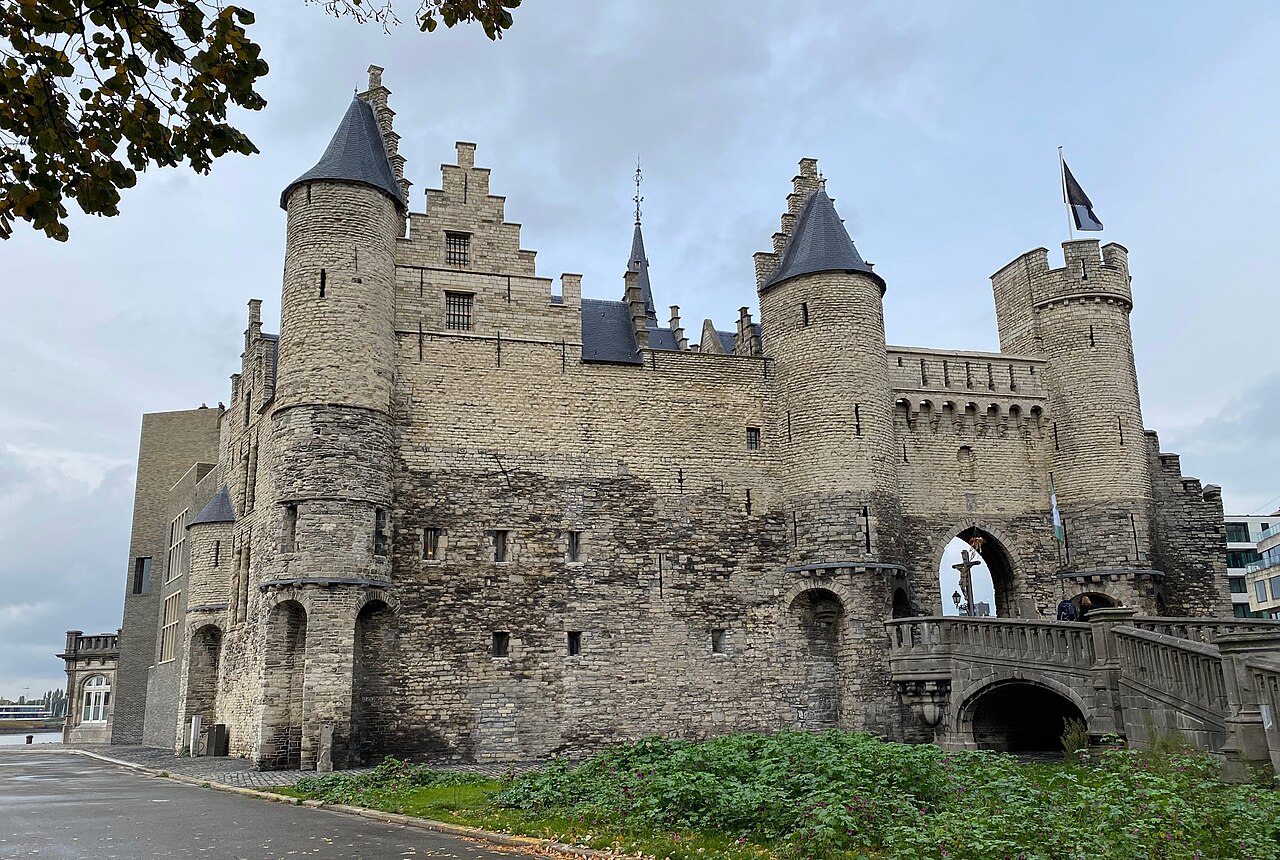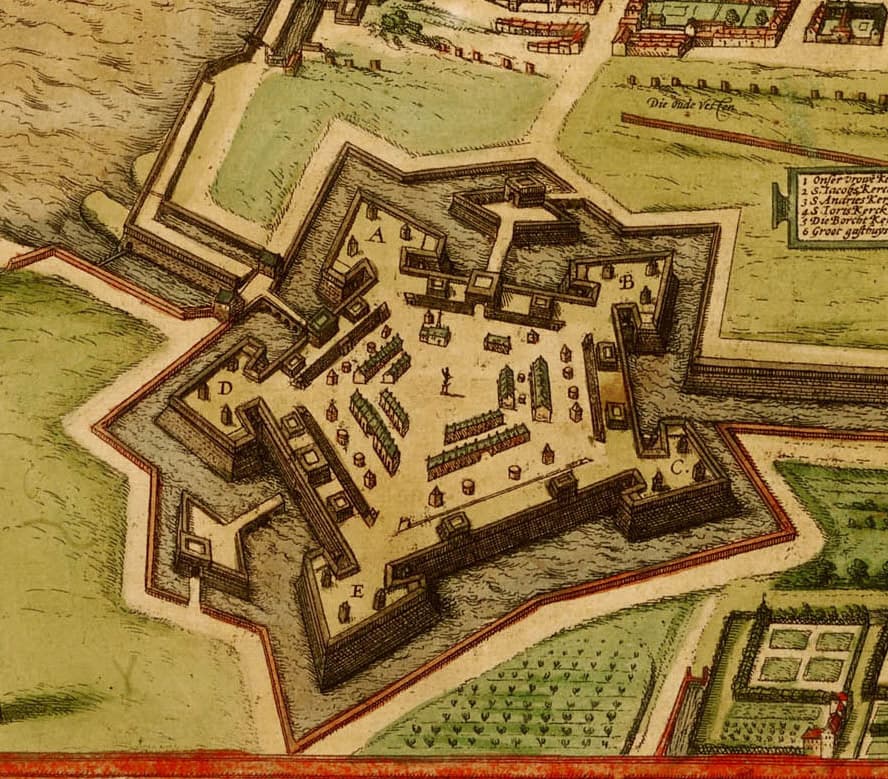
The Citadel of Antwerp, known in Spanish as Castillo de Amberes and in Dutch as Kasteel van Antwerpen, is a significant 16th-century bastioned fortress located in Antwerp, Belgium. Constructed during the Renaissance period, it was designed as a pentagonal bastion fort to strengthen the city's defenses in the early stages of the Dutch Revolt. This fortress played a crucial role in military architecture and urban defense in the 16th century.
Historical context and strategic importance
The Citadel was built by the Spanish Habsburg rulers who controlled the region at the time, aiming to secure Antwerp, one of the most important commercial hubs in Europe. Its construction began in the mid-16th century, around 1567, under the orders of the Duke of Alba, who was appointed governor of the Spanish Netherlands. The fortress was intended to suppress rebellious forces and maintain Spanish control over the city during the turbulent period of the Dutch Revolt (1568–1648).
Antwerp was a key economic center with a large port and thriving trade, making it strategically vital. The Citadel's location allowed it to dominate the city and its river approaches, controlling movement and providing a base for Spanish troops. Its presence was a symbol of Spanish authority and a deterrent against uprisings.
Architectural design and features
Pentagonal bastion fort layout
The Citadel of Antwerp exemplifies the Renaissance military architectural style known as a bastioned fort. Its pentagonal shape was designed to maximize defense and minimize blind spots, a significant advancement over medieval castles. Each corner of the pentagon featured a bastion, allowing defenders to cover adjacent walls with overlapping fields of fire.
The design incorporated thick, angled walls resistant to artillery fire, a moat surrounding the fortress, and earthen ramparts to absorb cannon impacts. The fortifications included curtain walls, ravelins (triangular outworks), and glacis (sloping embankments) to protect against siege artillery.
Internal structures and facilities
Inside the fortress, there were barracks to house troops, storage facilities for weapons and provisions, and command buildings. The layout was functional, designed to sustain a garrison during prolonged sieges. The Citadel also had a central courtyard, parade grounds, and defensive ditches.
Role during the dutch revolt and subsequent history
The Citadel's strategic design was tested during the Dutch Revolt, a protracted conflict between the Spanish crown and the rebellious provinces seeking independence. The fortress served as a stronghold for Spanish forces and a base for military operations in the region.
Over the centuries, the Citadel underwent modifications to adapt to evolving military technologies and political changes. It remained a key military installation through the 17th and 18th centuries, witnessing sieges and occupations by various European powers.
Legacy and current status
Today, the original Citadel no longer exists in its entirety; much of it was demolished in the 19th century as Antwerp expanded and modernized. However, its historical footprint and influence remain significant in the study of Renaissance military architecture and urban fortifications.
The Citadel of Antwerp is often cited as "one of the most studied urban installations of the sixteenth century" due to its innovative design and role in European military history. Its pentagonal bastion layout influenced fortress construction across Europe.
While the physical structure is mostly lost, the site and its history continue to attract scholars and visitors interested in military architecture and the history of the Spanish Netherlands during the Renaissance.
Frequently asked questions (FAQ)
- What is the historical significance of the Citadel of Antwerp?
- The Citadel of Antwerp, built in the 16th century, played a crucial role in the defense of the city against invaders. It was designed to protect Antwerp's strategic position and served as a military stronghold for centuries, reflecting the military architecture of its time.
- When was the Citadel of Antwerp constructed?
- The construction of the Citadel of Antwerp began in 1542 and was completed in 1546. It was commissioned by the Spanish King Charles V as part of a larger strategy to fortify the city against external threats.
- What are the opening hours for the Citadel of Antwerp?
- The Citadel of Antwerp is typically open to visitors from 10 AM to 5 PM, Tuesday through Sunday. It is recommended to check the official website for any seasonal variations or special closures.
- Is it possible to access the Citadel of Antwerp with a wheelchair?
- Yes, the Citadel of Antwerp is committed to making the site accessible to all visitors, including those with mobility challenges. There are designated pathways and ramps to help wheelchair users navigate the grounds more easily.
- Can I purchase tickets in advance for the Citadel of Antwerp?
- Yes, tickets for the Citadel of Antwerp can be purchased online through their official website. Buying tickets in advance is recommended, especially during peak tourist seasons, to avoid long queues at the entrance.
- What is the best time to visit the Citadel of Antwerp?
- The best time to visit the Citadel of Antwerp is during the spring and early fall when the weather is generally mild and pleasant. These seasons offer a beautiful backdrop for exploring the castle grounds and enjoying the surrounding gardens.
- Are there any nearby attractions to the Citadel of Antwerp?
- Yes, the Citadel of Antwerp is located near several other attractions, including the Cathedral of Our Lady and the Museum aan de Stroom (MAS). Visitors can easily explore these sites on foot, making for a full day of sightseeing.
- How do I get to the Citadel of Antwerp using public transport?
- The Citadel of Antwerp is accessible via public transport, with several tram and bus stops nearby. Visitors can take tram lines 3 or 5 to reach the nearest stop and then enjoy a short walk to the castle entrance.
- What are the ticket prices for the Citadel of Antwerp?
- Ticket prices for the Citadel of Antwerp are generally around €10 for adults, with discounts available for students and seniors. Children under a certain age may enter for free, so be sure to check the official website for the latest pricing and any special offers.
Photo gallery

Photo by George Braun, Frans Hogenberg•Public domain
Information
Loading map...
Visitor reviews
No reviews yet. Been here? Write the first review and help other travelers!
Write the first reviewVisited this castle? Share your experience
Your review helps other travelers and adds first-hand knowledge to our encyclopedia.