Stävlö Castle — Sweden castle

Stävlö Castle

Stävlö Castle in Kalmar Municipality, Sweden
Modern (19th–20th c.)

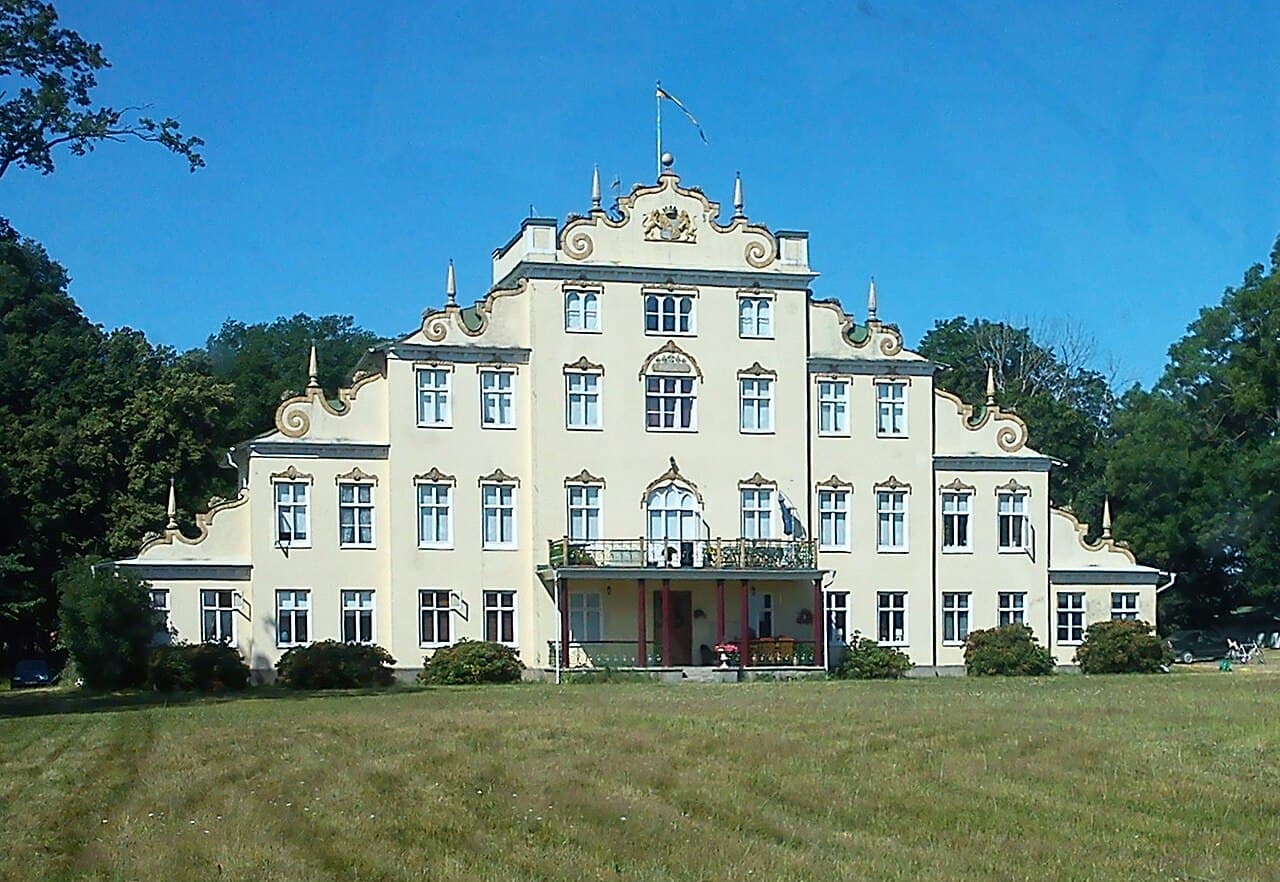
Stävlö Castle, also spelled Stäflö Castle, is a notable historic residence situated in the Kalmar Municipality of Sweden. This 19th-century hill castle stands out as an example of the architectural and cultural developments of its era, combining both residential and defensive features typical of castles built during the Modern period.

Historical background and construction

The castle was constructed in the 19th century, a time when the traditional medieval fortress was no longer primarily built for military defense but rather as a symbol of status and residence for the nobility or wealthy landowners. Stävlö Castle reflects this transition, embodying the characteristics of a hill castle strategically positioned on elevated terrain, which historically provided natural defense advantages.

While detailed records about the original architect or builder of Stävlö Castle are scarce, the design and construction align with the architectural tendencies of the period, where romanticized medieval elements were often incorporated into new buildings. This trend was part of a broader European movement that sought to evoke the grandeur and prestige of the past.

Architectural features and style

Stävlö Castle exhibits architectural elements that blend traditional castle features with the stylistic preferences of the 19th century. Although not a fortress in the medieval sense, its elevated position and robust construction give it a commanding presence in the landscape.

The castle's design likely includes characteristic components such as towers, , and possibly a courtyard, common in hill castles, though specific details about its layout and stylistic influences remain limited. The prevailing architectural style could be described as Romantic, reflecting the 19th-century fascination with medieval forms, though it does not strictly adhere to the Romantic Neo-Gothic style that was popular in some contemporaneous constructions.

Location and surroundings

Situated within Kalmar Municipality, Stävlö Castle benefits from the region's natural landscape, which includes rolling hills and proximity to the Baltic Sea. The castle's location on a hill not only provided historical defensive advantages but also offers expansive views of the surrounding countryside.

The area around Kalmar is rich in history, with several other castles and fortifications, including the famous Kalmar Castle, which played a significant role in Swedish history. Stävlö Castle contributes to this heritage as part of the region's network of historic estates and castles.

Current status and cultural significance

Today, Stävlö Castle remains an important cultural landmark within the Kalmar region. While it may not be as prominent as some of Sweden's larger or older castles, it represents the architectural and social trends of the 19th century and offers insight into the evolution of castle construction from purely defensive structures to stately homes.

The castle's preservation status is generally good, reflecting efforts to maintain its historical integrity. It serves as a point of interest for visitors exploring the region's rich architectural heritage, although public access details are limited.

Visiting information and nearby attractions

Visitors to Kalmar Municipality interested in castles and historical architecture may include Stävlö Castle in their itinerary alongside other notable sites such as Kalmar Castle and the nearby coastal fortresses. The region's blend of natural beauty and historical sites offers a comprehensive cultural experience.

While specific visiting hours and ticket prices for Stävlö Castle are not widely published, potential visitors should check local tourism resources or contact Kalmar Municipality for the most current information.

Frequently asked questions (FAQ)

How do I get to Stävlö Castle?
Stävlö Castle is located in Sweden, and it is easily accessible by car or public transport. If you are traveling by car, you can follow the signs from the nearest major city, which is easily navigable. Public transport options include buses that run regularly to the area, making it convenient for visitors.
What is the historical significance of Stävlö Castle?
Stävlö Castle has a rich history dating back to the 17th century, playing a crucial role in Swedish heritage. It served as a noble residence and has witnessed various historical events that shaped the region. Today, it stands as a symbol of Sweden's architectural and cultural legacy.
When was Stävlö Castle built?
Stävlö Castle was originally constructed in the mid-1600s, showcasing the grandeur of Swedish Baroque architecture. Over the centuries, it has undergone several renovations to preserve its historical integrity. Each period of restoration has added to its charm, making it a fascinating site for history enthusiasts.
Can I take guided tours of Stävlö Castle?
Yes, guided tours are available for visitors who wish to explore Stävlö Castle in depth. These tours provide insights into the castle's history, architecture, and the lives of its former inhabitants. It is advisable to book in advance, especially during peak tourist seasons.
Why is Stävlö Castle considered an architectural gem?
Stävlö Castle is celebrated for its stunning Baroque architecture, characterized by intricate details and elegant design. The castle features beautifully landscaped gardens and impressive interiors that reflect the opulence of its time. Its unique architectural style attracts architects and history lovers alike.
Is it possible to host events at Stävlö Castle?
Yes, Stävlö Castle offers facilities for various events, including weddings, conferences, and private gatherings. The picturesque setting and historical ambiance make it a desirable location for memorable occasions. Interested parties should contact the castle administration for more details on availability and services.
What are the opening hours for Stävlö Castle?
Stävlö Castle is open to visitors seasonally, typically from late spring to early autumn. Opening hours may vary, so it is recommended to check the official website for the most current information. Special events or holidays may also affect the schedule, so planning ahead is advised.
What are the ticket prices for Stävlö Castle?
Ticket prices for Stävlö Castle vary depending on the type of tour or event you choose. Generally, entry fees are reasonable, making it accessible for most visitors. Discounts for students, seniors, and groups may also be available, so it's worth inquiring when purchasing tickets.
What nearby attractions should I visit while at Stävlö Castle?
While visiting Stävlö Castle, there are several nearby attractions worth exploring, including beautiful parks and historical sites. Guests can also enjoy local dining options that showcase Swedish cuisine. The surrounding countryside offers scenic views and walking trails for those looking to experience nature.

Photo gallery

Stävlö Castle
Click to view

Photo by Modified picture from Wikimedia Commons•CC BY-SA 3.0

1 photo • Click any image to view in full screen

Information

Hill Castle

Loading map...

Visitor reviews

No reviews yet. Been here? Write the first review and help other travelers!

Write the first review

Visited this castle? Share your experience

Your review helps other travelers and adds first-hand knowledge to our encyclopedia.
Write a review

(5/5)

0/2000 characters

Your review will be visible after admin approval

Nearby castles

10.5 km
Kalmar Castle — Sweden castle

Kalmar Castle

Kalmar, Sweden

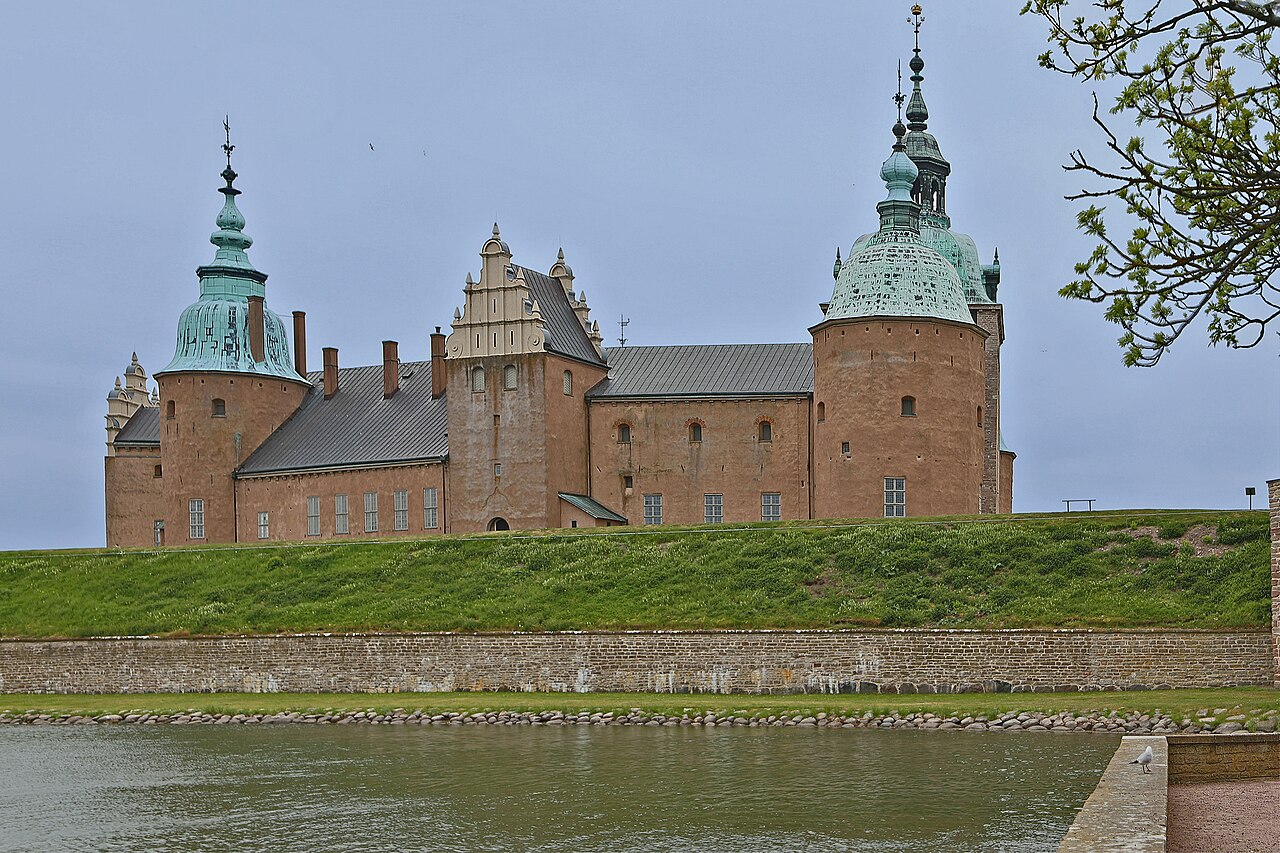
Kalmar Castle stands majestically on a small peninsula just south of the city of Kalmar in the historic province of Småland, Sweden. With origins tracing back to the 12th century, this fortress has evolved over centuries from a solitary defensive tower into one of Sweden's most important and well-preserved Renaissance castles. Situated strategically by the narrow strait of Kalmarsund, separating the mainland from the island of Öland, the castle's location was crucial for controlling maritime traffic and defending the realm. The earliest known construction at Kalmar was a round defensive tower built in the late 1100s, marking the beginning of a fortified site that would grow in military and political significance throughout the High Medieval period. Over time, successive monarchs and architects expanded and transformed the castle, adapting it to the changing demands of warfare, politics, and royal residence. Its walls witnessed pivotal historical events, including the formation of the Kalmar Union in 1397, a landmark political union uniting Denmark, Norway, and Sweden under a single monarch. Early medieval origins and medieval fortifications The first fortification at Kalmar was a substantial round tower constructed in the 12th century to protect the medieval harbor and oversee the vital maritime route. This tower featured walls approximately three meters thick, designed for surveillance and defense against seaborne threats. By the late 13th century, under the reign of King Magnus III (Magnus Ladulås), the castle underwent significant expansion. A robust curtain wall was erected, encompassing the original tower and enhanced by five large round corner towers and two square gatehouses. This fortification created a formidable defensive perimeter, controlling access and providing vantage points for archers and lookouts. The castle's medieval curtain wall included small watchtowers and a military port, reflecting the strategic importance of Kalmar as a border fortress between Sweden and Denmark. Throughout the 14th century, Kalmar Castle served not only as a military bastion but also as a royal residence. King Magnus Eriksson and Queen Blanche of Namur frequently stayed here, and in 1337, major renovations were undertaken to strengthen the ground floors of the wings and add further defensive structures. The kalmar union and political significance Kalmar Castle's most renowned historical moment came on June 17, 1397, when Queen Margaret I of Denmark orchestrated the assembly that led to the establishment of the Kalmar Union. This union united the crowns of Denmark, Norway, and Sweden under a single monarch, aiming to consolidate power and coordinate foreign policy across Scandinavia. The castle's role as the venue for this event underscores its importance as a political and diplomatic center during the late medieval period. Despite the union's intent to unify the Nordic kingdoms, tensions persisted, especially from Sweden, which often resisted Danish dominance. Throughout the 15th century, Kalmar Castle was a focal point for several union meetings and battles. Control of the fortress shifted multiple times between Danish and Swedish forces, reflecting the ongoing struggle for supremacy in the region. Renaissance transformation and royal residence The 16th century marked a significant transformation for Kalmar Castle, shifting from a medieval fortress to a Renaissance royal residence and modern stronghold. After reconquering Kalmar in 1523, King Gustav I (Gustav Vasa) initiated extensive building projects, including ramparts and turrets designed to withstand artillery attacks. His royal builder, James (Jacob) Richter, led construction efforts from the 1550s until his death in 1571, followed by architects Johannes Baptista Pahr, Dominic Pahr, and Peter Dionysius, who continued fortification and embellishment works. King Erik XIV, Gustav's son, contributed to the castle's interior refinement, commissioning ornate limestone portals from the Belgian stonecutter Roland Mackle and creating the elaborately decorated "King Erik's chambers." These chambers feature intricate wooden paneling and painted ceilings with hunting scenes, exemplifying Renaissance interior artistry. Under King John III, the castle's fortifications were further strengthened, and artistic embellishments flourished. The castle church was constructed between 1589 and 1592, featuring royal seating and Latin inscriptions that highlight its religious and ceremonial role. Other notable additions include a wellhouse built from 1579 to 1581 within the inner courtyard and the grand "King's stairs," made from repurposed tombstones, connecting key parts of the castle. Architectural features of the renaissance castle Four large round corner towers topped with characteristic Renaissance roofs Enclosed wings connecting the towers to form a compact, defensible structure Bastions equipped with artillery placements, reflecting advances in military technology The castle church with 17th-century royal pews and religious decorations King Erik XIV's chambers with concealed passages and elaborate woodwork The Striped Hall with a gilded ceiling used for receptions The Great Hall, a spacious banquet room covering approximately 400 square meters A wellhouse and a large open fireplace in the courtyard, demonstrating practical needs Conflicts, decline, and restoration efforts Kalmar Castle's strategic importance made it a target during the Kalmar War (1611-1613) between Sweden and Denmark. The fortress was occupied by Danish forces and suffered extensive damage, including the destruction of interior decorations, towers, and a gazebo built by John III. In 1642, a significant fire destroyed one of the palace halls, known today as the "incinerated hall," which was never restored. Following the war and changing political borders, Kalmar Castle gradually lost its military relevance. By the mid-17th century, proposals to demolish the castle emerged, but fortunately, these were never realized. Instead, the castle's fortifications were modestly reinforced in the 1640s and 1650s. However, by the late 17th century, the castle ceased to function as a royal residence or fortress, and parts of it fell into disrepair. In the 18th century, the castle was repurposed for various non-military uses, including a distillery and a prison. Structural alterations during this period included breaking up walls to accommodate distillery equipment. Despite these changes, the castle's core structure remained intact. 19th and 20th century restorations Restoration efforts began in earnest in the mid-19th century under the patronage of King Oscar I. Architect Fredrik Wilhelm Scholander led the initial work, restoring key features such as "Erik XIV's chambers" between 1855 and 1862. Subsequent restorers, including Helgo Zettervall and Carl Möller, continued the restoration through the late 19th century, culminating in the castle regaining much of its Renaissance silhouette by 1891. In the 20th century, further restoration focused on the castle's earthworks, moat, bridge, and drawbridge. Under the guidance of professor Martin Olsson, these efforts continued until 1941, restoring the castle's water defenses and historic appearance. Today, Kalmar Castle is recognized as one of Sweden's best-preserved Renaissance castles and serves as a cultural monument open to the public. Visitor experience and cultural significance Visitors to Kalmar Castle can explore its richly decorated interiors, including royal chambers, grand halls, and the castle church. The fortress's extensive defensive structures, such as bastions, ramparts, and moats, offer insight into medieval and Renaissance military architecture. The castle's location provides scenic views of the Kalmarsund strait and the surrounding landscape. As a site of immense historical importance, Kalmar Castle embodies the evolution of Swedish fortifications and royal residences from the Middle Ages through the Renaissance and into modern times. Its association with key historical figures and events, such as the Kalmar Union and the reigns of Gustav I, Erik XIV, and John III, enhances its cultural and heritage value. Today, the castle is owned by the Swedish state and managed as a public museum, hosting exhibitions, guided tours, and cultural events that celebrate its rich history and architectural grandeur.

High Medieval (11th–13th c.)
Details
17.1 km
Ismantorp Fortress — Sweden castle

Ismantorp Fortress

Borgholm, Sweden

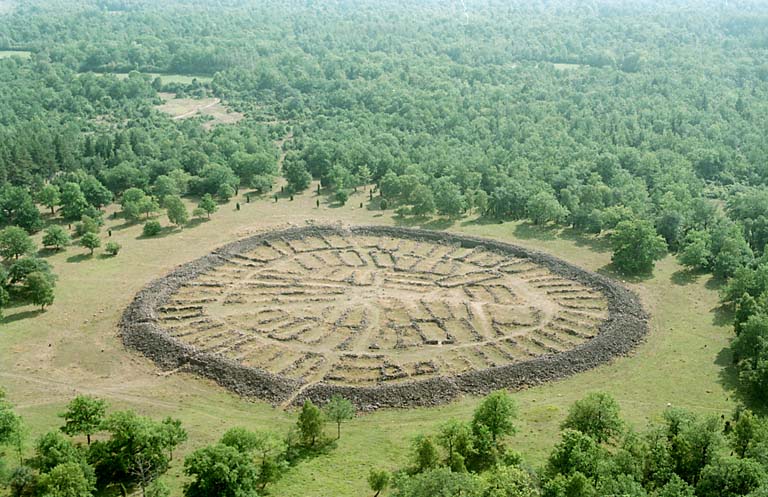
Ismantorp fortress is a remarkable ancient ringfort located on the island of Öland in Sweden. Dating back to approximately 300-500 AD, it is one of the largest and oldest known ringforts in the region. The site is renowned for its extensive limestone walls, measuring about 300 meters in length, which enclose the fortress in a roughly circular shape. The walls are punctuated by nine gates, a feature that has intrigued historians and archaeologists due to the defensive challenges posed by multiple entry points. Architectural features and layout The fortress's design includes 95 house foundations arranged in 12 blocks around a central open area. This central space contains a distinctive circular building situated on a natural elevation, which is unusual for ringforts and adds to the site's uniqueness. The houses are compactly organized, reflecting a planned settlement within the fortified enclosure. The construction primarily utilizes the abundant local limestone, contributing to the walls' durability and the fortress's enduring presence. The ringfort's gates and defensive considerations The presence of nine gates in the fortress's walls is unusual for a structure with an apparent defensive purpose. While fortifications typically feature limited entry points to enhance security, Ismantorp's multiple gates suggest a complex function beyond mere defense. This architectural choice has led to various interpretations regarding the fortress's role, including the possibility of it serving ceremonial or communal purposes alongside military ones. Historical context and significance Ismantorp fortress's origins place it in the late Roman Iron Age period, a time of significant social and political changes in Scandinavia. The site is part of a broader tradition of ringfort construction in the Baltic region, with parallels found in other parts of Sweden and neighboring countries. Its large scale and sophisticated design indicate it was a center of considerable importance, possibly serving as a refuge, a community hub, or a symbol of power. Research and scholarly attention The fortress was first described in written records in 1634, attracting the interest of notable figures such as the botanist Carl von Linné and other travelers and scholars over the centuries. Since the 19th century, researchers have extensively studied Ismantorp to uncover its age, function, and historical context. Despite these efforts, many aspects of the fortress remain enigmatic, fueling ongoing debate and investigation. Theories on function and usage Theories about Ismantorp's purpose vary widely. The strong limestone walls and overall fortification suggest a defensive role. However, the numerous gates complicate this interpretation, as they would have made the fortress difficult to defend effectively. Some scholars compare Ismantorp to large Slavic castles that combined protective functions with religious or ceremonial uses, proposing that Ismantorp may have served as a sanctuary or communal gathering place. Regional defense and community role Another perspective views Ismantorp as part of a broader defensive network on Öland, integrated with other fortifications to protect the island. Its location, now surrounded by marshland within the Mittlandskogen forest, would have enhanced its strategic value in the past. The fortress likely played a significant role in the island's social and military organization during the late Iron Age. Current condition and visitor experience Today, Ismantorp stands as archaeological ruins with well-preserved sections of its limestone walls and visible foundations of the houses and central building. The site offers visitors a tangible connection to Sweden's ancient past and is a popular destination for those interested in archaeology and history. Its setting within a forested landscape adds to the atmosphere, making it a compelling place to explore. Access and tourism Visitors to Ismantorp can walk along the remnants of the walls and explore the layout of the fortress. Interpretive signage and guided tours provide insights into the site's history and architectural features. The fortress's enigmatic nature continues to attract scholars and tourists alike, contributing to its cultural significance on Öland.

Renaissance (15th–17th c.)
Details
17.6 km
Gråborg Castle — Sweden castle

Gråborg Castle

Färjestaden, Sweden

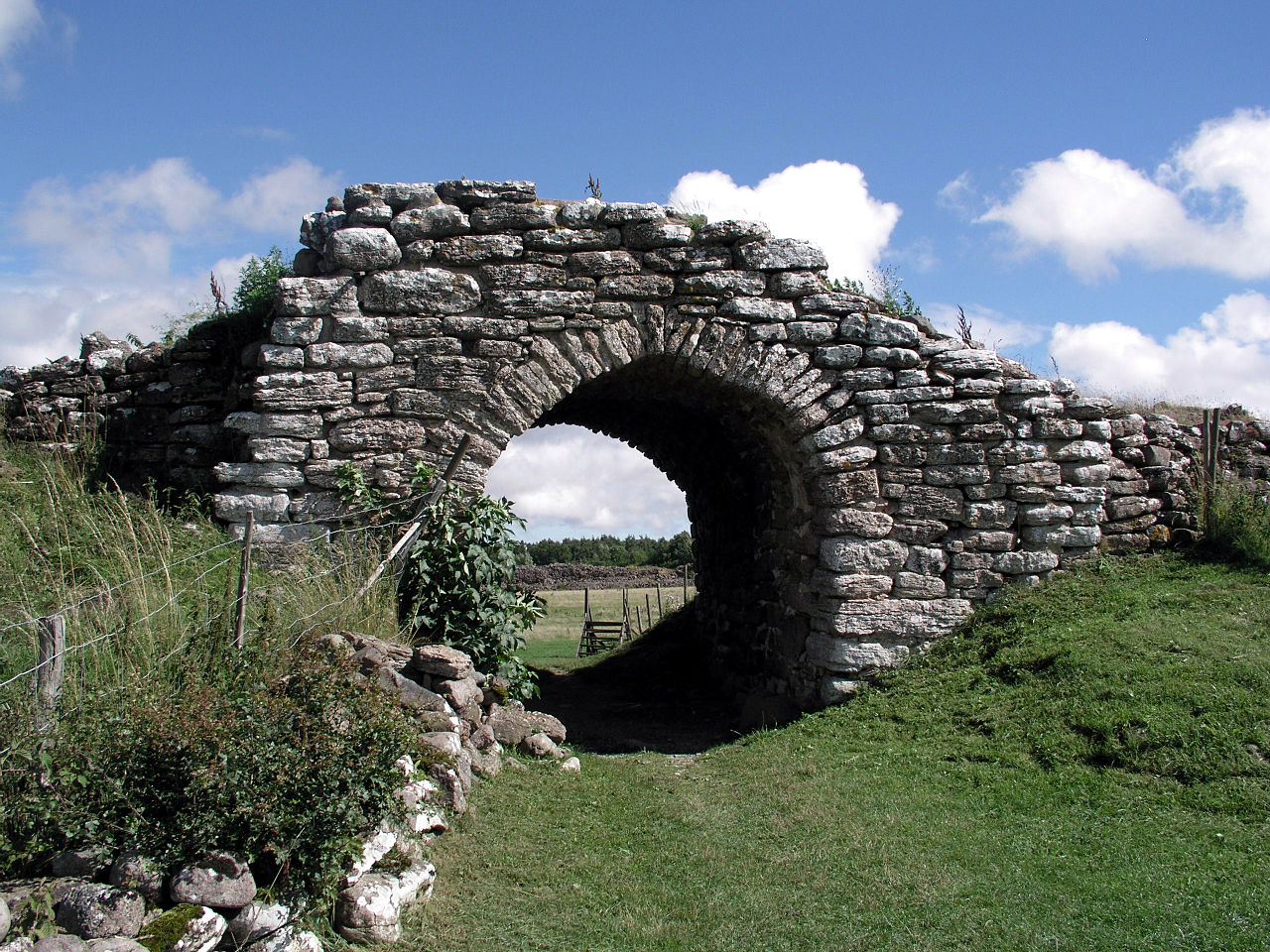
Gråborg Castle is the largest known ancient hillfort on the Swedish island of Öland. Its origins trace back to the 6th century, making it a significant archaeological site that illustrates early medieval defensive architecture and the evolution of regional power centers. The hillfort's strategic location near the modern town of Färjestaden in Mörbylånga Municipality highlights its historical importance as a fortified refuge and a hub for trade and social interaction throughout the Middle Ages. Historical development and significance The earliest construction phase of Gråborg likely dates from around 500 AD, during the Early Medieval period. Initially built as a hillfort to provide protection for local populations, it was expanded and reinforced over several centuries, reaching its largest form by the 12th century. This prolonged development reflects the shifting political and military landscape of the Baltic region during the Viking Age and the Middle Ages. Throughout the medieval period, Gråborg served multiple functions beyond military defense. According to historical tax records from 1450, the site was owned by the Vadstena Abbey, indicating its integration into ecclesiastical landholdings. The castle also functioned as a protected marketplace, facilitating trade and economic activity in the region. Its role as a commercial center is further supported by archaeological finds suggesting extensive human activity and exchange. The castle's defensive role persisted into the late 17th century. It was reportedly used for protection against Danish forces as late as 1677, underscoring its continued strategic relevance well beyond the medieval era. Local legends connect Gråborg with the antiking Burislev Sverkersson, who is said to have grown up at the site alongside his half-sister Sofia of Minsk. These stories contribute to the castle's cultural heritage and highlight its place in regional folklore. Architectural features and layout Gråborg is characterized by its elliptical rampart, which encloses an area approximately 210 by 160 meters. The fortification walls stand about 4 to 7 meters tall and are constructed primarily from local stone. Notably, parts of the outer wall are bonded with mortar, a feature that has helped preserve the structure's integrity over centuries. The hillfort has three entrances, one of which was enhanced with a vaulted gate and a tower superstructure during the Middle Ages. This architectural adaptation reflects evolving defensive needs and the influence of medieval military design. Despite extensive archaeological investigation, no remains of internal buildings have been found within the fort's enclosure, likely due to subsequent agricultural use that disturbed the original foundations. On the northern side of the castle ruins lie the remains of a medieval chapel dedicated to St. Knut. This ecclesiastical structure indicates the site's religious significance and its integration into the spiritual landscape of medieval Öland. Archaeological discoveries Excavations at Gråborg have uncovered a wide range of artifacts, which are now housed at the Kalmar County Museum. These finds include everyday objects, trade goods, and remnants of fortification construction, providing valuable insights into the life and activities of the castle's inhabitants over many centuries. The archaeological record confirms continuous use and adaptation from the Early Medieval period through the Middle Ages. Gråborg in the context of Öland's fortifications For many years, Gråborg was considered the largest ancient hillfort on Öland, a testament to its regional importance. However, in 2021, the discovery of Sörby borg in central Öland revealed an even larger hillfort, reshaping understandings of the island's defensive landscape. Despite this, Gråborg remains a key site for understanding the military, economic, and social history of Öland. Its size, construction, and long period of use reflect the island's strategic position in the Baltic Sea and its role in the broader Scandinavian medieval world. Visiting Gråborg today Today, the site of Gråborg is a protected archaeological ruin open to visitors interested in medieval history and early Scandinavian fortifications. The ramparts remain prominent in the landscape, although the interior is now covered with grass and vegetation. Interpretive signage and museum exhibits in nearby Kalmar provide context for the site's historical and cultural significance. Visitors can explore the remains of the fortifications and the chapel ruins, gaining a tangible sense of the site's past importance. The castle's connection to regional legends and its role as a medieval trade center add to its appeal as a destination for history enthusiasts.

Early Medieval (5th–10th c.)
Details