Ismantorp Fortress
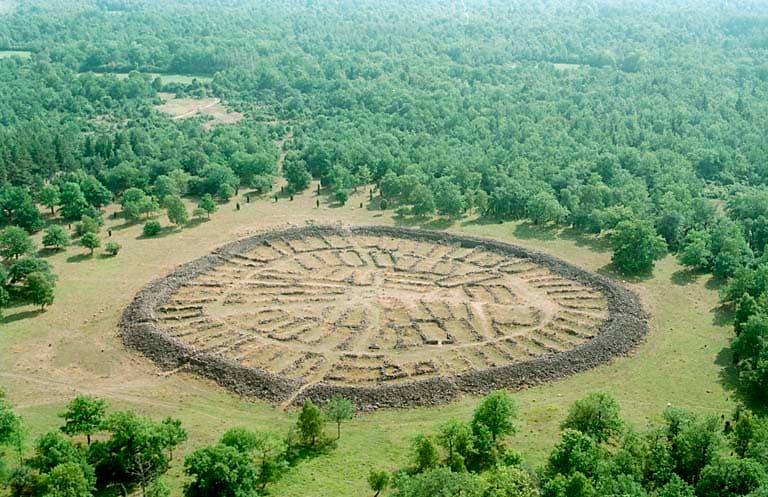
Ismantorp fortress is a remarkable ancient ringfort located on the island of Öland in Sweden. Dating back to approximately 300-500 AD, it is one of the largest and oldest known ringforts in the region. The site is renowned for its extensive limestone walls, measuring about 300 meters in length, which enclose the fortress in a roughly circular shape. The walls are punctuated by nine gates, a feature that has intrigued historians and archaeologists due to the defensive challenges posed by multiple entry points.
Architectural features and layout
The fortress's design includes 95 house foundations arranged in 12 blocks around a central open area. This central space contains a distinctive circular building situated on a natural elevation, which is unusual for ringforts and adds to the site's uniqueness. The houses are compactly organized, reflecting a planned settlement within the fortified enclosure. The construction primarily utilizes the abundant local limestone, contributing to the walls' durability and the fortress's enduring presence.
The ringfort's gates and defensive considerations
The presence of nine gates in the fortress's walls is unusual for a structure with an apparent defensive purpose. While fortifications typically feature limited entry points to enhance security, Ismantorp's multiple gates suggest a complex function beyond mere defense. This architectural choice has led to various interpretations regarding the fortress's role, including the possibility of it serving ceremonial or communal purposes alongside military ones.
Historical context and significance
Ismantorp fortress's origins place it in the late Roman Iron Age period, a time of significant social and political changes in Scandinavia. The site is part of a broader tradition of ringfort construction in the Baltic region, with parallels found in other parts of Sweden and neighboring countries. Its large scale and sophisticated design indicate it was a center of considerable importance, possibly serving as a refuge, a community hub, or a symbol of power.
Research and scholarly attention
The fortress was first described in written records in 1634, attracting the interest of notable figures such as the botanist Carl von Linné and other travelers and scholars over the centuries. Since the 19th century, researchers have extensively studied Ismantorp to uncover its age, function, and historical context. Despite these efforts, many aspects of the fortress remain enigmatic, fueling ongoing debate and investigation.
Theories on function and usage
Theories about Ismantorp's purpose vary widely. The strong limestone walls and overall fortification suggest a defensive role. However, the numerous gates complicate this interpretation, as they would have made the fortress difficult to defend effectively. Some scholars compare Ismantorp to large Slavic castles that combined protective functions with religious or ceremonial uses, proposing that Ismantorp may have served as a sanctuary or communal gathering place.
Regional defense and community role
Another perspective views Ismantorp as part of a broader defensive network on Öland, integrated with other fortifications to protect the island. Its location, now surrounded by marshland within the Mittlandskogen forest, would have enhanced its strategic value in the past. The fortress likely played a significant role in the island's social and military organization during the late Iron Age.
Current condition and visitor experience
Today, Ismantorp stands as archaeological ruins with well-preserved sections of its limestone walls and visible foundations of the houses and central building. The site offers visitors a tangible connection to Sweden's ancient past and is a popular destination for those interested in archaeology and history. Its setting within a forested landscape adds to the atmosphere, making it a compelling place to explore.
Access and tourism
Visitors to Ismantorp can walk along the remnants of the walls and explore the layout of the fortress. Interpretive signage and guided tours provide insights into the site's history and architectural features. The fortress's enigmatic nature continues to attract scholars and tourists alike, contributing to its cultural significance on Öland.
Frequently asked questions (FAQ)
- What is Ismantorp Fortress?
- Ismantorp Fortress is a well-preserved medieval fortress located on the island of Öland in Sweden. Built in the 14th century, it served as a strategic military installation and is renowned for its unique circular layout, which distinguishes it from other castles in the region.
- When was Ismantorp Fortress built?
- The construction of Ismantorp Fortress began in the late 14th century, around 1390. It was built during a time of conflict and served as a defense against potential invasions, reflecting the turbulent history of the region.
- Can I visit Ismantorp Fortress?
- Yes, visitors are welcome to explore Ismantorp Fortress. The site is accessible to the public, allowing you to wander through the ruins and enjoy the scenic views of the surrounding landscape.
- What are the opening hours of Ismantorp Fortress?
- Ismantorp Fortress is typically open to visitors year-round, but specific hours may vary seasonally. It is advisable to check the official website or local tourist information for the most current visiting hours before planning your trip.
- Is it possible to access Ismantorp Fortress by public transport?
- Yes, public transport options are available to reach Ismantorp Fortress. Visitors can take a bus to Borgholm and then a short taxi ride or bike to the fortress, making it relatively easy to visit even without a car.
- What are the ticket prices for visiting Ismantorp Fortress?
- Entry to Ismantorp Fortress is generally free of charge, making it an accessible destination for all visitors. However, some guided tours or special events may have a fee, so it's best to check in advance.
- What is the best time to visit Ismantorp Fortress?
- The best time to visit Ismantorp Fortress is during the warmer months, from late spring to early autumn, when the weather is pleasant. This period also offers the chance to enjoy the lush surroundings and participate in local events.
- What nearby attractions should I consider visiting?
- While visiting Ismantorp Fortress, you can also explore the nearby Borgholm Castle and the beautiful beaches along the Öland coastline. These attractions provide additional insights into the local history and stunning natural scenery.
- Why is Ismantorp Fortress historically significant?
- Ismantorp Fortress is significant for its unique architecture and role in Sweden's medieval military history. It represents the strategic importance of Öland in protecting against invasions and has been a focal point for archaeological studies, revealing insights into the past.
Photo gallery

Information
Website
Visit websiteSources & official resources
Verify the information above using these authoritative references.
Loading map...
Visitor reviews
No reviews yet. Been here? Write the first review and help other travelers!
Write the first reviewVisited this castle? Share your experience
Your review helps other travelers and adds first-hand knowledge to our encyclopedia.