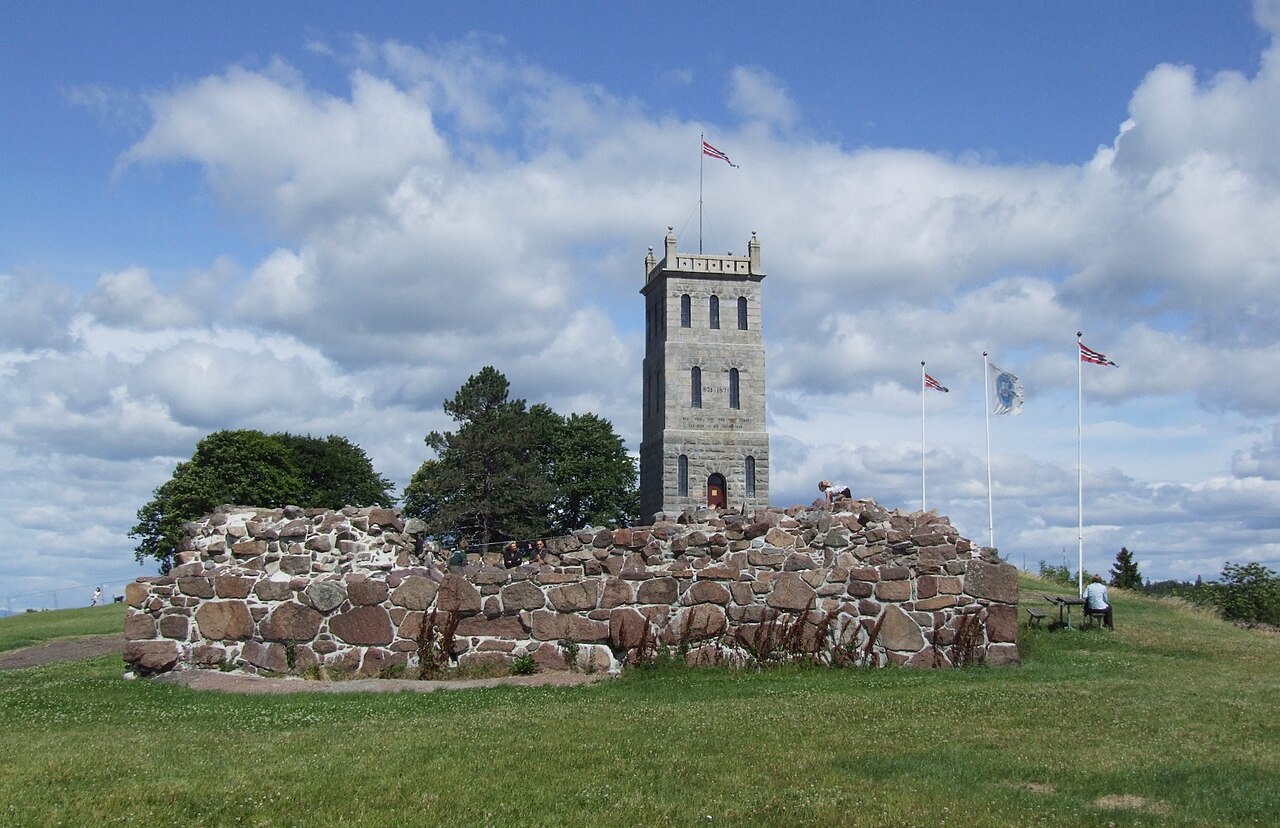
Staverns Fortress
Staverns Fortress, located in Larvik, Norway, is a historic military stronghold with origins dating back to the late 17th century. Its construction began in 1677 under the direction of Ulrik Frederick Gyldenløve, a prominent figure in Norwegian history, as part of a strategic effort to strengthen Norway's coastal defenses during the Gyldenløve War (1675–1679). The initial fortification consisted of a blockhouse with a battery and protective palisades positioned on a hill, making it a formidable defensive site on the island of Karlsøy.
Development and expansion in the late 17th century
Following its initial construction, Staverns Fortress underwent significant expansions between 1687 and 1689. These enhancements included the addition of three cannon batteries and an enlarged blockhouse, which improved its defensive capabilities considerably. This period of development reflected the fortress's growing strategic importance as a coastal defense installation and naval base within the Danish-Norwegian realm.
Role during the great northern war and naval significance
During the Great Northern War, particularly in its final Norwegian phase from 1709 to 1720, Staverns Fortress played a crucial role as a naval base. It served as the operational center for the renowned Norwegian naval hero Peder Tordenskiold and his fleet. The fortress was a key staging ground for naval operations in the region and supported the Danish-Norwegian Kattegat squadron, which was responsible for controlling sea routes and defending against Swedish naval forces.
In addition to its military functions, Staverns Fortress was a vital hub for maritime commerce between Norway and Denmark. It acted as a major chandelling and forwarding center, facilitating the supply and transport of cannon from Norwegian ironworks as well as other military equipment. This logistical role underscored the fortress's importance beyond pure defense, linking it to Norway's industrial and naval infrastructure.
Integration into fredriksvern naval base
From 1750 to 1758, the establishment of Fredriksvern and Fredriksvern Verft as the headquarters for the Norwegian Fleet transformed the older fortification into a component of a larger naval base complex. The fortress became known as the Citadellet, and the island on which it stood was renamed Citadelløya. This integration marked a shift in its function, with Staverns Fortress serving as a protective citadel within the broader naval infrastructure of the region.
Decline and preservation efforts in the 19th and 20th centuries
In the 19th century, Staverns Fortress and the associated Fredriksvern naval facilities gradually lost their military importance. Advances in military technology and changing strategic priorities led to the fortress falling into decline. The Citadellet no longer served as a frontline defense and was largely abandoned as a military installation.
During the 20th century, however, restoration efforts were undertaken to preserve the historic structures of Staverns Fortress. One of the most notable surviving buildings is Krutttårnet, the oldest constructed building within the complex. Its distinctive architecture has made it a well-known tourist attraction, drawing visitors interested in Norway's military heritage and coastal fortifications.
Architectural features and layout
Staverns Fortress exhibits typical features of Renaissance military architecture adapted to the coastal Norwegian environment. The original blockhouse and cannon batteries were designed for effective artillery defense, with thick walls and strategic placement to cover key sea approaches. The palisades and earthworks provided additional layers of protection against infantry assault.
The fortress's position on a hilltop on Citadelløya allowed for commanding views of the surrounding waters, essential for early warning and defense against naval threats. The integration into the larger Fredriksvern naval base further enhanced its role as a defensive citadel and logistical center.
Cultural and historical significance
Today, Staverns Fortress stands as a significant cultural landmark reflecting Norway's maritime and military history during the Renaissance and early modern periods. It illustrates the evolution of coastal fortifications in response to changing military technologies and geopolitical challenges. The fortress's association with figures like Ulrik Frederick Gyldenløve and Peder Tordenskiold adds to its historical importance.
Visitors to the site can explore the preserved structures, including the Krutttårnet, and gain insight into the strategic role the fortress played in Norway's naval defense. Its location in Larvik also places it within a region rich in maritime heritage, enhancing its appeal to historians and tourists alike.
Frequently asked questions (FAQ)
- What is Staverns Fortress?
- Staverns Fortress is a historic coastal fortification located in Larvik, Norway. Built in the 17th century, it played a vital role in Norway's defense against naval invasions and has a rich history that reflects the military architecture of the period.
- When was Staverns Fortress built?
- Staverns Fortress was constructed beginning in 1677 and completed in 1685. It was designed to protect the harbor of Stavern and served as a strategic military point during various conflicts in Norwegian history.
- What are the opening hours of Staverns Fortress?
- Staverns Fortress is typically open to visitors from May to September, with hours varying by day. It's best to check the official website or local tourism information for the most accurate and up-to-date opening times before your visit.
- Can I take guided tours of the fortress?
- Yes, guided tours are available at Staverns Fortress, providing visitors with in-depth knowledge about its history and architecture. These tours are a great way to explore the site while learning about its significant past from knowledgeable guides.
- Is Staverns Fortress accessible for people with disabilities?
- Staverns Fortress has made efforts to be more accessible, but some areas may still pose challenges due to uneven terrain and historic structures. It is recommended to contact the fortress administration in advance to inquire about specific accessibility options and accommodations.
- When is the best time to visit Staverns Fortress?
- The best time to visit Staverns Fortress is during the summer months, from June to August, when the weather is generally mild and the fortress is fully operational. This period also offers various events and activities that enhance the visitor experience.
- What are the ticket prices for visiting Staverns Fortress?
- Ticket prices for Staverns Fortress vary depending on the season and whether you opt for a guided tour. Generally, there are discounts for children, students, and seniors, making it an affordable destination for families and history enthusiasts alike.
- What nearby attractions can I explore after visiting the fortress?
- After visiting Staverns Fortress, you can explore the charming coastal town of Stavern, known for its picturesque harbor and art galleries. The nearby beaches and nature trails also offer a perfect opportunity for relaxation and outdoor activities.
Information
Loading map...
Visitor reviews
No reviews yet. Been here? Write the first review and help other travelers!
Write the first reviewVisited this castle? Share your experience
Your review helps other travelers and adds first-hand knowledge to our encyclopedia.