Altleiningen Castle
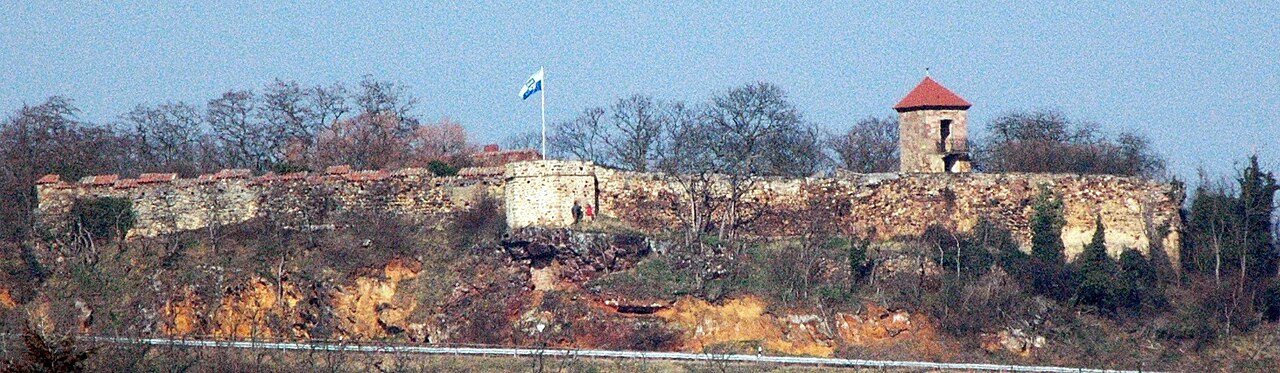
Altleiningen Castle is a prominent hill castle located on a domed summit approximately 400 metres above sea level, overlooking the left bank of the Eckbach river in the German state of Rhineland-Palatinate. This imposing fortress, with its triangular ground plan adapted to the natural contours of the hilltop, stands as a testament to medieval military architecture and the historical legacy of the Frankish noble family of Leiningen, who ruled the surrounding Leiningerland region.
The castle was originally established around 1100 to 1110 by Count Emich I of Leiningen and his son Emich II, marking it as a significant high medieval fortification. Its strategic location on rocky terrain provided natural defensive advantages, augmented by man-made features such as a moat and a deep rock-hewn ditch separating the outer ward from the main castle. Access was controlled by a drawbridge, emphasizing its function as a defensive stronghold.
Medieval origins and architecture
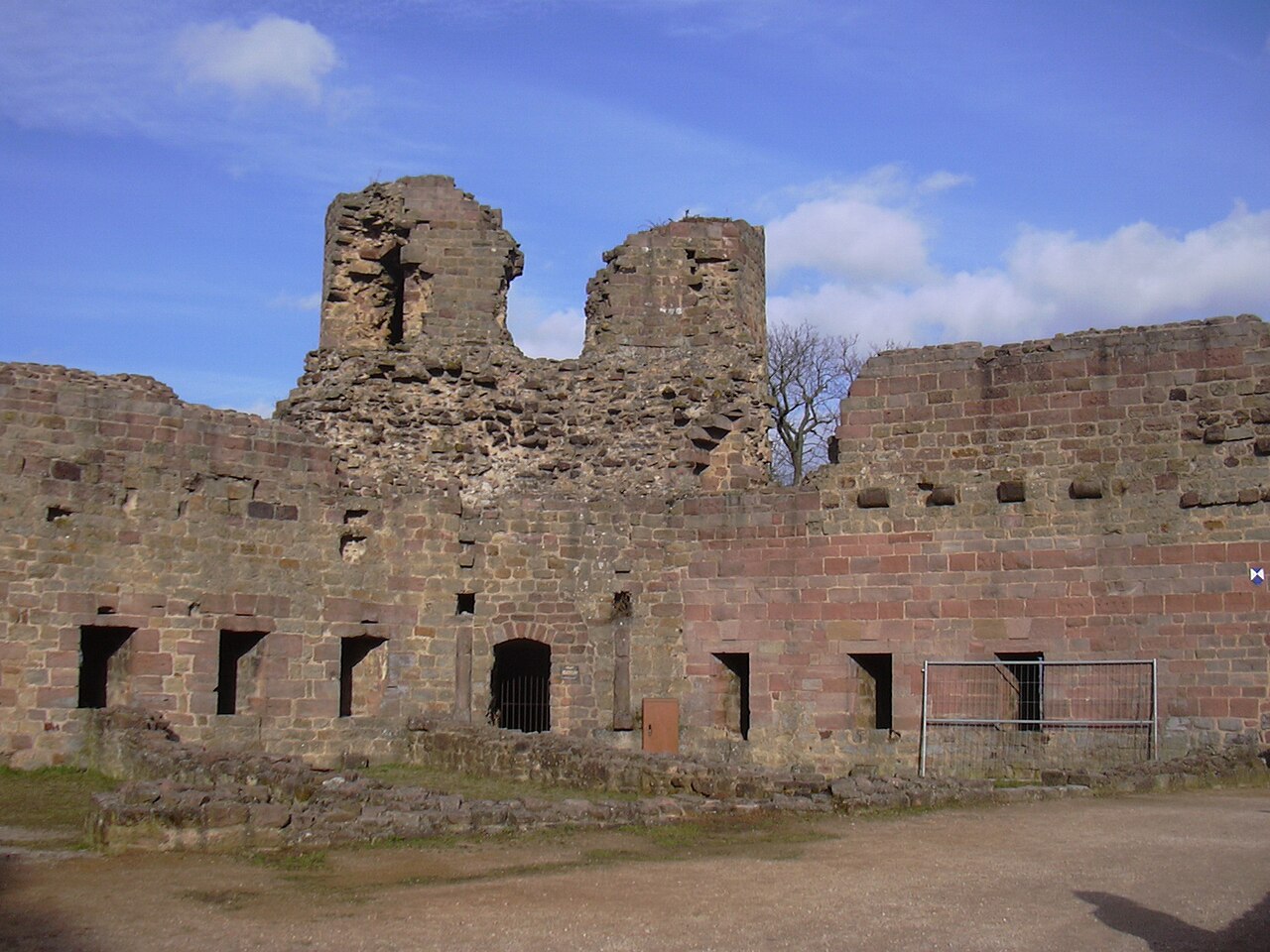
The original castle's design reflects the typical hill castle construction of the early 12th century, with a focus on defense and territorial control. The surviving remains on the western side include some of the original stone walls, offering insight into the castle's initial layout and fortification techniques. The castle's location and structure underscore the importance of natural topography in medieval military architecture.
Renaissance transformation and water engineering
Following damage during the 1525 peasants' uprising, the castle underwent significant rebuilding starting in 1528 under the direction of Counts Cuno II, Philip I, Louis, and John Casimir. This reconstruction introduced Renaissance architectural elements, marking a stylistic transition from purely military fortification to a residence with enhanced aesthetic and functional features. The rebuilding effort was supported by local farmers through socage, a form of feudal labor obligation.
One of the castle's remarkable engineering feats from this period is the construction of the 20-Pipe Well, a gallery driven deep into the rock beneath the castle around 1600 to secure a reliable water supply. This well remains the largest source feeding the Eckbach stream and exemplifies early modern ingenuity in castle water management.
Destruction and decline
The castle suffered a second, more devastating destruction in 1690 during the War of the Palatine Succession when French troops razed it. Following this event, Altleiningen Castle fell into ruin and was subsequently used as a quarry for building materials until the mid-19th century. The quarrying was halted by the Kingdom of Bavaria, which recognized the site's historical value.
Modern restoration and adaptive reuse
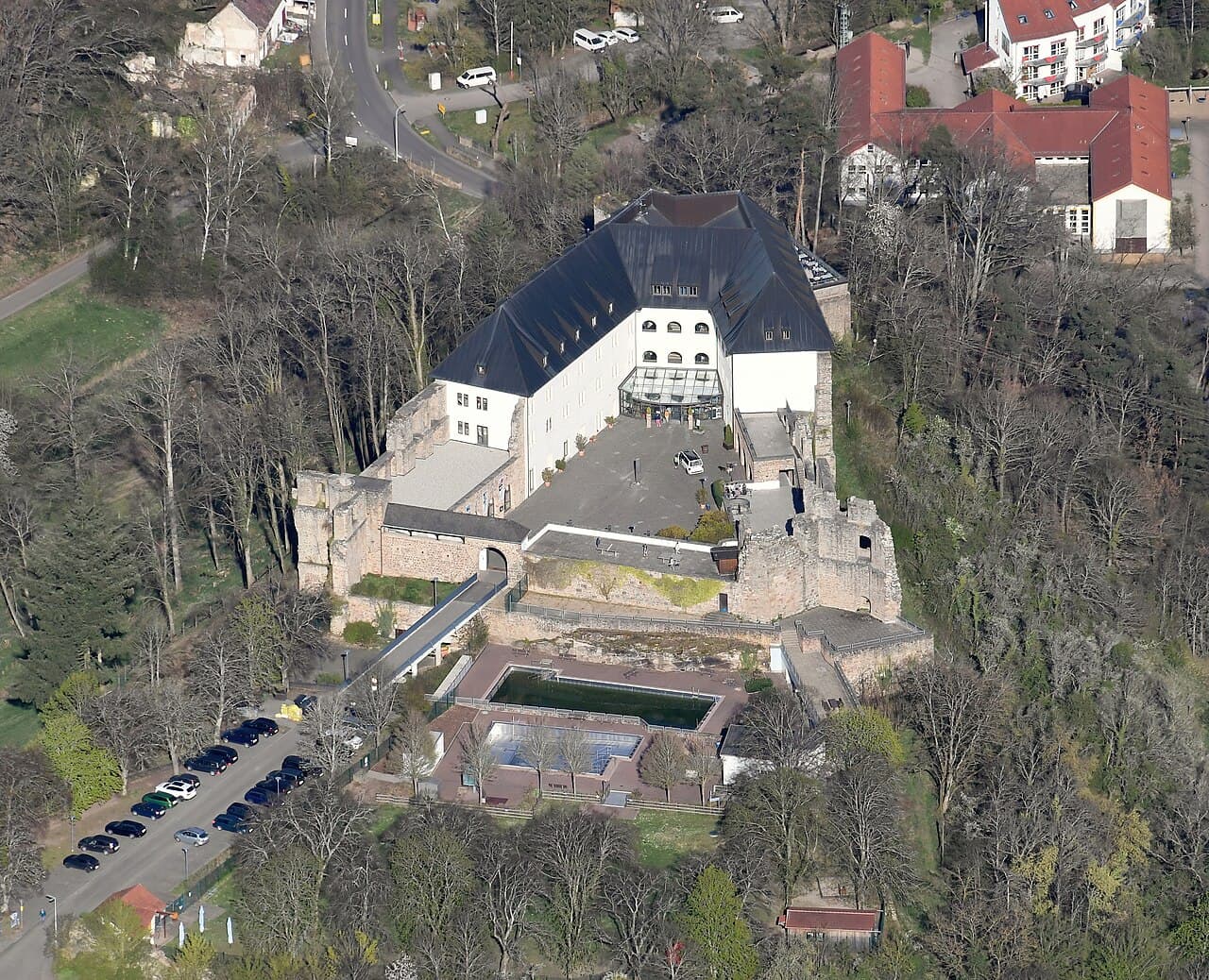
Ownership of the castle remained with the Leiningen-Westerburg-Altleiningen line until 1933, when the county of Frankenthal acquired the site. In 1962, the ruins were officially listed as a heritage site, prompting a restoration project that included rebuilding the schloss wing over six years. The restoration incorporated the surviving western wall remains and aimed to preserve the castle's historical character.
By 1968, the partially restored castle was repurposed to house a youth hostel, which underwent a comprehensive modernization between 1998 and 2000. During this renovation, the castle was given a new gable roof to replace the previous flat roof from the 1960s, restoring a more traditional silhouette. The castle's great hall now serves as a dining room, and the Burgschänke pub with its summer terrace offers hospitality to visitors. Additionally, the main moat has been transformed into a public open-air swimming pool, blending historical elements with contemporary recreational use.
Location and cultural significance
Altleiningen Castle is situated in the Palatinate Forest, within the parish of Altleiningen in the Bad Dürkheim county. Its proximity to the sister castle, Neuleiningen Castle, approximately five kilometres northeast, highlights the strategic network of fortifications controlled by the Leiningen family. The castle's enduring presence and adaptive reuse reflect the region's layered history, from medieval feudalism through Renaissance transformation to modern heritage conservation.
Frequently asked questions (FAQ)
- How do I get to Altleiningen Castle?
- Altleiningen Castle is located in the parish of Altleiningen, Rhineland-Palatinate. It is accessible by road and public transport from nearby towns such as Bad Dürkheim. Visitors can follow local signage or use GPS navigation to reach the castle grounds.
- What are the visiting hours for Altleiningen Castle?
- The castle is open to visitors daily, with the youth hostel and pub operating during regular business hours. It is advisable to check the official website or contact the local tourist office for seasonal variations and special events.
- Can I stay overnight at Altleiningen Castle?
- Yes, the castle houses a modernized youth hostel that offers overnight accommodation. Guests can enjoy the historical ambiance along with contemporary amenities during their stay.
- What architectural styles are visible at Altleiningen Castle?
- Altleiningen Castle features a blend of high medieval fortification elements and Renaissance architectural details from its 16th-century reconstruction. The gable roof and restored schloss wing reflect Renaissance influences.
- Why is the 20-Pipe Well significant?
- The 20-Pipe Well, constructed around 1600, is a remarkable example of early modern water engineering. It was created by driving a gallery deep into the rock to provide a reliable water source, which remains the largest feeder of the Eckbach stream.
- Is the castle suitable for family visits?
- Yes, Altleiningen Castle offers family-friendly facilities including the open-air swimming pool in the former moat and the Burgschänke pub with a summer terrace. The youth hostel also accommodates families looking to stay overnight.
Photo gallery

Information
Sources & official resources
Verify the information above using these authoritative references.
Loading map...
Visitor reviews
No reviews yet. Been here? Write the first review and help other travelers!
Write the first reviewVisited this castle? Share your experience
Your review helps other travelers and adds first-hand knowledge to our encyclopedia.