Neuleiningen Castle
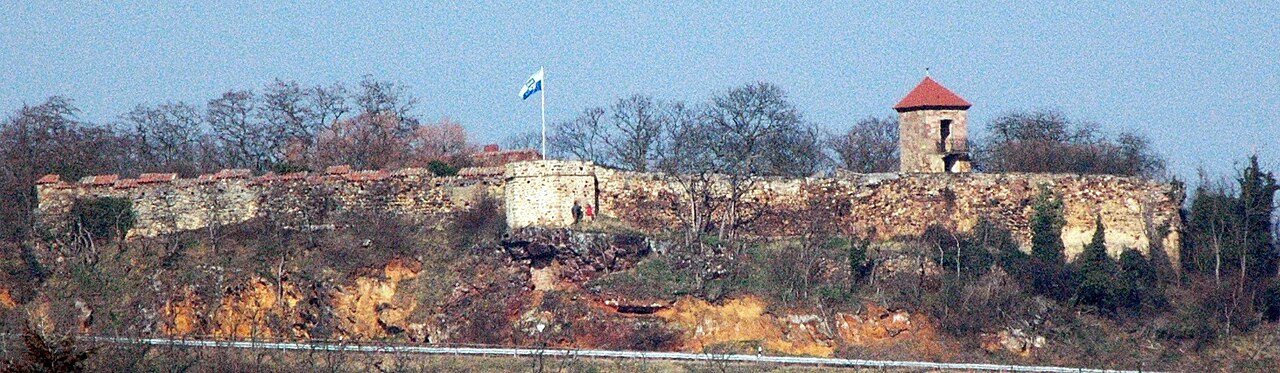
Neuleiningen Castle stands as a remarkable example of high medieval hill castle architecture in the Palatinate region of Germany. Built between 1238 and 1241 by Count Frederick III of Leiningen, this fortress was strategically positioned on a hill spur overlooking the Eckbach valley, commanding a vital route from the Rhine plain. The castle's location, approximately 270 meters above sea level at the northeastern edge of the Palatinate Forest, afforded it a commanding view of the surrounding landscape, including the Upper Rhine Valley, the Palatinate Forest mountains, and the Donnersberg massif.
Neuleiningen Castle was part of a defensive network alongside Battenberg Castle, situated about 1,400 meters to the south, together controlling the entrance to the Eckbach valley. This positioning was vital for the Leiningen family, who held the castle for over two centuries, reflecting the feudal power and territorial control typical of the high medieval period.
Historical context and ownership
The castle was constructed following the division of family lands within the Leiningen lineage, a prominent Frankish noble family. Over the centuries, Neuleiningen Castle witnessed significant historical events that shaped its fate. In 1468, during inheritance disputes, the castle was seized by Prince-Elector Frederick the Victorious of the Palatinate, demonstrating the turbulent political landscape of the region.
By 1508, ownership became shared between the Bishopric of Worms and the Counts of Leiningen-Westerburg, a division that complicated decisions about the castle's future. The castle's role during the Peasants' War of 1525 is notable; it was peacefully occupied by rebellious farmers who were generously received by Countess Eva, a gesture commemorated in local poetry by Paul Münch.
While the castle sustained only minor damage during the Thirty Years' War, it was nearly destroyed in 1690 by French troops during the War of the Palatine Succession. The destruction left the castle in ruins, and conflicting interests between its owners prevented its immediate reconstruction. The Leiningen family favored rebuilding, whereas the Bishopric of Worms opposed it, leading to the eventual sale of the Leiningen share to Worms in 1767.
Following the French Revolution and the secularization of church properties, the castle ruins were transferred to municipal ownership in 1804 and subsequently sold in 1808. In 1874, the castle was repurchased by Count Karl Emich of Leiningen-Westerburg, restoring the family's connection to the site.
Architectural features and layout
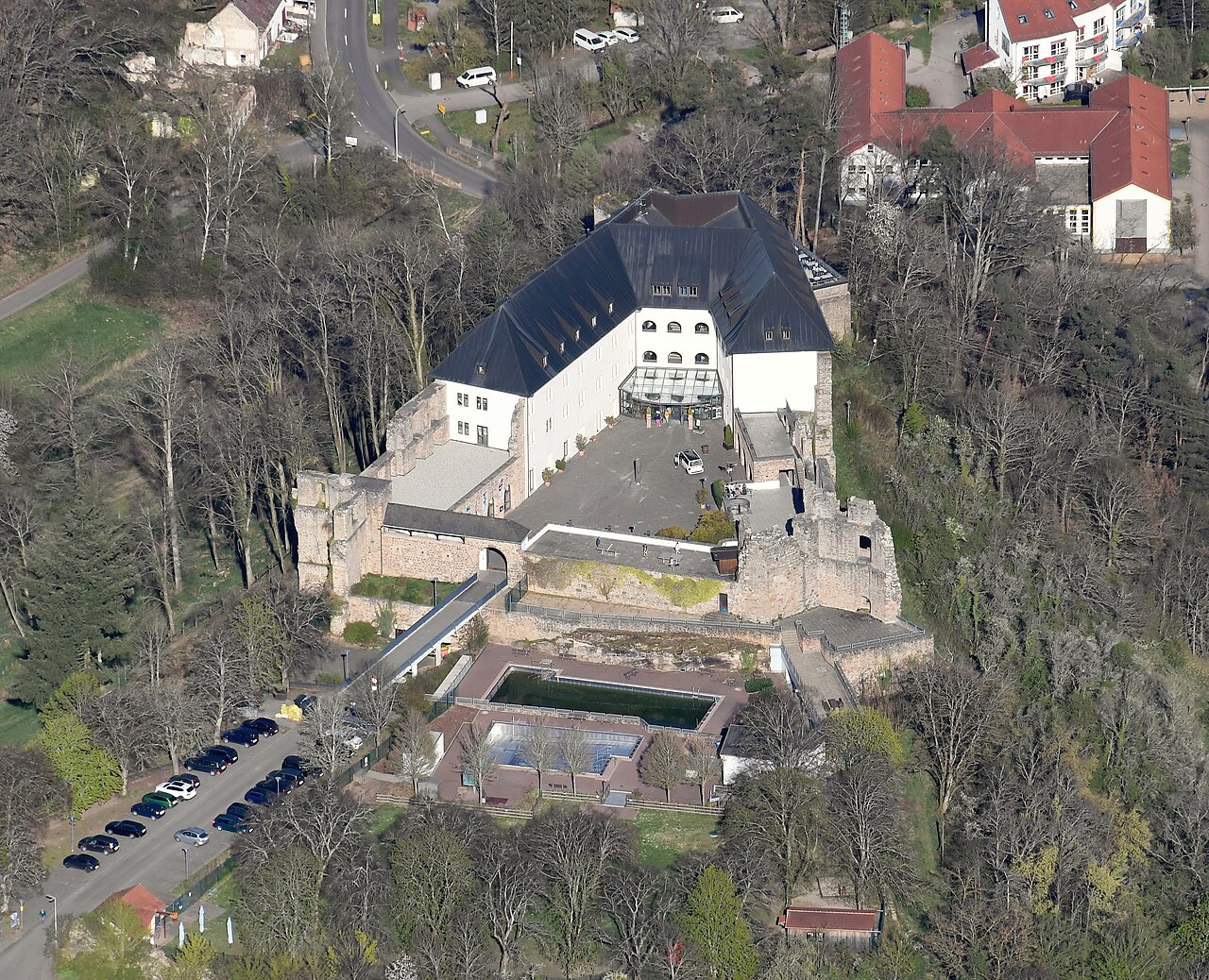
Neuleiningen Castle exemplifies the quadrangular or "kastell" style typical of early 13th-century fortifications influenced by French castle design from the Île-de-France region. Its plan is a regular rectangle with four round towers at each corner, a design that enhanced its defensive capabilities.
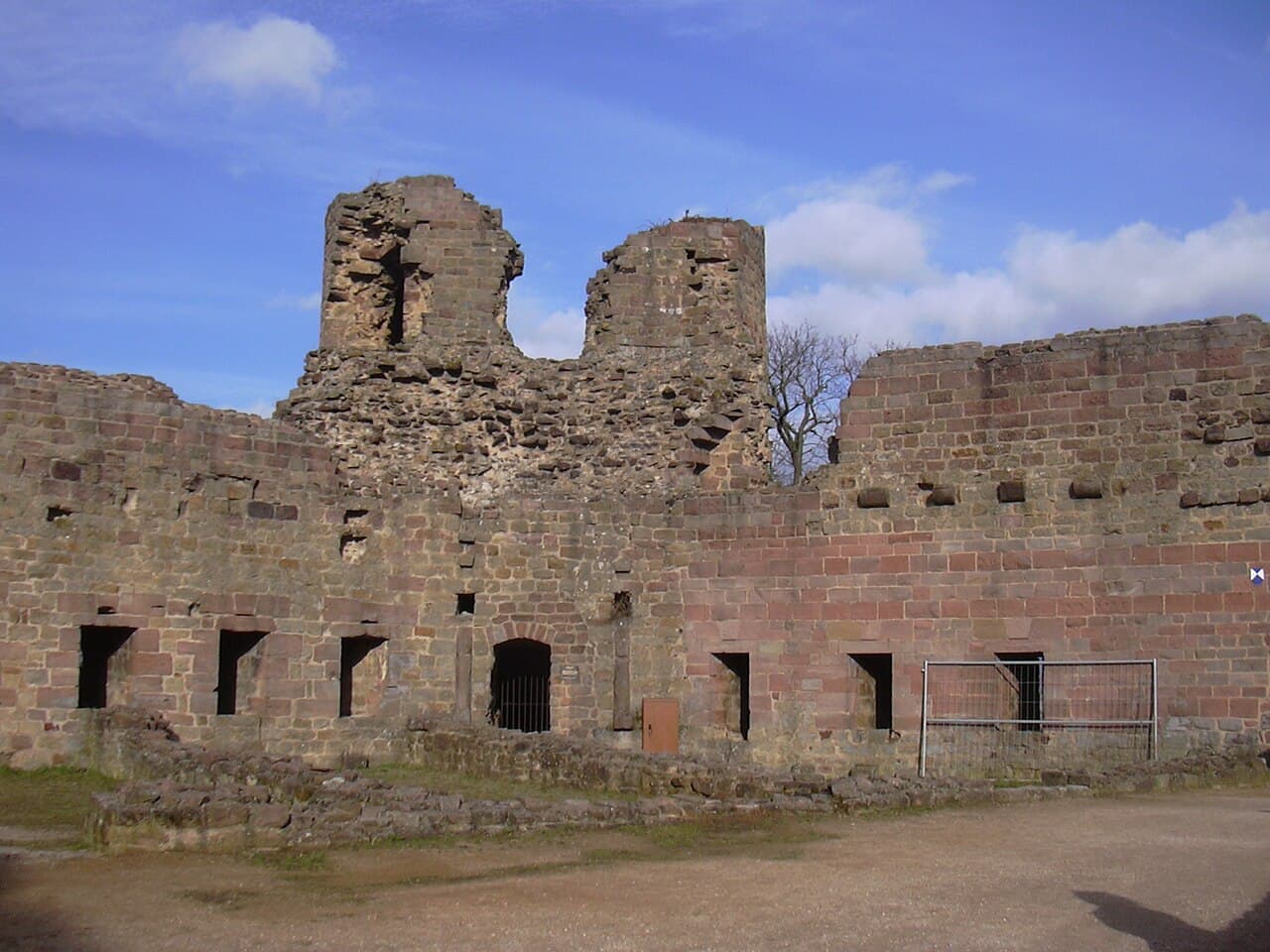
The castle's walls feature numerous narrow arrow slits (Schlitzscharten), among the earliest examples in Germany, designed for bows and crossbows, reflecting advanced military architecture of the time. These defensive innovations underscore the castle's strategic importance in controlling the surrounding territory.
Although the original internal buildings from the initial construction phase no longer survive, the visible remains mainly date from the 14th to early 17th centuries, indicating continuous occupation and modification. One of the most distinctive architectural elements is the stepped gable of the palas (main hall) on the north side, attributed to the period of Landgrave Hesso of Leiningen (circa 1435–1467), illustrating the castle's ongoing development through the late medieval period.
The southeast corner contains cellar vaults from the Leiningen-Westerburg residential building dating to around 1508. These cellars were adapted in the late 20th century to accommodate the Burgschänke inn, demonstrating the castle's modern reuse. The southeast tower was reconstructed starting in 1874 under Count Karl Emich's initiative and now serves as an observation tower approximately 15 meters tall. It houses a small local history museum displaying regional stoneware production and traditional handicrafts, enriching the cultural experience for visitors.
Cultural significance and visitor experience
Neuleiningen Castle is not only a monument of medieval military architecture but also a cultural landmark intertwined with the history of the Leiningen family and the surrounding region. Its proximity to the well-preserved medieval village of Neuleiningen, which retains its historic fortifications, offers visitors a unique glimpse into medieval life and defense systems.
From the castle's observation tower, visitors can enjoy panoramic views encompassing the Upper Rhine Plain, the Palatinate Forest, and the Donnersberg massif. On clear days, landmarks such as Speyer Cathedral, Heidelberg Castle, Worms Cathedral, and even Frankfurt Airport are visible, making it a favored spot for photography and sightseeing.
Nearby, the Old Vicarage (Alte Pfarrey), first recorded in 1524, now houses a gourmet restaurant, adding to the castle's appeal as a destination combining history, culture, and culinary experiences.
Access and amenities
The castle is accessible to the public, with the observation tower and museum providing educational insights into the region's history and craftsmanship. The Burgschänke inn offers refreshments within the historic setting, enhancing the visitor experience. The surrounding village's medieval charm and the castle's commanding presence make Neuleiningen a significant cultural and tourist attraction in the Palatinate.
Neuleiningen Castle remains a testament to the architectural ingenuity and historical complexity of medieval German castles, reflecting the evolving political, military, and social dynamics of the region over eight centuries.
Frequently asked questions (FAQ)
- What is the historical significance of Neuleiningen Castle?
- Neuleiningen Castle, dating back to the 12th century, is an important example of medieval fortification in Germany. It played a crucial role in the region's defense and showcases the architectural evolution of castles over the centuries.
- When was Neuleiningen Castle built?
- Construction of Neuleiningen Castle began in the early 12th century, with significant expansions and renovations occurring throughout the Middle Ages. Its enduring structure reflects the historical developments of the time and the castle's strategic importance.
- What are the opening hours for Neuleiningen Castle?
- Neuleiningen Castle is generally open to visitors from April to October, with specific hours varying by day. It is advisable to check the official website or contact local tourism for the most current opening times before your visit.
- Can I access Neuleiningen Castle with mobility challenges?
- While Neuleiningen Castle has some accessible areas, the steep paths and uneven surfaces may pose challenges for visitors with mobility issues. It is recommended to contact the castle administration in advance to inquire about accessibility options.
- What is the best time to visit Neuleiningen Castle?
- The best time to visit Neuleiningen Castle is during the spring and summer months when the weather is pleasant, and the surrounding landscape is lush. Additionally, various events and guided tours are often held during these seasons.
- Are there any ticket prices for visiting Neuleiningen Castle?
- Entry to Neuleiningen Castle is typically free, although special guided tours may have a nominal fee. Be sure to check for any special events that might have associated costs.
- What nearby attractions can I visit after exploring Neuleiningen Castle?
- After visiting Neuleiningen Castle, you can explore the picturesque village of Neuleiningen, known for its charming half-timbered houses. Additionally, the nearby Palatinate Forest and other historical sites offer great opportunities for hiking and sightseeing.
- How do I get to Neuleiningen Castle?
- Neuleiningen Castle is easily accessible by car and is located near major roadways. Public transportation options are also available, with local bus services connecting to the village of Neuleiningen.

Information
Loading map...
Visitor reviews
No reviews yet. Been here? Write the first review and help other travelers!
Write the first reviewVisited this castle? Share your experience
Your review helps other travelers and adds first-hand knowledge to our encyclopedia.