Starokostiantyniv Castle
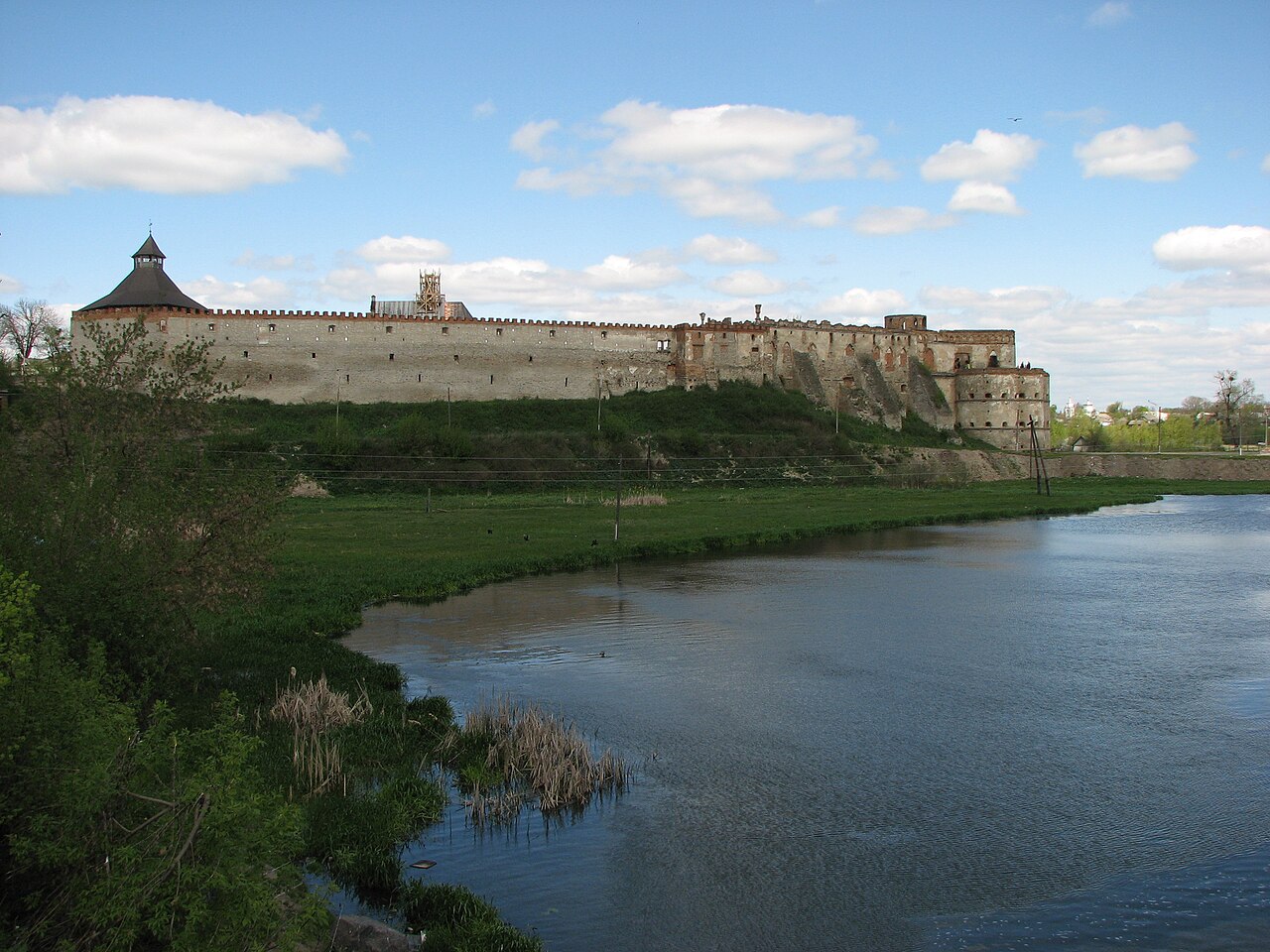
Starokostiantyniv Castle stands as a remarkable example of a 16th-century hill castle located in the city of Starokostiantyniv, Ukraine. Built by the influential Ostrozkys princely family, this fortress was a critical military and administrative center designed to protect southeastern Volhynia from frequent Tatar raids. Its strategic placement on a triangular promontory where the Sluch and Ikopot rivers converge provided natural defensive advantages that were expertly integrated with man-made fortifications.
Founding and early history
The castle and its adjoining settlement were founded in 1561 by Prince Vasyl-Kostiantyn Ostrozkyi, who secured royal approval to establish the city initially named Kostiantyniv. Construction progressed swiftly, and by 1571, much of the fortress and urban infrastructure was complete, with further enhancements continuing into the early 1580s. The settlement later became known as Starokostiantyniv, meaning "Old Kostiantyniv." The fortress served as the main residence of the Ostrozkyi family and functioned as the administrative center of the Kostiantyniv volost. Throughout the late 16th century, the castle's robust fortifications successfully repelled all Tatar assaults, underscoring its military significance.
Military significance and cossack era
In the late 16th century, Severyn Nalyvaiko, a prominent Cossack leader, commanded the castle's court Cossack hundred around 1591. The fortress played a pivotal role during the Khmelnytsky Uprising of the mid-17th century. In 1648, Ukrainian Cossack forces captured Starokostiantyniv Castle, and Bohdan Khmelnytsky himself stayed within its walls in 1649. The castle continued to be a strategic military stronghold throughout the 17th century, housing various Cossack garrisons, including those loyal to Petro Doroshenko around 1673. It notably withstood a Turkish siege in 1675, demonstrating its enduring defensive capabilities.
Transition of ownership and later use
After the death of Anna Khodkevych, granddaughter of the founder, in 1654, the castle passed to the Sangushko family. Unlike the Ostrozkys, the Sangushkos did not reside in the fortress, instead leasing it for economic purposes. During the 19th and early 20th centuries, under Russian imperial rule, the castle accommodated local government officials and police services, reflecting its continued administrative importance.
Architectural features and layout
Starokostiantyniv Castle occupies a naturally defensible triangular promontory bordered by the Sluch and Ikopot rivers. Its fortifications include a water-filled moat, an earthen embankment, and a stone curtain wall approximately 1.5 meters thick and nearly 6 meters high. Originally, the fortress featured five towers, but today only two remain partially intact.
The princely residence and castle church
The castle's core buildings are tightly arranged, reflecting the design of Romanesque palaces that combined residential, administrative, and religious functions. The princely residence is a two-story elongated brick structure near the southern riverside. Renovations in the 1990s introduced concrete roofing that unfortunately caused structural strain on the historic brick walls.
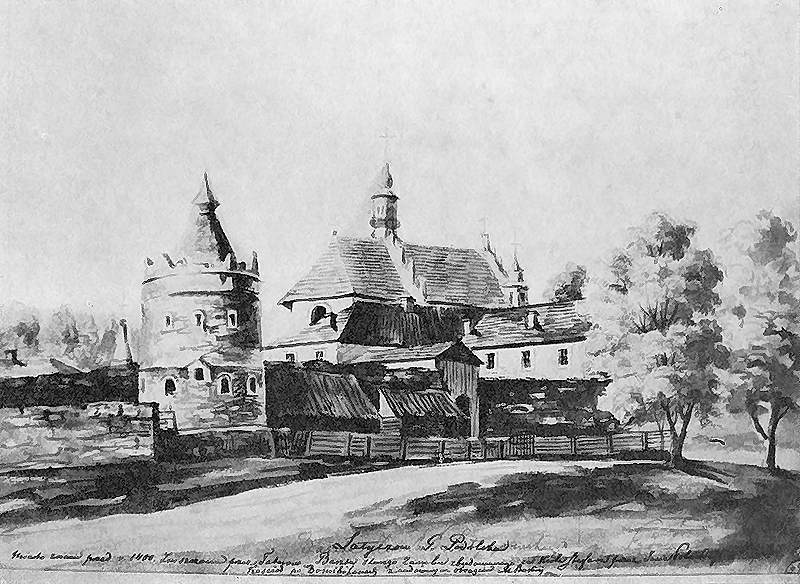
The castle church of the Holy Trinity is a modest stone and brick building with a single nave and an apse. Its exterior is decorated with glazed tiles, and inside it features a combination of cylindrical and groin vaulting. The nave is divided by piers resting on four columns topped with pointed arches. A sacristy with defensive loopholes adjoins the riverside side of the church. The church remains relatively well preserved and is currently used by the Ukrainian Orthodox Church of the Kyiv Patriarchate.
Surviving towers and defensive elements
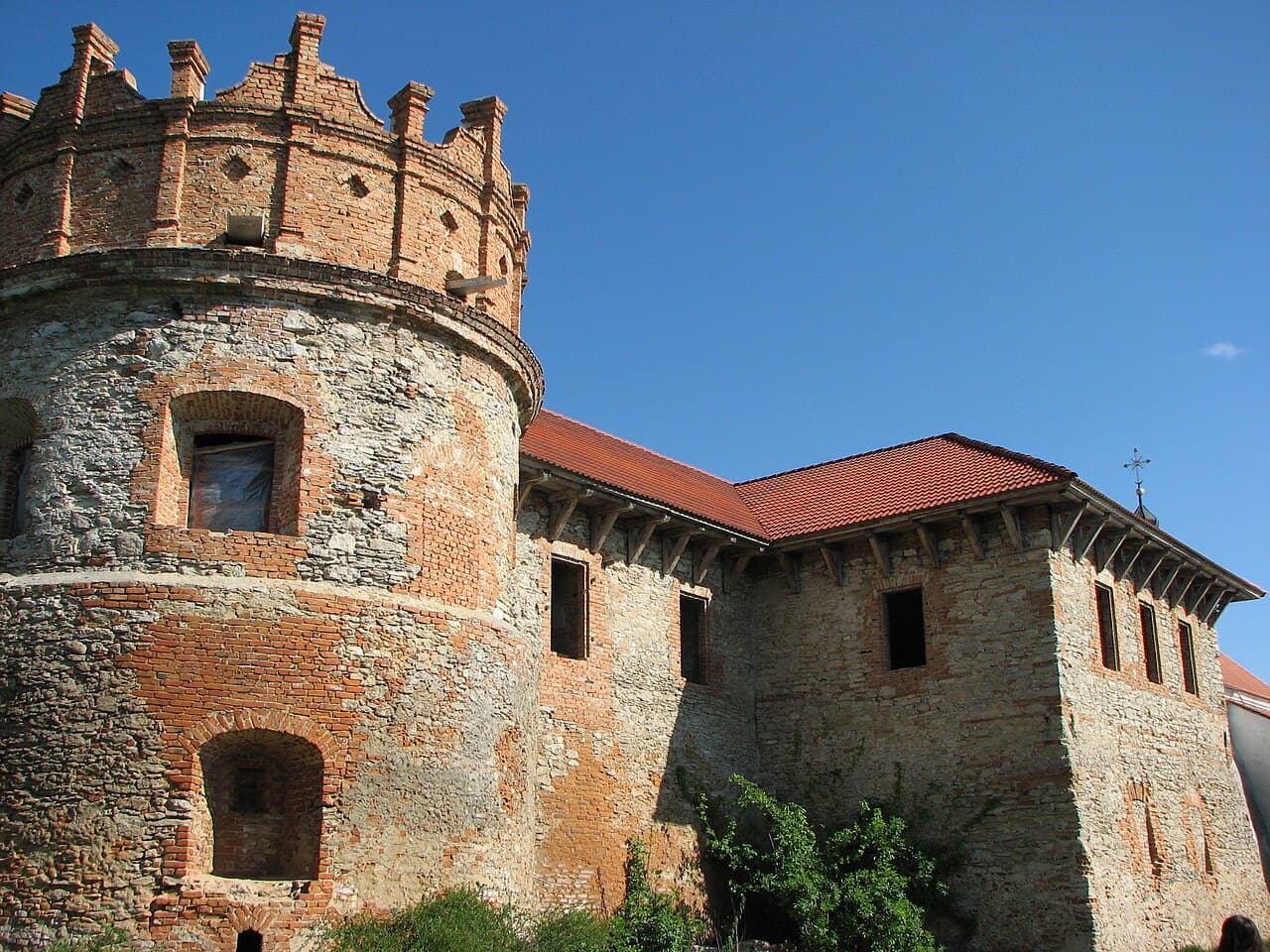
One of the surviving towers, located at the southwest corner, rises two stories and includes firing slits designed to cover frontal and side approaches. The tower's ground floor has a hemispherical vaulted ceiling, while the upper floor features a wooden beam ceiling supported by structural elements. The upper section is marked by a two-level attic.
Archaeological discoveries and historical layers
Excavations beneath the castle between 2001 and 2008 uncovered a significant medieval cultural layer containing ash deposits and fortification remnants dating back to the late 12th and early 13th centuries. These findings link the site to the historical Bolokhiv land, a region destroyed by the Ruthenian prince Danylo Romanovych. Historical documents from the 17th century also mention auxiliary buildings such as stables, storerooms, and kitchens within the castle complex, although these structures have not survived.
Modern history and preservation efforts
In 1929, Starokostiantyniv Castle was declared a State Historical and Cultural Reserve, recognizing its heritage value. Restoration efforts in the 1930s established a museum within the princely palace. However, World War II inflicted damage on the complex, and some late 20th-century restoration attempts inadvertently harmed the historic fabric. Since 2010, the castle has been part of a heritage rehabilitation pilot project under the Council of Europe, aiming to preserve and promote this significant cultural monument.
Visiting starokostiantyniv castle today
Today, Starokostiantyniv Castle stands as a well-preserved example of a hill castle with rich historical layers visible in its architecture and archaeological remains. Visitors can explore the surviving towers, the princely residence, and the castle church of the Holy Trinity, which remains active for religious services. The site offers insight into the military, political, and cultural history of southeastern Volhynia and the broader Ukrainian lands.
Frequently asked questions (FAQ)
- How do I get to Starokostiantyniv Castle?
- Starokostiantyniv Castle is located in the city of Starokostiantyniv, Khmelnytskyi Oblast, Ukraine. It is accessible by local roads and public transportation from nearby major cities such as Khmelnytskyi.
- What are the opening hours for visiting the castle?
- The castle is generally open to visitors during daylight hours, but it is advisable to check with the local State Historical and Cultural Reserve administration for exact visiting times and any seasonal variations.
- Is there an entrance fee to visit Starokostiantyniv Castle?
- Entrance fees may apply depending on the exhibitions or guided tours available. Visitors should inquire locally or check official websites for the current ticket prices.
- What architectural styles are represented at Starokostiantyniv Castle?
- The castle primarily features <strong>Romanesque architectural elements</strong> in its princely residence and church, including vaulted ceilings and glazed tile decorations, reflecting late medieval design.
- Can I see archaeological excavations at the castle?
- Archaeological excavations have revealed medieval layers beneath the castle, but active digs are not regularly open to the public. Some findings are displayed in the castle museum.
- Why is Starokostiantyniv Castle historically significant?
- Starokostiantyniv Castle was a key defensive fortress against Tatar raids and played a strategic role during the Cossack uprisings, hosting notable leaders like Bohdan Khmelnytsky.
Photo gallery

Photo by MaPet1•Public domain
Information
Sources & official resources
Verify the information above using these authoritative references.
Loading map...
Visitor reviews
No reviews yet. Been here? Write the first review and help other travelers!
Write the first reviewVisited this castle? Share your experience
Your review helps other travelers and adds first-hand knowledge to our encyclopedia.