Starozaslavsky Castle
Starozaslavsky Castle stands as a significant historical monument in Iziaslav, Ukraine, embodying centuries of architectural evolution and regional history. Originally constructed in the 15th century by East Slavic settlers, the castle was founded under the auspices of Prince Vasyl Fedorovych Krasnyi, whose influence in the region extended beyond 1461. Strategically positioned near the confluence of the Soshena and Horyn rivers, the castle formed a vital part of the defensive network safeguarding the important settlement of Iziaslav in the Volhynia region.
The castle's earliest documented mentions appear in the early 16th century, particularly in the Zaslav castle books initiated in 1512, which provide detailed records of the castle's administration and its role in local governance. Subsequent references in 1533 and 1535 confirm its continued importance. It is important to clarify that the often-cited date of 1539 pertains not to the castle's construction but to the first recorded mention of the nearby Zaslav customs house. Throughout the 17th century, Starozaslavsky Castle transitioned into a military armory, as evidenced by records from 1622 that describe it as a repository for weapons, military supplies, and part of the castle's art collection.
Architectural evolution and 18th-century modifications
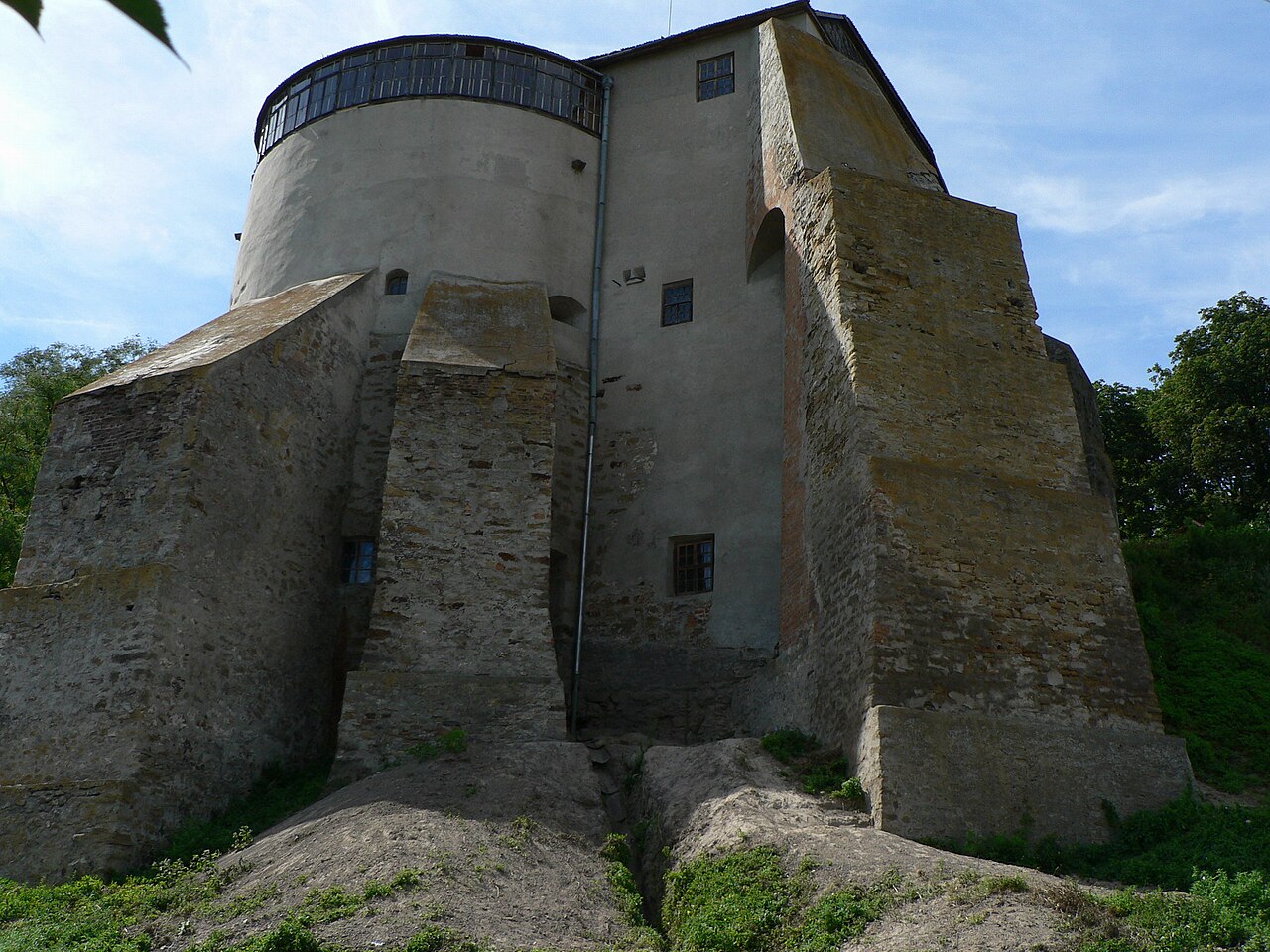
The castle's architecture reflects a complex history of construction and adaptation. The original 15th-century structure was primarily built of stone, featuring a nearly square, two-story layout centered around a wide north-south passage. This passage divides the first floor into two equal halves, each containing three rooms. The cellar level and first floor are notable for their cross-vaulted ceilings, a hallmark of durable medieval construction. Ventilation openings known as prorukhy in the cellar ensured airflow to the underground chambers, while internal channels within the walls possibly served as lifts for goods or smoke vents for gunpowder fumes.
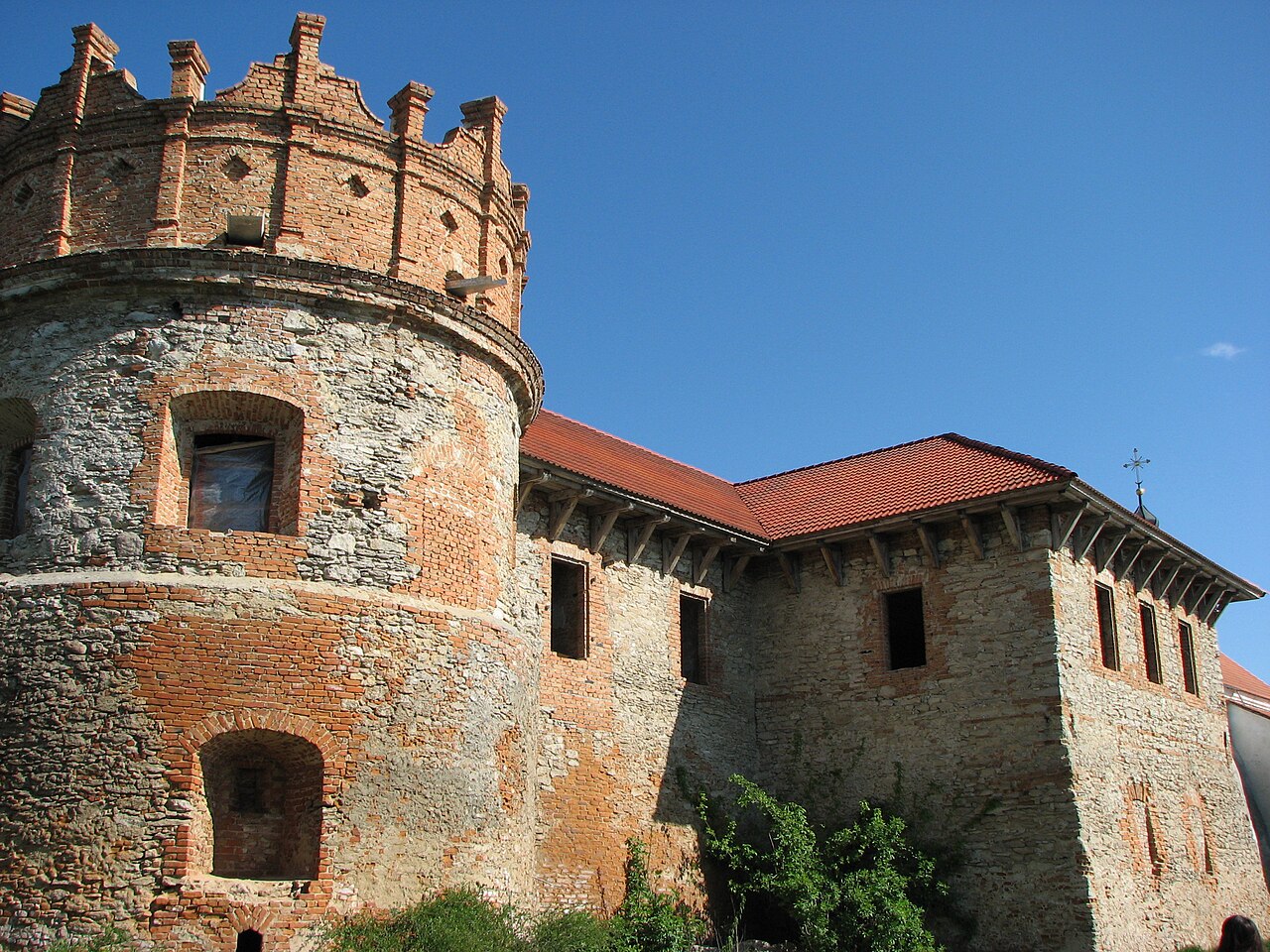
In the early 18th century, under the patronage of Prince Pavlo Karl Sangushko and his wife Barbara Sangushkova, the castle underwent significant expansion. This included the addition of a brick second floor and the construction of a tower above the western entrance. The design is attributed to the court architect Paolo Fontana, potentially assisted by Fryderyk Opitz. The new upper floor was built without internal stairs connecting it to the first floor, indicating a functional separation within the structure.
Adaptations during Russian occupation
During the period of Russian control over eastern Volhynia, the castle's military function diminished, and it was repurposed primarily as a storage facility. Modifications to the roof and second floor were made to accommodate grain storage, a change reflected in the roof's distinctive architecture designed to support large quantities of stockpiled grain. This agricultural use persisted through the 20th century, including the Soviet era, during which the castle served as a warehouse.
Historical significance and events
Starozaslavsky Castle witnessed significant historical events, including damage during the Khmelnytsky Uprising in the mid-17th century, which led to its decline. By 1700, only the basilica remained intact, marking the fortress's fall into ruin. The castle also played a role as a prison in 1619, detaining the nobleman Nemyrich after his capture near Zaslav. This event is linked to the kidnapping of Bartolomey Uberovich, the mayor of Lviv, highlighting the castle's involvement in regional political conflicts.
Archaeological discoveries and preservation efforts
Archaeological investigations conducted in 1994 revealed remnants of an older fortified settlement dating from the late 11th to early 13th centuries near the castle's dytynets (courtyard). These findings underscore the site's longstanding strategic importance, predating the existing castle by several centuries. The settlement was associated with the Old Rus' civilization and was located near the Soshena River and the Bernardine Monastery.
In the early 21st century, preservation efforts were initiated by the Ukrainian government in 2006, including documentation, debris clearing, and fencing installation. Despite these measures, funding shortages led to ongoing vandalism and theft, particularly affecting the northern facade and the western tower. The castle is officially recognized by the State Register of National Cultural Heritage under protection number 757/0, emphasizing its cultural and historical value.
Current condition and structural details
Today, Starozaslavsky Castle remains in a deteriorated condition, with significant damage to its northern facade and the western tower. The surviving structure offers valuable insights into its architectural complexity, featuring a combination of stone medieval construction and 18th-century brick additions. The vaulted cellars with ventilation channels and the distinct separation between floors reflect the castle's evolving functions over time.
Excavations and photographic documentation have illuminated the castle's interior layout, including the wall channels and window structures, contributing to a deeper understanding of its historical adaptations. The castle's strategic location and layered history make it a notable example of medieval and early modern fortifications in Ukraine.
Frequently asked questions (FAQ)
- When was Starozaslavsky Castle originally built?
- Starozaslavsky Castle was originally constructed in the 15th century by East Slavic settlers, with its foundation attributed to Prince Vasyl Fedorovych Krasnyi.
- What architectural features characterize Starozaslavsky Castle?
- The castle features a nearly square stone structure with cross-vaulted ceilings in the cellar and first floor, ventilation openings called prorukhy, and an 18th-century brick second floor added without internal stairs.
- What historical events affected the castle during the 17th century?
- During the Khmelnytsky Uprising in the mid-17th century, the castle suffered severe damage and decline, transitioning from a military fortress to a storage facility under Russian occupation.
- Are there archaeological findings related to the castle?
- Yes, excavations in 1994 uncovered remains of an older fortified settlement dating from the late 11th to early 13th centuries near the castle's courtyard, indicating the site's long strategic importance.
- What is the current condition of Starozaslavsky Castle?
- The castle is in a deteriorated state, with significant damage to its northern facade and western tower due to vandalism and neglect, despite some preservation efforts in the early 21st century.
Information
Architect
Paolo Fontana
Loading map...
Visitor reviews
No reviews yet. Been here? Write the first review and help other travelers!
Write the first reviewVisited this castle? Share your experience
Your review helps other travelers and adds first-hand knowledge to our encyclopedia.