Starkenburg Castle
Starkenburg Castle, perched on the Schlossberg mountain above the town of Heppenheim in Germany, is a remarkable example of a high medieval hill castle with a rich history spanning nearly a millennium. Built in 1065 originally by monks from the nearby Lorsch Abbey, the castle was intended to defend the abbey's holdings against external threats. Over the centuries, it evolved from a simple wooden fortification into a complex stone fortress, embodying the military and architectural developments of the high and late medieval periods.
The castle's strategic location atop the 295-meter-high Schlossberg hill allowed it to dominate the surrounding landscape and control important routes through the western Odenwald region. This vantage point made Starkenburg a key defensive stronghold in the region, particularly under the control of the Electorate of Mainz, which acquired the castle in the early 13th century. The castle was known as Burcheldon in its earliest days, with the name Starkimberg appearing in documents by 1206.
Early construction and medieval development
Initially, the castle featured wooden towers, earthworks, and bulwarks reminiscent of a Roman fort, constructed primarily from timber and earth to provide quick defensive measures. The early fortification was modest but strategically effective, serving as a refuge for the monks of Lorsch Abbey and a deterrent against attempts by powerful figures such as Archbishop Adalbert of Bremen to seize the abbey's lands.
By the 13th century, the castle came under the authority of the Archbishop of Mainz, who undertook significant reconstruction efforts to transform Starkenburg into a more formidable stone fortress. This period saw the addition of stone curtain walls, towers, and fortified gates, reflecting the castle's growing military importance. The castle became one of the strongest fortresses in the Mainz Bergstraße region, second only to other major Mainz fortifications.
Fortification enhancements under elector anselm of ingelheim
Between 1675 and 1689, Archbishop-Elector Anselm of Ingelheim initiated a comprehensive rebuilding of Starkenburg Castle, adapting it to the evolving demands of warfare and administration. The design was inspired by contemporary French fortress models, emphasizing both military defense and practical functions such as agricultural production, storage, and regional administration.
This reconstruction transformed Starkenburg from a purely military fortress into a multifunctional complex. It featured bastioned defenses and improved living quarters, integrating the castle into the broader economic and administrative framework of the Electorate. However, after the withdrawal of Mainz troops in 1765, the castle was largely abandoned and parts were demolished, marking the end of its active military role.
Architectural features and surviving structures
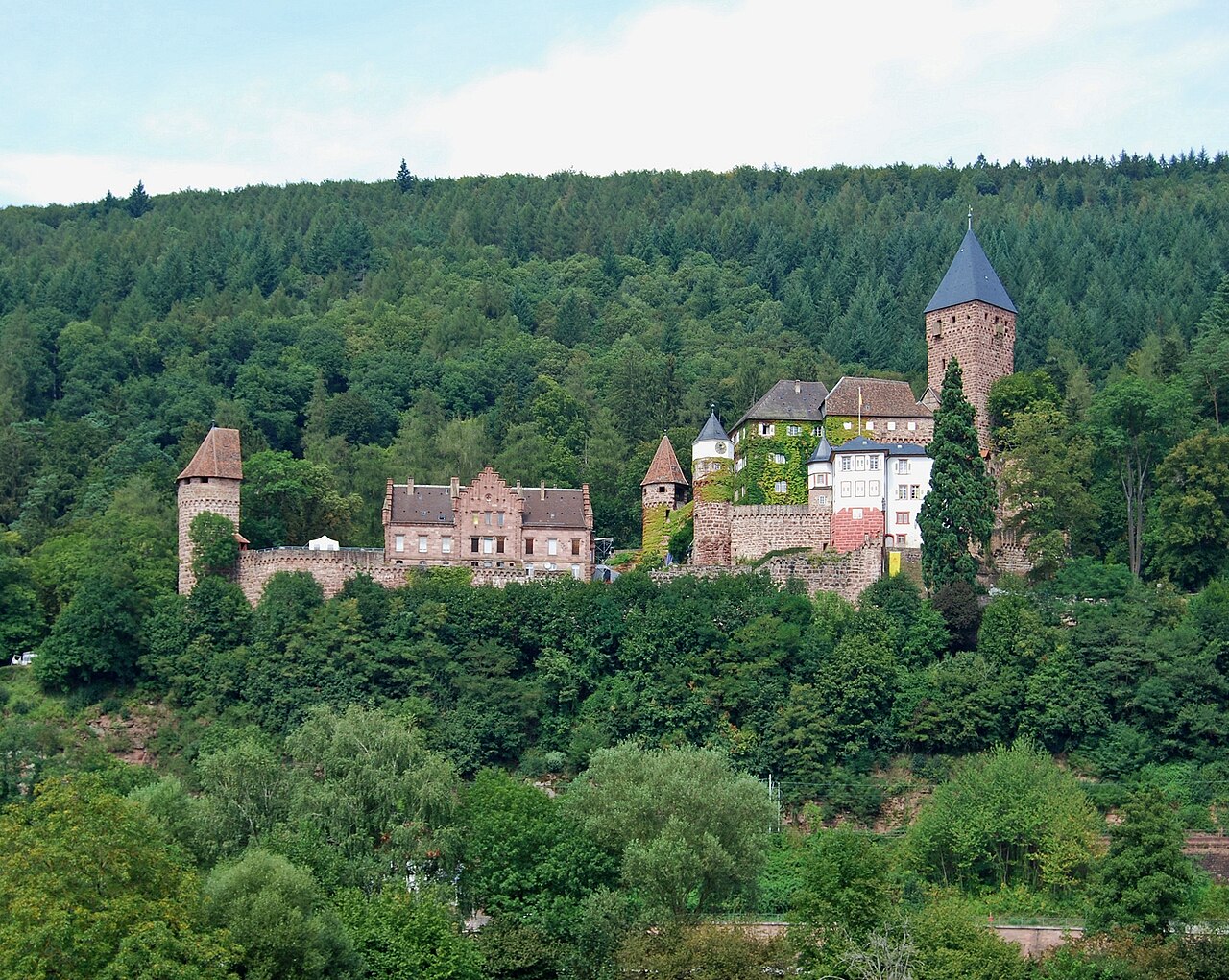
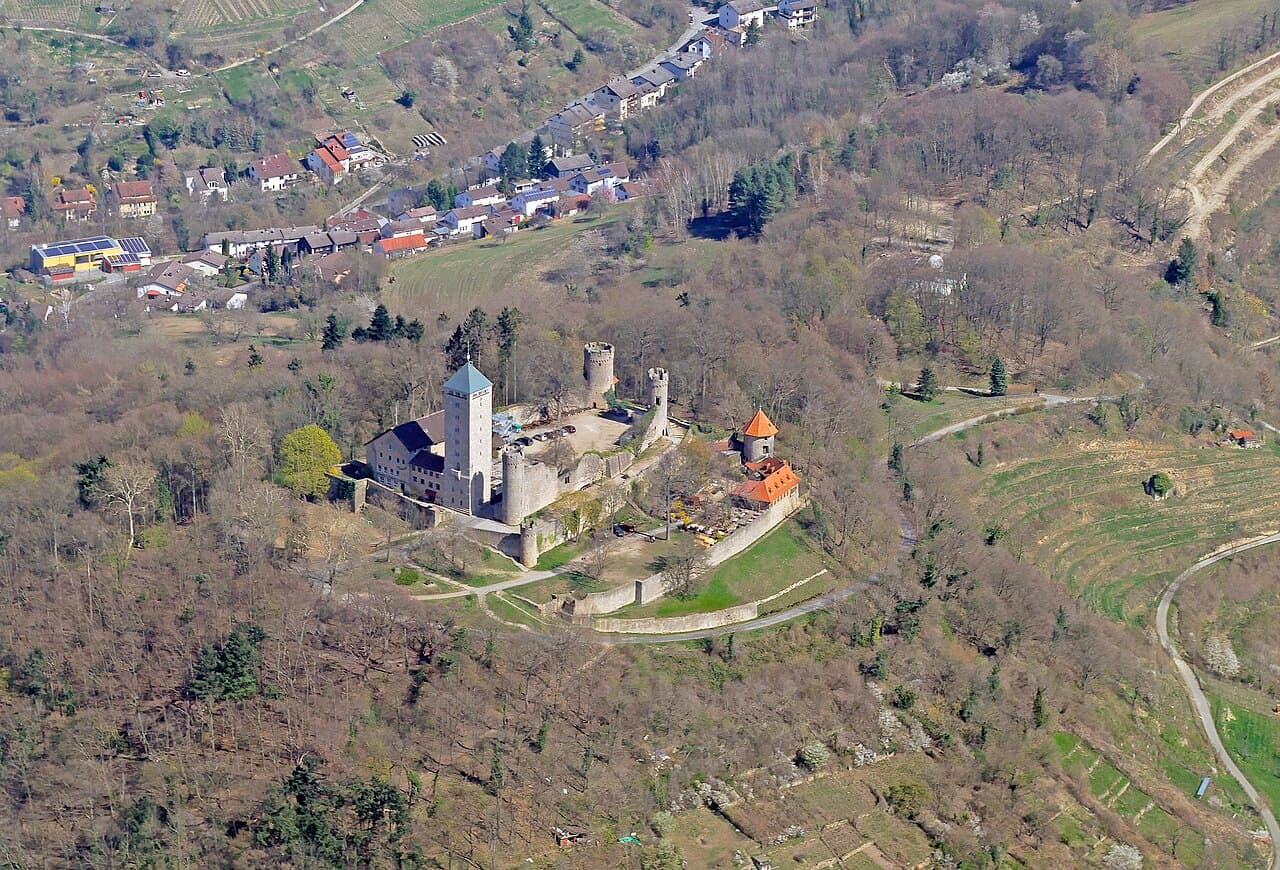
Today, Starkenburg Castle stands as a partially preserved ruin with several notable architectural elements that illustrate its long history. The castle's layout is centered around an inner castle enclosed by robust defensive walls and surrounded by earth ramparts extending into the adjacent forest.
Towers and defensive works
- The castle retains seven towers in various states of preservation, each reflecting different construction phases from the 14th century onward.
- The Hambacher Turm is the largest defensive tower, located at the northeast corner of the inner castle. Built in the 14th century, it has a slightly elliptical base measuring approximately 6.5 to 7.1 meters in diameter, widening towards its battlements. Its courtyard-facing entrance is secured by a barred door, emphasizing its defensive purpose.
- The Kirschhäuser Turm at the southeast corner is a circular tower about 5.1 meters in diameter, with battlements renovated in the early 20th century. Its outer wall displays two embedded stone plaques, one of which contains cannonballs found during 19th-century excavations, underscoring the castle's martial history.
- The southwest tower was reconstructed in 1964 on the site of a 14th-century predecessor. It rises 18.45 meters above the courtyard and features an internal stairwell with 67 steps leading to a platform that offers panoramic views of Heppenheim and the surrounding countryside.
- The Snail Tower (Schneckenturm) is a smaller cylindrical tower with a narrow spiral staircase, standing 11.1 meters tall and providing commanding views from its battlements.
- The Cannon Tower (Kanonenturm) occupies the northeast corner of the outer defenses. Rebuilt in 1970 with an octagonal roof, it historically housed artillery and now serves as guest accommodation linked to the youth hostel.
- The Kitchen Tower (Küchenturm) at the east corner of the lower courtyard also features an octagonal roof and is integrated into the castle tavern complex.
Residential and administrative buildings
The palas, or residential building, retains its southeast corner, offering insight into the living quarters of the castle's medieval inhabitants. The castle also includes reconstructed sections such as the entrance area and a modern residential building constructed in the 20th century, reflecting ongoing adaptations for contemporary use.
Historical significance and military role
Throughout its history, Starkenburg Castle played a crucial role in regional defense and administration. Its position allowed it to guard important trade and military routes, and it was a key stronghold for the Electorate of Mainz. During the Thirty Years' War, the castle was besieged but only conquered twice, demonstrating its formidable defenses.
Following its military decline in the 18th century, the castle was abandoned and fell into ruin. The demolition of the original bergfried in 1924 due to structural instability marked a significant loss, but the construction of a new bergfried between 1928 and 1930, albeit in a different location and design, preserved the symbolic presence of the main tower.
Modern use and preservation efforts
Since the mid-20th century, Starkenburg Castle has been managed by the Landesbetrieb Bau und Immobilien Hessen, which oversees its preservation and public access. Part of the former residential area has been converted into a youth hostel operated by the German Youth Hostel Association since 1960, providing modern accommodation within this historic setting.
The castle grounds also include a tavern and guest facilities, blending historical ambiance with contemporary hospitality. Informational panels and stone plaques throughout the site educate visitors about the castle's history and architecture.
Local legends enrich the cultural heritage of Starkenburg, including tales of the protective ghost spirit Melampus and the White Lady, as well as stories of a secret underground passage connecting the castle to Lorsch Abbey, which remain part of the castle's mystique.
Visitors to Starkenburg Castle can explore its extensive ruins, enjoy panoramic views from its towers, and experience a unique blend of medieval history and modern amenities in the heart of the Odenwald region.
Frequently asked questions (FAQ)
- How do I get to Starkenburg Castle in Heppenheim?
- Starkenburg Castle is located on Schlossberg hill above Heppenheim. Visitors can reach the castle by a short hike from the town center or by car with parking available near the base of the hill.
- What is the historical significance of Starkenburg Castle?
- Starkenburg Castle was built in 1065 to protect Lorsch Abbey and later became a key fortress for the Electorate of Mainz. It played a strategic role during the Thirty Years' War and is one of the oldest castles in the western Odenwald region.
- Can I visit the towers of Starkenburg Castle?
- Yes, several of the castle's towers, including the Hambacher Turm and the Snail Tower, are accessible to visitors and offer panoramic views of Heppenheim and the surrounding countryside.
- Is there accommodation available at Starkenburg Castle?
- Yes, part of the castle has been converted into a youth hostel with 121 beds and seminar rooms, providing comfortable lodging in a historic setting.
- When is the best time to visit Starkenburg Castle?
- The castle is open daily from 9:00 to 18:00, making spring through autumn the best seasons for visiting due to favorable weather and scenic views.
- Are there any guided tours available at Starkenburg Castle?
- Guided tours are occasionally offered by local heritage groups and the youth hostel. Visitors should check in advance for schedules and availability.
Photo gallery

Information
Opening hours
Daily, 9:00-18:00
Ticket prices
Free
Current owner
Landesbetrieb Bau und Immobilien Hessen
Website
Visit websiteSources & official resources
Verify the information above using these authoritative references.
Loading map...
Visitor reviews
No reviews yet. Been here? Write the first review and help other travelers!
Write the first reviewVisited this castle? Share your experience
Your review helps other travelers and adds first-hand knowledge to our encyclopedia.