Alsbach Castle
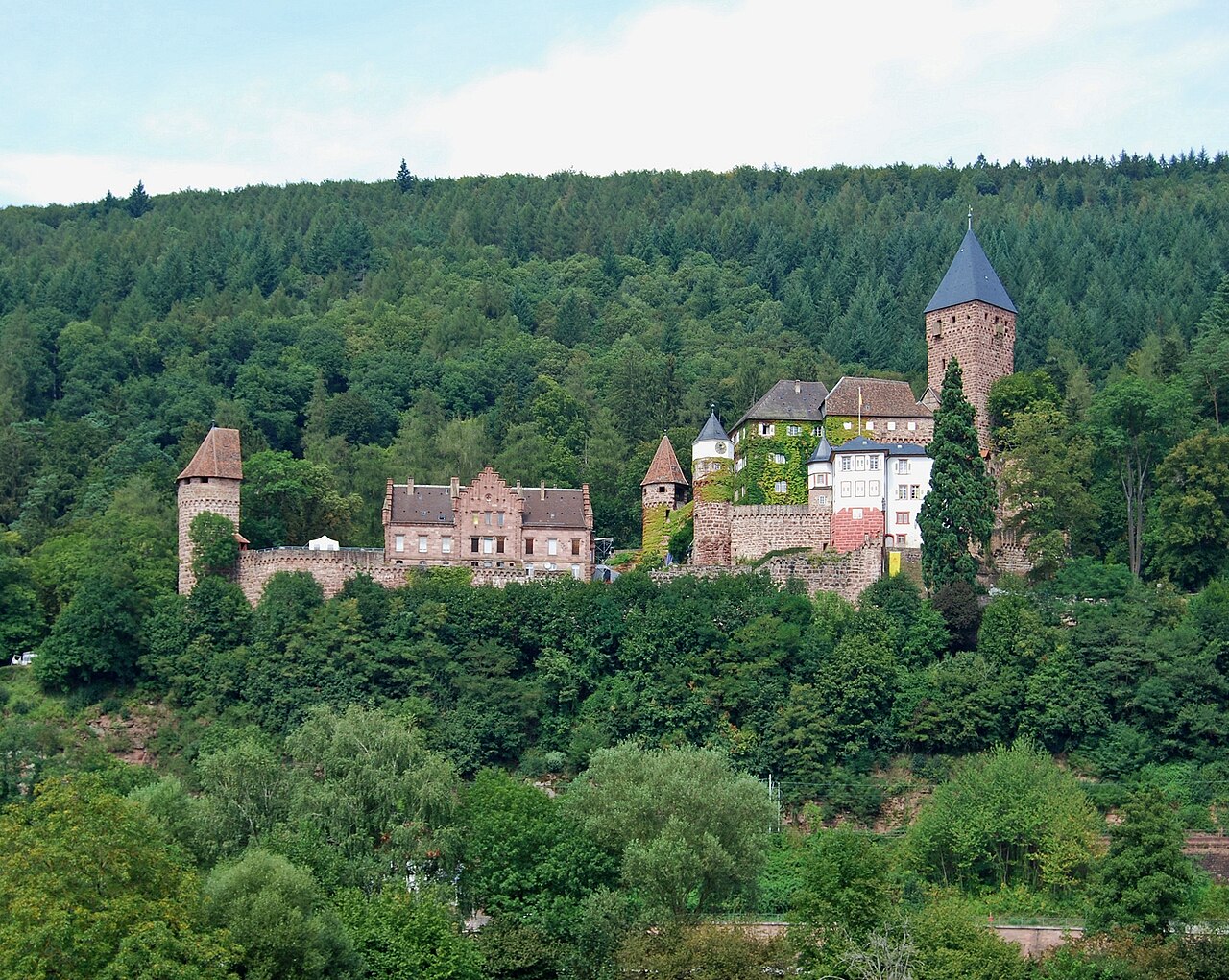
Alsbach Castle, originally known as Bickenbach Castle, was constructed around 1235 by Gottfried I von Bickenbach, a member of a minor noble family from the Odenwald region. This castle was likely built as a successor to an earlier motte and bailey structure located on nearby Weiler Hill. The new stone castle served to protect the family’s territorial interests following the subordination of Lorsch Abbey to the Archbishopric of Mainz. The strategic location of Alsbach Castle on a hill provided a commanding view of the surrounding landscape, which was crucial for defense and control over the region.
Architectural features and medieval fortifications
The castle was designed as a typical high medieval hill castle, featuring thick defensive walls, a central keep, and a fortified gatehouse. The transition from a wooden motte and bailey to a more substantial stone fortress reflected advances in military architecture during the 13th century. The castle's layout included a courtyard surrounded by residential buildings and defensive structures, with battlements and towers enabling defenders to repel attackers effectively.
Defensive structures and layout
The castle’s defensive system incorporated a ringwork of stone walls and a moat, which enhanced its resilience against sieges. The gatehouse was heavily fortified, serving as the main point of access and defense. Inside, the great hall and living quarters were arranged around the courtyard, reflecting the dual role of the castle as both a military stronghold and a noble residence.
Historical significance and turbulent past
Alsbach Castle witnessed several significant historical events that shaped its fate. In 1463, the castle was attacked by the free city of Frankfurt as retaliation for a robbery against one of Frankfurt’s communal owners. The castle was overrun, plundered, and set ablaze, suffering extensive damage. Despite this devastation, the castle was quickly rebuilt, demonstrating its strategic importance in the region.
During the War of Succession of Landshut in 1504, the castle was taken without resistance by Landgrave Wilhelm I of Hessen. From that point onward, Alsbach Castle remained under Hessian control, marking a significant shift in regional power dynamics.
Role during the thirty years war
In the Thirty Years War (1618-1648), Alsbach Castle served as a refuge for the local population during times of conflict and unrest. However, after the war, the castle was abandoned and gradually fell into disrepair. Its stones were quarried for other building projects in the area, a common fate for many medieval castles that lost their military relevance.
Restoration and modern preservation efforts
The castle remained in ruins until the late 19th century, when the Grand Duke of Hesse-Darmstadt took steps to secure the site and prevent further deterioration. After World War II, more extensive restoration efforts were undertaken to stabilize and partially restore the ruins. The castle was renamed Alsbacher Schloss during this period, reflecting its renewed status as a cultural and historical monument.
Today, Alsbach Castle stands as a partially preserved medieval fortress that offers visitors insight into high medieval castle architecture and the complex history of the Hessian region. The ruins include remnants of the original defensive walls, towers, and residential buildings, providing a tangible connection to the past.
Visiting alsbach castle
Visitors to Alsbach Castle can explore the scenic hilltop site and enjoy panoramic views of the surrounding countryside. The castle ruins are accessible to the public, and informational signage helps visitors understand the historical context and architectural features of the site. The castle’s location near Alsbach-Hähnlein makes it a popular destination for those interested in medieval history and architecture.
Nearby attractions and cultural significance
Alsbach Castle is situated in a region rich with cultural heritage, including other medieval sites and natural landscapes. The castle contributes to the local identity and serves as a venue for occasional cultural events and historical reenactments, enhancing public engagement with the region’s past.
Frequently asked questions (FAQ)
- How do I get to Alsbach Castle?
- Alsbach Castle is located in Alsbach-Hähnlein, Hesse, Germany, and can be reached by car or local public transportation. There are parking facilities nearby, and the castle is accessible via walking paths from the town center.
- What is the best time to visit Alsbach Castle?
- The best time to visit Alsbach Castle is during the spring and summer months when the weather is mild and the surrounding landscape is lush. This period is ideal for exploring the ruins and enjoying panoramic views from the hilltop.
- Is Alsbach Castle suitable for families?
- Yes, Alsbach Castle is suitable for families. The site offers open spaces for children to explore, and the historical ruins provide an educational experience. However, visitors should be cautious on uneven terrain and supervise children accordingly.
- Can I learn about the castle's history on-site?
- Yes, informational signage at Alsbach Castle provides visitors with details about the castle’s history, architecture, and significant events. Guided tours may be available during special events or by arrangement with local cultural organizations.
- Are there any facilities at Alsbach Castle?
- Alsbach Castle is primarily a ruin site with limited facilities. Visitors should plan accordingly, as there are no permanent visitor centers or restrooms at the castle itself. Nearby town amenities can be used for food and rest.
Information
Current owner
Municipality
Loading map...
Visitor reviews
No reviews yet. Been here? Write the first review and help other travelers!
Write the first reviewVisited this castle? Share your experience
Your review helps other travelers and adds first-hand knowledge to our encyclopedia.