Starigrad Fortress
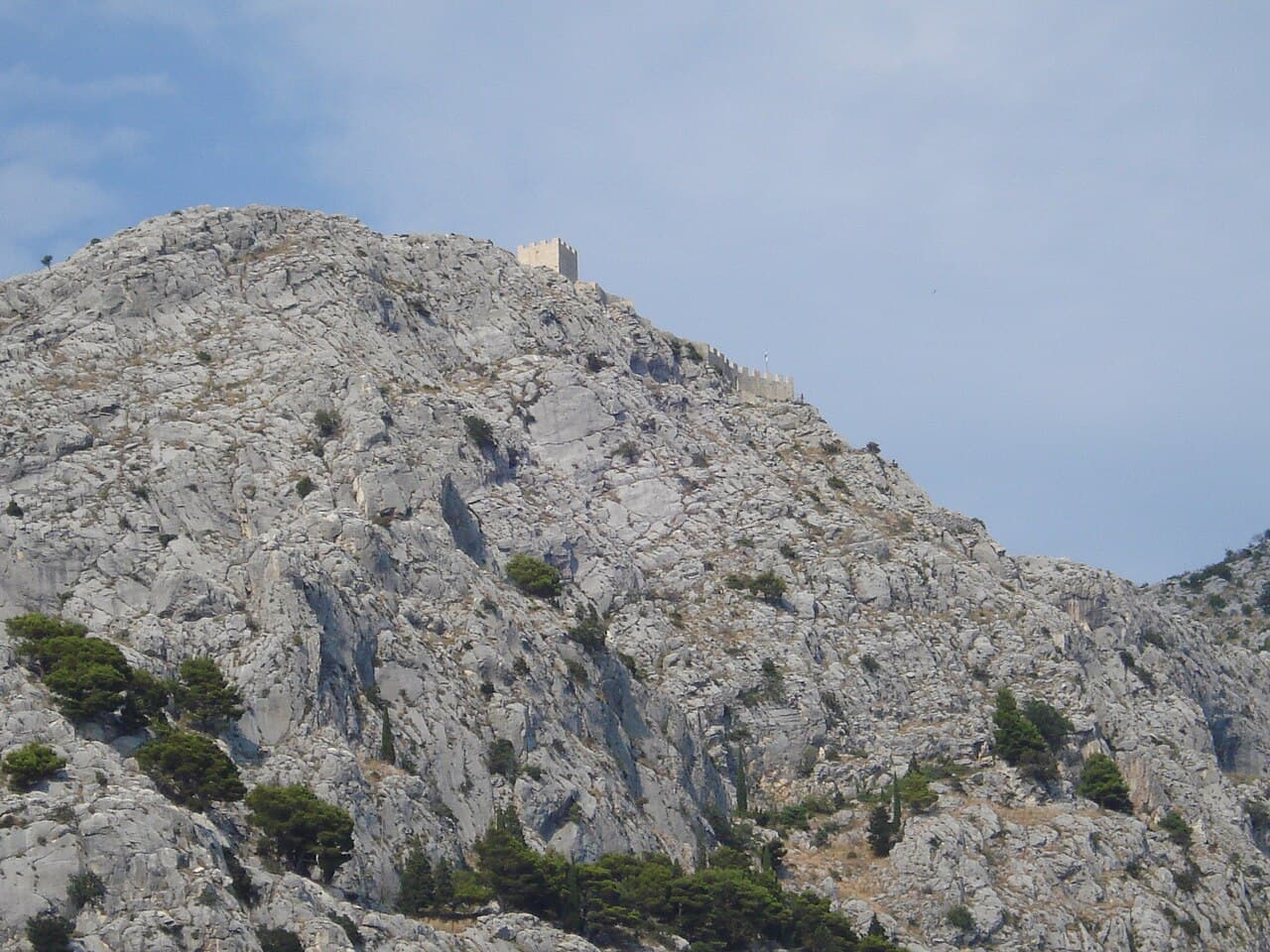
Starigrad Fortress, also locally known as Tvrđava Starigrad or Fortica, is a striking example of a late medieval fortress perched dramatically above the historic town of Omiš in the Split-Dalmatia region of Croatia. Its name translates to "Old Castle," reflecting its enduring presence and historical significance in the region. Constructed in the 15th century during the turbulent period of the Croatian–Ottoman Wars, the fortress was a critical defensive installation designed to protect the local population from Ottoman incursions.
Strategically positioned on a steep mountain ridge at an elevation of approximately 262 meters, Starigrad Fortress dominates the surrounding landscape, offering commanding views of the Adriatic coast and the nearby island of Brač. This elevated location was chosen deliberately to maximize its defensive capabilities, making it difficult for attackers to approach undetected or mount a successful siege. The fortress served not only as a military stronghold but also as a refuge for the inhabitants of Omiš during times of conflict.
Architectural features and layout
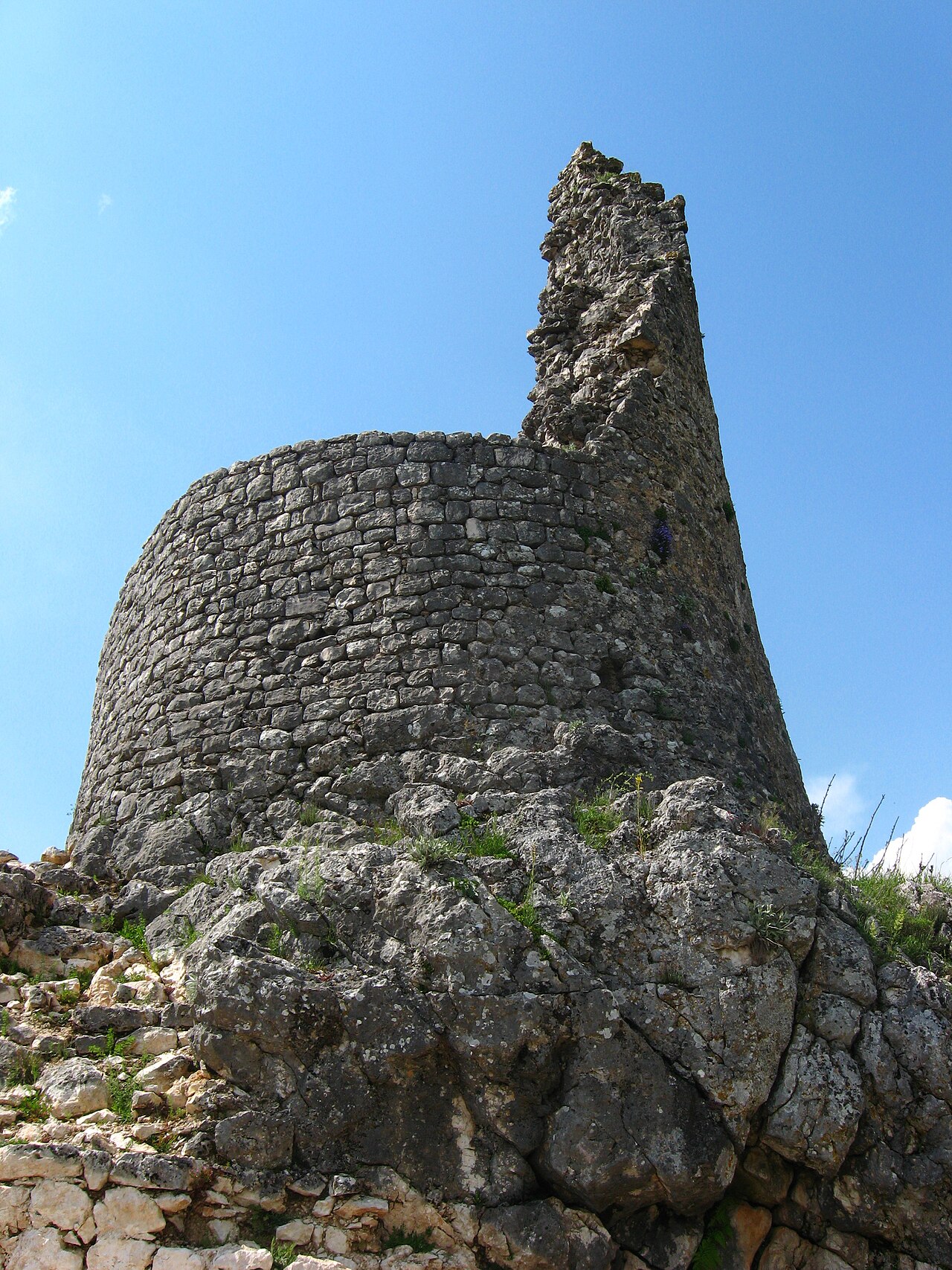
The fortress is characterized by its rugged stone construction using locally quarried limestone, typical of the Dalmatian coast's medieval fortifications. The walls, approximately 1 meter thick, enclose an inner bailey that is ingeniously divided into two levels, adapting to the natural rock formations of the site. This terraced design enhanced the fortress's defensive depth, allowing defenders to retreat to higher ground progressively if the lower level was compromised.
The keep and defensive structures
At the highest point of the fortress stands a two-storey square tower that functioned as the keep and lookout post. This tower was the last line of defense and provided a vantage point to monitor enemy movements across the surrounding terrain. Opposite the keep, a simple bastion guards the approach path and the ridge line, reinforcing the fortress's protective perimeter.
The main entrance to Starigrad Fortress is fortified by an outer barbican, a defensive gateway structure designed to slow and expose attackers before they could reach the main gate. This barbican, combined with the bastion, created a formidable obstacle for any invading force attempting to breach the fortress.
Interior layout and defensive strategy
Within the fortress walls, two small baileys are separated by a stone stairway, which was once protected by an additional stone wall and gateway. This internal division allowed defenders to fall back to the upper bailey if the lower one was overrun, a common defensive tactic in medieval fortifications. The design reflects a practical approach to defense, utilizing the natural topography to enhance the fortress's resilience against prolonged attacks.
Historical context and significance
Starigrad Fortress was constructed during a period marked by frequent conflict between the Kingdom of Croatia and the expanding Ottoman Empire. The fortress played a vital role in the defense of Omiš, a town known historically for its maritime activities and resistance to Ottoman conquest. Although detailed records of specific battles involving Starigrad Fortress are scarce, it is reasonable to infer that it contributed to the town's successful defense during the Ottoman-Venetian Wars spanning from the 15th to the 18th centuries.
The fortress's primary function was to provide a secure refuge for the local population during raids and to serve as a stronghold where defenders could mount resistance. Its location and design reflect the strategic military thinking of the period, emphasizing the importance of high ground and layered defense in countering Ottoman advances.
Access and visitor experience
Today, Starigrad Fortress is accessible to visitors, offering a unique glimpse into Croatia's medieval military architecture and history. Access to the fortress is on foot, with two main hiking routes leading from the historic center of Omiš. The shorter route is steep and challenging, while the longer path offers a more gradual ascent, both requiring sturdy footwear and a reasonable level of fitness.
Visitors who reach the fortress are rewarded with spectacular panoramic views of the Adriatic coastline and the nearby island of Brač. The fortress itself, though relatively simple in design compared to larger castles, provides an evocative atmosphere of medieval defense and resilience.
In addition to Starigrad Fortress, the town of Omiš features the ruins of Mirabela Castle, a 13th-century fortification that adds to the area's rich historical tapestry. Together with the charming historic town center, these sites make Omiš a compelling destination for those interested in history, architecture, and scenic landscapes.
Preservation and cultural importance
Starigrad Fortress remains a well-preserved example of a late medieval hill castle adapted to its rugged environment. Its stone walls and defensive structures have endured centuries of exposure to the elements and historical upheavals, maintaining much of their original character. The fortress is an important cultural landmark, symbolizing the resilience and strategic acumen of the Croatian people during a critical period of their history.
Efforts to maintain and promote the site have made it accessible to the public, contributing to the preservation of Croatia's medieval heritage and offering educational opportunities for visitors and scholars alike.
Frequently asked questions (FAQ)
- How do I reach Starigrad Fortress from Omiš?
- Starigrad Fortress is accessible on foot from the historic center of Omiš via two hiking routes: a shorter but steep path and a longer, easier trail. Both routes require sturdy footwear and a reasonable level of fitness.
- What is the historical significance of Starigrad Fortress?
- Built in the 15th century during the Croatian–Ottoman Wars, Starigrad Fortress served as a defensive refuge for the inhabitants of Omiš against Ottoman attacks, playing a key role in the town's resistance.
- Can I visit Starigrad Fortress year-round?
- The fortress is generally open to visitors throughout the year, but access is only on foot, so weather conditions may affect the ease of the hike. It is advisable to check local information before planning a visit.
- Is there an entrance fee to visit Starigrad Fortress?
- There is a small entrance fee to visit Starigrad Fortress, which is usually payable in cash at the site. Prices are modest and help support the maintenance of the fortress.
- What can I see from the top of Starigrad Fortress?
- From the fortress, visitors can enjoy stunning panoramic views of the Adriatic coast, the town of Omiš below, and the nearby island of Brač, making the hike well worth the effort.
Photo gallery

Information
Loading map...
Visitor reviews
No reviews yet. Been here? Write the first review and help other travelers!
Write the first reviewVisited this castle? Share your experience
Your review helps other travelers and adds first-hand knowledge to our encyclopedia.