Mirabela Castle
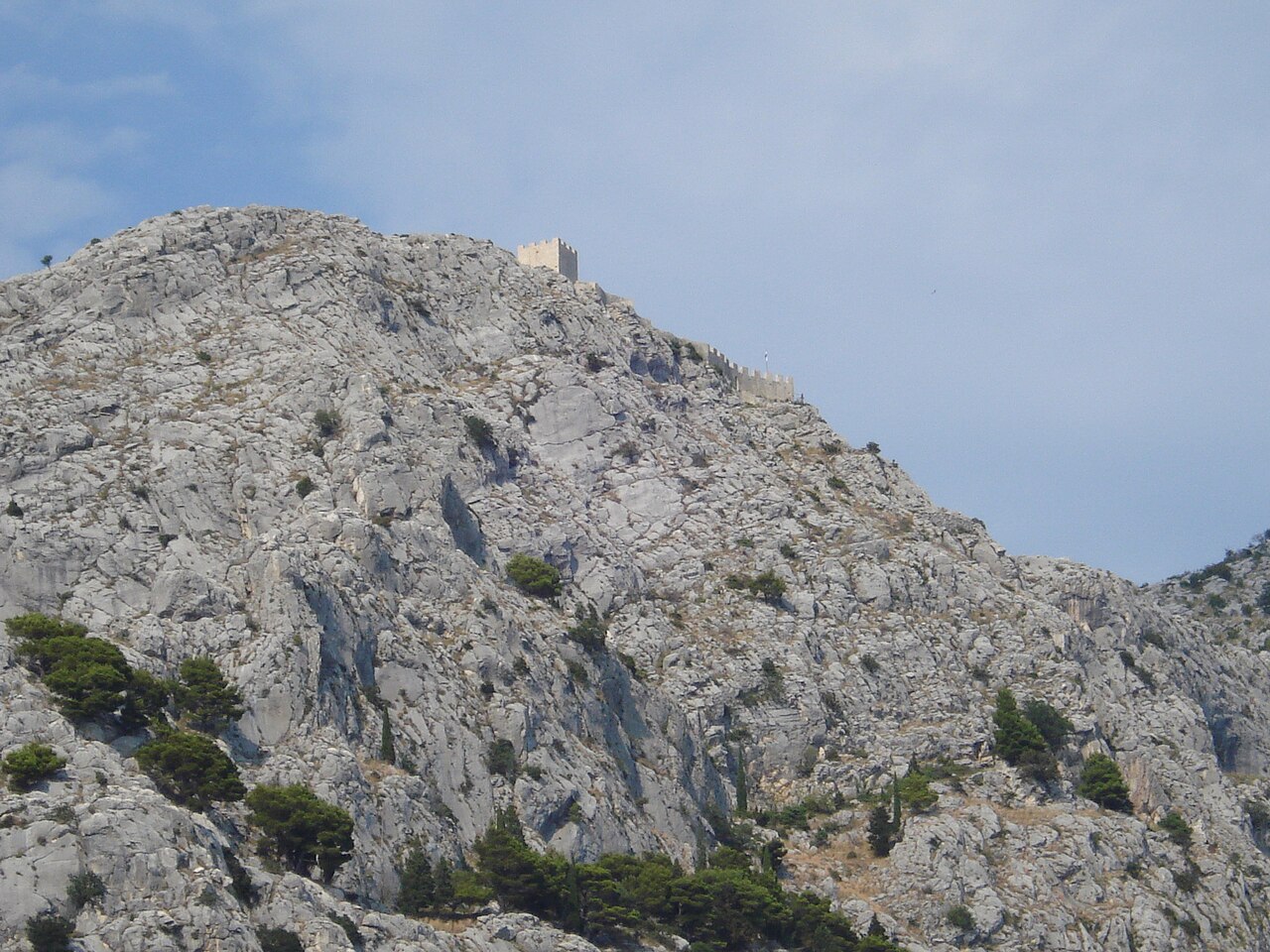
Mirabela Castle, also known locally as Utvrda Mirabela or Peovica, stands prominently above the historic town of Omiš in the Split-Dalmatia County of Croatia. This 13th-century Romanesque fortress was strategically built on a steep crag overlooking the mouth of the Cetina River, serving as a crucial defensive stronghold during the High Medieval period.
The castle's location provided commanding views over the Adriatic coast and the river gorge, making it an ideal refuge and lookout point for the town's inhabitants, who were notorious for their maritime piracy. The fortress was part of a network of fortifications that protected Omiš, a town that played a significant role in regional maritime conflicts and trade control along the Dalmatian coast.
Historical significance and context
During the 13th century, Omiš was inhabited by a community of pirates who exploited the natural geography of the Cetina River gorge to evade capture. Mirabela Castle was instrumental in this defensive strategy, providing a secure hideout and vantage point to monitor approaching enemies. The fortress witnessed numerous sieges, particularly from the forces of the Venetian Republic and the Papal States, who sought to suppress piracy and control the Adriatic trade routes.
Despite these conflicts, Omiš was never conquered by the Ottoman Empire, a testament to the effectiveness of its fortifications including Mirabela. Over the centuries, the town and its castle came under the influence of various rulers, including Croatian, Venetian, and later Austro-Hungarian authorities, each leaving their mark on the region's cultural and political landscape.
Architectural features and layout
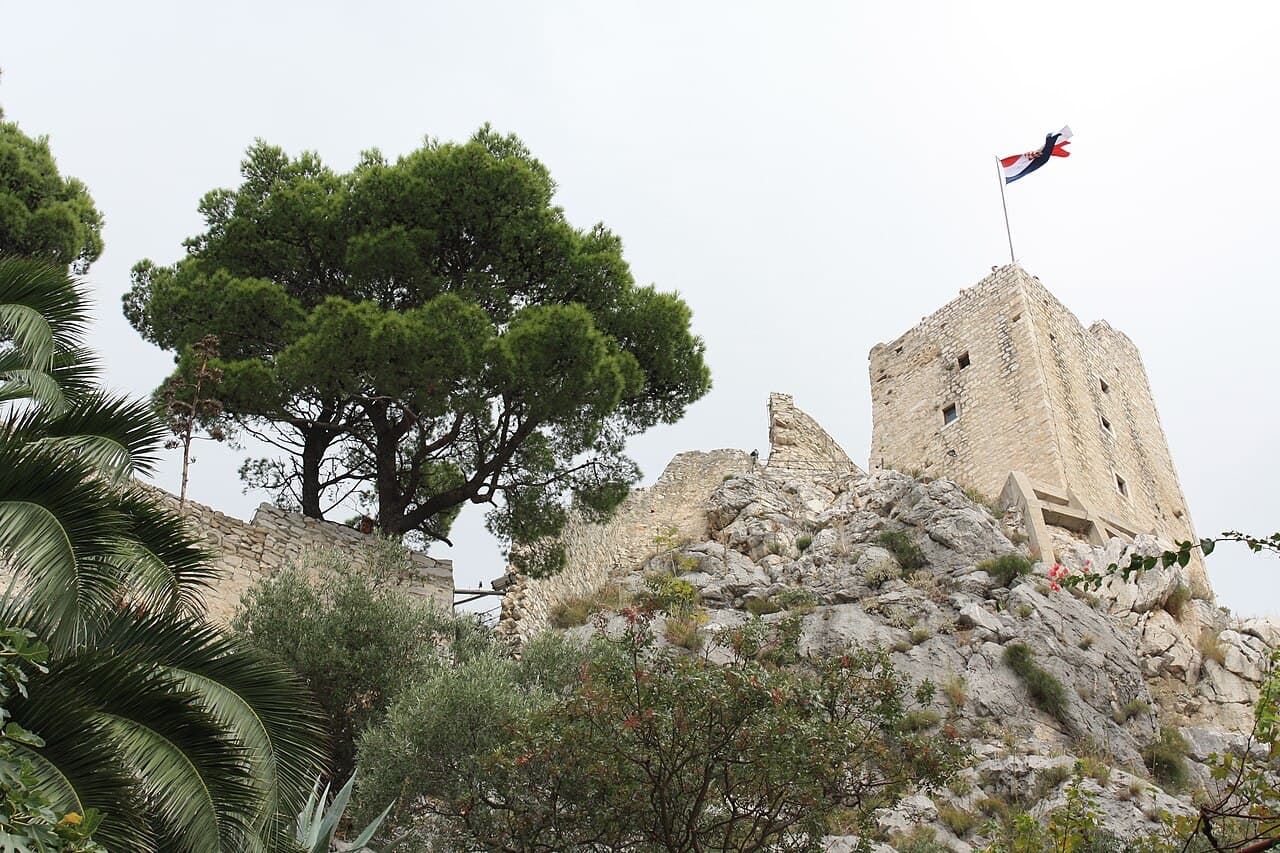
Mirabela Castle exemplifies Romanesque military architecture of the High Medieval period. Built primarily from local stone, the fortress was designed to maximize defense on its steep and rocky site. The surviving elements include the highest tower, which served as a lookout and last line of defense, and portions of the curtain walls that once enclosed the castle grounds.
The castle's elevated position above Omiš allowed defenders to control the approaches from the sea and the river. The steep cliffs surrounding the fortress made direct assaults difficult, enhancing its defensive capabilities. The layout likely included living quarters, storage rooms, and battlements, although much of the original structure has been lost over time.
In the lower part of the castle complex stands a more modern concrete observation turret, probably dating from the 19th or 20th century, which reflects the site's continued strategic importance into more recent times.
Restoration and preservation
The 13th-century tower of Mirabela Castle suffered partial destruction in 1988 due to a lightning strike. Subsequent restoration efforts rebuilt the upper part of the tower, preserving its historical silhouette and ensuring its structural stability. Today, the castle remains a partially preserved ruin, offering visitors a tangible connection to the medieval past.
Visitor experience and surrounding attractions
Mirabela Castle is accessible from the historic center of Omiš by a relatively easy hike, making it a popular destination for tourists interested in history and panoramic views. Visitors can explore the remaining walls and tower, enjoying sweeping vistas of the town, the Cetina River, and the Adriatic Sea.
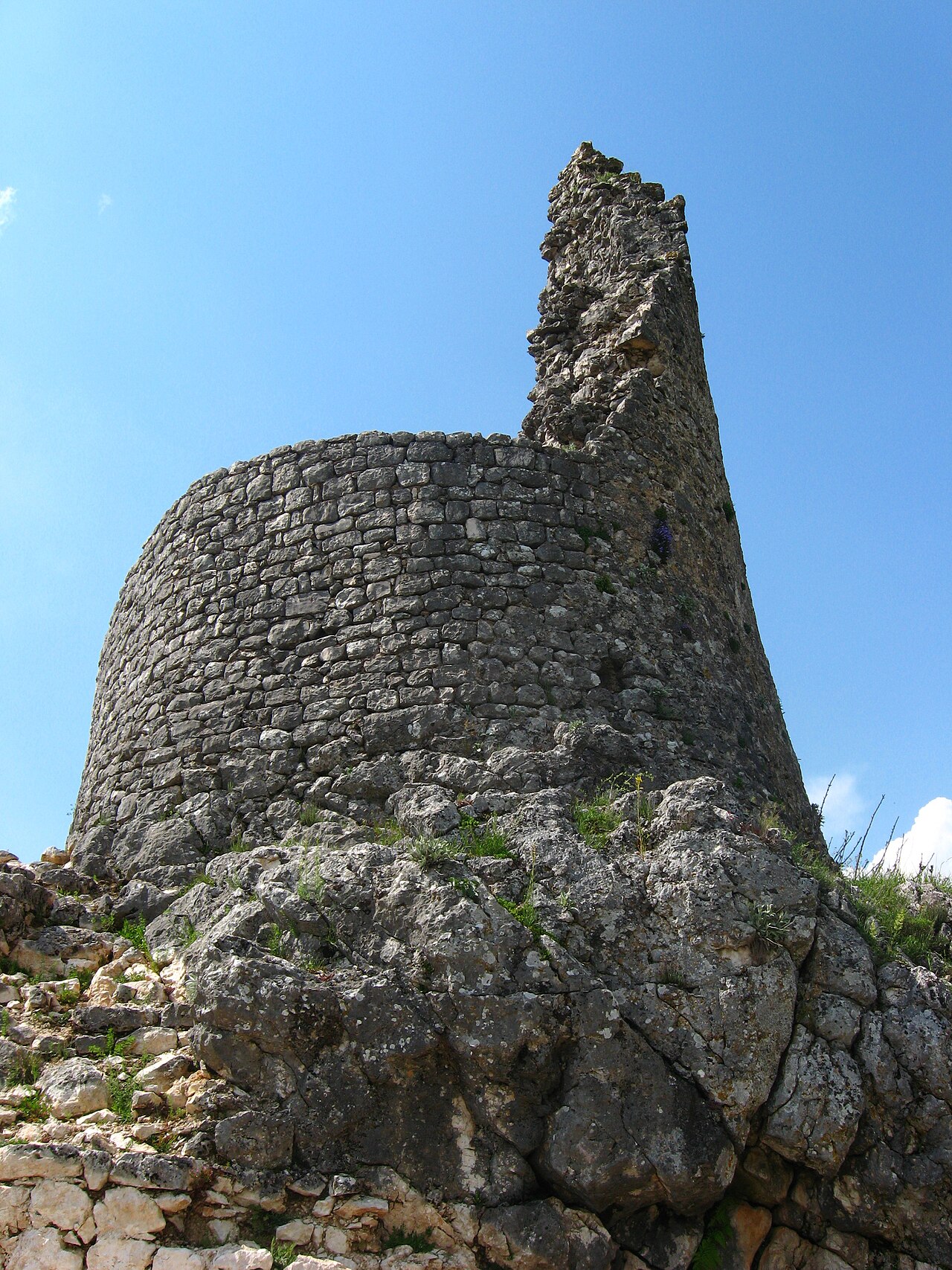
Close to Mirabela lies the Starigrad Fortress, a larger fortification dating from the 15th century located on the mountaintop above the castle. Although more challenging to reach, Starigrad offers further insights into the region's defensive network and is well worth the effort for those seeking a deeper historical experience.
Legend and folklore
Local legend adds a colorful chapter to Mirabela's history. It is said that during a 1537 Turkish attack, the defenders of Omiš used loud shouting and gunfire to create the illusion of a large defending force. This ruse reportedly caused the Ottoman attackers to overestimate the town's defenses and retreat, preserving Omiš from capture.
Cultural and heritage significance
Today, Mirabela Castle stands as a symbol of the resilience and maritime heritage of Omiš. Its ruins evoke the turbulent history of piracy, warfare, and shifting political powers along the Dalmatian coast. The castle is protected as a cultural monument and contributes to the identity and tourism appeal of the region.
Visitors to Mirabela gain not only a glimpse into medieval military architecture but also an understanding of the strategic importance of Omiš in Adriatic history. The fortress's commanding position and enduring presence continue to inspire admiration and curiosity among historians, architects, and travelers alike.
Frequently asked questions (FAQ)
- How do I get to Mirabela Castle?
- Mirabela Castle is located in Omiš, Croatia, and can be reached by following the marked trails from the town center. The hike to the castle takes about 30 minutes and offers stunning views of the surrounding landscape.
- What is the historical significance of Mirabela Castle?
- Mirabela Castle, built in the 13th century, played a crucial role in the defense of the town of Omiš against pirates and invaders. It is one of the oldest fortifications in the area, symbolizing the rich history and strategic importance of Omiš during medieval times.
- When was Mirabela Castle built?
- Mirabela Castle was constructed in the 13th century, specifically around the year 1280. Its architecture reflects the medieval defensive styles of the time, making it an important historical landmark in the region.
- Can I visit Mirabela Castle year-round?
- Yes, Mirabela Castle is open to visitors throughout the year, although accessibility may vary in winter due to weather conditions. It’s advisable to check local weather reports before planning your visit during the colder months.
- Why is Mirabela Castle a popular tourist attraction?
- Mirabela Castle is popular for its breathtaking panoramic views of the Adriatic Sea and the surrounding mountains, making it a perfect spot for photography and sightseeing. Its rich history and well-preserved architecture also draw history enthusiasts and tourists alike.
- Is it possible to access Mirabela Castle with a wheelchair?
- Unfortunately, access to Mirabela Castle may be challenging for wheelchair users due to the steep and uneven terrain leading to the castle. It is recommended to have assistance or consider alternative attractions in Omiš that offer better accessibility.
- What are the opening hours for Mirabela Castle?
- The opening hours for Mirabela Castle typically range from 9 AM to 6 PM during the peak tourist season. In the off-peak season, hours may vary, so it’s best to check local listings before your visit.
- What are the ticket prices for entering Mirabela Castle?
- Entry to Mirabela Castle is usually free of charge, allowing visitors to explore its historic grounds without any ticket fees. However, guided tours may incur a fee, which can enhance your understanding of the castle's history.
- What is the best time to visit Mirabela Castle?
- The best time to visit Mirabela Castle is during the spring and early autumn months when the weather is mild and the scenery is particularly beautiful. Summer can be quite hot, while winter may present accessibility challenges due to weather conditions.
- Are there any nearby attractions to visit after Mirabela Castle?
- Yes, after visiting Mirabela Castle, you can explore the charming town of Omiš, famous for its beautiful beaches and the Cetina River. Additionally, the nearby Omis Fortress and the stunning Cetina Canyon offer further outdoor activities and scenic views.
Photo gallery

Information
Loading map...
Visitor reviews
No reviews yet. Been here? Write the first review and help other travelers!
Write the first reviewVisited this castle? Share your experience
Your review helps other travelers and adds first-hand knowledge to our encyclopedia.