Staraya Ladoga Fortress
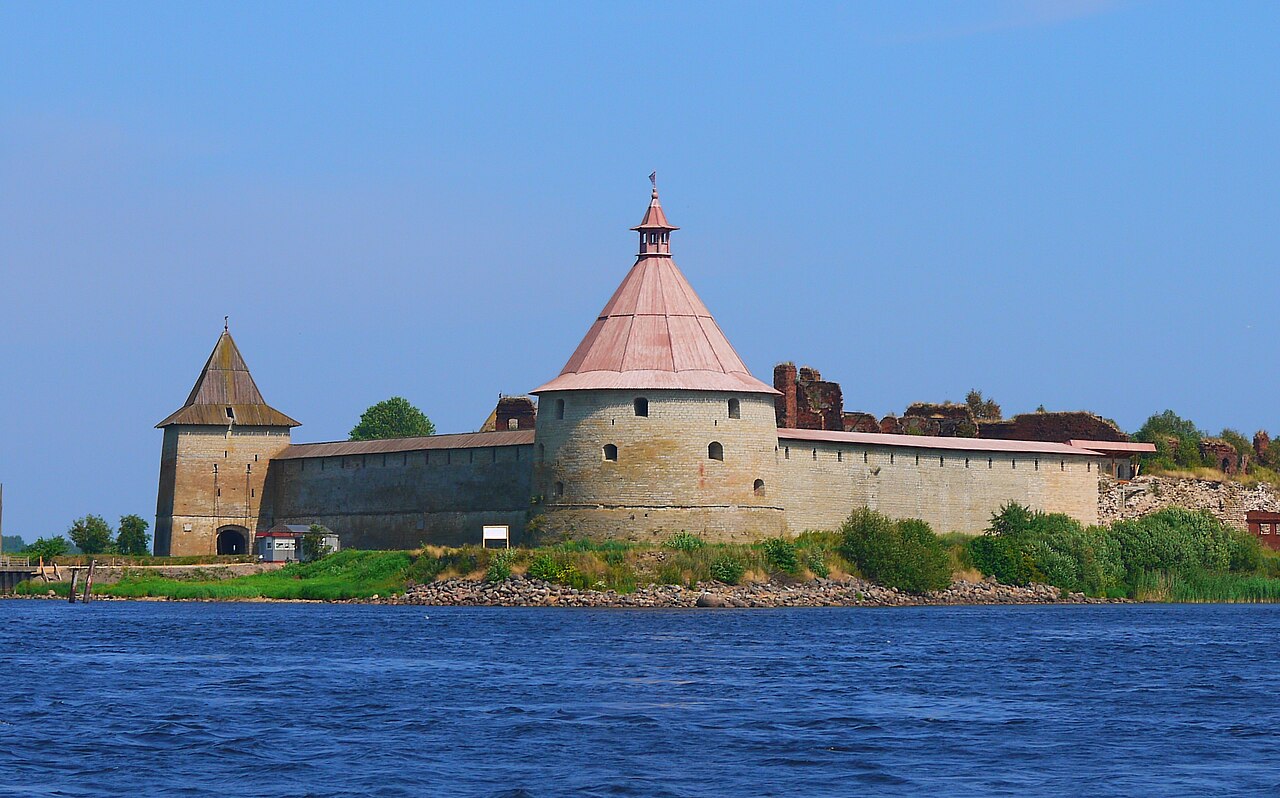
Staraya Ladoga fortress holds a significant place in Russian history as the first stone fortress constructed in the country, dating back to ca. 1114. Located in the village of Staraja Ladoga, this fortress was strategically built on the banks of the Volkhov River, a crucial waterway that connected the Varangians to the Greeks. Its proximity, just 15 kilometers from Lake Ladoga, made it a vital hub for trade and military defense during the High Medieval period. The fortress and the settlement around it played a pivotal role in the early formation of the Russian state and the protection of trade routes that linked Scandinavia and Byzantium.
Historical significance and early development
The village of Staraya Ladoga was a prosperous trading outpost as early as the 8th and 9th centuries, inhabited by a multi-ethnic population dominated by Scandinavians known as the Rus. This connection has led to Staraya Ladoga sometimes being referred to as the first capital of Russia. The earliest mention of the site in historic chronicles dates to 862, when three Varangian brothers, including the elder Rurik, were invited to rule over the Russian lands to restore order amid political fragmentation. Rurik established his wooden settlement here before relocating the capital to Novgorod for political reasons.
By the early 12th century, the need for a more durable defensive structure led to the construction of the first stone fortress in Russia. This was commissioned by the Novgorod posadnik Pavel around 1114. The fortress was designed to protect the growing trading city and control the vital river route.
Architectural features and fortifications
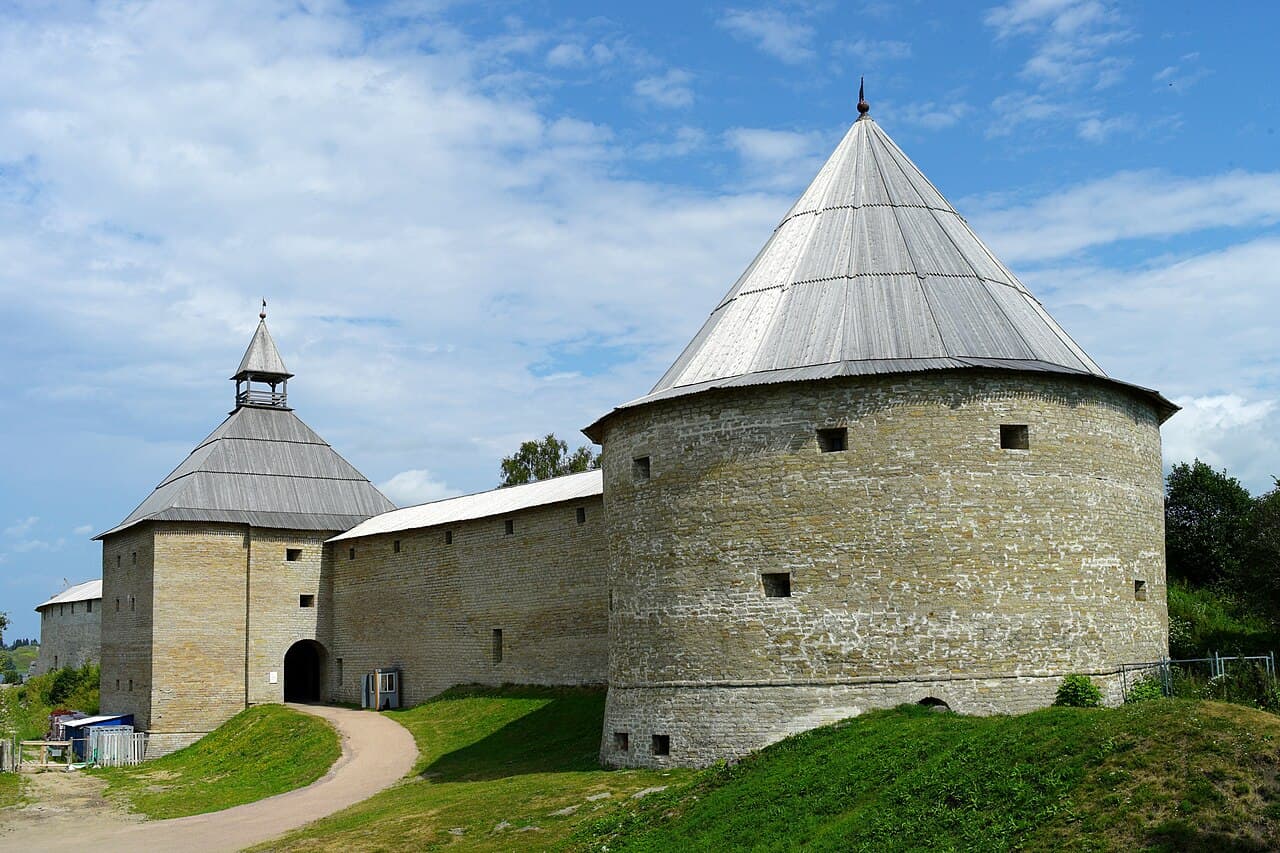
The Staraya Ladoga fortress is classified as a bastioned fortress, a style that evolved to meet the challenges posed by the introduction of firearms and artillery in the late medieval period. Its curtain walls and defensive towers were robustly constructed to withstand sieges and cannon fire. The fortress originally featured multiple towers and thick stone walls enclosing a courtyard and essential buildings, including churches.
Over the centuries, the fortress underwent several reconstructions, especially in the 15th century, to adapt to advancements in military technology such as quick-firing firearms. Despite these upgrades, the fortress retained much of its medieval character, with its walls and towers still dominating the landscape.
Military history and sieges
Staraya Ladoga fortress witnessed numerous military confrontations, particularly with Swedish forces. In 1164, a Swedish fleet of 55 vessels attacked the fortress but was repelled after a fierce battle. The retreating Swedish forces were further defeated by the Novgorod militia in Lake Ladoga. However, the Swedes succeeded in capturing and burning the fortress in 1313, although their occupation was short-lived.
Subsequent attempts to seize the fortress were unsuccessful, including a notable siege in 1338. During the Time of Troubles in 1610, Swedish forces occupied the fortress for six years before being expelled. The last major Swedish assault occurred in 1701, which also failed to capture the fortress.
Decline and modern status
In 1704, under the orders of Peter the Great, the administrative and commercial center was moved to the newly founded Novaya Ladoga near Lake Ladoga, marking the beginning of the decline of Staraya Ladoga. The construction of the railway in 1860 further diminished the importance of river trade along the Volkhov, accelerating the village's fading prominence.
Today, Staraya Ladoga is a small village with remnants of its medieval past. The fortress's curtain walls and several defensive towers remain, alongside two of the original six churches. The site includes two museums that offer visitors insights into the fortress's rich history, with a modest entrance fee.
Visiting staraya ladoga fortress
Visitors to Staraya Ladoga can explore the well-preserved portions of the fortress, including its stone walls and defensive towers. The museums provide detailed exhibitions on the fortress's role in medieval Russian history and its architectural evolution. The site offers a unique glimpse into the early medieval period of Russia and the interactions between the Rus, Scandinavians, and neighboring powers.
Frequently asked questions (FAQ)
- What is the historical significance of Staraya Ladoga fortress?
- Staraya Ladoga fortress is known as the first stone fortress in Russia, built around 1114, and served as a vital trading and military hub on the Volkhov River during the High Medieval period.
- Can I visit the museums inside Staraya Ladoga fortress?
- Yes, there are two museums within the fortress that showcase its history and architecture. They charge a small entrance fee and provide detailed exhibitions about the fortress and the surrounding region.
- When was Staraya Ladoga fortress built?
- The fortress was constructed around the year 1114 by the Novgorod posadnik Pavel, marking the first stone fortress in Russia.
- How did the fortress defend against Swedish attacks?
- The fortress resisted multiple Swedish sieges, notably repelling attacks in 1164, 1338, and 1701. It was briefly captured and burned in 1313 and occupied during the Time of Troubles but was never permanently lost to Swedish control.
- Why did Staraya Ladoga decline in importance?
- The fortress declined after 1704 when Peter the Great moved the administrative center to Novaya Ladoga. The construction of the railway in 1860 further reduced river trade, leading to the village's fading significance.
Photo gallery

Information
Loading map...
Visitor reviews
No reviews yet. Been here? Write the first review and help other travelers!
Write the first reviewVisited this castle? Share your experience
Your review helps other travelers and adds first-hand knowledge to our encyclopedia.