Bip Castle
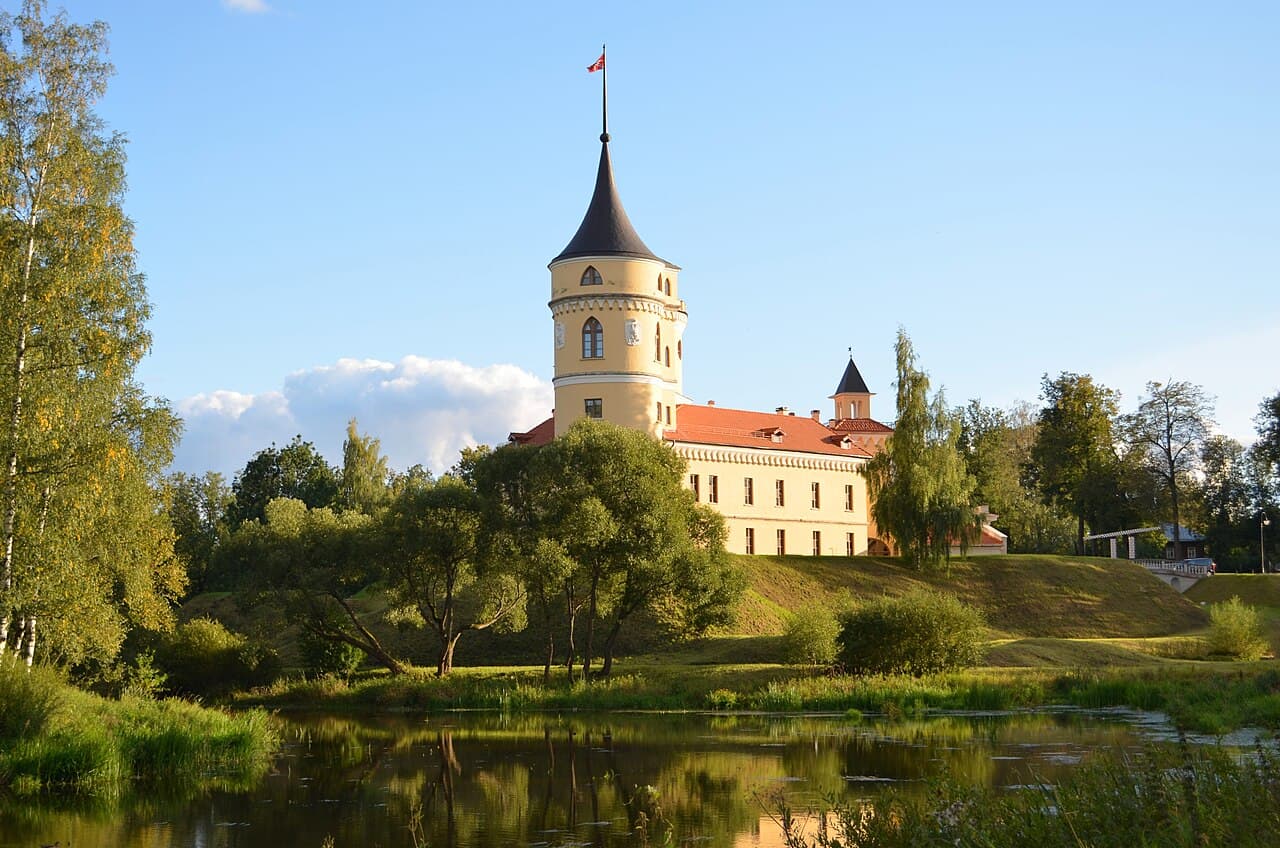
Bip Castle stands as a notable example of a bastioned fortress constructed during the post-Renaissance period in the late 18th century. Built between 1795 and 1797 under the direction of architect V. F. Brenna, the fortress was commissioned by Emperor Paul I of Russia. The site chosen for Bip Castle was historically significant, as it incorporated remnants of an older Swedish fortification, highlighting the strategic importance of this location in the region of Pauluskoi, Russian Federation.
Architectural design and military function
The design of Bip Castle reflects the military architectural principles of the late 18th century, emphasizing defensive capabilities typical of a bastioned fortress. This type of fortress features angular bastions that project outward from the main walls, allowing defenders to cover adjacent walls with overlapping fields of fire, a crucial advancement in fortification design following the development of artillery. The fortress's location offered natural advantages for defense, which were enhanced by the construction of robust walls, a moat, and a drawbridge system.
The fortress was integrated into the military register of fortresses of the Russian Empire, signifying its role in regional defense. A small garrison was stationed here under the command of the fortress commandant, known as Arakcheev. The daily routine of the fortress included the ceremonial lifting of the drawbridge at sunset and a midday gunshot signal, reflecting the disciplined military life within its walls.
Historical uses and transformations
Following the death of Emperor Paul I, Bip Castle underwent several functional transformations. It ceased to serve primarily as a military installation and was repurposed to accommodate various civil and institutional uses. Among these were a school for deaf children, a clinic for a cavalry regiment, the Aleksandrovskij College, and the Pavlovsk city board. These adaptations illustrate the fortress's flexibility and the changing needs of the community over time.
After the October 1917 coup d'état, the fortress's role shifted again to serve social and administrative functions. It housed an orphanage, a military commissariat, and the sovdep (local council of people's deputies), reflecting the social upheavals and reorganizations of the early Soviet period.
Destruction and restoration
During World War II, Bip Castle suffered significant damage, including destruction by fire. Despite this, the fortress was not lost to history. In the post-war period, the structure was restored and repurposed as a hotel, preserving its architectural heritage while giving it a new function that supports tourism and local economy.
Architectural features and significance
The fortress exemplifies the military architectural style of its era, combining practical defensive elements with the austere yet functional aesthetic typical of late 18th-century Russian fortifications. The presence of a drawbridge, bastions, and the strategic layout of the fortress demonstrate an advanced understanding of fortification design aimed at maximizing defense against artillery and infantry assaults.
Bip Castle's transformation over centuries—from a military fortress to educational and social institutions, and finally to a restored hotel—reflects the broader historical and cultural shifts in Russian society. Its preservation allows visitors to appreciate the architectural ingenuity and historical layers embedded in this unique bastioned fortress.
Visiting Bip Castle today
Today, Bip Castle serves as a cultural landmark and a hotel, offering visitors the chance to experience a historic fortress with modern amenities. Its restoration ensures that the architectural integrity and historical significance are maintained, making it an attractive destination for those interested in military architecture, Russian history, and heritage tourism.
Frequently asked questions (FAQ)
- How do I get to Bip Castle?
- Bip Castle is located in Pauluskoi, Russian Federation. You can reach the castle by taking public transportation from nearby cities or by driving, with ample parking available on-site for visitors.
- What is the historical significance of Bip Castle?
- Bip Castle dates back to the 16th century and played a crucial role in local defense during various conflicts. Its rich history is reflected in its architecture and the legends that surround it.
- When was Bip Castle built?
- Bip Castle was constructed in the early 1500s, making it one of the oldest structures in the region. Its construction was part of a broader effort to strengthen defenses against invasions.
- Can I take guided tours of Bip Castle?
- Yes, guided tours of Bip Castle are available and highly recommended for a comprehensive understanding of its history and architecture. Tours typically last around 1-2 hours and provide insights from knowledgeable guides.
- Why is Bip Castle famous for its architecture?
- Bip Castle is renowned for its unique blend of Russian and European architectural styles, featuring impressive stonework and intricate detailing. The castle's design reflects the historical influences of the era in which it was built, making it a fascinating site for architecture enthusiasts.
- Is it possible to visit Bip Castle year-round?
- Yes, Bip Castle is open for visitors year-round, although hours may vary seasonally. It's advisable to check the official website for specific opening times before planning your visit.
- What are the ticket prices for visiting Bip Castle?
- Ticket prices for Bip Castle vary depending on age and group size, with discounts available for students and seniors. Generally, tickets are quite affordable, allowing visitors to explore the castle and its grounds without breaking the bank.
- What is the best time to visit Bip Castle?
- The best time to visit Bip Castle is during the spring and early autumn months when the weather is mild and the surrounding landscape is particularly beautiful. Summer can be busy with tourists, while winter may limit access due to snow.
- Are there any nearby attractions to visit along with Bip Castle?
- Yes, there are several nearby attractions such as the historic town of Pauluskoi and local museums that showcase regional history. Exploring these sites can enhance your experience and provide a deeper understanding of the area's culture.
Photo gallery

Information
Website
Visit websiteSources & official resources
Verify the information above using these authoritative references.
Loading map...
Visitor reviews
No reviews yet. Been here? Write the first review and help other travelers!
Write the first reviewVisited this castle? Share your experience
Your review helps other travelers and adds first-hand knowledge to our encyclopedia.