Stahlberg Castle Ruins
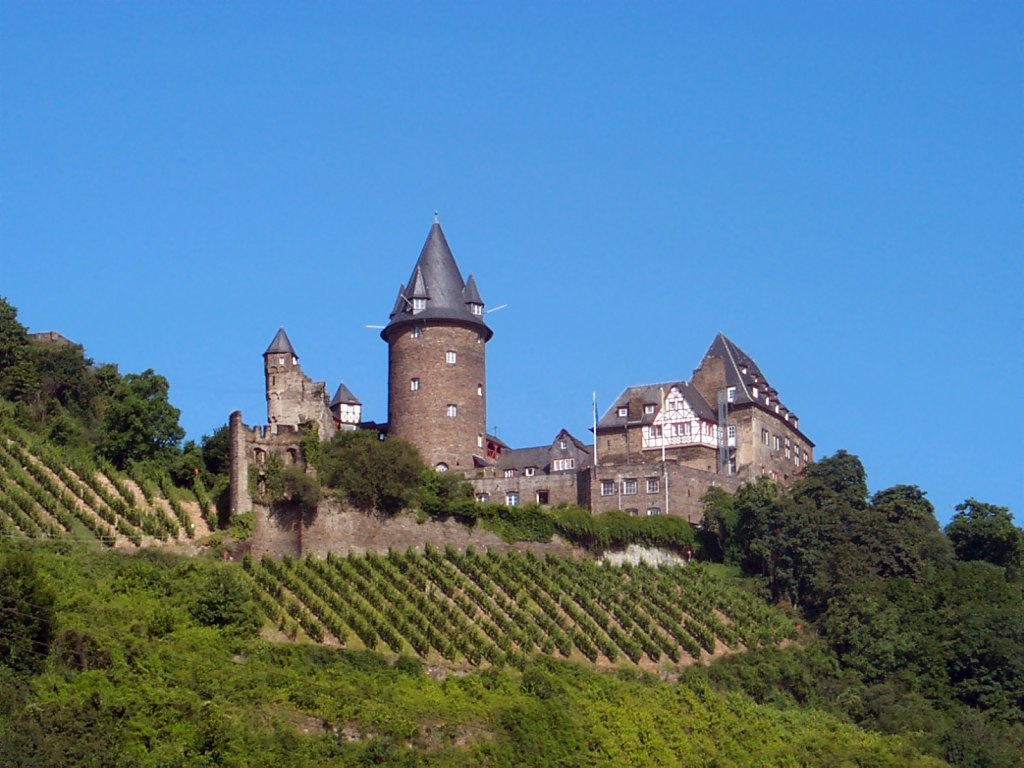
Stahlberg Castle Ruins stand as a testament to the military architecture of the high medieval period, specifically dating back to the 12th century. Perched on a rocky projection northwest of Bacharach, this castle was strategically positioned to oversee and control the surrounding valley and river routes. Its elevated location provided natural defense advantages, typical of hill castles constructed during this era.
Architectural layout and defensive features
The castle's rectangular ring wall encloses the entire site, a common design choice in the high medieval fortifications. Although parts of this wall have been rebuilt, its original form included several openings for access and defense. The wall's robust construction was intended to withstand siege warfare, with battlements likely crowning the curtain walls to allow defenders to repel attackers.
The circular tower and gateway complex
One of the most striking features of Stahlberg Castle is the prominent circular tower adjacent to the gateway, which was added at the start of the 13th century. This tower functioned as a keep, reinforcing the castle's narrow entrance. It was protected by a curtain wall and a defensive ditch, creating multiple layers of defense. The design of this gateway complex draws clear inspiration from the nearby Stahleck Castle, indicating common architectural influences or shared builders during that period.
The original keep and upper castle structures
The ruins include remnants of an angular tower in the upper section of the castle, which is believed to be the site of the original keep. Keeps served as the last line of defense and the lord's residence, typically the strongest and most fortified part of a medieval castle. This angular keep would have dominated the castle's skyline and provided commanding views of the surrounding landscape.
Historical context and significance
Stahlberg Castle was constructed during a period when the Rhineland was a patchwork of feudal territories, and castles played critical roles in asserting control over trade routes and territorial boundaries. Its proximity to Bacharach, an important medieval town on the Rhine River, underscores its strategic importance. The castle likely served both military and administrative functions, controlling access along the river and protecting local interests.
Relationship with stahleck castle
The architectural similarities between Stahlberg and Stahleck Castle suggest a shared cultural or political connection. Stahleck Castle, located nearby, was a significant fortress and administrative center. The adoption of similar defensive features, such as the circular tower and gate design, points to a regional style or the influence of a particular ruling family or builder active in the area during the late 12th and early 13th centuries.
Current condition and preservation
Today, Stahlberg Castle exists as ruins, with only fragments of the original structures remaining visible. The ring wall's partial reconstruction helps visitors understand the castle's original scale and layout. The site offers insights into medieval military architecture and the evolution of castle design in the Rhineland region. Despite its ruined state, the castle remains an important cultural heritage site, attracting historians and tourists interested in medieval fortifications.
Visitor experience and accessibility
Visitors to the Stahlberg Castle Ruins can explore the remains of the walls and towers, gaining a tangible sense of medieval life and defense strategies. The elevated position provides scenic views of Bacharach and the Rhine Valley. The site is accessible by foot from the town, making it a popular destination for those interested in history and hiking. Informational signage at the site helps contextualize the ruins within the broader history of the region.
Architectural elements typical of high medieval castles
Stahlberg Castle exemplifies several high medieval architectural elements, including the use of ring walls for perimeter defense, keeps as strongholds, and gatehouses with complex defensive features such as ditches and curtain walls. The circular tower's design reflects advancements in military architecture aimed at improving defense against siege engines and infantry assaults. These features highlight the castle's role as both a military fortress and a noble residence.
Construction materials and techniques
The castle was built primarily from local stone, which was quarried nearby and shaped to form thick defensive walls. The masonry techniques of the period involved carefully fitted stones bonded with lime mortar, creating durable structures capable of withstanding attacks and the elements. The surviving ruins show evidence of these construction methods, including the remains of arrow slits and battlements.
Frequently asked questions (FAQ)
- What is the historical significance of Stahlberg Castle Ruins?
- Stahlberg Castle Ruins date back to the 13th century and were strategically built to oversee the Rhine River and protect trade routes. The castle played a vital role in regional defense and served as a residence for local nobility. Today, it represents an important piece of the area's medieval heritage.
- When was Stahlberg Castle built?
- Stahlberg Castle was constructed in the early 1200s, during a time when many castles were built throughout Germany to fortify regions against invasions. The castle underwent several modifications and expansions over the centuries, reflecting the architectural styles of the periods.
- Can I visit Stahlberg Castle Ruins?
- Yes, visitors can explore the ruins of Stahlberg Castle. While the site is not fully restored, it offers a unique glimpse into medieval architecture and history. Accessible trails lead up to the castle, making it a popular destination for hikers and history enthusiasts.
- What are the opening hours for Stahlberg Castle Ruins?
- Stahlberg Castle Ruins are open to visitors year-round. However, the best time to visit is during daylight hours, as the trails can be challenging to navigate in the dark. Always check local guidelines for any seasonal changes in access.
- Is it possible to take guided tours of Stahlberg Castle?
- Currently, there are no official guided tours of Stahlberg Castle Ruins. However, visitors often find self-guided tours enjoyable, with plenty of information available online about the history and architecture of the site. Local tourism offices may also provide maps and brochures.
- What are the ticket prices for visiting Stahlberg Castle Ruins?
- Entry to Stahlberg Castle Ruins is free of charge, making it an accessible destination for all visitors. Donations to support the preservation of the site are appreciated but not mandatory. This allows everyone to enjoy the historical significance without financial barriers.
- When is the best time to visit Stahlberg Castle Ruins?
- The best time to visit Stahlberg Castle Ruins is during the spring and fall when the weather is mild and the scenery is stunning. Autumn offers beautiful foliage, while spring showcases blooming flowers. Summer can be warm, but it also attracts more visitors, so plan accordingly.
- Are there any nearby attractions to visit after Stahlberg Castle?
- Yes, the surrounding area of Bacharach is rich in attractions, including the picturesque Rhine Valley and several other historic castles. Visitors can enjoy wine tasting at local vineyards or explore the charming town of Bacharach, known for its medieval buildings and vibrant culture.
- Is Stahlberg Castle Ruins accessible for people with mobility issues?
- The trails leading to Stahlberg Castle Ruins can be steep and uneven, which may pose challenges for individuals with mobility issues. It is advisable to wear appropriate footwear and consider visiting with assistance if needed. Always check local resources for any accessibility updates before your visit.
Loading map...
Visitor reviews
No reviews yet. Been here? Write the first review and help other travelers!
Write the first reviewVisited this castle? Share your experience
Your review helps other travelers and adds first-hand knowledge to our encyclopedia.