St Quintins Castle
St Quintins Castle stands as a remarkable example of Norman military architecture in Wales, located in the village of Llanblethian near Cowbridge. The site was initially fortified around 1102 under the direction of Herbert de St Quentin, following the Norman conquest of Glamorgan. This early fortification was a typical ringwork defence featuring timber palisades atop an earth bank and surrounded by a defensive ditch, reflecting the common early medieval fortification techniques used by the Normans to establish control over newly acquired lands.
By the late 12th century, the castle evolved with the construction of a rectangular stone keep, replacing the earlier wooden structures. This keep formed the core of the castle's defenses and symbolized the transition from temporary wooden fortifications to more permanent stone castles, a trend seen across Britain during the high medieval period. The keep's remains are now integrated within the later gatehouse, indicating successive phases of construction and adaptation.
Historical development and ownership
The lordship of Llanblethian remained with the St Quentin family until 1233, when it was seized by Richard Siward. Subsequently, in 1245, the lands passed to Earl Richard de Clare, a powerful marcher lord who controlled extensive territories in Glamorgan. It was his grandson, Earl Gilbert de Clare, who undertook significant building works at St Quintins Castle starting shortly after 1307. Gilbert aimed to transform the site into a formidable stone castle, reflecting the evolving military architecture of the period.
However, Gilbert de Clare's death at the Battle of Bannockburn in 1314 during the Wars of Scottish Independence curtailed these plans. Modern historians suggest that the castle was never fully completed, as evidenced by the absence of inner courtyard buildings and the relatively weak curtain walls. This incomplete state provides valuable insight into the challenges of castle construction during turbulent times and the impact of political events on architectural projects.
Architectural features and layout
St Quintins Castle occupies a roughly rectangular enclosure approximately 64 meters east to west, with stone walls about 1.2 meters thick. The castle is strategically positioned on a hill spur rising around 40 meters above sea level, overlooking the surrounding landscape. This elevated location provided natural defensive advantages, particularly on the southern side, where steep slopes descend sharply to the River Thaw.
The castle's defenses are strongest on the south, west, and north sides, where natural scarps and slopes act as barriers. The east side was the most vulnerable and is protected by a substantial twin-tower gatehouse flanked by two additional towers. The gatehouse features narrow vertical slits designed for portcullises and robust wooden doors, highlighting the emphasis on securing the main entrance against attack.
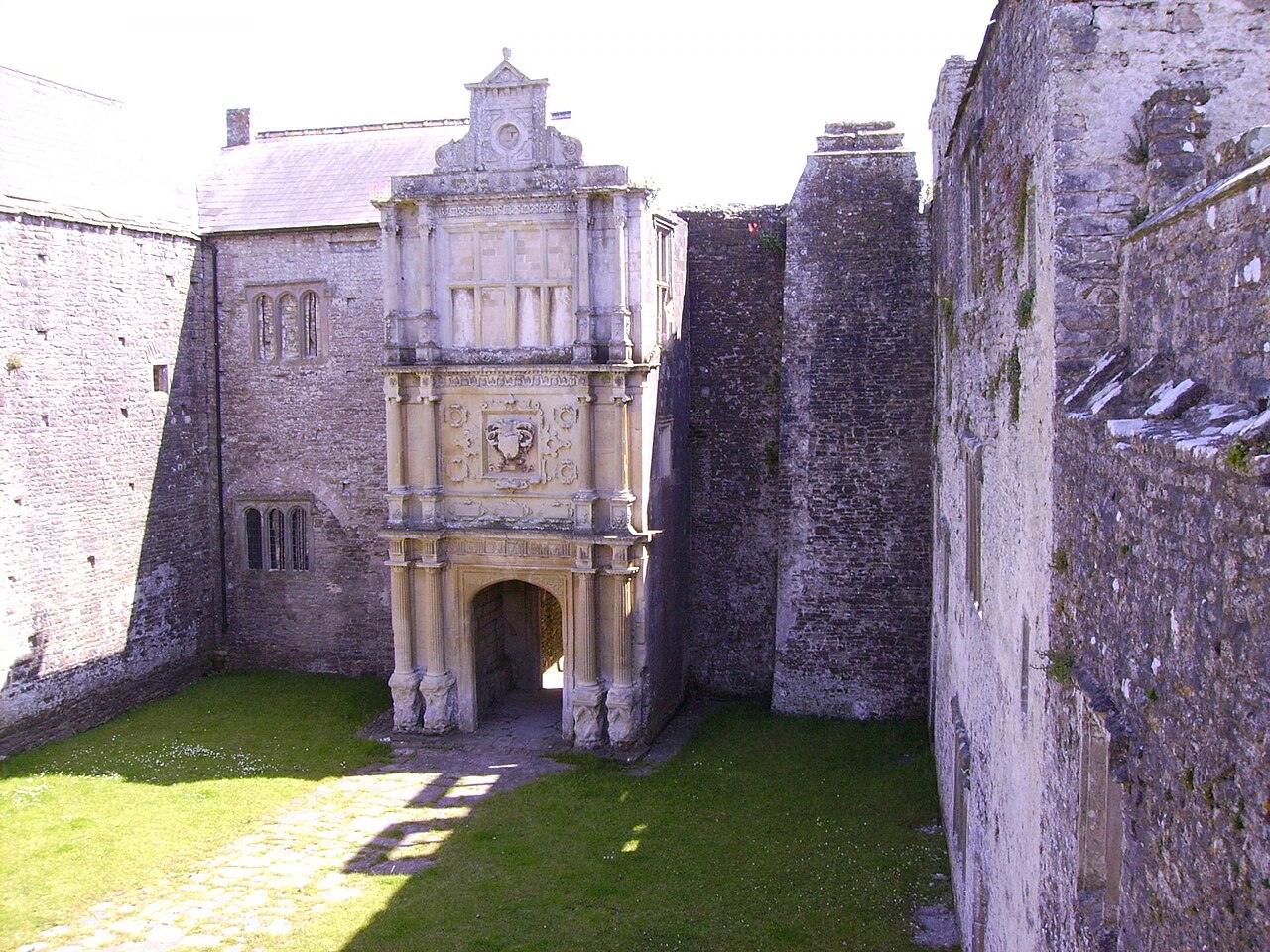
At the southeast corner, the remains of a semi-octagonal tower survive, while the southwest corner retains fragments of another tower. The gatehouse itself incorporates the rubble remains of the original stone keep, illustrating how earlier structures were adapted into later defensive works. Limited remnants of the bailey walls survive on the east, north, and south sides, indicating the extent of the outer courtyard enclosure.
Later history and preservation
Following its medieval military use, St Quintins Castle was repurposed as a prison at some point in its history. Over the centuries, the castle fell into disrepair and was described as ruinous by 1741. Despite this decline, the castle's ruins have remained a significant historical and archaeological site.
Today, the castle is a protected scheduled monument and a Grade II* listed building under the care of Cadw, Wales's historic environment service. The site is notable for its ivy-clad stone remains, which evoke the medieval past and provide a tangible connection to the Norman conquest and the turbulent history of the Welsh Marches.
Significance and visitor experience
St Quintins Castle offers visitors a glimpse into the high medieval period of Welsh history and Norman military architecture. Its commanding hilltop position, substantial gatehouse, and surviving towers illustrate key defensive strategies of the era. The castle's incomplete state and layered construction phases tell a story of shifting political fortunes and the challenges of castle building in the early 14th century.
Visitors can explore the ruins to appreciate the castle's layout, including the gatehouse with its portcullis slits and the remains of the stone keep. The surrounding landscape, with steep slopes and river views, enhances the sense of strategic importance the site held. While much of the castle is in ruins, the surviving structures and earthworks make it a valuable cultural heritage site for those interested in medieval history and architecture.
Frequently asked questions (FAQ)
- How do I get to St Quintins Castle?
- St Quintins Castle is located in the village of Llanblethian near Cowbridge in Wales. It is accessible by local roads from Cowbridge, with parking available nearby. Public transport options include buses serving the area, but checking current schedules is advised.
- What is the historical significance of St Quintins Castle?
- St Quintins Castle is significant as a Norman fortification dating back to the early 12th century, illustrating the transition from timber ringworks to stone castles in medieval Wales. It reflects the political and military history of the Welsh Marches and the influence of the de Clare family.
- Can I explore the interior of the castle ruins?
- Visitors can explore the remains of the gatehouse, towers, and curtain walls at St Quintins Castle. While much of the interior is in ruins, the site offers a clear sense of the castle's layout and defensive features. Caution is advised due to uneven ground and unstable structures.
- When is the best time to visit St Quintins Castle?
- The best time to visit St Quintins Castle is during the spring and summer months when weather conditions are favorable for walking and exploring the ruins. The site is outdoors and exposed, so suitable clothing and footwear are recommended.
- Are there any entrance fees to visit St Quintins Castle?
- There is no entrance fee to visit St Quintins Castle as it is an open heritage site managed by Cadw. Donations may be welcomed to support conservation efforts.
Information
Sources & official resources
Verify the information above using these authoritative references.
Loading map...
Visitor reviews
No reviews yet. Been here? Write the first review and help other travelers!
Write the first reviewVisited this castle? Share your experience
Your review helps other travelers and adds first-hand knowledge to our encyclopedia.