St Donat's Castle
St Donat's Castle stands as a remarkable medieval fortress located on a commanding cliff-top overlooking the Bristol Channel in the Vale of Glamorgan, Wales. Its strategic position on a rocky promontory with natural defenses on three sides has made it a significant stronghold since the Iron Age, with archaeological evidence confirming early occupation. Local tradition associates the site with the Celtic chieftain Caradog, embedding the castle deeply within Welsh legendary history.
The castle's stone origins date back to the late 12th century, when the de Hawey family replaced earlier timber fortifications with a durable stone structure. This transition reflected the growing importance of securing the coastline and controlling maritime routes. In 1298, ownership passed to the Stradling family through marriage, who would hold the castle for over four centuries, shaping its development and prominence in the region.
The medieval development and the Stradling legacy
During the early 14th century, the Stradlings undertook substantial expansions, including the construction of the outer gatehouse and curtain walls around 1300. These fortifications enhanced the castle's defensive capabilities, featuring a portcullis room with the original wooden portcullis and a fireplace, illustrating the blend of military and domestic functions.
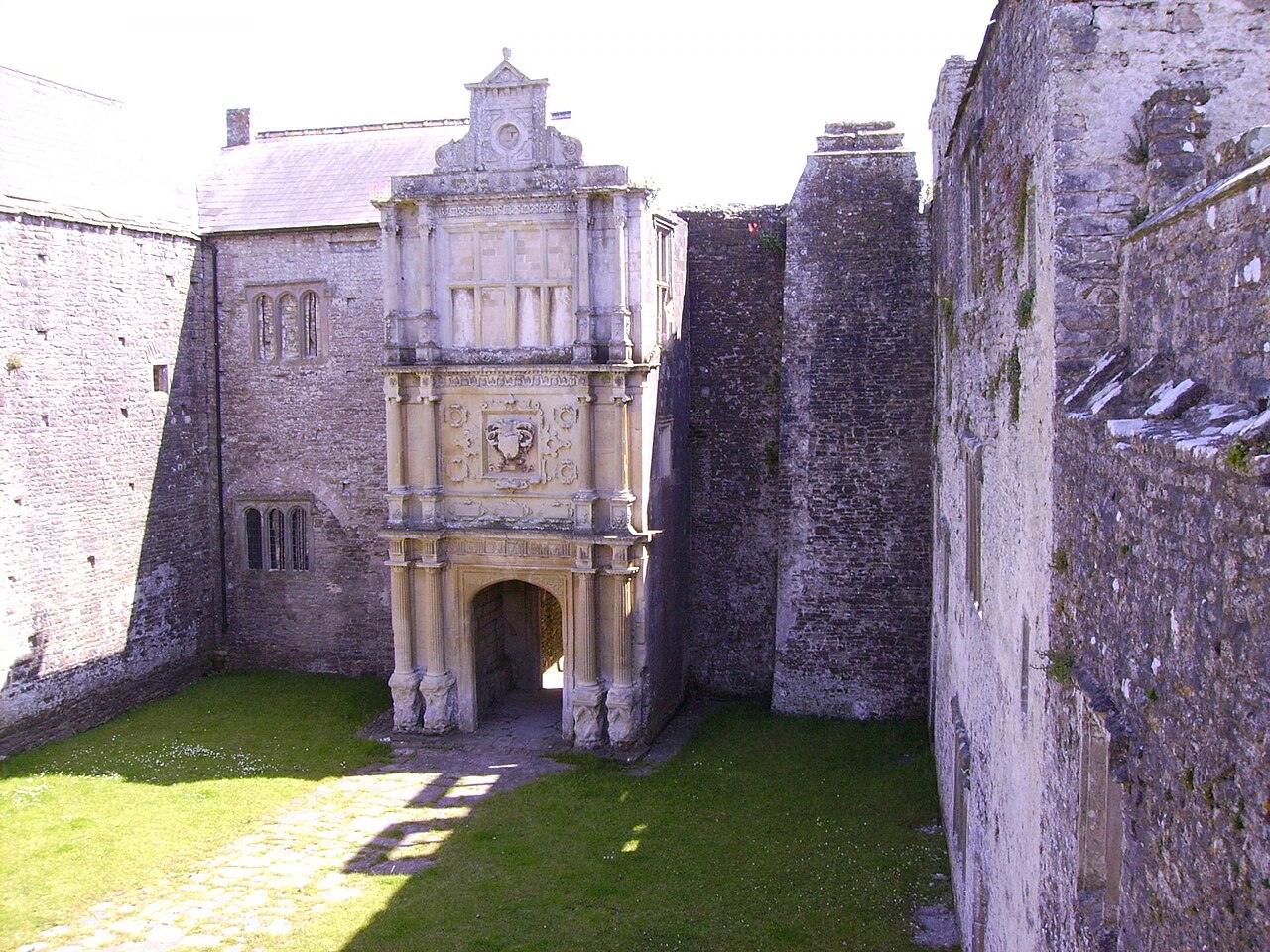
The castle's layout consists of an outer court—the oldest surviving stone section—and an inner court enclosed by polygonal curtain walls protecting buildings from the late 15th and early 16th centuries. The great hall to the southwest and the banqueting hall to the west served as key social and administrative spaces. The inner ward's exterior walls are adorned with terracotta medallions and busts, some attributed to the Italian sculptor Giovanni da Maiano, adding Renaissance artistic flair to the medieval fabric.
The Stradlings were influential local magnates, serving as magistrates and parliamentarians. Their Catholic faith during the English Reformation led to periods of persecution, but they maintained a notable library within the castle, emphasizing its role as a center of learning and culture. The family's fortunes declined after the English Civil War, culminating in the death of Sir Thomas Stradling in a duel in 1738, which marked the end of their continuous occupation.
Decline and restoration efforts
Following the Stradlings, the castle passed to Sir John Tyrwhitt but gradually fell into disrepair. By the early 19th century, it was only partly habitable, with sections in ruin. Initial restoration attempts began in 1862 under Dr John Whitlock Nicholl Carne, though these were criticized for their lack of historical sensitivity.
More comprehensive restorations took place between 1901 and 1909, led by coal industrialist Morgan Stuart Williams and architects George Frederick Bodley and Thomas Garner. These works sought to preserve and enhance the castle's medieval character, including the addition of double-height bay windows in the northwest range to improve lighting and aesthetics.
William Randolph Hearst's transformative ownership
In 1925, American media magnate William Randolph Hearst purchased St Donat's Castle and invested heavily—approximately £250,000—in remodeling and expanding the property. Hearst's vision incorporated architectural elements salvaged from other historic British sites, notably a 14th-century roof from Bradenstoke Priory and a 15th-century timber roof with painted bosses from St Botolph's Church in Lincolnshire.
These additions, while architecturally impressive, sparked controversy due to the destruction involved at donor sites like Bradenstoke Priory. Hearst's renovations also included lavish interiors designed with architect Sir Charles Allom, featuring paneling from the Stradling family's Red Parlour and imported timber panelling such as the Ellenhall Wainscot linenfold.
The castle hosted distinguished visitors including Winston Churchill, Charlie Chaplin, and John F. Kennedy during Hearst's ownership. Despite this, Hearst spent only limited time at the castle before financial difficulties led to its sale listing in 1937. World War II interrupted these plans as the castle was requisitioned for military use by British and American forces, serving as a training and command post.
Post-war use and educational transformation
After Hearst's death in 1951, the castle remained unsold until 1960 when Antonin Besse II acquired it and gifted it to the trustees of Atlantic College. This marked the beginning of the castle's new role as an international educational institution, hosting approximately 350 students from around the world as part of the United World Colleges movement.
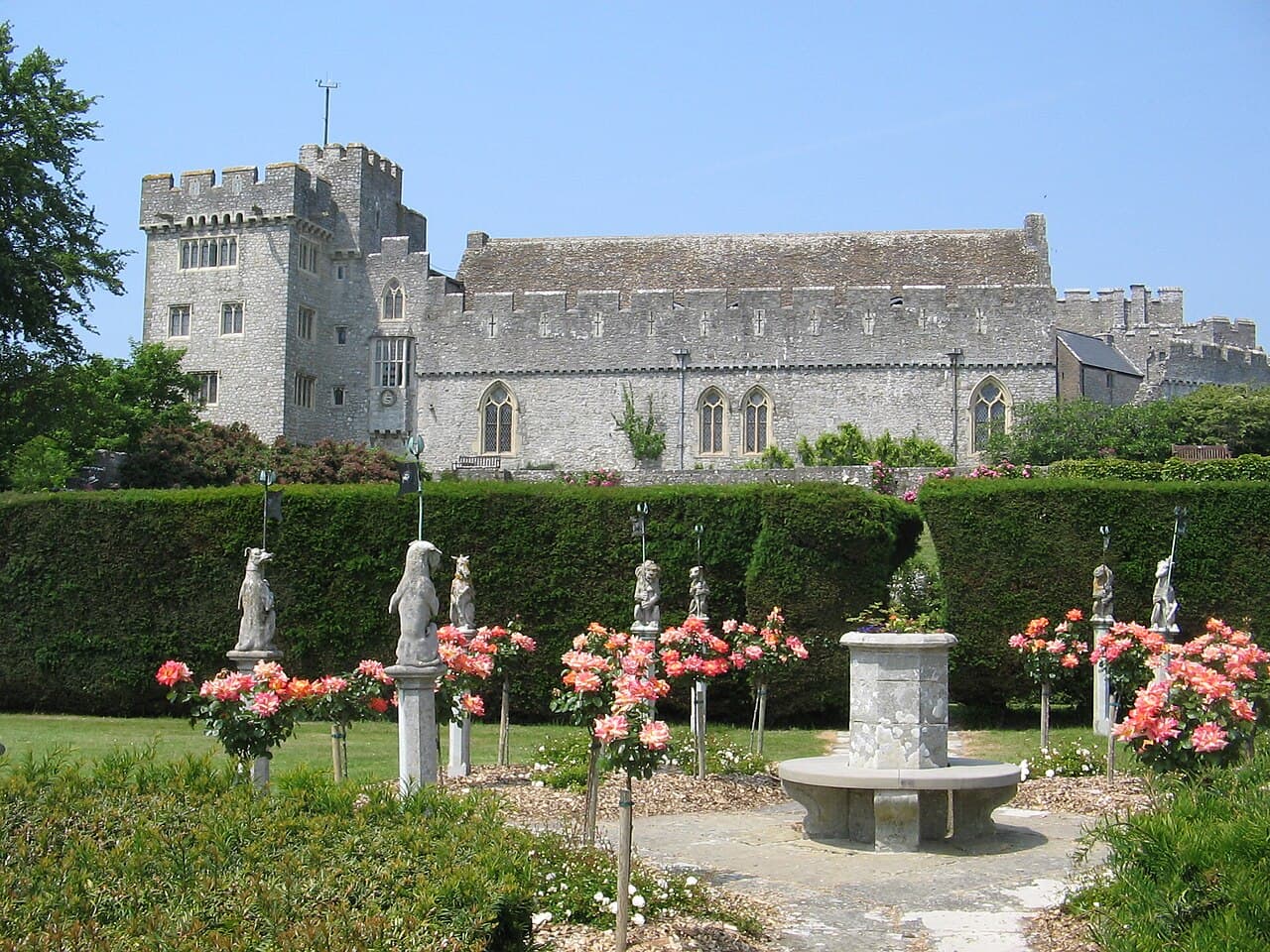
The castle continues to be inhabited and maintained, combining its rich historical legacy with modern educational functions. The surrounding Tudor-style terraced gardens, originally established by the Stradlings and expanded in the early 20th century, remain significant, featuring heraldic sculptures and period-appropriate landscaping. Hearst's additions include an Italianate summerhouse with a telephone exchange and a 150-foot outdoor swimming pool designed by Allom and architect Julia Morgan.
Architectural features and heritage significance
Built primarily from locally sourced lias limestone rubble with decorative Sutton stone and sandstone dressings, St Donat's Castle exemplifies medieval defensive architecture with layered outer and inner curtain walls and a deep dry moat protecting the eastern approach. The castle's gatehouse and portcullis room, complete with original wooden portcullis, highlight its martial function.
Inside, the castle's interiors blend medieval, Renaissance, and early 20th-century elements, including imported timberwork, ornate fireplaces, and decorative ceilings. The Lady Anne Tower, a reconstructed 16th-century feature, and other restored buildings provide a glimpse into the castle's evolving architectural history.
The estate also includes a renovated cavalry barracks converted into accommodation, defensive sea walls and towers rebuilt under Hearst, and a nearby coastal watchtower likely used for maritime observation in the late medieval period. The watchtower, restored in the 19th century, remains in a state of disrepair today.
St Donat's Castle and its grounds hold Grade I listed status, recognizing their exceptional historical and architectural importance. The gardens are also Grade I listed on the Cadw/ICOMOS Register of Parks and Gardens of Special Historic Interest in Wales. The medieval tithe barn on the estate has been converted into the St Donat's Arts Centre, a professional theatre space with modern additions that frame views of the sea, blending heritage with contemporary cultural use.
Overall, St Donat's Castle represents a unique palimpsest of Welsh history, architecture, and cultural evolution, from its Iron Age roots through medieval fortification, Renaissance refinement, early 20th-century restoration, and modern educational adaptation.
Frequently asked questions (FAQ)
- How do I visit St Donat's Castle?
- St Donat's Castle is part of Atlantic College and is not generally open to the public. Visitors should check for special events or guided tours offered by the college or local heritage organizations.
- What is the historical significance of St Donat's Castle?
- St Donat's Castle is one of the oldest continuously inhabited castles in Wales, with origins dating back to the 12th century and connections to the Stradling family and William Randolph Hearst.
- When was the castle extensively restored?
- Significant restorations occurred in the early 20th century between 1901 and 1909, and later during William Randolph Hearst's ownership in the 1920s and 1930s.
- Can I see the gardens at St Donat's Castle?
- The Tudor-style terraced gardens are an important feature of the estate. Access may be limited, but they are sometimes open during college events or heritage days.
- Is the castle accessible for educational visits?
- As home to Atlantic College, the castle hosts international students and educational programs. Educational visits may be arranged through the college with prior permission.
Photo gallery

Information
Sources & official resources
Verify the information above using these authoritative references.
Loading map...
Visitor reviews
No reviews yet. Been here? Write the first review and help other travelers!
Write the first reviewVisited this castle? Share your experience
Your review helps other travelers and adds first-hand knowledge to our encyclopedia.