St. Nicholas Fortress
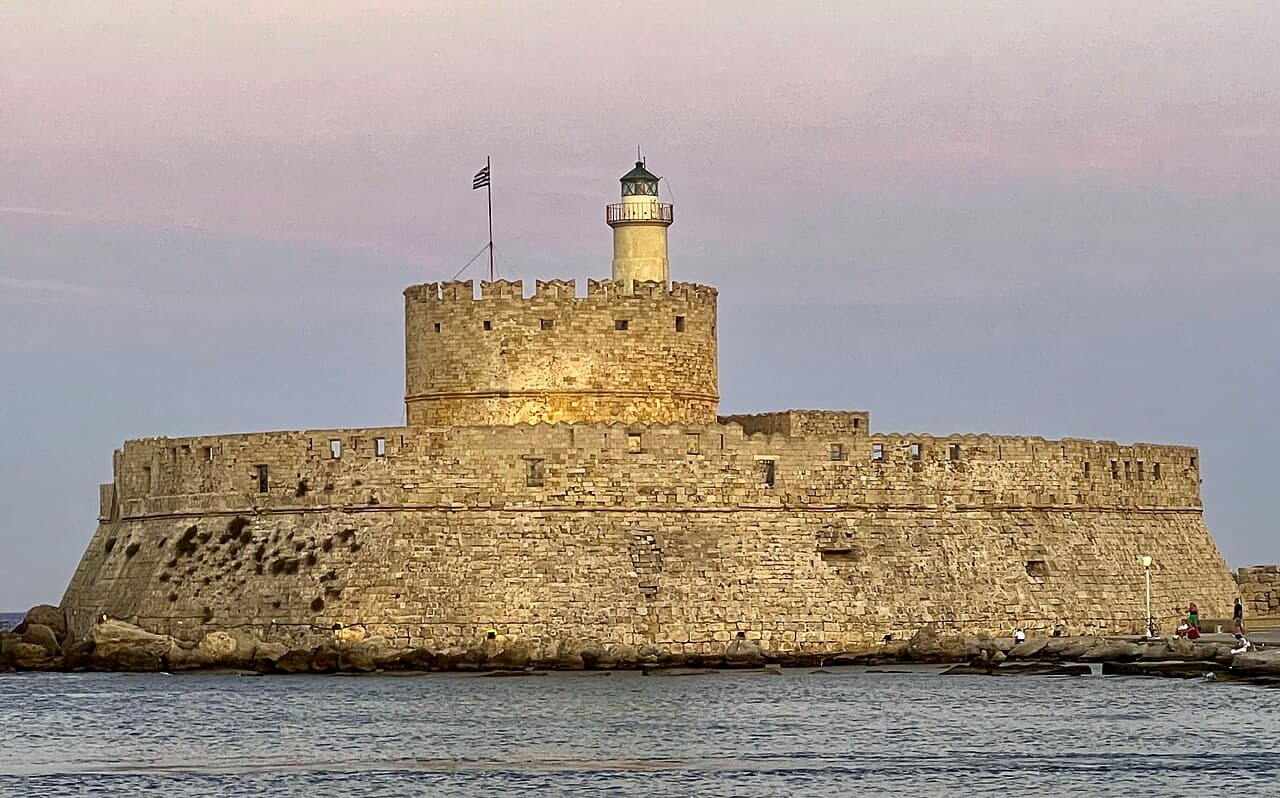
St. Nicholas fortress is a prominent late medieval bastioned fortress located at the entrance of the Mandraki harbour in Rhodes, Greece. Constructed between 1464 and 1467 by the Grand Master Zacosta of the Knights Hospitaller, it was strategically positioned at the end of a natural mole to protect the vital military harbour from naval attacks. The fortress stands on the site of an earlier Byzantine church dedicated to St. Nicholas, from which it derives its name.
Historical background and construction
The original structure was a simple tower guarding the harbour, built during a period when Rhodes was a key stronghold of the Knights Hospitaller. Following the siege of Rhodes in 1480, the fortress underwent significant enhancements under the direction of Grand Master Pierre d'Aubusson. He commissioned the addition of a bastion around the existing tower, transforming it into a more formidable sea guard fortress designed to repel Ottoman naval forces and other maritime threats.
This phase of construction reflects the evolution of military architecture in response to the increasing use of gunpowder artillery. The bastioned design allowed for better defensive coverage and the ability to mount cannons along the walls, a feature that was crucial for the fortress's role in protecting the harbour.
Architectural features and design
The fortress is characterized by its robust stone walls and bastioned layout, typical of late medieval military architecture adapted to the challenges of artillery warfare. The bastion added by d'Aubusson encircles the original tower, creating a compact defensive complex with thick walls capable of absorbing cannon fire.
Atop the fortress, a lighthouse was installed in the 17th century, serving as a navigational aid for ships entering the harbour. This addition highlights the fortress's continuous use and adaptation through the centuries, blending military and maritime functions.
Location and strategic significance
Situated at the end of the natural mole extending into the sea, the fortress commands a crucial position overseeing the entrance to the Mandraki harbour. This harbour was the main naval base for the Knights Hospitaller and later for various maritime powers controlling Rhodes. The fortress's location allowed it to monitor and control naval traffic effectively, playing a key role in the island's defense system.
Later history and preservation
Over the centuries, St. Nicholas fortress has witnessed numerous historical events, including sieges and changes in control from the Knights Hospitaller to the Ottoman Empire and beyond. Despite these turbulent times, the fortress remains well-preserved, retaining much of its original late medieval structure and bastioned fortifications.
Today, the fortress stands as a significant cultural and historical landmark in Rhodes, attracting visitors interested in medieval military architecture and the history of the Knights Hospitaller. The lighthouse remains operational, symbolizing the fortress's enduring maritime heritage.
Visiting St. Nicholas fortress
Visitors to Rhodes can explore the exterior of the fortress and enjoy views of the Mandraki harbour and the Aegean Sea. While the interior may have limited access, the fortress's imposing presence and historical context provide a compelling experience for those interested in the island's defensive architecture and naval history.
Frequently asked questions (FAQ)
- How do I get to St. Nicholas Fortress?
- St. Nicholas Fortress is located on the northeastern tip of Rhodes, easily accessible by foot from the Old Town. You can also reach it by taking a local bus or taxi from various points in the city. The scenic walk along the waterfront is highly recommended for a picturesque view.
- What is the historical significance of St. Nicholas Fortress?
- St. Nicholas Fortress, built by the Knights of Saint John in the 15th century, served as a vital defense mechanism for the harbor of Rhodes. It played a crucial role in protecting the island from invasions and controlling maritime trade in the region. Today, it stands as a symbol of the rich medieval history of Rhodes.
- When was St. Nicholas Fortress constructed?
- Construction of St. Nicholas Fortress began in 1476 and was completed in 1480. The fortress was strategically designed to enhance the defenses of the city and to safeguard the entrance to the harbor. Its construction reflects the architectural style and military strategies of the Knights of Saint John during the Renaissance era.
- Can I enter St. Nicholas Fortress?
- Yes, visitors are allowed to explore the fortress and enjoy its impressive architecture and stunning views of the sea and city. Inside, you can find various exhibits that provide insights into its history and significance. Be sure to check for any specific guidelines or restrictions before your visit.
- Why is St. Nicholas Fortress an architectural marvel?
- St. Nicholas Fortress is renowned for its unique blend of Gothic and Renaissance architectural styles, showcasing the ingenuity of its builders. The fortress features robust stone walls, thick towers, and a strategic layout that reflects military design principles of its time. Its preservation allows visitors to appreciate these historical architectural techniques.
- Is it possible to visit St. Nicholas Fortress year-round?
- Yes, St. Nicholas Fortress is open to visitors year-round, though hours may vary by season. It’s advisable to check the official website or local tourist information for the most accurate opening hours before your visit. The fortress can be enjoyed in all seasons, each offering a different experience of the site.
- What are the ticket prices for St. Nicholas Fortress?
- Entry to St. Nicholas Fortress is typically affordable, with tickets priced around €6 for adults and discounts available for students and seniors. Children under a certain age may enter for free. Be sure to confirm the latest pricing information as it may vary or change over time.
- When is the best time to visit St. Nicholas Fortress?
- The best time to visit St. Nicholas Fortress is during the spring (April to June) and fall (September to October) when the weather is mild and pleasant. These months also see fewer tourists compared to the summer peak season, allowing for a more enjoyable experience. Early mornings or late afternoons can provide beautiful lighting for photography as well.
- What nearby attractions should I visit after St. Nicholas Fortress?
- After exploring St. Nicholas Fortress, consider visiting the nearby Old Town of Rhodes, a UNESCO World Heritage site filled with medieval architecture. The Archaeological Museum of Rhodes and the Palace of the Grand Master are also within walking distance and provide further insights into the island’s history. Don’t miss the beautiful beaches just a short distance away for a relaxing afternoon.
Photo gallery

Information
Current owner
Municipality of Rhodes
Loading map...
Visitor reviews
No reviews yet. Been here? Write the first review and help other travelers!
Write the first reviewVisited this castle? Share your experience
Your review helps other travelers and adds first-hand knowledge to our encyclopedia.