Palace of the Grand Master of the Knights of Rhodes
The Palace of the Grand Master of the Knights of Rhodes stands as a monumental testament to the island's rich medieval history and its strategic importance in the eastern Mediterranean. Located in the South Aegean region of Greece, this fortress was originally built on the foundations of an ancient temple dedicated to Helios, the sun god, believed to be the site of the legendary Colossus of Rhodes. This connection to antiquity underscores the palace’s significance as a cultural and historical landmark.
Constructed initially as a Byzantine citadel in the late 7th century, the palace was extensively rebuilt and fortified by the Knights Hospitaller after their conquest of Rhodes in 1309. The knights transformed the fortress into their administrative center and residence, shaping it into a formidable Gothic-style stronghold that dominated the city’s skyline. Over the centuries, it served as the nerve center for the Knights’ autonomous state, a bastion of Christian defense against Ottoman expansion.
The origins and early history
The palace’s site has a layered history beginning with its ancient Greek roots. The temple to Helios once stood here, marking the religious and cultural heart of Rhodes in antiquity. The Byzantine fortress that followed was strategically positioned to guard the city and harbor, setting the stage for the palace’s later military and political role.
In 1306, Foulques de Villaret, the French Grand Master of the Order of St. John, acquired Rhodes from the Genoese admiral Vignolo de'Vignoli. The knights established an autonomous state on the island by 1309, choosing this fortress as their headquarters. Their enhancements included thickening walls, adding towers, and creating a complex defensive system that incorporated the natural hilltop terrain.
Architectural evolution and medieval fortifications
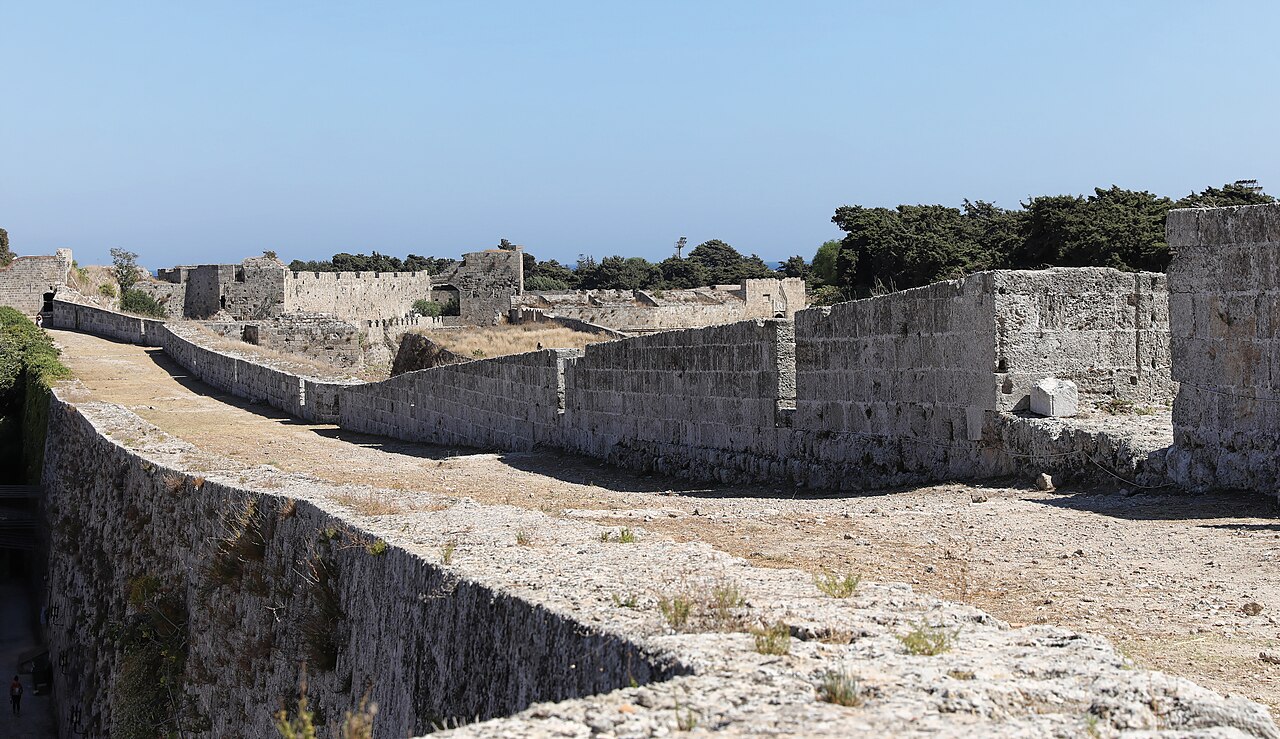
The palace exemplifies medieval Gothic architecture blended with Byzantine and later Italian influences. Its massive walls, imposing towers, and fortified gates were designed to withstand prolonged sieges. The palace’s layout includes a large courtyard, grand halls, living quarters, and chapels, reflecting its dual function as a military fortress and a noble residence.
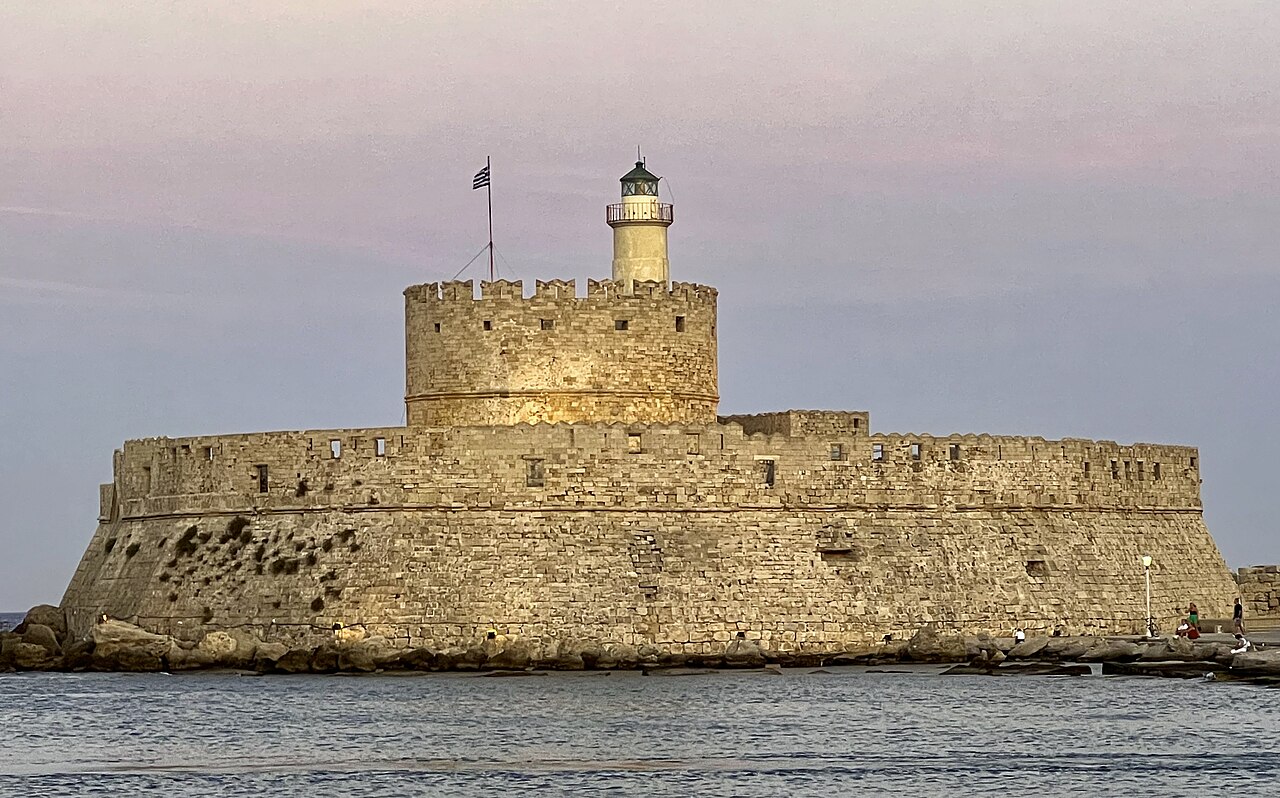
Notable features include the Naillac Tower, the Bastion of Saint George, and the Bastion del Carretto, which provided strategic defense points. The Windmills Tower (also called the French or Angel Tower) and the Fort of Saint Nicholas further fortified the harbor entrance, protecting Rhodes from naval assaults.
The siege of 1522 and Ottoman conquest
The palace played a critical role during the 1522 siege by Suleiman the Magnificent of the Ottoman Empire. After months of fierce fighting, the defenders, comprising knights and local inhabitants, were forced to surrender on New Year’s Day 1523. This marked the end of the Knights’ rule in Rhodes and the beginning of Ottoman control.
Following the conquest, the palace was repurposed as a barracks, administrative center, and armory. Over time, it fell into disrepair, suffering from neglect and damage, including a catastrophic event in 1856 when lightning struck the nearby Church of Saint John, triggering a massive gunpowder explosion that destroyed much of the palace’s upper floors and damaged its structure severely.
Modern restoration and Italian influence
During the Italian administration of Rhodes from 1912 to 1943, the palace underwent extensive restoration led by architect Vittorio Mesturino. This restoration, conducted between 1937 and 1940, aimed to revive the palace’s medieval character but introduced elements of medieval Italian architectural style rather than strictly adhering to the original Gothic design.
The restoration involved demolishing Ottoman additions and reconstructing towers and gates with a romanticized medieval appearance. The palace was adapted for use as a summer residence by King Victor Emmanuel III and Benito Mussolini, whose name is commemorated on a plaque near the entrance. This period left a distinct imprint on the palace’s appearance and function.
Current status and cultural significance
Today, the Palace of the Grand Master is a well-preserved monument and a major tourist attraction. It forms part of the medieval walled city of Rhodes, a UNESCO World Heritage Site. The palace houses a museum featuring a rich collection of artifacts spanning from antiquity through the Middle Ages, including Roman mosaics from Kos, medieval tombstones, weapons, jewelry, paintings, and sculptures.
One of the museum’s highlights is the Medusa mosaic in the "Room of the Medusa," renowned for its exquisite depiction of the mythological figure with snake hair and a petrifying gaze. The palace’s exhibitions provide insight into Rhodes’ complex history as a crossroads of cultures and a strategic military hub.
Fortifications and surrounding structures
The palace is integrated into a larger defensive network that protected Rhodes for centuries. The Bastion of Saint George and Bastion del Carretto are key elements of this system, along with several towers guarding the harbor and city walls. These fortifications demonstrate advanced medieval military architecture designed to resist both land and sea attacks.
The blend of Byzantine foundations, Gothic fortifications, and Italian restoration makes the palace a unique architectural palimpsest, reflecting the island’s layered history and cultural influences.
Visiting the palace
Visitors to Rhodes can explore the palace and its museum to experience firsthand the grandeur of the Knights Hospitaller’s rule and the island’s medieval heritage. The site offers a compelling journey through history, architecture, and art, set against the backdrop of the picturesque old town and harbor.
The palace’s elevated position provides panoramic views of Rhodes and the surrounding sea, enhancing its appeal as a cultural landmark and symbol of resilience.
Frequently asked questions (FAQ)
- How do I get to the Palace of the Grand Master of the Knights of Rhodes?
- The Palace of the Grand Master is located in the heart of Rhodes Town, easily accessible by foot from various points in the city. Visitors can also reach Rhodes Town via bus or taxi from the airport or ferry terminal.
- What is the historical significance of the Palace of the Grand Master?
- The Palace of the Grand Master served as the administrative and ceremonial center for the Knights of St. John during their rule over Rhodes from 1309 to 1522. It is a remarkable example of medieval architecture and reflects the rich history of the island, showcasing the power and influence of the Knights in the region.
- When was the Palace of the Grand Master built?
- Construction of the Palace began in the 14th century, specifically around 1309, and it was completed in the 15th century. The palace has undergone various renovations and restorations, especially after being damaged during World War II.
- Can I take photographs inside the Palace of the Grand Master?
- Yes, photography is allowed inside the Palace, but visitors are requested to be respectful of the exhibits and other guests. Some areas may have restrictions, so be sure to check for any signage indicating photography rules.
- Why is the architecture of the Palace of the Grand Master unique?
- The architecture of the Palace is a blend of Gothic and Byzantine styles, featuring impressive stonework, vaulted ceilings, and large courtyards. Its design not only served a defensive purpose but also displayed the grandeur and authority of the Knights of St. John.
- Is it possible to access all areas of the Palace?
- While many areas of the Palace are open to the public, some sections may be restricted due to preservation efforts or ongoing restoration work. It is advisable to check with the staff upon your visit for the latest updates on accessible areas.
- What are the opening hours of the Palace of the Grand Master?
- The Palace is typically open to visitors from 8:00 AM to 8:00 PM during the summer months and from 8:00 AM to 3:00 PM in the winter. It's best to check the official website or local resources for any seasonal changes in hours.
- What are the ticket prices for the Palace of the Grand Master?
- As of now, the entrance fee for adults is approximately 8 euros, while discounted tickets are available for students and seniors. Children under 18 can enter for free, but it's advisable to confirm the prices before your visit as they may change.
- What is the best time to visit the Palace of the Grand Master?
- The best time to visit is during the spring (April to June) and fall (September to October) when the weather is mild and crowds are smaller. Visiting during these months allows for a more enjoyable experience while exploring the palace and its surroundings.
- Are there any nearby attractions to visit after the Palace?
- Yes, after visiting the Palace, you can explore the nearby Archaeological Museum of Rhodes, which houses artifacts from the island's rich history. Additionally, the charming Old Town of Rhodes offers numerous shops, restaurants, and historical sites to discover.
Information
Website
Visit websiteSources & official resources
Verify the information above using these authoritative references.
Loading map...
Visitor reviews
No reviews yet. Been here? Write the first review and help other travelers!
Write the first reviewVisited this castle? Share your experience
Your review helps other travelers and adds first-hand knowledge to our encyclopedia.