Medieval Town of Rhodes
The medieval town of Rhodes stands as a remarkable testament to the enduring legacy of the Knights of Saint John of Jerusalem, also known as the Hospitallers. Nestled in the South Aegean region of Greece, this fortified city is one of the most complete and best-preserved medieval towns in Europe. Its streets, walls, and buildings evoke the rich history of the Middle Ages and the strategic importance of Rhodes as a military and commercial hub in the eastern Mediterranean.
Declared a UNESCO World Heritage Site in 1988, the town offers visitors a unique journey back in time. The atmosphere is thick with history, from the cobbled streets and towering Gothic fortifications to the remnants of Byzantine and Ottoman influences that layer the urban fabric. The medieval city of Rhodes is not merely a collection of ruins but a vibrant living monument that has continuously evolved since its ancient origins.
Historical evolution of the fortified city
The origins of Rhodes date back to antiquity, with the ancient city founded in 408 BC following the Hippodamian grid plan, an early example of urban planning. The Byzantines fortified a portion of this ancient city in the 7th century AD as a defense against invasions, creating the first medieval fortifications.
When the Knights of Saint John arrived in 1309, they inherited this Byzantine fortress and expanded it significantly. Over the next two centuries, the knights transformed Rhodes into a formidable stronghold and the center of their maritime kingdom. The city walls were extended to cover approximately 175,000 square meters initially, and later expansions brought the fortified area to about 800,000 square meters.
The knights' presence marked a golden age for Rhodes, as it became a bastion against Ottoman expansion and a thriving commercial port. The city withstood numerous sieges, most notably the six-month siege by the forces of Suleiman the Magnificent in 1522. Despite the eventual surrender and departure of the knights to Malta, the medieval town they left behind remains a masterpiece of military architecture.
Urban layout and architectural highlights
Division of the medieval city
The medieval town was divided internally by a wall into two distinct sectors. The northern quarter, known as the "Chateau," "Castrum," or "Castellum", housed the administrative buildings, the hospital, the cathedral, and the residences of the knights and the Grand Master. This area functioned as the political and military heart of the city.
The southern quarter, called the "Ville," "Burgus," or "Burgum", was primarily residential, containing the houses of the laity, bustling street markets, synagogues, and churches. This division reflects the social and functional organization of the medieval city and highlights the coexistence of diverse communities within the walls.
Fortifications and military architecture
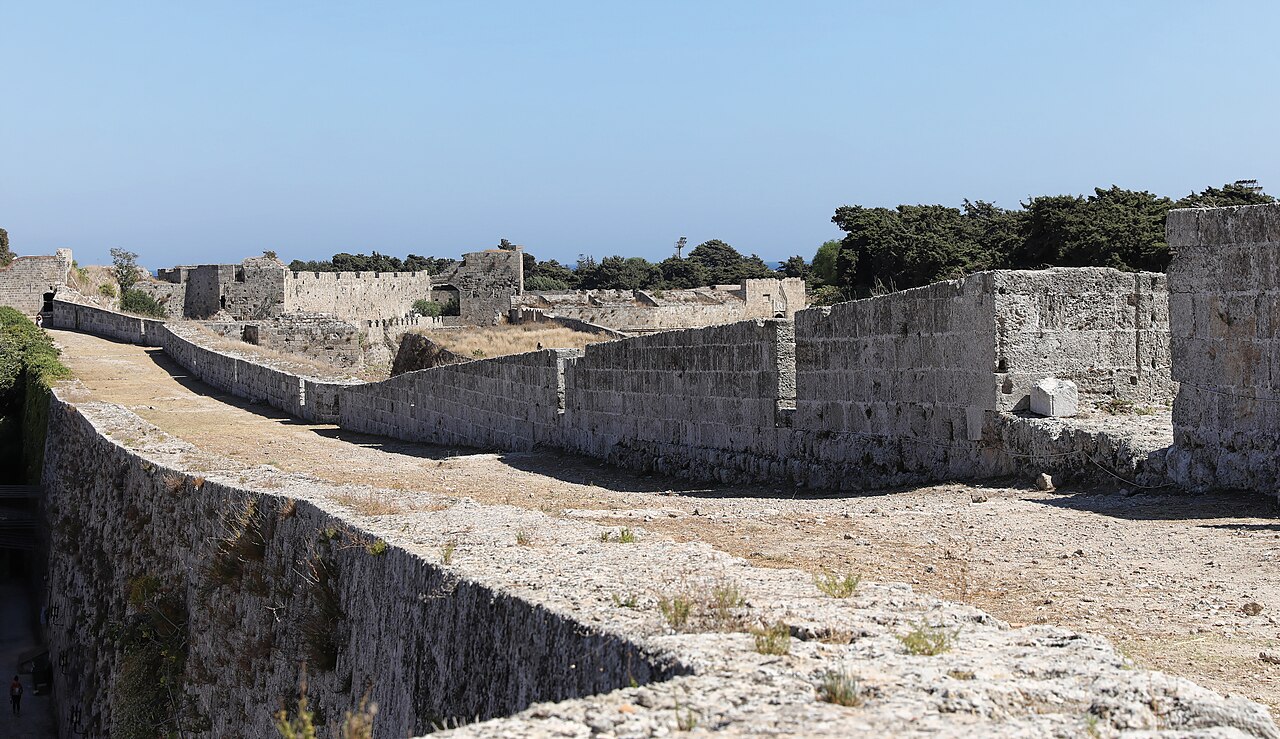
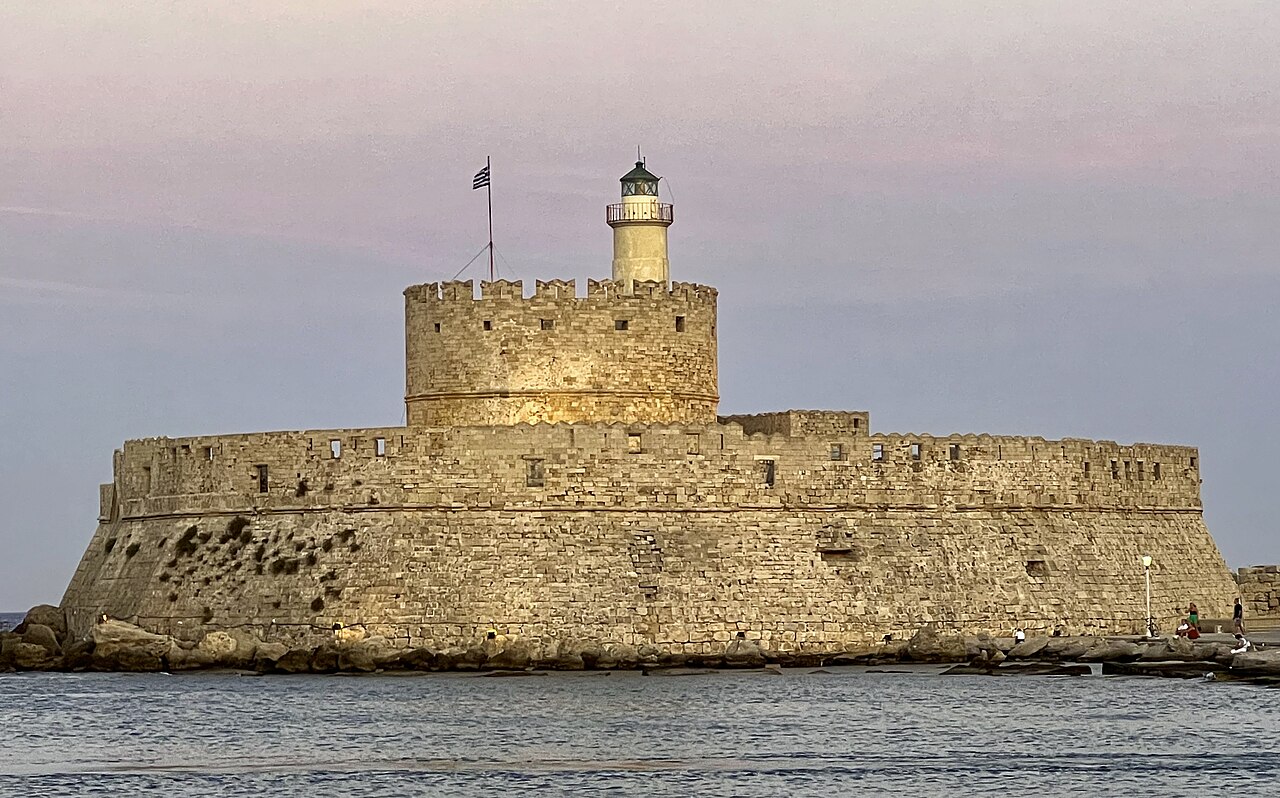
The town's defenses are among the finest examples of medieval military architecture in Europe. The walls feature multiple layers of fortifications, including towers, bastions, gates, and moats. The walls were designed to resist artillery and prolonged sieges, showcasing the evolution of defensive strategies from the Byzantine period through the Renaissance.
The Gates of Rhodes are particularly notable, including the Porta Marina, the main sea gate, and the Gate of Saint Athanasius. These gates controlled access to the city and were heavily fortified to repel attackers.
Religious and civic buildings
The medieval town is rich in sacred architecture, with several churches that reveal the cultural layers of Rhodes. Notable examples include the churches of Agia Triada (Holy Trinity), Agios Athanasios (St. Athanasius), Agia Aikaterini (St. Catherine), Panagia tou Kastrou (Virgin of the Castle), and Agia Paraskevi. Many of these churches were later converted into mosques during the Ottoman period, reflecting the city's complex history.
The palace of the grand master
The centerpiece of the medieval town is the Palace of the Grand Master, often called the "Castello". This imposing fortress served as the administrative center and residence of the leader of the Knights of Saint John. Architecturally, it is a masterpiece of Gothic and Renaissance styles, with robust walls, elegant chambers, and grand halls.
The palace suffered significant damage during the Ottoman siege, including an explosion in the ammunition stores. It was restored in the early 20th century under Italian rule, preserving its historical character. Today, it functions as the Museum of Rhodes, housing extensive collections of artifacts, including tombstones, paintings, statuary, jewelry, books, and mosaics. Among the prized exhibits are the Trophy of the Mithridatic Wars, the statue of Laocoon, and the Medusa mosaic, which highlight the region's ancient and medieval heritage.
Cultural significance and preservation
The medieval town of Rhodes is not only an architectural marvel but also a cultural symbol of resilience and historical continuity. Unlike many medieval towns that fell into ruin or abandonment, Rhodes has remained inhabited and vibrant through centuries of change.
The blend of Gothic, Renaissance, Byzantine, and Ottoman architectural elements creates a unique urban tapestry that attracts scholars, tourists, and history enthusiasts alike. The preservation efforts, supported by international recognition and local stewardship, ensure that Rhodes continues to tell its story for future generations.
Visiting the medieval town today
Today, visitors to Rhodes can walk the same streets once patrolled by the knights, explore the imposing fortifications, and enter historic buildings that showcase centuries of architectural and cultural evolution. The town's lively atmosphere, combined with its rich history, makes it a must-see destination for those interested in medieval history and Mediterranean heritage.
Guided tours, museums, and cultural events provide immersive experiences that bring the past to life. The medieval town of Rhodes remains a shining example of how history and modern life can coexist within ancient walls.
Frequently asked questions (FAQ)
- How do I get to the Medieval Town of Rhodes?
- The Medieval Town of Rhodes is easily accessible from the Rhodes International Airport, which is about 15 kilometers away. You can take a taxi, shuttle bus, or rent a car to reach the town. Once in Rhodes town, the medieval area is within walking distance from the main bus station.
- What is the historical significance of the Medieval Town of Rhodes?
- The Medieval Town of Rhodes is recognized as a UNESCO World Heritage Site due to its well-preserved medieval architecture and rich history. It was once the home of the Knights of St. John, who fortified the town and built impressive structures. The town reflects a blend of Gothic and Byzantine influences, showcasing its historical importance in the Mediterranean.
- When was the Medieval Town of Rhodes built?
- The construction of the Medieval Town of Rhodes began in the early 14th century when the Knights of St. John established it as their headquarters. The town was fortified and developed over the following decades, with significant additions made until the 16th century. This long history is evident in the town's diverse architectural styles and historic landmarks.
- Can I enter the medieval castles and museums in the town?
- Yes, visitors can explore various medieval castles and museums within the Medieval Town of Rhodes. Key sites include the Palace of the Grand Master and the Archaeological Museum of Rhodes. There may be entrance fees for some attractions, so it's advisable to check in advance.
- Why is the Medieval Town of Rhodes a popular tourist destination?
- The Medieval Town of Rhodes is popular due to its unique blend of history, architecture, and vibrant atmosphere. Visitors are drawn to its cobblestone streets, ancient walls, and historical landmarks, making it a perfect spot for history enthusiasts and casual tourists alike. Additionally, its proximity to beautiful beaches and local shops enhances the overall experience.
- Is it possible to visit the Medieval Town of Rhodes year-round?
- Yes, the Medieval Town of Rhodes is open to visitors year-round, though certain attractions may have seasonal hours. The best time to visit is during the spring or fall when the weather is mild and crowds are smaller. Summer can be quite hot and busy, but it offers a lively atmosphere with many events and activities.
- What are the ticket prices for attractions in the Medieval Town of Rhodes?
- Ticket prices for attractions in the Medieval Town of Rhodes vary depending on the site. For example, entrance to the Palace of the Grand Master typically costs around €8, while other museums may charge different rates. It's a good idea to check the official websites for the most current pricing and any available discounts.
- What are the opening hours of the Medieval Town of Rhodes?
- The Medieval Town of Rhodes is open to visitors throughout the day, but specific attractions may have varying opening hours. Generally, most sites open around 8:00 AM and close by 8:00 PM in the summer months, with shorter hours in the winter. Always verify the hours before your visit to plan accordingly.
- Are there any nearby attractions worth visiting?
- Yes, there are several nearby attractions to explore while visiting the Medieval Town of Rhodes. Notable sites include the Acropolis of Rhodes, Lindos, and the beautiful beaches of the island. These destinations provide a perfect complement to your historical exploration of the medieval town.
Information
Loading map...
Visitor reviews
No reviews yet. Been here? Write the first review and help other travelers!
Write the first reviewVisited this castle? Share your experience
Your review helps other travelers and adds first-hand knowledge to our encyclopedia.