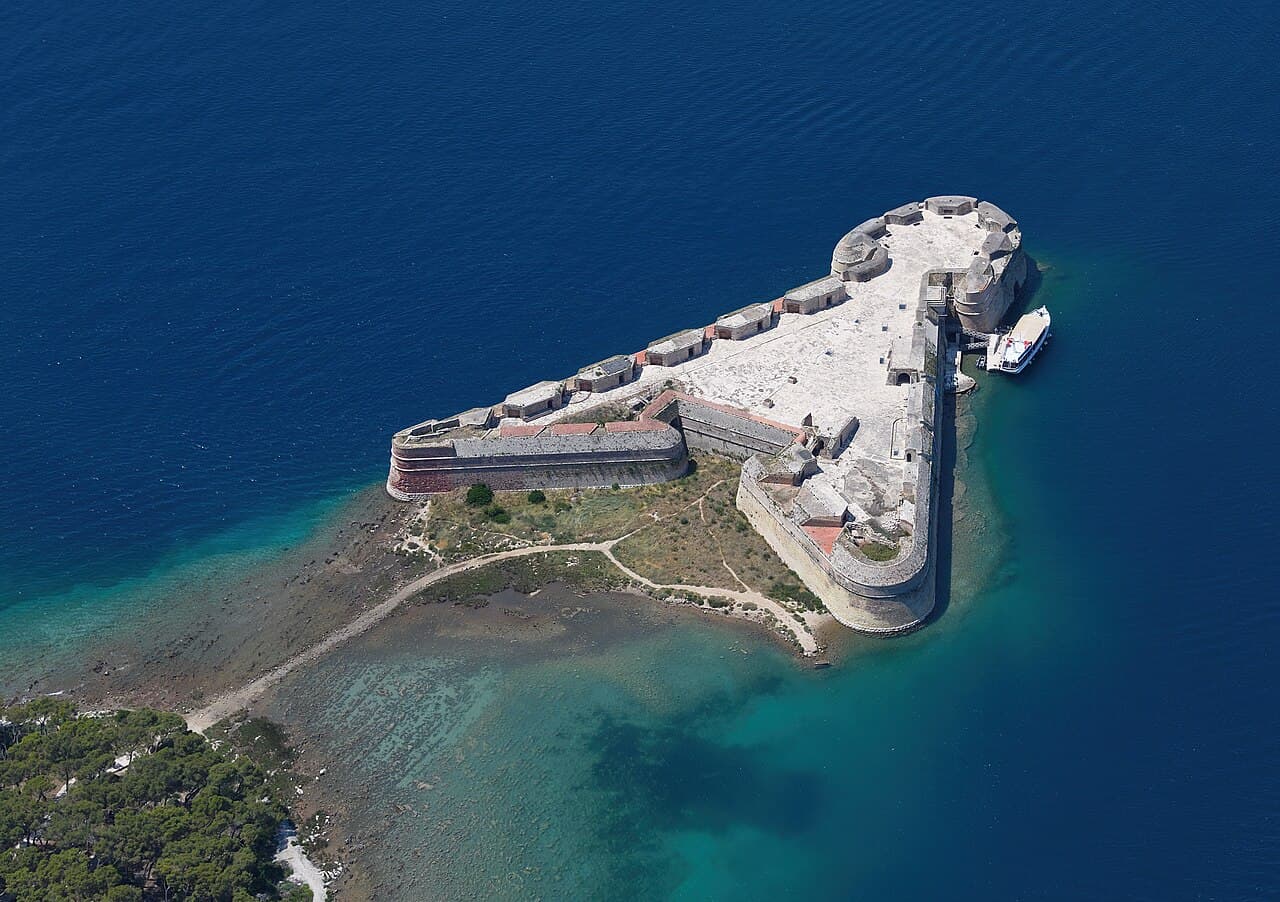
St. Nicholas’ Fortress
St. Nicholas' Fortress, locally known as Tvrđava sv. Nikole, is a remarkable example of Venetian military architecture situated near the historic town of Šibenik in the Šibenik-Knin County of Croatia. Built in the mid-16th century, this fortress played a crucial role in defending the Adriatic coast against the expanding Ottoman Empire during the reign of Suleiman the Magnificent. Its strategic position on a small island at the entrance to the narrow St. Anthony Channel enabled it to effectively control naval access to the important port of Šibenik.
The fortress was constructed between 1540 and 1547 by the Republic of Venice, which at the time controlled much of the Dalmatian coast. The site was previously home to a Benedictine monastery dedicated to St. Nicholas, which was demolished to make way for the new fortification. Before the fortress was built, Šibenik's defenses consisted mainly of medieval town walls and the inland St. Michael's Fortress.
Architectural design and features
The design of St. Nicholas' Fortress is attributed to Giangirolamo Sanmicheli, nephew of the renowned Venetian architect Michele Sanmicheli. The fortress showcases an innovative triangular layout with two land-facing bastions shaped like pliers (tenaglia), an early example of this defensive concept that was later widely adopted across Europe. The seaward side is dominated by a large semicircular tower, which provided robust protection against naval attacks.
The fortress was originally equipped with 38 cannon embrasures arranged on two levels, many of which remain intact today. The interior housed quarters for a castellan and 30 to 50 soldiers, a gunpowder magazine, a cistern for water storage, and a small church built on the ruins of the former monastery. The use of brick construction was deliberate, as brick was considered more resistant to cannon fire than stone, while the foundations were constructed from stone for stability.
The northeast gate and artistic elements
One of the fortress's most artistically significant features was the northeast gate, once adorned with Renaissance carvings and a relief of the Venetian lion, a symbol of Venetian power. Unfortunately, this decoration was destroyed during the early 19th century by French troops and later further damaged by the Yugoslavian army in the 20th century.
Historical context and military significance
St. Nicholas' Fortress was built primarily as a response to the increasing threat posed by the Ottoman Empire, which sought to expand its influence along the Adriatic coast. The fortress's strategic location enabled it to block enemy ships from entering the Šibenik channel, effectively protecting the city and its vital port from seaborne assaults. Despite its formidable defenses, the fortress never saw direct combat, yet its imposing presence served as a strong deterrent against potential attackers.
Throughout its history, the fortress underwent various renovations to adapt to evolving military technology and artillery advancements. It remained a key defensive installation for the Venetian Republic and later for the Austro-Hungarian Empire, which controlled the region until the early 20th century.
Later military use and abandonment
After the Austro-Hungarian army withdrew in the early 20th century, the fortress was taken over by the Yugoslavian army and remained under military control for much of the 20th century. It was closed to the public until 1991, when it was finally abandoned. Since then, the fortress has undergone significant restoration efforts to preserve its structure and historical value.
UNESCO World Heritage designation and modern restoration
In 2017, St. Nicholas' Fortress was inscribed as a UNESCO World Heritage Site as part of the "Venetian Works of Defence between the 15th and 17th centuries". This designation recognizes the fortress's outstanding value as a well-preserved example of Renaissance military architecture and its role in the broader defensive network of the former Venetian Republic along the Adriatic coast.
Following its inscription, extensive restoration work was carried out to stabilize and restore the fortress. These efforts culminated in the fortress reopening to visitors in July 2019. Today, it is accessible only by boat from Šibenik, as it is located on the island of Ljuljevac at the entrance to the Šibenik channel, near the Jadrija beach lighthouse.
Visiting St. Nicholas' Fortress and Šibenik's fortifications
Visitors to St. Nicholas' Fortress can explore its impressive defensive structures, including the bastions, cannon embrasures, and the remnants of the church and living quarters. The fortress offers a unique perspective on Venetian military engineering and the historical maritime defense of the Adriatic coast.
The town of Šibenik itself is rich in historical heritage and features several other fortifications worth visiting. These include the St. Michael's Fortress, which predates St. Nicholas', as well as the 17th-century fortresses of St. John's and Barone. Together, these fortifications illustrate the layered military history of Šibenik and its strategic importance over the centuries.
Access and visitor information
Access to St. Nicholas' Fortress is exclusively by boat, with regular ferry services departing from Šibenik's harbor. Visitors should plan accordingly, as there is no road or pedestrian access from the mainland. The fortress is open to the public during the warmer months, with guided tours available to provide historical context and architectural insights.
Šibenik's inclusion of St. Nicholas' Fortress and other Venetian defensive works in the UNESCO World Heritage List highlights the cultural and historical significance of these sites, making them essential destinations for those interested in military architecture, Renaissance history, and Adriatic maritime heritage.
Frequently asked questions (FAQ)
- How do I get to St. Nicholas’ Fortress?
- St. Nicholas’ Fortress is located in Šibenik, Croatia, and can be reached by boat or on foot. There are regular boat services from the mainland that offer scenic views of the fortress and the surrounding coastline. If you prefer to walk, you can enjoy a beautiful stroll along the waterfront.
- What is the historical significance of St. Nicholas’ Fortress?
- St. Nicholas’ Fortress, built in the 16th century, played a crucial role in defending the city of Šibenik against naval attacks. It is an excellent example of Renaissance military architecture and showcases the technological advancements of the time. Today, it is recognized as a UNESCO World Heritage site, reflecting its importance in Croatian history.
- When was St. Nicholas’ Fortress built?
- Construction of St. Nicholas’ Fortress began in 1540 and was completed in 1560. Designed by the Venetian architect Giovanni Battista Baldassare, the fortress was built to protect Šibenik from Ottoman invasions. Its strategic location and robust design have allowed it to stand the test of time.
- Can I visit St. Nicholas’ Fortress year-round?
- Yes, St. Nicholas’ Fortress is open to visitors year-round, although hours may vary seasonally. It’s advisable to check the official website for current opening times before your visit. During the summer months, the fortress is particularly popular, so visiting early in the day can enhance your experience.
- Why is St. Nicholas’ Fortress a popular tourist attraction?
- St. Nicholas’ Fortress is popular for its stunning architecture, rich history, and breathtaking views of the Adriatic Sea. Visitors are drawn to its unique military design and the role it played in historical defense. Additionally, its proximity to the charming town of Šibenik and other attractions makes it a must-see.
- Is it possible to explore the interior of St. Nicholas’ Fortress?
- Yes, visitors can explore the interior of St. Nicholas’ Fortress, where you can find various historical exhibits and beautiful views from the ramparts. Guided tours are often available, providing deeper insights into its history and architecture. Don't forget to bring your camera to capture the stunning landscape!
- What are the ticket prices for St. Nicholas’ Fortress?
- Ticket prices for St. Nicholas’ Fortress are generally affordable, with discounts available for students and seniors. Children under a certain age may enter for free, making it a great option for families. It's best to check the official website for the most up-to-date pricing information.
- What is the best time to visit St. Nicholas’ Fortress?
- The best time to visit St. Nicholas’ Fortress is during the spring and early fall when the weather is mild and the crowds are smaller. Summer offers vibrant activities but can be quite busy. Visiting during off-peak hours, such as early morning or late afternoon, can enhance your experience.
- Are there any nearby attractions to visit after St. Nicholas’ Fortress?
- Yes, after visiting St. Nicholas’ Fortress, you can explore the historic town of Šibenik, including the Cathedral of St. James, a UNESCO World Heritage site. The nearby Krka National Park is also a popular destination, known for its stunning waterfalls and scenic trails. Both locations offer fantastic opportunities for exploration and photography.
Photo gallery

Information
Loading map...
Visitor reviews
No reviews yet. Been here? Write the first review and help other travelers!
Write the first reviewVisited this castle? Share your experience
Your review helps other travelers and adds first-hand knowledge to our encyclopedia.


