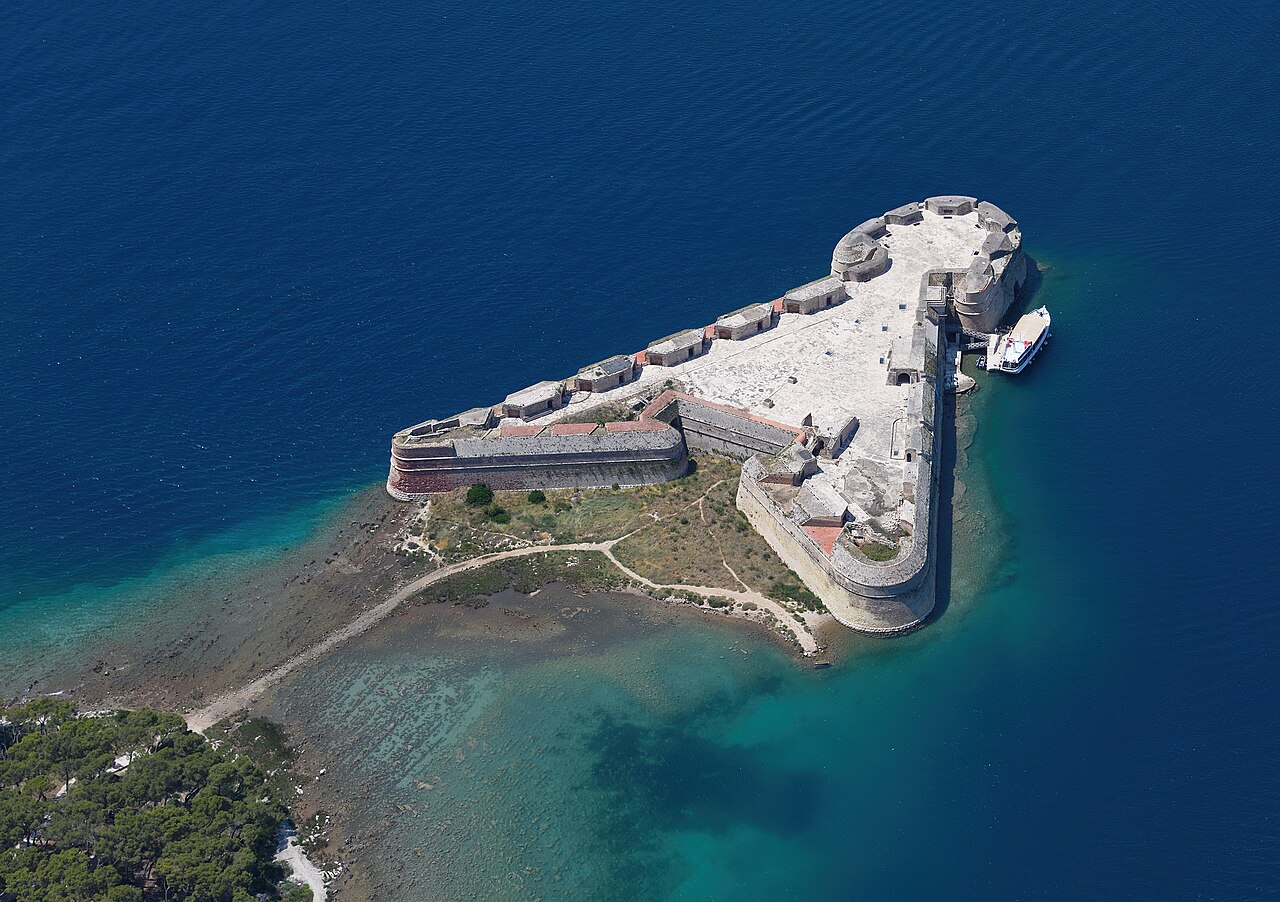
St. Michael's Fortress
St. Michael's Fortress, locally known as Tvrđava svetog Mihovila, is a prominent medieval fortress situated in the historic town of Šibenik, within the Šibenik-Knin County of Croatia. Perched atop a steep 70-meter-high hill, the fortress commands stunning panoramic views of the old town and the shimmering waters of the Adriatic Sea. Recognized as the oldest of Šibenik's fortifications, St. Michael's Fortress played a pivotal role in the town's early defense and urban development.
The ancient origins and early history
The strategic location of St. Michael's Fortress has been continuously occupied since prehistoric times, as evidenced by archaeological discoveries including pottery fragments, Roman artifacts, and early medieval remains. The hill's significance is underscored by the earliest known mention of Šibenik in a 1066 charter likely issued at the site.
During the early 12th century, the fortress was under Byzantine rule and was described as "unconquerable" by the Venetian duke in 1116, although it was destroyed during his campaign. This early fortress laid the groundwork for the later medieval structure that would dominate the town's defenses.
Late medieval construction and Venetian rule
The current form of St. Michael's Fortress was largely developed during the late medieval period, particularly in the 15th century. At this time, it served as Šibenik's main stronghold, connected to the sea by an extensive defensive wall. Under Venetian administration, the fortress was a tightly controlled military installation, housing a garrison and an armory. Access was restricted, with women prohibited except for the castellan's wife, emphasizing its martial function.
Within the fortress walls stood a church dedicated to St. Michael, the fortress's namesake. The fortress's architecture includes a notable Gothic arch entrance and several coats of arms adorning the walls, representing city rectors and castellans who contributed to its construction and maintenance.
Architectural features and layout
St. Michael's Fortress comprises several key elements: a central castle or citadel, northern and southern faussebrayes (outer defensive walls), a lower western platform known as the place-of-arms, and double defensive walls extending down to the sea. These walls functioned both as a retreat route and a supply line for the garrison. Water supply was ensured by two preserved cisterns, crucial for sustaining the fortress during sieges.
Military significance and later developments
In the mid-16th century, Venetian concerns over a potential Ottoman seaborne attack led to the construction of the nearby St. Nicholas' Fortress on an island at the entrance to the St. Anthony Channel, visible from St. Michael's. Despite these additions, St. Michael's Fortress remained central to Šibenik's defense until the 17th century.
During the Cretan War (1645–1669) between Venice and the Ottoman Empire, two new forts—St. John's Fortress and Barone Fortress—were built to better protect the town, diminishing St. Michael's military role. In 1663, a catastrophic lightning strike ignited the gunpowder magazine, causing a massive explosion that destroyed much of the fortress's western section and the church, killing over 40 people. A second explosion occurred in 1752, and the damage was never fully repaired.
Post-military use and modern revitalization
Following its military obsolescence, parts of St. Michael's Fortress underwent restoration in the 19th century. A signal station was added in 1911, reflecting its continued strategic importance in communication. Archaeological excavations throughout the 20th century uncovered and preserved its rich historical layers.
In 2014, the fortress was fully revitalized through an EU-funded project, reopening as a vibrant cultural venue. Today, St. Michael's Fortress hosts concerts, exhibitions, and public events, serving as a cherished symbol of Šibenik's heritage. Its open-air summer stage is a highlight of the town's cultural calendar, attracting visitors from across Croatia and beyond.
The fortress in contemporary cultural life
Visitors to St. Michael's Fortress can enjoy not only its impressive medieval architecture but also breathtaking views of the Adriatic coastline and the historic town below. The fortress's transformation into a cultural hub has enhanced its appeal, making it the second most-visited heritage monument in Šibenik and one of Croatia's most significant fortification sites.
Religious and local significance
The fortress was named after the oldest church in Šibenik, dedicated to St. Michael. This church is believed to have been constructed during the first wave of Christianization in Croatia, possibly between the late 8th and early 9th centuries. The church was first mentioned in a 12th/13th-century hagiographic text, highlighting its longstanding spiritual importance.
After the 1663 explosion destroyed the original church, a statue of St. Anne—the protector from storms—was relocated to a smaller 16th-century church below the fortress's southeastern walls. This church and its surrounding area became known as St. Anne's church and the city graveyard, respectively. Over time, locals began referring to the fortress itself as St. Anne's Fortress, reflecting its integration into the community's cultural landscape.
Frequently asked questions (FAQ)
- How do I get to St. Michael's Fortress?
- St. Michael's Fortress is located in Šibenik, Croatia, and can be accessed by foot from the city center. There are signposts guiding visitors to the fortress, and it is a short uphill walk, taking approximately 10-15 minutes.
- What is the historical significance of St. Michael's Fortress?
- St. Michael's Fortress dates back to the 15th century and played a crucial role in defending the city of Šibenik against invasions. It is recognized as a symbol of the city's rich history and has served various military purposes throughout the centuries.
- When was St. Michael's Fortress built?
- Construction of St. Michael's Fortress began in 1496 and was completed in the early 16th century. Over the years, it has undergone several renovations to preserve its structure and historical importance.
- Can I visit St. Michael's Fortress with children?
- Yes, St. Michael's Fortress is family-friendly and offers a great experience for visitors of all ages. The fortress provides ample space for children to explore while learning about its fascinating history.
- Why is the architecture of St. Michael's Fortress unique?
- The architecture of St. Michael's Fortress is unique due to its strategic location on a hilltop, which offers panoramic views of Šibenik and the surrounding area. The fortress showcases a blend of Gothic and Renaissance styles, reflecting the artistic trends of the period.
- Is it possible to visit St. Michael's Fortress year-round?
- Yes, St. Michael's Fortress is open to visitors throughout the year, but it is advisable to check specific opening hours as they may vary by season. The fortress is especially popular in the warmer months when outdoor activities and events are hosted.
- What are the ticket prices for St. Michael's Fortress?
- Ticket prices for St. Michael's Fortress are generally affordable, with discounts available for students and children. It's best to check the official website for the most current pricing and any special offers.
- When is the best time to visit St. Michael's Fortress?
- The best time to visit St. Michael's Fortress is during spring and early autumn when the weather is pleasant and the crowds are smaller. Visiting during sunset can also provide a breathtaking view over Šibenik and the Adriatic Sea.
- What nearby attractions can I explore after visiting St. Michael's Fortress?
- After visiting St. Michael's Fortress, you can explore the UNESCO World Heritage Site of Šibenik Cathedral, as well as nearby Krka National Park, known for its stunning waterfalls. The charming old town of Šibenik offers cafes, shops, and beautiful coastal views for a perfect day out.
Information
Loading map...
Visitor reviews
No reviews yet. Been here? Write the first review and help other travelers!
Write the first reviewVisited this castle? Share your experience
Your review helps other travelers and adds first-hand knowledge to our encyclopedia.