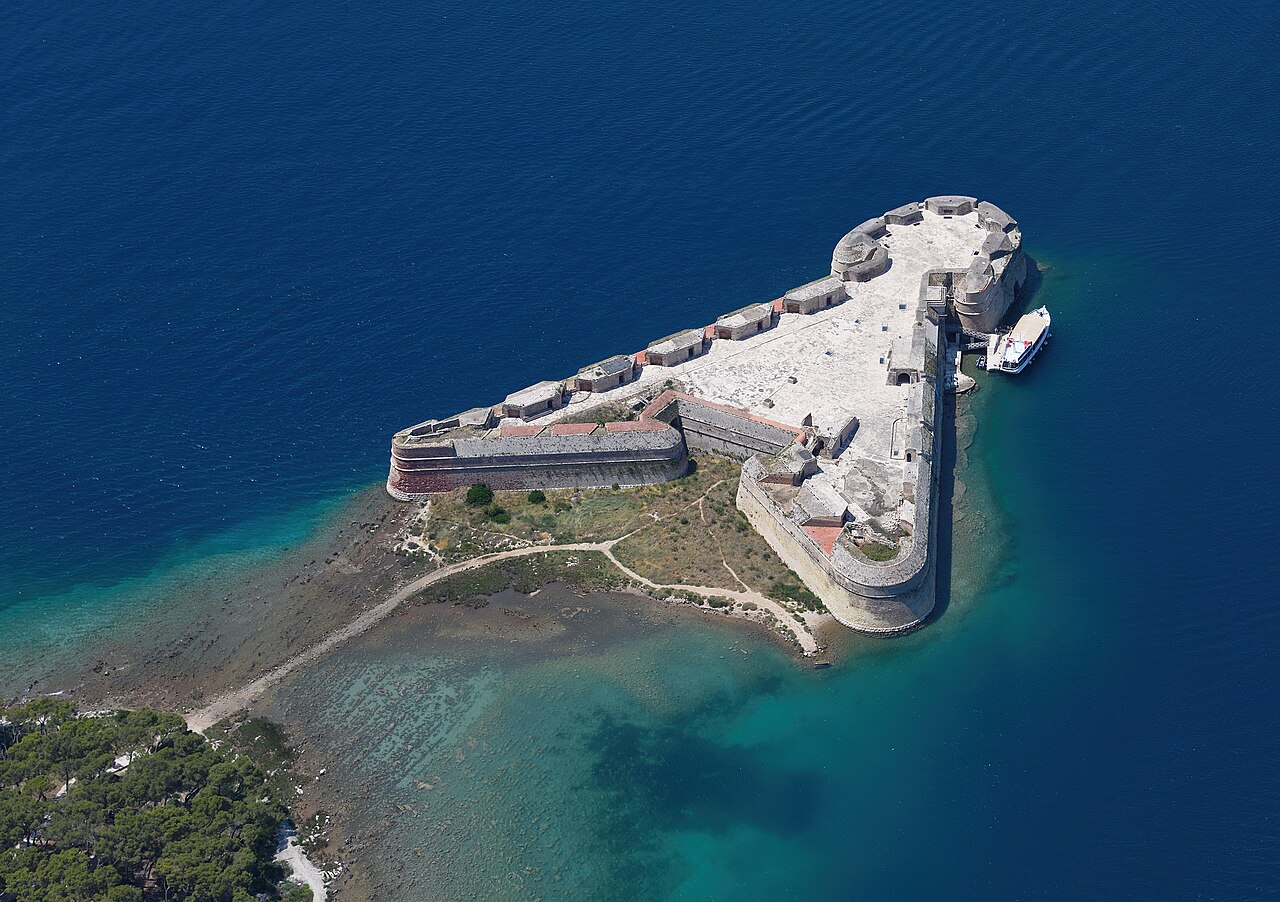
St. John's Fortress
St. John's Fortress, locally known as Tvrđava svetog Ivana, is a prominent Renaissance fortress located in the historic town of Šibenik, within the Šibenik-Knin County of Croatia. Perched atop a strategic hill north of the town's historical center, the fortress commands sweeping views over the city and the Adriatic coast, underscoring its historical military significance. It stands as a testament to early modern fortification design and the turbulent history of Dalmatia during the 17th century.
Before the construction of St. John's Fortress, Šibenik's defenses relied primarily on its medieval city walls and the St. Michael’s Fortress. However, by the early 17th century, these fortifications had become increasingly obsolete, especially given the escalating threat from the Ottoman Empire. Venetian authorities, who controlled Šibenik at the time, recognized the vulnerability posed by the high ground overlooking the city. This concern was first formally noted in the 1520s by Venetian military engineers, who warned that the city could be easily dominated if enemies secured the surrounding hills.
Historical context and construction
The construction of St. John's Fortress was directly prompted by the outbreak of the Cretan War (1645–1669) between the Republic of Venice and the Ottoman Empire. In 1646, with the Ottoman front dangerously close—only about 5 kilometers from Šibenik—the urgency to fortify the high ground became critical. The citizens of Šibenik took the initiative to fund and build the fortress themselves, as the Venetian Senate did not allocate official funds but permitted the endeavor.
The fortress was designed by Father Antonio Leni, a Genoese Franciscan engineer in Venetian service. Leni devised a practical and efficient plan featuring a symmetrical star-shaped fortification with a prominent front hornwork extending towards the anticipated direction of attack and two demi-bastions flanking the side facing the city. Construction began on 1 August 1646 and was remarkably completed in just 58 days, a feat that underscored the determination and resourcefulness of Šibenik's inhabitants.
Architectural features and design
The fortress was built around the foundations of a medieval chapel dedicated to St. John the Baptist, from which it derives its name. The original structure was a dry-stone star-shaped fort characterized by thick walls, angled bastions, and a plier-shaped outwork known locally as Tanaja (from the Italian tanaglia, meaning tenaille), which served as a defensive outwork to protect the main walls from artillery fire.
Subsequent expansions in the following decades introduced a series of hornworks replacing earlier external defenses, enhancing the fortress's ability to withstand artillery sieges. The fortress was also connected to other nearby fortifications, including the Barone Fortress on a lower hill, creating an integrated defensive network around Šibenik.
Military significance and sieges
St. John's Fortress played a pivotal role during the Ottoman sieges of 1646 and 1647. Its strategic position and modern design allowed a relatively small garrison to defend Šibenik against overwhelming Ottoman forces. In October 1646, shortly after its completion, the fortress successfully withstood its first Ottoman assault.
The summer of 1647 saw a much larger siege, with an estimated Ottoman force of up to 30,000 soldiers attacking the fortress. Despite intense artillery bombardment and ground assaults, the defenders—numbering around 7,000—repelled the attackers after a prolonged defense lasting until 8 September 1647. This victory was significant, marking one of the largest military engagements in Dalmatia since Roman times and securing Šibenik from Ottoman conquest.
Later military use and decline
Following the Ottoman threat's decline, St. John's Fortress retained military importance into the 18th century but gradually lost strategic value. Over the centuries, it was occupied by various powers, including Venetian, Austrian, and Yugoslav forces, each leaving minor modifications to the structure based on contemporary military needs.
By the 20th century, the fortress fell into neglect. Modern installations such as sports courts and antennas were added within the ruins, detracting from its historical character. However, the site remained a popular vantage point and recreational area for locals, surrounded by Aleppo pine forest.
Restoration and contemporary significance
In the 2010s, a comprehensive revitalization project was launched to restore and preserve St. John's Fortress. Archaeological excavations uncovered original walls and features from Leni's 1646 design, guiding careful restoration efforts funded by the City of Šibenik and the European Union.
Today, St. John's Fortress stands as a well-preserved example of early modern military architecture. It is open to visitors, offering historical interpretation, walking paths, and stunning panoramic views of Šibenik and the Adriatic Sea. The fortress is not only a cultural heritage monument but also an educational site that illustrates the complex military history of the Dalmatian coast during the Renaissance period.
Visitor experience and cultural importance
Visitors to St. John's Fortress can explore its bastions, walls, and outworks while learning about its role in defending Šibenik during the turbulent 17th century. The site hosts various cultural events and exhibitions, enhancing public engagement with the region's rich history. Its elevated position provides excellent photographic opportunities and a unique perspective on the town's medieval core and surrounding landscape.
As a Renaissance hill castle, St. John's Fortress exemplifies the adaptation of fortification design to the challenges posed by gunpowder artillery. Its rapid construction, strategic location, and successful defense against a much larger Ottoman force highlight its historical and architectural significance in Croatian and Venetian military heritage.
Frequently asked questions (FAQ)
- How do I get to St. John's Fortress?
- St. John's Fortress is located in Šibenik, Croatia, and is easily accessible by walking from the city center. You can follow the signs leading to the fortress, which is situated on a hill overlooking the town and offers stunning views of the Adriatic Sea.
- What is the historical significance of St. John's Fortress?
- St. John's Fortress was built in the 16th century to protect the city of Šibenik from naval attacks. It played a crucial role in the defense of the region and is a testament to the military architecture of the time, showcasing the strategic importance of Šibenik in Croatian history.
- When was St. John's Fortress constructed?
- Construction of St. John's Fortress began in 1576 and was completed in 1580. The fortress was built under the direction of the Venetian Republic, marking a significant period in the architectural development of the region.
- Can I enter St. John's Fortress?
- Yes, visitors can enter St. John's Fortress. There are designated pathways and areas for exploration, allowing you to enjoy the historical features and breathtaking views of the surrounding landscapes.
- Why is St. John's Fortress a popular tourist attraction?
- St. John's Fortress is popular due to its rich history, impressive architecture, and panoramic views of Šibenik and the Adriatic Sea. It offers a unique glimpse into the past and is a perfect spot for photography and sightseeing.
- Is it possible to visit St. John's Fortress year-round?
- Yes, St. John's Fortress is open to visitors year-round, although opening hours may vary by season. It's advisable to check the official website or local information for the latest updates on visiting hours and any potential seasonal closures.
- What are the ticket prices for St. John's Fortress?
- The ticket prices for St. John's Fortress are generally affordable, with discounts available for students and seniors. It's best to check the official site for the current pricing and any special offers that may be available during your visit.
- What time is the best to visit St. John's Fortress?
- The best time to visit St. John's Fortress is during the spring and early fall when the weather is pleasant and the tourist crowds are smaller. Early morning or late afternoon visits are ideal for avoiding the heat and capturing the beautiful sunset views.
- Are there any nearby attractions to see while visiting St. John's Fortress?
- Yes, nearby attractions include the UNESCO-listed Cathedral of St. James and the picturesque old town of Šibenik. Exploring these sites along with the fortress provides a comprehensive experience of the city's rich cultural heritage.
Information
Loading map...
Visitor reviews
No reviews yet. Been here? Write the first review and help other travelers!
Write the first reviewVisited this castle? Share your experience
Your review helps other travelers and adds first-hand knowledge to our encyclopedia.